
EPISODE · Dec 28, 2023 · 2H
(Part 7/N) Salesforce: Lightning Design System, Aura Components, Salesforce CLI, Scratch Org, Permission Sets
from Software Development, Finance and AI · host snowpal.com
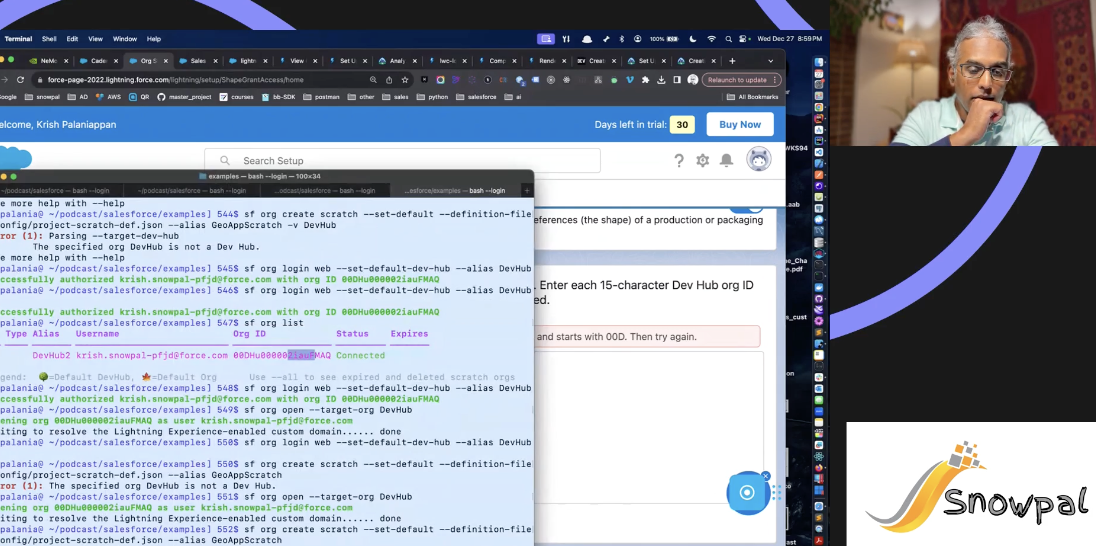
In this podcast episode, Krish explores the Salesforce platform and its various features. He starts by reviewing the previous episodes in the Salesforce series and provides an overview of the Anypoint platform. Krish then dives into the Salesforce dashboard and explores the sales solutions available. He also examines the configuration settings and introduces the concept of Lightning components and the Lightning Design System. Krish demonstrates how to use the Lightning Web Components Studio and explores the differences between Aura components and Lightning Web Components. He also shares his approach to learning by doing and troubleshooting component issues. Finally, Krish compares Salesforce components to React components. In this part of the conversation, the host explores Salesforce Lightning Components and the process of setting up the development environment. They discuss the Salesforce Lightning Experience and the creation of a Lightning Web Component. The host also delves into the usage of Salesforce CLI for deployment and the concept of Scratch Orgs. They explore Salesforce Dev Hubs and troubleshoot deployment issues. The conversation concludes with an overview of Salesforce Permission Sets and a summary of the topics covered. In this episode, Krish explores the Salesforce CLI and the Salesforce platform. He starts by creating a new org and then logs into it. Next, he creates a project and explores scratch orgs. Krish introduces Apex, the Salesforce-specific language, and discusses its usage. He then explores the Salesforce Lightning Experience and its features. Finally, Krish summarizes the topics covered and suggests next steps for further exploration. Takeaways Salesforce offers a wide range of solutions for sales, marketing, commerce, and service. Lightning components and the Lightning Design System are key elements of the Salesforce platform. The Lightning Web Components Studio provides a visual interface for building and testing components. Understanding the differences between Aura components and Lightning Web Components is important for development on the Salesforce platform. Learning by doing and troubleshooting issues is an effective way to explore and understand Salesforce components. Salesforce Lightning Components are used to build applications on the Salesforce platform. Setting up the development environment involves installing Salesforce CLI and configuring Scratch Orgs. Salesforce Dev Hubs are used to manage and deploy Salesforce applications. Permission Sets in Salesforce allow for granular control over user access and permissions. The Salesforce CLI allows developers to interact with the Salesforce platform from the command line. Scratch orgs are temporary Salesforce environments that can be created and used for development and testing purposes. Apex is a Salesforce-specific language used for creating custom components and functionality. The Salesforce Lightning Experience provides a modern and intuitive user interface for Salesforce applications. Chapters 00:00 Introduction to Salesforce Series 03:23 Exploring Salesforce Dashboard 04:19 Salesforce Sales Solutions 06:43 Configuring Salesforce Settings 09:09 Understanding Lightning Components 17:17 Using Lightning Web Components Studio 21:13 Exploring Lightning Design System 23:12 Understanding Aura Components and Lightning Web 28:02 Learning by Doing 32:13 Creating a Hello World Component 36:21 Troubleshooting Component Issues 45:41 Adding More Components 49:53 Comparing Salesforce Components to React Components 50:34 Introduction to Salesforce Lightning Components 58:52 Setting Up the Development Environment 01:01:26 Exploring Salesforce Lightning Experience 01:04:31 Creating a Lightning Web Component 01:07:12 Using Salesforce CLI for Deployment 01:09:24 Working with Scratch Orgs 01:12:25 Understanding Salesforce Dev Hubs 01:21:16 Troubleshooting Deployment Issues 01:30:18 Exploring Salesforce Permission Sets 01:41:57 Summary and Next Steps 01:49:23 Creating a New Org 01:50:13 Logging into the New Org 01:51:43 Creating a Project 01:52:28 Exploring Scratch Orgs 01:53:26 Reviewing Scratch Org Creation 01:54:02 Introduction to Apex 01:55:13 Exploring Salesforce Lightning Experience 01:56:57 Using Scratch Orgs for Projects 01:57:59 Summary and Next Steps Snowpal Products: Backends as Services on AWS Marketplace Mobile Apps on App Store and Play Store Web App Education Platform for Learners and Course Creators
Embed this episode
NOW PLAYING
(Part 7/N) Salesforce: Lightning Design System, Aura Components, Salesforce CLI, Scratch Org, Permission Sets
No transcript for this episode yet
Similar Episodes
No similar episodes found.
Similar Podcasts
No similar podcasts found.