
EPISODE · Jul 12, 2026 · 50 MIN
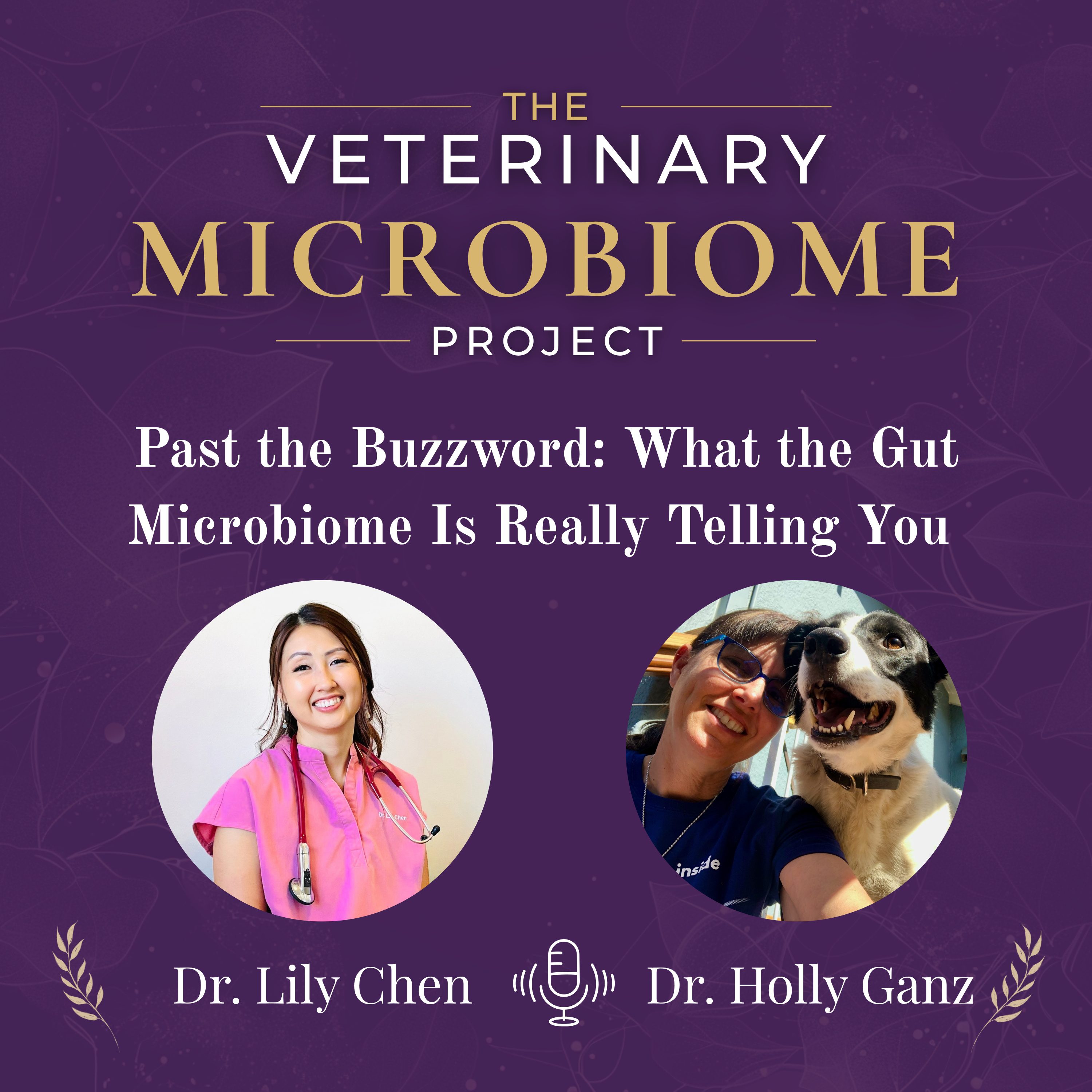
Past the Buzzword: What the Gut Microbiome Is Really Telling You — Dr. Holly Ganz, AnimalBiome
from The Veterinary Microbiome Project · host Dr. Lily Chen
A practical guide to reading the microbiome report, choosing FMT, and resolving the cases that don't respond to conventional tools.The gut microbiome has gone from buzzword to bedside, but what is it actually telling you in practice? In this episode of The Veterinary Microbiome Project, Dr. Lily Chen sits down with Dr. Holly Ganz, microbial ecologist and Co-Founder and Chief Science Officer of AnimalBiome, to turn microbiome science into clinical decisions.Together they unpack how to read a companion animal microbiome report without drowning in it: 16S rRNA sequencing versus the Dysbiosis Index, relative versus absolute abundance, and a simple three-part framework for spotting missing core bacteria, pathobiont overgrowth, and low diversity. They get practical on fecal microbiota transplantation (FMT): what goes into an oral FMT capsule, why consistency matters, donor screening, and when a case needs more support. Plus the gut-organ axes (gut-skin, gut-brain, gut-kidney), supplements and fermented foods, autologous self-FMT banking before antibiotics, and where microbiome-informed medicine is headed next.A must-listen for veterinarians, specialists, and integrative practitioners ready to look one layer deeper. Real science, real cases, and a little magic.KEY INSIGHTS:✨ Dr. Ganz developed the first oral FMT capsules for dogs and cats after her own herding dog, Yuki, was cured of recurring hemorrhagic gastroenteritis once the missing gut bacteria were restored.✨ A simple three-part framework for reading a report: check whether core beneficial bacteria are missing, whether pathobionts like E. coli or C. perfringens are overgrown, and what overall diversity and richness look like.✨ 16S rRNA sequencing maps the whole bacterial ecosystem, while targeted panels like the Dysbiosis Index are built for known pathogens. Each has its place depending on what the clinician needs to know.✨ Oral FMT capsules showed improvement in about 80 percent of cases within 30 days in AnimalBiome's data, though some animals need a slower, more gradual approach to tolerate them.✨ Intolerance to a first FMT session is not a reason to stop. It can signal the microbiome needs more support, not less, since the immune system has to learn which bacteria are friend rather than foe.✨ Donor screening is central to safety. AnimalBiome runs IDEXX and Antech panels on every donation to rule out parasites and pathogens before freeze-drying.✨ A recent pilot study with Dr. Curtis Dewey linked FMT capsules to improvement in canine cognitive dysfunction, one of many emerging gut-organ axis findings spanning skin, kidney, and brain health.✨ Autologous self-FMT, banking a healthy pet's own stool before a course of antibiotics so it can be transplanted back afterward, is an emerging option for protecting an already-balanced microbiome.RESOURCES:AnimalBiome: https://animalbiome.comAnimalBiome Veterinary Hub: https://animalbiome.vetEmail: [email protected]: https://www.linkedin.com/company/animalbiomeFacebook: @animalbiomeveterinaryInstagram: @animal.biomeFOLLOW:Integrative Pet Wellness Center: https://integrativepet.comUnicorn Academy: https://theunicorn.academyDr. Lily Chen: Instagram: @dr.lilychen @the.unicorn.vetThreads: @the.unicorn.vetLinkedIn: Lily Chen, DVM, CVA & The Unicorn VetJoin our newsletter to get more clinical microbiome insights 🐶🐈⬛
Embed this episode
Ready to play
Past the Buzzword: What the Gut Microbiome Is Really Telling You — Dr. Holly Ganz, AnimalBiome
No transcript for this episode yet
Similar Episodes
No similar episodes found.
Similar Podcasts
No similar podcasts found.