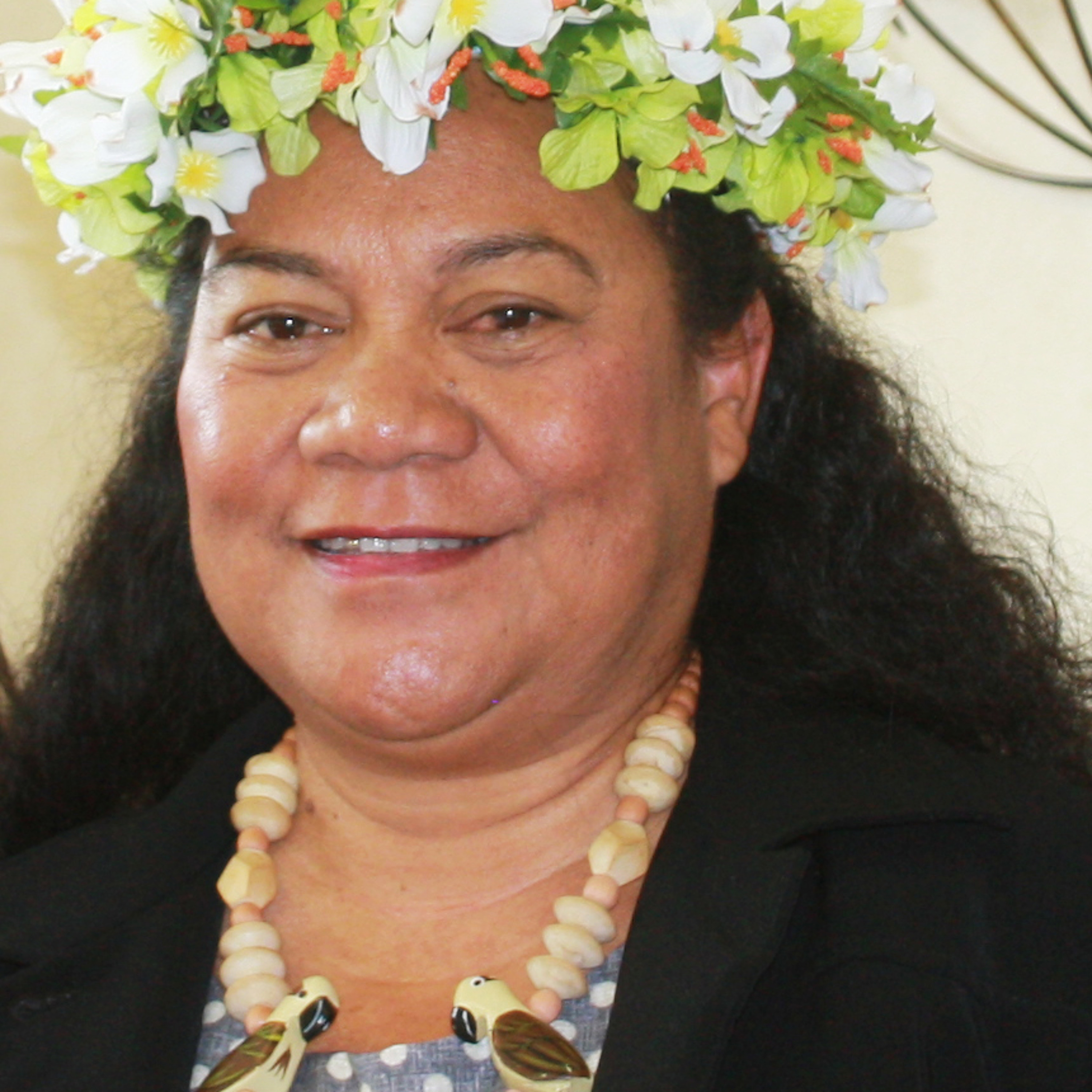
Hello and welcome to our first podcast on migration, refugee and population issues brought to you by the Center for Migration Studies of New York. My name is Rachel Reyes, CMS's Communications Coordinator. For our inaugural podcast, we are pleased to speak with Pelenisa Elova. Ms.
Elova hails from Kiribas, a nation comprised of 33 islands spread across the central Pacific. Rising tides are increasingly contaminating the country's freshwater supply and washing trash on shore, and the rising sea levels threaten to ventilate and engulf the low-lying islands. The government has predicted freshwater contamination could render the country uninhabitable in 30 to 60 years. And scientists predict that many, if not all, know the islands could be submerged under the Pacific as early as 2050.
Kiribas, therefore, is poised to become one of the first countries to disappear because of climate change. The entire population, approximately 103,000 people according to 2012 estimates from the United Nations, could be forced to seek new homes. They may become the first permanent, environmentally-induced mass migration movement. And according to the United Nations High Commissioner for Refugees, populations obliged to leave their own country due to climate change, such as the Kiribas people could be rendered stateless.
Ms. Elova is the National Coordinator for the Kiribas Climate Action Network, of 20 organizations active on climate change. She also serves as the In-Country Coordinator for the Pacific Center of Sustainable Development at the University of the South Pacific. At USP, she works on the European Union Global Climate Change Alliance Project, which aims to develop and strengthen countries' ability to adapt to the impacts of climate change through capacity-building, research, and community engagement.
Ms. Elova is in New York to be honored by the Women in the World Conference. She joins us today with the help of the State Department's International Visitor Program. Ms.
Elova, thank you again for speaking with me today. I'd like to begin our discussion with an overview of the situation facing Kiribas. Can you please describe what is happening in your country? Well, our Kiribas Islands, we have 33 islands, 23 are inhabited.
The islands are like three meters above sea level, most of them, except for Banyva, which is the highest island, my island, which is almost uninhabitable because of the phosphate mining. But the islands, because of their narrowness, their own narrow and low, and with climate change, the impact, I think, our biggest impact is the high tide, or the sea level rise. We call it a sea level rise. And so while the water is coming up, it takes away the land.
Every time the tide comes up, coastal erosion takes place every time. And if it comes with the storm and the wind and the rain, then it's worse. Yes. And you contaminate our water.
The second biggest problem in Kiribas is water. We have the coastal erosion from the sea level rise and the contamination of water. In Kiribas, we have wells. We depend on wells.
Every home has a well water. And also when it comes to our land, it comes into our wells. So when they contaminate it, they clean it out. And they will use it, but it's not good enough to use.
Yes, so that's what's happening in Kiribas right now. But with this high tide that came just recently, like February this year, I think that wakes everyone up. They woke up because it came at a day when it was an ordinary sunny, calm day like this, like today. And the tide came up.
We know it's a high tide, but it came up. And it came up almost like two meters high than the normal. And it just came up and you watched it coming up. What's happening?
And it came up and came up and came up. Over the sea walls, right into people's homes. People's homes are hospital everywhere. The interesting thing was, the biggest high tide that we had, and the biggest damage was at the Red Beach.
In Tarawa, that island where we live, the Red Beach is recorded Red Beach because the American soldiers were killed by the Japanese during the Second World War. And I was running around to take photos at the same time I was thinking, man, my heart was going, you know, this is real. This is the world I was really coming up. And people all came to see because they wanted to know what's happening.
We thought our sea wall has fallen. That's why I came up. But we said, no, the sea wall is there, but what has come over the sea wall. And I thought, is this a tsunami?
Or something is happening in the neighborhood, no somewhere? The other islands, that's why it's affecting our island. It's just a high tide. A normal high tide.
And then, after a few weeks after that, we had a cyclone. A cyclone that hits one one really bad. But some of it touches Kiribas and it just washed up our cosway that joined the two islands. Our main two islands are kept to the islands of Kiribas.
Washed up, nobody can go on the cosway. And I was overseas then. I was what's happening. Is this really happening in Kiribas?
Now, I return home. People are repairing the cosway. People are repairing their homes. When I had a meeting with my NGO, the ladies came.
The main came and they were sharing the stories. And they said, oh, all our gardens that we had washed away, all our water wells, all filled with water. And our pigs died because we tied them. You know, the pigs died.
Or they are in the pigs died and the water came up and they got drowned. And the rubbish just all washed up on land. I realized that for the last five years I've been talking about climate change. I was watching what's coming.
What's really happening on the island. I couldn't really see it until last February. I saw it, but it's a great one. And I saw trees falling, but it takes time.
But last February when that time came up, when a normal peaceful day had just washed up. And I said, wow, if this continues to be every month, every high tide, we're really going to be looking for a place to go. What has been the government's response to the environmental degradation of the islands? Our other biggest challenge in Kiribas is the lack of political willpower.
When you have the water coming up and we are crying, you know, and shouting or screaming and begging people to do something. And the political arena, no one is moving. That is not the biggest problem right now in Kiribas. Because we're not going to control the water coming up.
We can do whatever we can do, but we know if the water continues to come up. And there is no political will, then this island will be submerged. So then what are the options for the people of Kiribas? The government has to find a place for them to move to.
And that's going to be difficult. Because you have to move people. And it's expensive. When you move them, you move them and you have to build homes.
It's quite expensive. When the tide came up, it washed up to the hospital and all government houses decided. I returned from overseas. I went to check on them.
Check on the houses. Nobody lived there. Because the houses were full of sand. The whole house inside the house.
Or full of sand and gravels outside. They said these uninhabitable people of government people have moved them. Okay, so these houses are standing like this now. No one can use them.
So I saw they built high-assie walls to protect the hospital. And I said, how can we protect it? No, I was watching the sea walls. They look so skinny.
So thin. They're not high enough. I don't think they're strong enough to protect the hospital. But you cannot move the hospital.
Where do you move? And I asked people, so what do you do? Where do we go? We just wait for the tide to go down.
And that's it. We wait. When it's dry, we rebuild. Clean up and rebuild.
Well, let's get a bus. Are there many care of us migrating now in preparation of an eventual climate-induced move? They are migrating because we have a migration scheme with different countries. Like we have with New Zealand.
We call it a PEC. Pacific Access to New Zealand. So they take 75 people every year. It's supposed to be a good migration.
A good scheme. It's quite tough. You have to pay your own fare. You have to go in and you wait for your visa to be approved.
While we process it while we live there. So that you can start working. Some of them, they wait for so long. And they go into a country and they're not staying in rental houses.
They come to live with relatives. So it's really the extended families in these countries are helping the migrants to come in. You come and live with your family and stay there until you get your visa and your work permit. But it may take you two to three months.
And by the time you finish all your money that you can make to pay for your living. So it's quite a tough scheme. But it's the only one that is Kiribati people are using right now. Is there a migration scheme with Australia?
Australian one, not yet. We don't have. We have the working scheme. People want pig fruits.
No, there's no jobs. We have that in Kiribati. The migration is the New Zealand one. We don't have Australia yet.
And that's what we really need. That's why we've Kiribati's preparation for this migration in the future is let's train our people with skills to fill in the gap in the labor market. So when we move, we move as a dignified people. That's why the training is done in Kiribati today.
A lot of training is all training just to make sure that our people are equipped. So tell me more about your projects. How are you handling environmental effects on the land and the people? And how are you assisting with migration efforts?
The projects that I'm doing in Kiribati right now through my NGO, the Non-Gumments Organization called the Kiribati Climate Action Network. And through the job that I'm doing with the University of the South Pacific, I have the EU Global Climate Change Alliance funding. And we also have the EU funding through the South Pacific community. It comes through the USP, the University of the South Pacific.
And we implement them. We also have a USA funding that comes to us for climate change adaptations. So what I work with the community is on is adaptation all the time. And it comes as a priority.
Most of the priority is water. In all the communities I go to, we really sound our priorities. And they say, what? Well, the real first priority is to protect the land.
Because there's no point of having water and development and everything if you cannot protect the land. And we're not going to be here. But with my project, I say, I cannot protect the land. I cannot build your sea walls.
I cannot provide water. We can provide water tanks to your communities. But that's what I found. I realized that the second biggest priority for Kiribati is what everywhere we go, you know, they need clean drinking water.
And do you provide any assistance to prepare people for migration? We have a project called Pacific Tivat, training on vocational education training. For example, with my project, I've been out to the outer islands and built in tents with communities. And we have a trainer to come and help them train these people how to build watershed, the stand for the water tank, you know, the concrete, and then to build the shed on it and the duttering, everything and go to the water tank.
And you know, these people come to learn how to do it and then they implement. Then they come to ask, are we going to get any qualification from this? Because we've learned to do this, like any certification on it. And so many of the projects we have training on the job while you are working, or we run training programs, workshops, we run workshops, how to do an assessment, how to do this, and how to do this.
But we just give them certificates of participation. And I said, no, we're going to do it properly. They've been trained, we give them a certificate of something, a certain skill. Maybe they learn how to do project proposals, how to do write reports for projects, how to do this.
We give them those certifications. So in the future when they migrate, they can find jobs, they have papers with them, you know, qualifications with them, you know, those kind of things. So that's specific to it. And it's a project through the South Pacific community, SPC, but we are implementing it through the USP, University of South Pacific.
And that's where I work. So we won't get trained for it to take it out to the communities. So in Kiribas we have a Kiribas Institute of Technology, they put a lot of money into it by the Australian government, they lifted the, what's called the standard up to the Australian standard. And not only that institution, but we have the teachers' college and we have the whole education system, they tried to raise it up to the Australian standard.
So when our youth, or whatever qualifies from these institutions will be able to find at least a job in New Zealand or Australia. So vocational trainings are available to people seeking to leave the country. So we also have a lot of times the school in Kiribas is a big amount of times school and we, a lot of our youth are boys, good seamen, seafarers, and we continue to train them so that they can find jobs overseas. And then we also stand out at University students training to be nurses, to Australia, as they spend three or four years here, and for them to stay and work.
But to stay to work in there so they can help their families. They remit money or the families come to live with them. Because of our communal society and the way we live, you will always help the family. So let the others go in first, train, stay there so they can help their families to be able to migrate.
And that's part of the migration with dignity. Skill building, finding a job, and you move with your family, but you can't be able to find jobs. And not to be in a country sitting there doing nothing because you do not have a skill. And so that's what's happening in Kiribas right now, what we're doing.
This is a preparation for, this is government, it's trying to prepare people for migration. And trying to tell them, you learned, we do the upskilling, but you migrate or not, but at least you are prepared. Don't just take it easy, and then when the time comes, you'll be the disadvantage person and become the liability to the host country. But we want our host countries to know that if we come, when Kiribas people come, they come with the skill.
There's a lot of work to do, part of this preparation. People are not saying, oh, we're moving away from Kiribas, no, they're not talking about it, but the government is saying, this is part of its policy to prepare them. So what kind of support do you and your fellow citizens need now from the international community? What we really need is an open-minded, if we do move, especially at the United Nations, say, we really need them to come up with something that, not to create a refugee status for us, but to prepare something on migration with dignity for people like us.
For us right now, we just have to create anyone. It's not refugees, but migration, environmental migrants. And that's why we have an incident in New Zealand where we have a Kiribas person there at the overstate, and said, oh, I'm PSR refugee. I'm going to be a refugee, claiming to be a refugee, because of climate change.
I can't go back home. And I know that my governments couldn't really support that, because we've already had a policy right now that there is no refugees on climate change. And we start giving refugees status to people. Once they start going overseas, then we will lose our time.
What we want in the UN to have for us is that a new definition, they are weak and be protected. We are not refugees. We move, but there should be preparation for us to move in places where we go to, and everything is available for us. What can the international community do to assist with integrating the Kiribas people into their societies?
We really want for a country like America, Australia, New Zealand, even Europe, to be able to open up the arms and just say, come and learn. Like what New Zealand is doing, not access to migration, but we want access to Western countries like America. We have these seasonal jobs, we have these jobs without people to come, but we need to have a proper training back home, and to have a partner in another country that helps us to settle in. But I know our people are resilient.
They will survive and they will do any job anywhere. And so much we have to teach our people to be able to survive in these countries. And that's why I'm also afraid and skeptical about migration. They only survive in these countries because they have extended families there.
But an unskilled person moving to another new country, a Western country, mind they're going to be lost, and they'll be out there on the street. We have a lot of preparation for them emotionally and psychologically and to change the way of thinking. That if you want to go to the West, you have to learn to work and you have to learn to pay your dues. So we talk about migration, and I say, oh yeah, we need our people to migrate, but we need to prepare them.
Really prepare them. What do you think is needed for Kiribas migrants to be successful in the places to which they've migrated? So we have to change the attitude. Learn, to save your money, to your own business, to your own master, and to survive in another country.
And you're contributing to that country at the same time you're looking after yourself. It's not just a skill, it's an attitude. Kiribas says that you have to understand that. It's not your values and your culture, but you're attitude.
When you go in there and you say work, yes, it's work. You have to be on time and money, you save your money because you have to pay for your rent. You know, all those kind of things. Like for example, you're here.
Forget about having a community that you have to contribute and contribute and contribute and they have nothing to pay for your rent. You know, we have to tell them to change that. Like budget your money so you can spend some money, send some money to home, but you have to make sure that you meet your needs in here. Because that's one of the problems that we have.
People come in here to lose their life. They fund jobs, but they very hard to survive. You know, why? They continue to live the way they live in Kiribas.
People are asking, we need the money, we need the money and they keep on sending. And then they have nothing left to live with. It's challenging to our people because we come from communities and shares. We share.
When I have it, I give it to you. Everyone, you can continue to be with your society, getting touched and keep with your values. The culture is important, but it's really the values in that culture that is important. It's not just about dancing.
It's not about just the food, but the values in it. What's really in that, you know, the dance that you want the value. Most of our, the most important thing in our culture is our respect. We respect our elders.
That's very important to us. We must never lose it. And the respect for other people, the respect for the brothers. It's just this.
Well, I want to thank Pelenisa Alofa for joining us today. You can find more information on Kiribas and the Work of Pelas organization at kirikun.wordpress.com. That's K-I-R-I-C-A-N.wordpress.com. Thank you very much.
Thank you very much. And for more information from the Center for Migration Studies of New York, including events, publications and video, visit us at cmsny.org.