
EPISODE · Jun 30, 2026 · 30 MIN
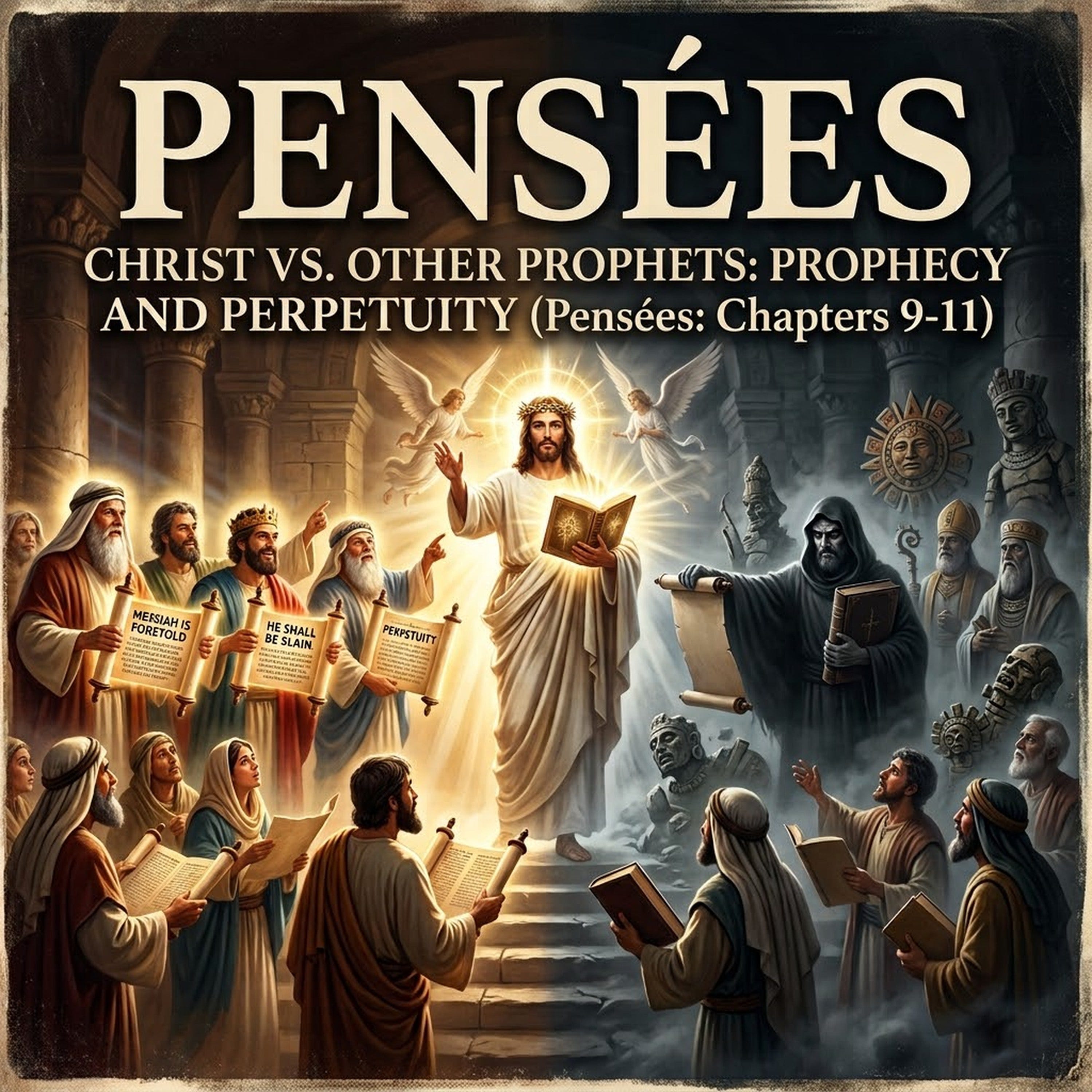
Pensées - 04 - Chapters 9-11
from Discipleship for the Present Podcast · host Kanu Emeruwa
Imagine treating the Old Testament not as a collection of static historical books or moral fables, but as a 4,000-year-old encrypted cipher—a multi-generational code locked until one specific person enters human history. This episode evaluates the towering intellect of 17th-century philosopher Blaise Pascal and his masterwork, the Pensées, specifically examining his arguments on Perpetuity, Typology, and the Prophecies.Pascal wrote during a profound epistemological crisis, an era of information overload where global exploration brought competing ancient chronologies to Europe's doorstep. To defend the faith, he did not just argue timelines; he argued from the continuous, unbroken spiritual diagnosis of humanity. True religion, Pascal asserted, survives precisely because it is contrary to nature, to common sense, and to our pleasure. It demands the very things the human ego despises: repentance and self-denial.The episode draws this historical apologetic into the present by applying a rigorous standard: Jesus Christ’s core instructions for discipleship. We examine Pascal’s razor-sharp distinction between "carnal" and "spiritual" believers—those who use the mechanics of faith to acquire temporal power versus those who possess a hidden, internal devotion. As the hosts observe, carnal believers fall in love with the scale model, expecting a Messiah to deliver earthly dominance, completely missing the spiritual reality of a suffering servant.Ultimately, Pascal provides a brilliant "decoder ring" for all of scripture: charity. If your interpretation of the text leads to pride, intellectual superiority, or political hostility rather than sacrificial love, you have misread the code. The episode challenges us to confront modern "carnal Christianity," where faith is too often leveraged for cultural control, and asks a sobering question: are you drawn to the faith for earthly security, or because you recognize the poverty of your own soul?In This EpisodeWhy treating the Old Testament as a 4,000-year-old encrypted cipher changes how we read scriptureBlaise Pascal, the Pensées, and the 17th-century epistemological crisis of information overloadThe continuous thread of truth and why true religion must be contrary to human egoPascal’s distinction between carnal and spiritual believers throughout historyTypology: how physical miracles and historical events act as scale models for invisible spiritual realitiesWhy charity (divine, self-giving love) is the master key for interpreting all biblical textsThe mathematical precision of Daniel’s prophecies and the historical expiration date of the Messiah's arrivalThe paradox of the suffering servant and why carnal believers stumble over the crossHow modern carnal Christianity manifests through the prosperity gospel and the pursuit of political powerThe danger of over-intellectualizing the faith and missing the simple instructions of JesusPractical ReflectionWhere in your life are you treating an opponent or a frustrating circumstance as the ultimate enemy, rather than recognizing your own pride and defensive anger as the true barrier to grace?When you read scripture or engage with theology, does it lead you to a posture of sacrificial love and humility, or does it quietly fuel a sense of intellectual superiority and tribal pride?If you stripped away the external, visible practices of your faith—church attendance, public service, social media posts—what secret, hidden devotion to God would remain?Suggested Substack ExcerptImagine the Old Testament not as a static history book, but as a 4,000-year-old encrypted cipher. In this episode, we evaluate Blaise Pascal's brilliant defense of the faith in the Pensées, exploring how his 17th-century insights on prophecies, typology, and "carnal Christianity" challenge the way we follow Jesus today.AI DisclosureThis episode was created using Google NotebookLM Audio Overview, based on human-curated source material, structured guidance, and editorial review. AI is used as a tool for clarity and delivery, not as a replacement for thoughtful study or engagement with the original texts.Copyright© 2026 Discipleship for the Present / Kamashcu Production Studios. All rights reserved. This is a public episode. If you would like to discuss this with other subscribers or get access to bonus episodes, visit discipleshipforthepresent.substack.com
Embed this episode
Ready to play
Pensées - 04 - Chapters 9-11
No transcript for this episode yet
Similar Episodes
No similar episodes found.
Similar Podcasts
No similar podcasts found.