People / on the prairie
from On the Commons Podcast Hosted by Antonia Malchik
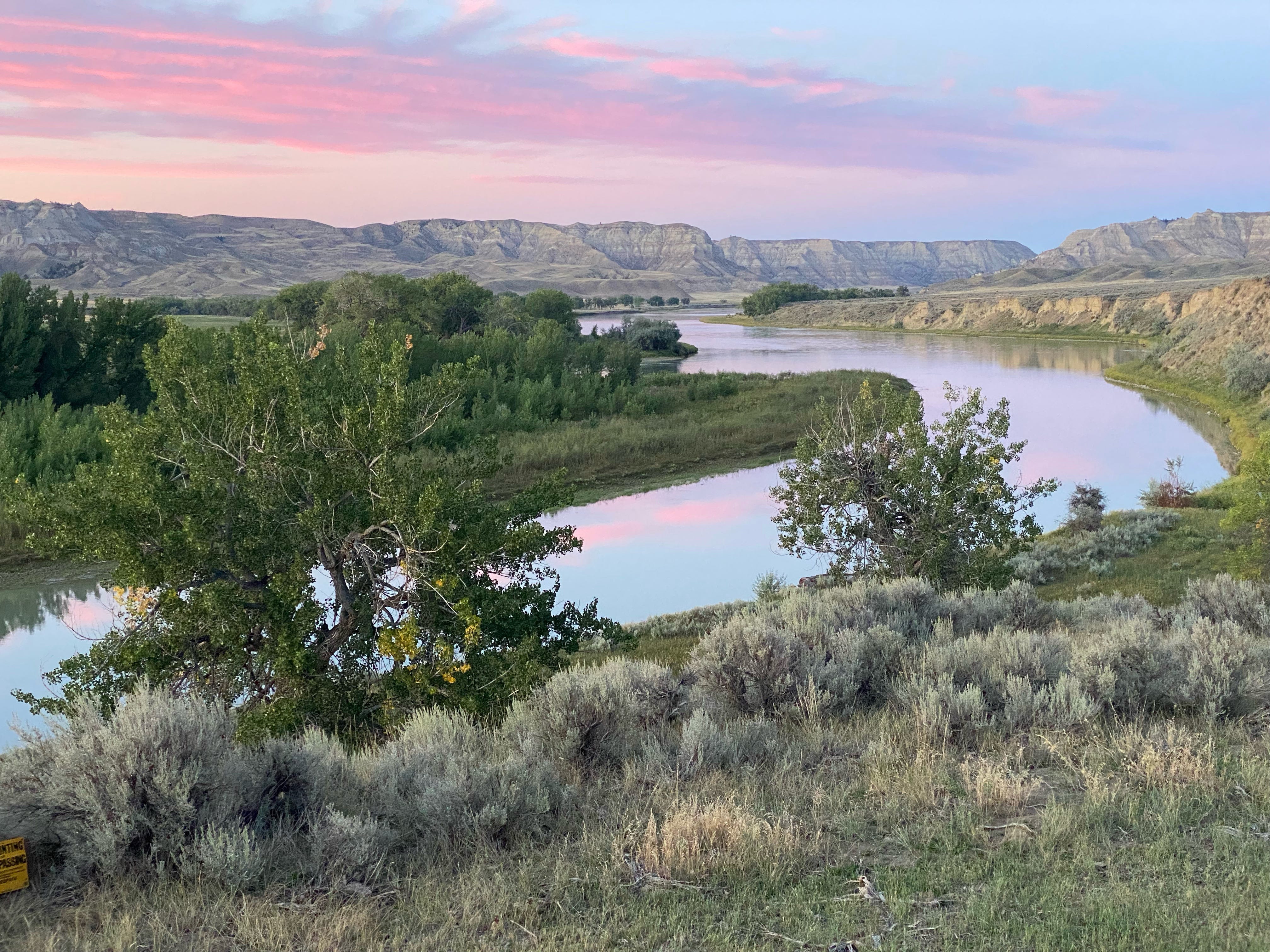
A couple weekends ago my family went to a cabin at American Prairie Reserve. APR is a private initiative that started as a World Wildlife Fund partnership in the early 2000s with the aim of purchasing private land in eastern Montana, land that would eventually link federal wildlife refuges and other open space to eventually preserve three million acres of connected prairie, part privately owned, part public. The initiative is described as a public-private partnership but I’m not sure it’s exactly that. It’s more open in its aims and methodology than I’m used to seeing from PPPs (the details of PPP deals in, say, urban planning or transportation are often kept from the public), but it’s possibly more completely privately owned in its structure, at least for the non-public parcels. I haven’t met many public lands advocates who know exactly how they feel about APR. The point of public lands is that they’re part of the public trust—held in trust for the people (not, as they’re often mischaracterized, owned by government). APR’s lands are not publicly owned—and never will be, according to their website—though they are open to the public. On the other hand, the private lands that make up APR were privately owned ranches for decades, and without APR’s purchase they most likely would have passed into other private ownership, ownership that probably wouldn’t have used them for conservation and certainly wouldn’t have allowed public access. I’ve wanted to visit APR for years because the project intrigued me, but also the idea of looking at and roaming in vast, intact prairie—with the chance of seeing a bison herd, though we didn’t—sounded wonderful. And it was. I’ve never been anywhere so completely quiet. The dirt roads are tricky (in rain they’d be nearly impassable and I would not want to drive them in winter); barely any cars passed, and even flight paths seem to be mostly routed somewhere else. One lone cottonwood tree sometimes rustled in the wind, and toward evening a couple packs of coyotes howled and yipped in the near distance. No cell phone service, no internet. Just silence and stars and the gentle flow of the Missouri River. It really was wonderful. Wonderful to me, and probably to anyone else interested in conservation and intact ecosystems. Not so wonderful to a small group of nearby property owners who have, at least twice, tried to make APR for all intents and purposes illegal via bills forwarded in Montana’s state legislature. I’ve tried to understand the objections to APR over the years. The most vocal group mounting resistance to the project insists that the organization harms families, communities, and the nation by taking the ranchland they purchase out of cattle production and turning it back into bison-supporting prairie. (The details of anti-APR arguments are on the group’s website.) The most recent legislative effort involved a bill that would have banned nonprofits from buying agricultural land. The bill specified “certain nonprofits,” exempting schools and churches while limiting the purchases by land trusts and conservation organizations, and it was widely understood to be aimed at APR. To say that the area where APR is located is sparsely populated is an understatement: slightly under 7,000 people live in one county of just over 4,000 square miles (10,360 square kilometers). As with communities in the western U.S. who felt left behind and betrayed by the 1980s to early 1990s timber wars, the effects of ranching families selling up or drifting away in regions like this leaves significant psychological scars. When your community feels like it’s hollowing out—schools half-full, jobs sparse, volunteer firefighters hard to come by, the only hospital an hour or two or more away—people want to know why. And in communities where environmental concerns play a factor in constraining resource extraction or management, conservation makes an easy scapegoat. Even when the economics of farming and ranching have been well known to batter family farms (and the soil itself) into debt for decades now. As drove closer to APR, we began seeing this sign posted on fencing that lined properties along the highway: Save the cowboy. Like so many other things in the world, this argument isn’t truly about economics or even community: it’s about identity. It’s about who we think we are entangling itself in how we think the world should be structured. It reminds me of Joe Wilkins’s novel Fall Back Down When I Die and how Wilkins so deftly characterized an anti-environmental resentment of nature itself, and how those attitudes were passed down from the characters’ homesteading ancestors, people who were gifted land in the first place from the U.S. government, at the expense of the people it was stolen from. One of the members of the Save the Cowboy campaign said in an interview that, because private donors fund APR’s efforts, it’s “basically a takeover of this area by just a few individuals with vast financial resources.” This objection, while clear and perhaps even fair, ignores the fact that other ranches nearby have been purchased by wealthy out-of-state residents who spend very little time there and have closed off rather than opened public access, as well as denied neighbors previously permitted grazing access. Nor is it unique to the area. Near where I live in a different part of Montana, an enormously wealthy couple who live mostly in Texas recently bought 126,000 acres of former Weyerhauser timber land that previously had been publicly accessible. I have serious doubts that their expressed desire to continue welcoming hunters and walkers will last long; their other local property, 200 acres near my town where they’re building a house with umpteen chimneys, boasts the largest “No Trespassing” sign I have ever seen in my life. If that anti-APR rancher really wanted to dig out the root of her complaint, it would be in land access and control being solely at the whim of wealthy landowners. That rancher’s complaint of APR being “basically a takeover of this area by just a few individuals with vast financial resources” is also a fairly accurate description of what happened with colonialism throughout the U.S., including Montana. Homesteading families notwithstanding, land speculation by wealthy individuals, corporations, and railways fueled much of the European settlement of the West, and the rest of America before that. George Washington himself was a land speculator. In addition to being the main beneficiary of lands granted to soldiers for helping to build a fort east of the Ohio River—he was gifted 20,000 acres for that and bought another 25,000 from fellow soldiers—he later scouted out lands west of the 1763 Proclamation Line (past which the British king had declared that his subjects were not meant to settle), writing to his land agent in 1767 that: “I can never look upon that proclamation in any other light . . . than as a temporary expedient to quiet the minds of the Indians. . . . Any person, therefore, who neglects the present opportunity of hunting out good lands, and in some measure marking and distinguishing them for his own, in order to keep others from settling them, will never regain it.” George Washington was little more than an individual with vast resources who chafed at limitations placed on his accumulation of more wealth through land speculation. I read an interview with a white nationalist a few years ago, someone who lives local to me, in which he gave a non-answer to a journalist when asked about Native American people. After he said that non-white people should “go back” to wherever they came from (not that it matters because the whole argument is nonsensical, but wouldn’t it be more straightforward for us pale-skinned people to “go back”?), the journalist asked him something along the lines of “what about Native Americans?” and the white nati… Get full access to TRESPASSING at antonia.substack.com/subscribe
Embed this episode
No transcript yet.