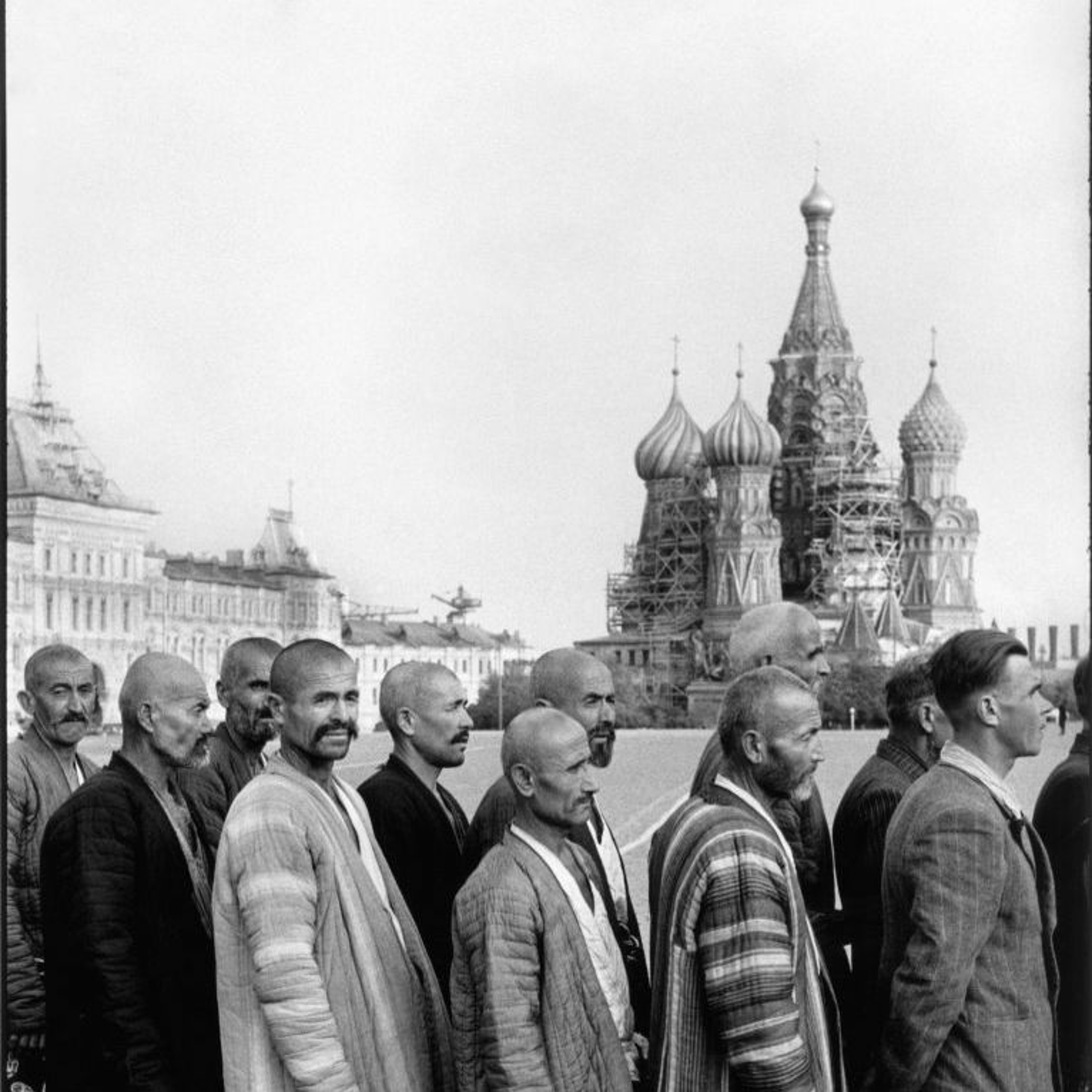
Perestroika's Dark Side - Jeff Sahadeo (10.22.2020) episode artwork

EPISODE · Oct 30, 2020 · 1H 15M

Perestroika's Dark Side - Jeff Sahadeo (10.22.2020)

from CREECA Lecture Series Podcast · host Center for Russia, East Europe, and Central Asia at the University of Wisconsin, Madison

"Perestroika's Dark Side: Nationalism, Racism and Crisis on Moscow Streets at the End of the Soviet Union" with Jeff Sahadeo, Professor at Carleton University. LECTURE DESCRIPTION: Migration from the Soviet South (Caucasus and Central Asia) to the capital, Moscow, dramatically increased in the 1980s. Newcomers sought to take advantage of top-quality education, professional opportunities and to trade as economic conditions in their homelands grew more challenging. Street traders from Azerbaijan, Uzbekistan and elsewhere, whose fruit and flowers fetched much higher prices than they might at home, came to symbolize a changing Soviet Union for Moscow’s residents. Mikhail Gorbachev’s efforts to bring openness (glasnost) and economic restructuring (perestroika) to the USSR brought initial enthusiasm to Soviet citizens, who hoped for increased social mobility and economic opportunity. As reforms faltered, however, as prices rose and shortages appeared in the planned economy, the goods and services provided by these Soviet southerners became at once more important and more resented by Moscow’s Slavic majority. Nationalist and racist ideas, percolating under the surface alongside increased south-north movement, burst into the open in the late 1980s and changed life plans of many of these southern migrants. Based on oral histories of the time, this presentation reveals connections between mobility, nationalism and racism in Moscow and across the USSR. By 1990, when hope for progress ebbed, the Soviet maxim of the Friendship of the Peoples evaporated and migrants no longer considered Moscow “their” capital. SPEAKER DESCRIPTION: Jeff Sahadeo is a Professor at the Institute of European, Russian and Eurasian Studies and the Department of Political Science. His presentation is drawn from his recent book, Voices from the Soviet Edge: Southern Migrants in Leningrad and Moscow (Cornell University Press, 2019). Professor Sahadeo is also the author of Russian Colonial Society in Tashkent, 1865-1923 and the co-editor of Everyday Life in Central Asia, Past and Present. His current research examines the intersection between nature and society through a study of rivers in tsarist and Soviet Georgia

"Perestroika's Dark Side: Nationalism, Racism and Crisis on Moscow Streets at the End of the Soviet Union" with Jeff Sahadeo, Professor at Carleton University. LECTURE DESCRIPTION: Migration from the Soviet South (Caucasus and Central Asia) to the capital, Moscow, dramatically increased in the 1980s. Newcomers sought to take advantage of top-quality education, professional opportunities and to trade as economic conditions in their homelands grew more challenging. Street traders from Azerbaijan, Uzbekistan and elsewhere, whose fruit and flowers fetched much higher prices than they might at home, came to symbolize a changing Soviet Union for Moscow’s residents. Mikhail Gorbachev’s efforts to bring openness (glasnost) and economic restructuring (perestroika) to the USSR brought initial enthusiasm to Soviet citizens, who hoped for increased social mobility and economic opportunity. As reforms faltered, however, as prices rose and shortages appeared in the planned economy, the goods and services provided by these Soviet southerners became at once more important and more resented by Moscow’s Slavic majority. Nationalist and racist ideas, percolating under the surface alongside increased south-north movement, burst into the open in the late 1980s and changed life plans of many of these southern migrants. Based on oral histories of the time, this presentation reveals connections between mobility, nationalism and racism in Moscow and across the USSR. By 1990, when hope for progress ebbed, the Soviet maxim of the Friendship of the Peoples evaporated and migrants no longer considered Moscow “their” capital. SPEAKER DESCRIPTION: Jeff Sahadeo is a Professor at the Institute of European, Russian and Eurasian Studies and the Department of Political Science. His presentation is drawn from his recent book, Voices from the Soviet Edge: Southern Migrants in Leningrad and Moscow (Cornell University Press, 2019). Professor Sahadeo is also the author of Russian Colonial Society in Tashkent, 1865-1923 and the co-editor of Everyday Life in Central Asia, Past and Present. His current research examines the intersection between nature and society through a study of rivers in tsarist and Soviet Georgia

NOW PLAYING

Perestroika's Dark Side - Jeff Sahadeo (10.22.2020)

0:00 1:15:02

No transcript for this episode yet

We transcribe on demand. Request one and we'll notify you when it's ready — usually under 10 minutes.

French Your Way Jessica: Native French teacher founder of French Your Way Boost your French listening skills and test your comprehension with this one of a kind series of podcasts. Get the chance to listen to a real conversation between native speakers talking at normal speed AND customise your learning experience through carefully designed sets of questions (2 levels of difficulty) available for download at www.frenchvoicespodcast.com. All interviews also come with the transcript. French teacher Jessica interviews native speakers of French from around the world who share a bit of their life and passion. Where else would you meet in one same place a French yoga teacher based in Melbourne, a soap manufacturer from Provence, or a couple cycling around the world? That Hoarder: Overcome Compulsive Hoarding That Hoarder Hoarding disorder is stigmatised and people who hoard feel vast amounts of shame. This podcast began life as an audio diary, an anonymous outlet for somebody with this weird condition. That Hoarder speaks about her experiences living with compulsive hoarding, she interviews therapists, academics, researchers, children of hoarders, professional organisers and influencers, and she shares insight and tips for others with the problem. Listened to by people who hoard as well as those who love them and those who work with them, Overcome Compulsive Hoarding with That Hoarder aims to shatter the stigma, share the truth and speak openly and honestly to improve lives. The Small Business Startup School – Business Notes | Financial Literacy | Retail Psychology – For Professionals & Entrepreneurs The Small Business Startup School Inc. Starting or buying a small business? While personal circumstances may vary, business patterns remain timeless. On The Small Business Startup School, we explore strategies, insights, and practical solutions to help entrepreneurs confidently navigate their journey.Hosted by Ola Williams—a retail entrepreneur, fintech founder, and financial coach with over two decades of experience—this podcast marries financial awareness and retail psychology with optimism to deliver actionable takeaways.Join us to learn, grow, and connect as we uncover the keys to business success.Let’s continue to learn together and be encouraged to keep on connecting! DIOSA. Carolina Sanper This podcast is a sacred space created by Carolina Sanper where you connect with your inner wisdom and embody your magnetic feminine power.It is the realization that the mystical realm is where you plant the seeds of your desired reality.It is a portal to your true essence: awareness, presence, and receiving with ease. Welcome home, DIOSA. 🖤

Frequently Asked Questions

How long is this episode of CREECA Lecture Series Podcast?

This episode is 1 hour and 15 minutes long.

When was this CREECA Lecture Series Podcast episode published?

This episode was published on October 30, 2020.

What is this episode about?

"Perestroika's Dark Side: Nationalism, Racism and Crisis on Moscow Streets at the End of the Soviet Union" with Jeff Sahadeo, Professor at Carleton University. LECTURE DESCRIPTION: Migration from the Soviet South (Caucasus and Central Asia) to the...

Can I download this CREECA Lecture Series Podcast episode?

Yes, you can download this episode by clicking the download button on the episode player, or subscribe to the podcast in your preferred podcast app for automatic downloads.
URL copied to clipboard!