
EPISODE · Jun 25, 2026 · 2 MIN
Petra Fromme, Arizona State University - Materials That Harness Humidity to Capture Carbon
from The Academic Minute · host Academic Minute
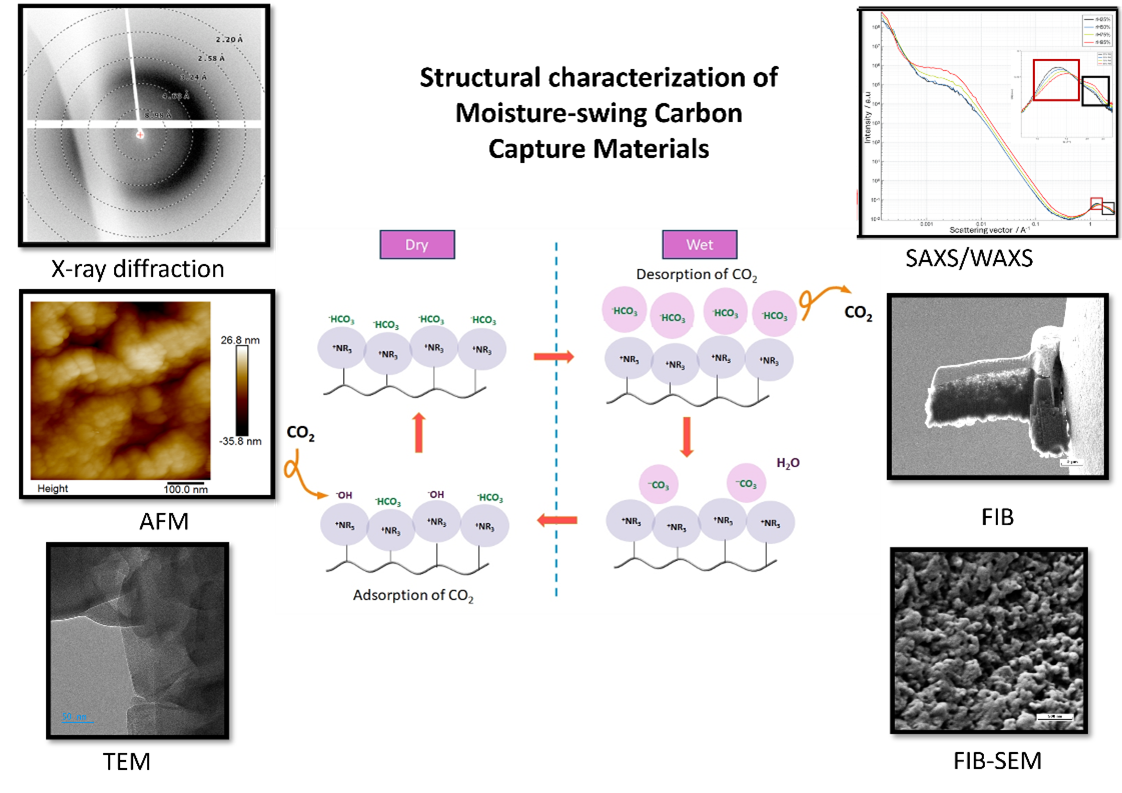
How can we use technology to clean the air around us?Petra Fromme, Regents Professor of Chemistry and Biochemistry and director of the Biodesign Center for Applied Structural Discovery at Arizona State University, examines how humidity can play a role in doing so.Faculty Bio:Petra Fromme, Regents’ Professor of Chemistry and Biochemistry and Director of the Biodesign Center for Applied Structural Discovery at Arizona State University, investigates the structure and function of biological and synthetic systems to advance solutions in energy, health, and sustainability.Petra Fromme, Ph.D., received her doctoral degree and habilitation in physical chemistry from the Technical University of Berlin in Germany, following her studies in biochemistry at the Free University of Berlin. She began her academic career at the Max Volmer Institute in Berlin before joining Arizona State University in 2002, where she has since become a leader in interdisciplinary research and innovation in structural biology and biophysics.Her research focuses on uncovering the molecular mechanisms of energy conversion and biological function, particularly through studies of membrane proteins such as photosystems. She has pioneered the use of X-ray free-electron lasers for serial femtosecond crystallography, enabling high-resolution structural determination of biomolecules and capturing dynamic processes. Her work has resulted in many impactful peer-reviewed publications and has significantly advanced the fields of structural biology and renewable energy research.Her current research also explores the development of advanced materials for direct air capture of carbon dioxide, focusing on moisture-swing systems that operate using changes in humidity. By studying nanoscale to macroscale structures, using different X-ray scattering and imaging techniques her team is working to design energy-efficient technologies to mitigate climate change.Professor Fromme has received numerous honors for her contributions to science, including the prestigious Anfinsen Award from the Protein Society. Through her leadership at the Biodesign Institute and her mentorship of students and researchers, she continues to drive innovation at the intersection of structural biology, energy, and environmental sustainability.Transcript:Fighting climate change often means building bigger machines—industrial systems that pull carbon dioxide from the air using heat, pressure or a lot of energy.But what if the air itself could do the work?My research is looking to step a big step forward in the fight against climate change; developed together with my graduate student and the first author of this published study, Gayathri Yogaganeshan and our team.Our work is on materials that can remove carbon dioxide directly from the air, using something as simple as changes in humidity. When the air is dry, the material captures CO₂. When the air becomes humid, it releases that CO₂ again. This process is called a moisture swing, and it allows us to capture carbon without using large amounts of energy, heat, or pressure.What makes this research special is that we didn’t just test whether the materials work, we looked deep inside them, all the way down to the nanoscale. Using advanced imaging techniques, we discovered that tiny structural features, thousands of times smaller than a human hair, control how water and CO₂ move through the material.We found that even small changes in humidity can subtly rearrange these structures, which in turn affects how efficiently carbon is captured and released. One of the materials we studied, a porous resin, showed particularly strong performance because its internal structure allows gases to move more easily.This work helps us understand how to design better materials, ones that are more efficient, more durable, and capable of operating on a large scale.Ultimately, our goal is to create technologies that can clean the air around us, helping to reduce atmospheric CO₂ and mitigate climate change.Read More:[ASU News] - Moisture-powered materials could make cleaning CO2 from air more efficient This is a public episode. If you would like to discuss this with other subscribers or get access to bonus episodes, visit www.academicminute.org
Embed this episode
Ready to play
Petra Fromme, Arizona State University - Materials That Harness Humidity to Capture Carbon
No transcript for this episode yet
Similar Episodes
No similar episodes found.
Similar Podcasts
No similar podcasts found.