
EPISODE · Jan 17, 2026 · 16 MIN
PHILOSOPHY #3 — "Even If God Exists, Why Should He Rule? A Consent-Based Critique of Divine Authority
from The Omittoist Perspective · host Shamsaddin Amanov
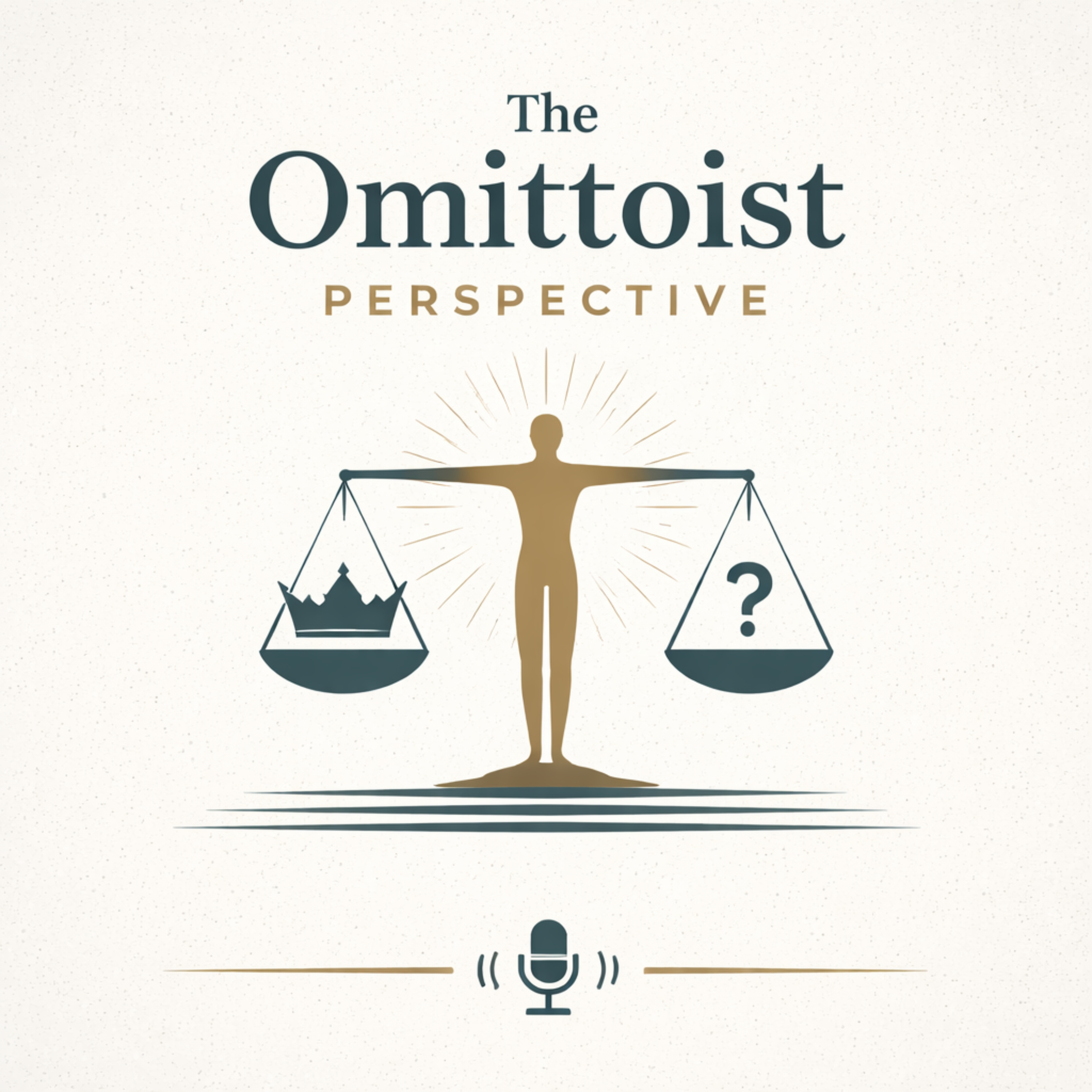
For millennia, the philosophy of religion has been trapped in a binary obsession: Does God exist? In this episode, we dismantle this traditional debate and introduce a radical new framework: Omittoism. Based on the groundbreaking paper "The Sovereign Dissent" by Shamsaddin Amanov (2026), we explore the "Jurisdictional Turn." This philosophy asserts that the capacity to create does not inherently generate the moral authority to command. Just as parents do not own their children, a Creator—whether a deity, a simulator, or an alien engineer—does not automatically possess legislative rights over the human conscience.Join us as we explore the four core pillars of this manifesto:1. The Jurisdictional Turn & The Orphans of Philosophy We begin by addressing the "Philosophical Orphans"—those stranded between rigid religious dogmatism and the cold silence of atheism. We explain why the vital question is not vertical (existence) but political: "By what right would such a power rule?". We introduce the "Null-Hypothesis of Sovereignty," which argues that without a signed, consent-based contract, every human agent is the sole proprietor of their own existence.2. The Cosmic Audit & The Hex-State Matrix What if God exists, but is a tyrant? What if we are in a simulation? We explore the "Hex-State Matrix," demonstrating that human sovereignty remains the necessary constant regardless of whether the "Architect" is a personal God, a silent Deist force, or a future AI. We conduct a "Forensic Audit" of divine governance, analyzing the "Hell Clause" as a violation of proportional justice and exposing the "structural flaws" of a universe filled with natural evil.3. Ethics Without Command If we sever ties with divine authority, does morality collapse? Absolutely not. We discuss "Constructivist Constitutivism" and the "Axiom of Shared Vulnerability". We explain how morality is not a gift from above, but a horizontal necessity between suffering beings. We also delve into "Diachronic Reciprocity"—investing in ethics today to protect our future selves.4. The Republic of Reason Finally, we outline the transition from "Subject" to "Citizen of the Cosmos". We discuss the "Internal Decolonization" of the mind and the "Jurisdiction of One". This is the ultimate call to "Collective Adulthood"—moving away from the nursery of cosmic supervision and into the "Republic of Reason," where meaning is manufactured through human legacy rather than divine assignment.Key Concepts Covered:• Jurisdictional Severance: The formal act of ignoring divine commands as legally null and void.• The Dependency Fallacy: Why "might" does not make "right," and creation is not ownership.• Causal Immortality: Finding meaning in the legacy of influence rather than an afterlife.• Metaphysical Stoicism: Preserving moral standing even in the face of infinite threat.Whether you are a believer, an atheist, or an agnostic, this episode challenges you to stop looking up for permission and start looking inward for authority. As the manifesto states: "If there is a God, let Him be warned: His jurisdiction ends where our conscience begins".Source Material: The Sovereign Dissent: A Consent-based Critique of Divine Authority and the Framework of Jurisdictional Severance by Shamsaddin Amanov (Baku, 2026).Tags: philosophy, philosophy of religion, political philosophy, Omittoism, Sovereign Dissent, Shamsaddin Amanov, divine authority, jurisdictional severance, atheism, agnosticism, theism, deism, ethics, moral philosophy, social contract, John Locke, Thomas Hobbes, Immanuel Kant, Albert Camus, existentialism, metaphysics, problem of evil, theodicy, simulation theory, secularism, human rights, sovereignty, consent theory, political theology, critical theory, post-secularism, religious studies, God, theology, moral autonomy, constructivism, nihilism, meaning of life, Hell, divine command theory, natural law, Enlightenment, Republic of Reason, collective adulthood, humanism, forensic philosophy
Embed this episode
NOW PLAYING
PHILOSOPHY #3 — "Even If God Exists, Why Should He Rule? A Consent-Based Critique of Divine Authority
No transcript for this episode yet
Similar Episodes
No similar episodes found.
Similar Podcasts
No similar podcasts found.