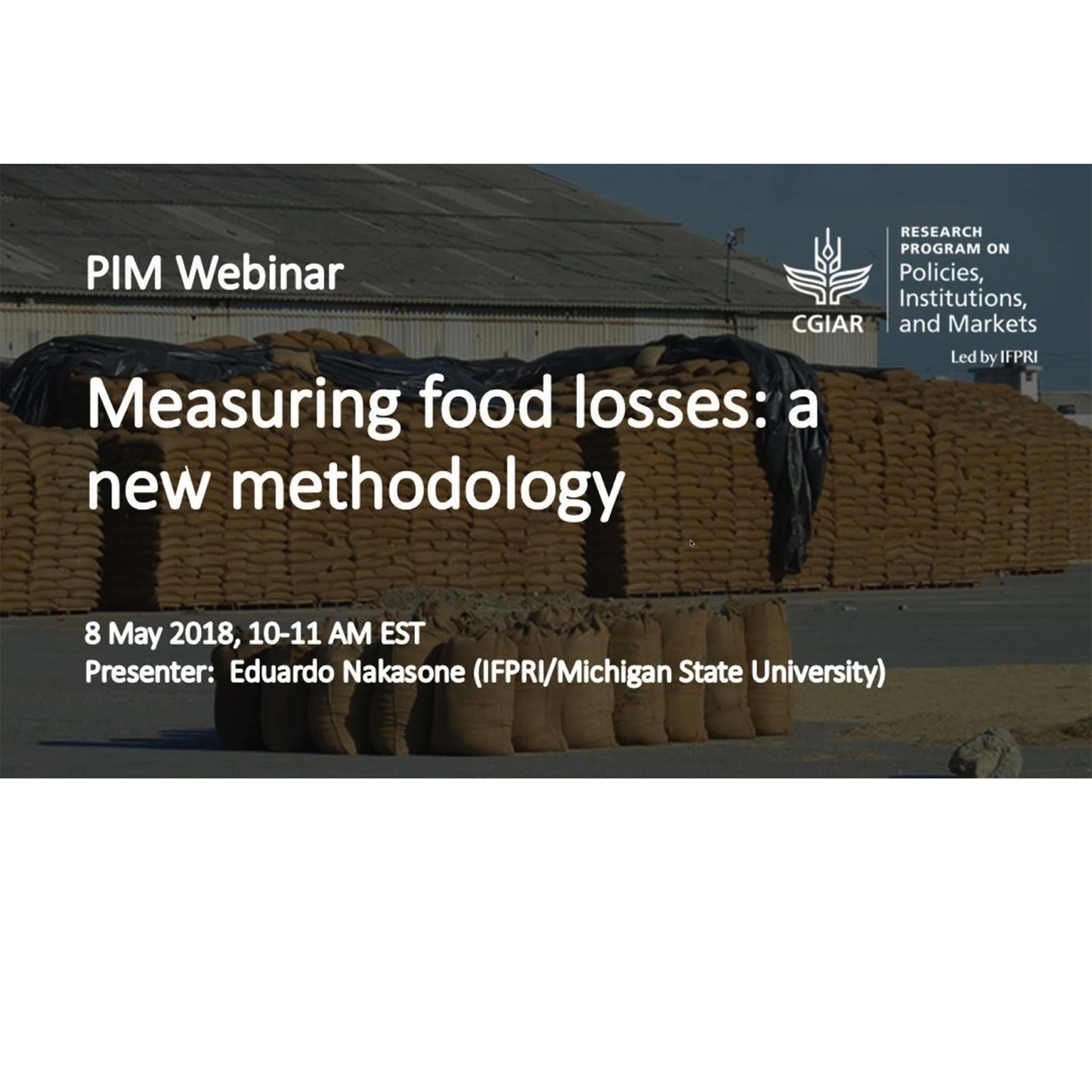
PIM Webinar Series:  Measuring food losses: a new methodology - 5/8/2018 episode artwork

EPISODE · May 8, 2018 · 1H

PIM Webinar Series: Measuring food losses: a new methodology - 5/8/2018

from IFPRI Podcast · host International Food Policy Research Institute

Presenter: Eduardo Nakasone, Assistant Research Fellow, IFPRI and Assistant Professor, Michigan State University. The United Nations has recognized the importance of reducing food loss and waste in the Sustainable Development Goal target 12.3 to “halve per capita global food waste at the retail and consumer levels and reduce food losses along production and supply chains, including post-harvest losses” by 2030. Despite broad interest in the problem, measurement of food loss and waste is problematical, especially in developing countries. In this webinar, we discuss a methodology to measure food losses developed by the International Food Policy Research Institute (IFPRI) team working under the CGIAR Research Program on Policies, Institutions, and Markets (PIM). The survey-based methodology has three main innovations. First, it allows measurement across different nodes of agricultural value chains to pinpoint the locus of loss. Second, it includes the economic value of loss due to quality deterioration as well as physical reduction in quantity. And finally, it characterizes and identifies particular processes in the value chain where food losses occur. We present the results of the application of the method in the value chains of maize and beans (in Guatemala and Honduras), teff (in Ethiopia), wheat (in China), and potatoes (in Ecuador and Peru). We also discuss ongoing work to assess interventions to reduce loss. See more: http://bit.ly/FoodLossWebinar

Presenter: Eduardo Nakasone, Assistant Research Fellow, IFPRI and Assistant Professor, Michigan State University. The United Nations has recognized the importance of reducing food loss and waste in the Sustainable Development Goal target 12.3 to “halve per capita global food waste at the retail and consumer levels and reduce food losses along production and supply chains, including post-harvest losses” by 2030. Despite broad interest in the problem, measurement of food loss and waste is problematical, especially in developing countries. In this webinar, we discuss a methodology to measure food losses developed by the International Food Policy Research Institute (IFPRI) team working under the CGIAR Research Program on Policies, Institutions, and Markets (PIM). The survey-based methodology has three main innovations. First, it allows measurement across different nodes of agricultural value chains to pinpoint the locus of loss. Second, it includes the economic value of loss due to quality deterioration as well as physical reduction in quantity. And finally, it characterizes and identifies particular processes in the value chain where food losses occur. We present the results of the application of the method in the value chains of maize and beans (in Guatemala and Honduras), teff (in Ethiopia), wheat (in China), and potatoes (in Ecuador and Peru). We also discuss ongoing work to assess interventions to reduce loss. See more: http://bit.ly/FoodLossWebinar

NOW PLAYING

PIM Webinar Series: Measuring food losses: a new methodology - 5/8/2018

0:00 1:00:52

No transcript for this episode yet

We transcribe on demand. Request one and we'll notify you when it's ready — usually under 10 minutes.

That Hoarder: Overcome Compulsive Hoarding That Hoarder Hoarding disorder is stigmatised and people who hoard feel vast amounts of shame. This podcast began life as an audio diary, an anonymous outlet for somebody with this weird condition. That Hoarder speaks about her experiences living with compulsive hoarding, she interviews therapists, academics, researchers, children of hoarders, professional organisers and influencers, and she shares insight and tips for others with the problem. Listened to by people who hoard as well as those who love them and those who work with them, Overcome Compulsive Hoarding with That Hoarder aims to shatter the stigma, share the truth and speak openly and honestly to improve lives. The Small Business Startup School – Business Notes | Financial Literacy | Retail Psychology – For Professionals & Entrepreneurs The Small Business Startup School Inc. Starting or buying a small business? While personal circumstances may vary, business patterns remain timeless. On The Small Business Startup School, we explore strategies, insights, and practical solutions to help entrepreneurs confidently navigate their journey.Hosted by Ola Williams—a retail entrepreneur, fintech founder, and financial coach with over two decades of experience—this podcast marries financial awareness and retail psychology with optimism to deliver actionable takeaways.Join us to learn, grow, and connect as we uncover the keys to business success.Let’s continue to learn together and be encouraged to keep on connecting! DIOSA. Carolina Sanper This podcast is a sacred space created by Carolina Sanper where you connect with your inner wisdom and embody your magnetic feminine power.It is the realization that the mystical realm is where you plant the seeds of your desired reality.It is a portal to your true essence: awareness, presence, and receiving with ease. Welcome home, DIOSA. 🖤 XXX Tech by SOVRYN Dr. Brian Sovryn The crossroads between technology, sensuality, and metaphysics - and the longest running anarchist podcast in the world! Brought to you by Dr. Brian Sovryn.

Frequently Asked Questions

How long is this episode of IFPRI Podcast?

This episode is 1 hour and 0 minutes long.

When was this IFPRI Podcast episode published?

This episode was published on May 8, 2018.

What is this episode about?

Presenter: Eduardo Nakasone, Assistant Research Fellow, IFPRI and Assistant Professor, Michigan State University. The United Nations has recognized the importance of reducing food loss and waste in the Sustainable Development Goal target 12.3 to...

Can I download this IFPRI Podcast episode?

Yes, you can download this episode by clicking the download button on the episode player, or subscribe to the podcast in your preferred podcast app for automatic downloads.
URL copied to clipboard!