Plaid Part II: What is Fabric?
from Niche Enough Podcast Hosted by Ash
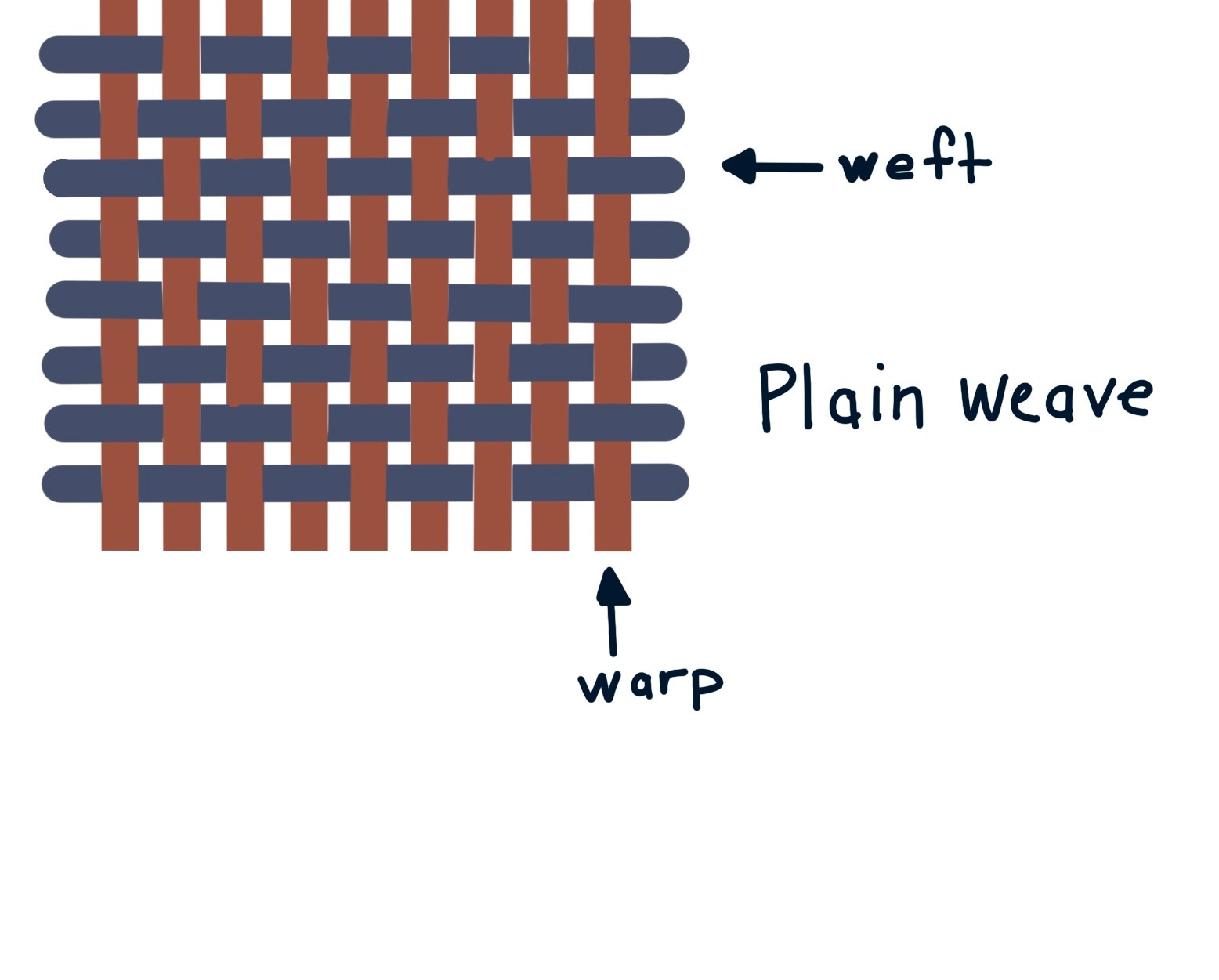
Welcome back to Niche Enough. This is Part II of the Plaid Series. If you haven’t listened to Part I, you should go ahead and do that first. Originally, Part II was going to focus on the Tarim Basin-Hallstatt connection and tease out just which came first, the salt mine or the desert mummies - but instead, that will wait for Part III. I wanted to answer a question left on Part I by Gina (Hi, Aunt Gina). The question: Isn't Plaid to some extent the natural outcome of any weaving? Threads/yarn going across/through threads going up and down. Wouldn't you expect to find some version of plaid everywhere and as far back as you find weavers? The very short answer is yes. This is absolutely true. But I didn’t derail my outline and posting plans just to say yes. Because the long answer is a little more complicated, and perhaps worth taking a journey to explain in more detail just what weaving is, how long humans have been doing it, and what the process is to introduce alternating colors of yarn to create a pattern. Instead of asking ‘what is plaid?’ this time we are asking, what is fabric? Fabric is a cloth made with yarn that has been spun from fiber, and then either woven or knitted together. There are other methods of making fabric, but those are the two most common, and we are most concerned with weaving as we think about the world from a plaid perspective, although you could certainly knit plaid fabric if you put your mind to it. If you’ve ever made a friendship bracelet then, in a very narrow sense, you’ve woven fabric. To weave, you need yarn and the ability to stabilize the lengthwise yarns (called the warp yarns) and then weave through the widthwise yarns (called weft yarns or filling yarns). Our Neolithic ancestors were creating woven fabric and woven goods- such as bags as baskets - by hand around 12,000 years ago. There are some surviving fabric fragments from Peru that date back about that far - and you can read more about those in the academic paper linked in the footnotes. If you’ve ever made a friendship bracelet - or sat by and watched someone else do it - then you might recall that one of the critical first steps is securing the lengthwise yarn somehow. Maybe you used a thumbtack or tape. And that’s fine, for our modern needs to make a narrow strip of fabric. But what if you wanted to weave something wider and what if, you know, you were doing this 10,000 years ago and didn’t have a thumbtack or scotch tape handy? Maybe Neolithic You decided to tie all of the warp yarns to a relatively straight stick and then spread those yarns out in neat rows so you could weave your weft yarn through. Excellent work, Neolithic You. But - and Modern You with the friendship bracelet might have encountered this as well - sometimes those free-hanging lengthwise yarns get tangled or move out of place. Very annoying. So… what if you put a second stick on top of those yarns, to hold them in place and keep them straight and maybe even to put a bit of tension on them so everything ends up nice and tight and secure? Again, great work Neolithic You. You’ve just invented the loom. A loom is a very simple machine and needs at least one beam - the warp beam or that first straight stick. Most looms have a second beam, called the cloth beam, that, like our second stick, helps keep the warp yarns even and tight. Some looms use a series of weights instead of a cloth beam to accomplish the same goal. The backstrap loom is probably one of the oldest and simplest looms. We don’t have any truly ancient backstrap looms around anymore, because they were very, very simple and consisted of just a few nice straight sticks and a way to secure the warp beam - usually to a tree or post - and then the ‘backstrap’, or part that went around the weavers’ back (more accurately butt) to help keep tension on the yarn. From there, looms grew more complex and more stationary - as did civilization. We went from very mobile backstrap looms - which, actually, are still in use today and not just via kits you can buy online - to warp weighted looms and treadle looms to steam powered looms and beyond, with quite a few variations along the way. But that’s not really our focus. Let’s go back to the original question: doesn’t all weaving create a plaid design, or at least the basis of one? Again, yes. The most simple weaving pattern is one we call a plain weave. It’s the act of taking the weft yarn over one warp yarn and then under the next and so on: over under over under over under, all the way across. If you’re looking for an example of this, check out your sheets. If you have plain cotton - or even microfiber - sheets, they are likely to be plain woven. If you’re the kind of person who keeps cheesecloth in your kitchen, this is also a plain weave, but a much looser and more open version. If you stare at your sheets long enough and closely enough, you will probably be able to pick up on the over under pattern. But you have to really stare at them - and depending on how high the thread count is, really stare at them. Most plain weaves aren’t trying to create a visible pattern - the goal is a fabric that is, well, plain. However, a pattern is simple to create - introduce a different color yarn in the weft yarns, or the warp yarns, and now we have stripes. Introduce it in both and now we have a check, or plaid pattern going for us. You can also get more complicated and use different size yarns to create a ribbing effect. Or you can double up on your warp and weft yarns to create a basket weave by going over over under under over over under under. Creating a pattern requires a choice - the weaver has to decide they want to create a plaid, because it takes planning to prepare the loom with alternating warp colors and weft colors. The act of weaving a plaid isn’t crazily complicated, but it does take planning and choice. Still, if a plaid, at its most basic, can be two colors of yarn, and every human civilization that we have found remains for has demonstrated the ability to produce at least two color pigments, then we can safely assume that once again: yes, it makes sense that every culture that has a tradition of weaving has the capability of producing plaid fabric. At this point, I want to remind us that just because we don’t have extant fabric samples of plaid fabrics from every historical culture around the world today, doesn’t mean that those cultures didn’t produce plaid fabrics. Maybe we can assume that some cultures created enough plaid fabrics that we have samples today and perhaps those cultures gave special attention to plaid. Or perhaps it is just happenstance that a scrap was left in a salt mine or buried with mummies in a desert in northwest China. Either way, the rest of this series will explore in depth plaid fabrics from around the world - including Scottish Tartan. Up Next: salt plaid vs. desert plaid. Get full access to Niche Enough at nichenough.substack.com/subscribe
Embed this episode
No transcript yet.