
EPISODE · Apr 1, 2026 · 46 MIN
Plantation Politics Never Left: Machine Politics, Over-Policing, and the Soul of Small-Town Texas
from Education is Elevation · host The Conscious Lee
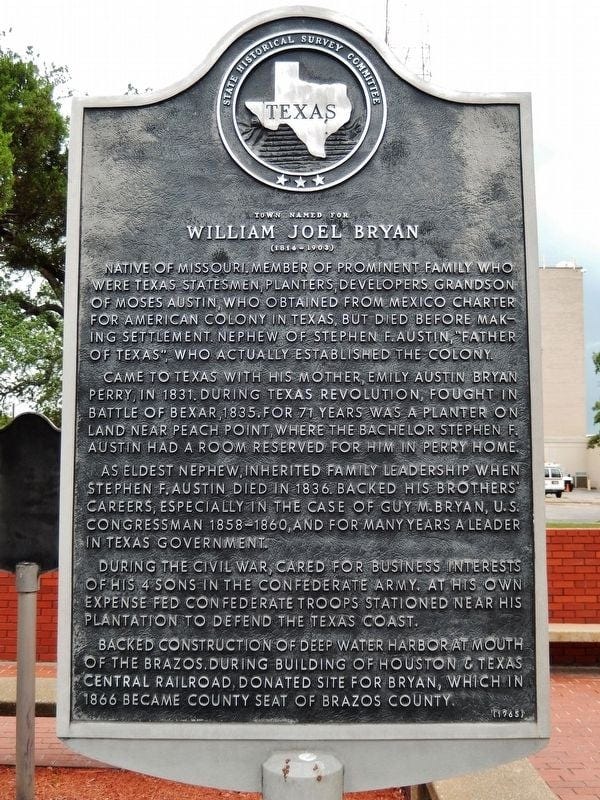
Thank you Reda Rountree (she/her), Mandy Ohman, PJ Schuster, Andrews, Martha, Molly Z, and many others for tuning into my live video! Join me for my next live video in the app.Huey P. Newton said that power is the ability to define the phenomenon and make it act in a desired manner. Today the phenomenon is this: how does small-town politics spill over into the global? Or, if you flip it, how does global politics trickle down and root itself inside the local? Because I’m going to tell you something — when I go back to Bryan, Texas, the town I was raised in, I don’t feel like I’m going home. I feel like I’m walking back into plantation politics.And I mean that structurally. Not metaphorically. Structurally.I recently sat down with my homie Ethan Brisby — a brother from Bryan who went to Morehouse College, got his master’s in land and property development from Texas A&M, and has spent the last fifteen years building an organization called SHIFT Enterprise Academy. SHIFT stands for Save your money, Help your family, Imagine your goals, Follow directions, and Think accurately. It’s a mindset framework, an ecosystem, and a material response to the oppressive conditions Black people face in small-town America — and increasingly, across the African continent. What Ethan is doing is real work. Ground-level, community-rooted, globally conscious work. And our conversation cracked open something I’ve been sitting with for a long time about what small-town Texas politics really is, where it comes from, and why it never seems to change.Let me give you the receipts.The Name on the City Is a Slaveholder’s NameLet’s start with the very name of the city. Bryan, Texas is named after William Joel Bryan — the nephew of Stephen F. Austin, the so-called “Father of Texas.” William Joel Bryan was born in Missouri in 1815, moved to Texas with his family, and grew up on Peach Point Plantation in Brazoria County, where his family managed the plantation, cattle, and property holdings of Stephen F. Austin himself. After Austin died in 1836, William Joel Bryan inherited massive land holdings across the region. By the 1860 census, Bryan owned real property valued at $176,000, personal property worth over $62,000, and held thirty-eight enslaved people. His Durazno Plantation raised cotton, cattle, and sugar using the labor of enslaved Africans. Four of his seven children went on to fight for the Confederate Army.In 1859, William Joel Bryan granted right-of-way through his inherited land in Brazos County to the Houston and Texas Central Railroad, and the projected townsite was named in his honor. In 1860, he deeded 640 acres for the original Bryan townsite to railroad officials for $3,200 — land that enslaved people had cultivated and maintained. The city of Bryan was literally formed by former Confederate soldiers after the Civil War ended in 1865. That is not ancient history. That is the foundation beneath the streets.So when I say I’m walking back into plantation politics when I go home, I need you to understand the literalness of that statement. The city is named after a slaveholder. The land the city sits on was inherited through the machinery of Anglo-colonial land theft and chattel slavery. And the neighborhoods where Black people live today — what folks call “the Bottoms,” what sits along the east side — those are the same areas where formerly enslaved people were relegated after emancipation.Freedman Town and the Geography of Anti-BlacknessAfter the Civil War, one of the earliest Black communities in Brazos County was Freedman Town. Records indicate lots were being sold to African Americans in what was called Hall’s Addition as early as 1867. The Bryan School for Colored Youth was established on that site in 1885 and was later destroyed in a fire. Washington Elementary was built in its place, then burned again in 1971 — the same year, finally, that Black students were integrated into Bryan’s public school system. Think about that. 1971.And this is the part that triggered me in my conversation with Ethan: the way that political consciousness gets suppressed in small-town Texas. It is not the same as the East Coast or the West Coast. When you start talking about white supremacy, anti-Blackness, challenging the legitimacy of government structures — the response from your own community is often: “Man, don’t do that.” Not because they disagree, but because the good old boy system has people psychologically conditioned to believe that defiance is dangerous and compliance is divine.The Normalization of Suffering and the Divine TrapThis is what I call the divine trap. In small-town Texas, particularly in Black communities, there is a deep cultural tendency to make suffering sacred. “The toughest battles go to the strongest soldiers.” “God doesn’t give you more than you can handle.” Now, I’m not attacking faith. I’m a spiritual person. But I am saying this: when you take the various structural ways that a system has caused your reality — the over-policing, the underfunded schools, the disinvestment, the geographic containment — and you make that divine, you have just absolved the structure of accountability.God didn’t put you on the east side of Bryan. Stephen F. Austin’s land grants did. William Joel Bryan’s railroad deal did. Post-Civil War Freedman Town designations did. Jim Crow zoning did. And the Klan’s resurgence in early twentieth-century Bryan — which the historical record documents as limiting the overall upward mobility of the African American community through segregation and terror — that did it too.Ethan mapped this same dynamic onto the colonization of Africa. He broke it down in sequence: first came the explorers, who were welcomed. Then the missionaries, who introduced spiritual frameworks that softened resistance — turn the other cheek, your heaven is in the afterlife. Then the mercenaries, who took the land by force. And finally the merchants, who control the markets to this day. That sequence — explorer, missionary, mercenary, merchant — is not just the story of continental colonization. That is the playbook. And small-town Texas has been running the same play since the 1820s when Jared Groce arrived from Alabama with ninety enslaved people and set up a cotton plantation on the Brazos River, in Stephen F. Austin’s colony.Machine Politics and the Good Old Boy SystemEthan said something that crystallized it for me: small-town politics is the epitome of machine politics. When you can redraw a district line today and already know who is going to win next year, that is a machine. That is not democracy. That is engineered outcomes. And machine politics runs on what Ethan called the good old boy system — people, places, and things that pull strings you never see.In Bryan-College Station, this machinery operates in plain sight if you know where to look. Every drug under the sun can be found on the Texas A&M campus. We all know this. And yet the east side and west side of Bryan — where the Black people live — get policed at a categorically different intensity than the university. They justify the over-policing of Black neighborhoods through the rhetoric of drugs and crime, while the same substances flow freely through a predominantly white institution five miles away. So how is correlation equals causation for the Black community but not for the affluent white people at Texas A&M University? That is not just structural inequality. That is anti-Blackness baked into the infrastructure.Ghislaine Maxwell, Federal Prison Camp Bryan, and the ContradictionAnd then there is this. I’m on the east side of Bryan, visiting family. I’ve been making videos about the Epstein files, about Ghislaine Maxwell, about the entire trafficking apparatus. And I look across the street from my auntie’s house and there is a federal prison. Federal Prison Camp Bryan — a minimum-security facility that sits right there in the hood, in Bryan, Texas.Ghislaine Maxwell is incarcerated there. Serving a twenty-year sentence for conspiring to sex traffic minors. And she is getting preferential treatment. The facility houses mostly non-violent white-collar offenders. Maxwell got transferred there from a low-security prison in Florida after meeting with Deputy Attorney General Todd Blanche for two full days. Bureau of Prisons policy says sex offenders should not be housed at minimum-security facilities — but she got a waiver. She was praised in her own emails for the cleanliness and orderliness of the facility. Other inmates were warned by prison staff to use discretion talking about Maxwell. One inmate who spoke to the media was pulled out of a puppy-training program and transferred to a federal detention center in Houston.Meanwhile, I’ve got family members from that very neighborhood who got locked up for moving narcotics and are sitting in rougher federal institutions than a woman who trafficked children. Think about the moral architecture of that. Think about the fact that Greg Abbott brings the hammer down on communities like east side Bryan while Ghislaine Maxwell gets an emotional support dog at a facility that locals used to call “Club Fed.”This is what plantation politics looks like in 2026. The geography hasn’t changed. The hierarchy hasn’t changed. The relationship between who gets punished and who gets protected hasn’t changed.Epigenetics, Programming, and the SHIFT ResponseI’ve been working on a video about epigenetics — about how suffering, trauma, and modes of emotion get passed down through DNA. Dr. George Yancy’s work on the elevator effect, on how anti-Black racism operates at the level of bodily encounter, has been central to how I think about this. And when I connect that to small-town Texas, I think a lot of our epigenetics are still captured within the plantation. The way Black people in Bryan relate to each other, measure each other’s success, police each other’s defiance — it is still structured by proximity to whiteness.This is why what Ethan is doing with SHIFT matters. His response to the intellectual alienation of going back home — after attending Morehouse, after getting his master’s at A&M, after seeing the world differently — was not to lecture. It was to build. SHIFT started in 2010 as a college access program. By 2014, it pivoted to homeownership and first-time homebuyers. In 2021, after a radio appearance in eastern Uganda went viral and his phone rang with over thirty missed calls, Ethan launched SHIFT East Africa — running five cohorts of fifteen students across eight countries, training over 112 alumni, and funding pitch competition winners with $500 of his own money to start businesses.And here is what hit me hardest about Ethan’s story: he could have stopped at the vibes. He could have been the small-town kid from Bryan who went to Morehouse, showed up in Africa, dropped his number on the radio, and bathed in the feeling of impact. But he didn’t. He said he couldn’t just give them language. He had to give them something material. That distinction — between emotional satisfaction and material impact — is everything.The Emotional Economy and Whose Feelings Have ValueThis made me think about what I’m going to call the emotional economy. Not just emotional intelligence, though that matters. I’m talking about the political economy of feelings. Whose emotions get to be mobilized into policy? Whose anger creates action? Whose anger gets criminalized?When white colonists were angry at King George, “give me liberty or give me death” became a founding principle. That was an emotional argument that built a nation. When white men feel economic anxiety, politicians respond with policy — tariffs, tax cuts, border walls. But when Black people express anger at structural conditions, that anger gets coded as criminality, defiance, danger. When women express emotion, patriarchy says they cannot lead. But whose emotional decisions have led us into more wars?The Afro-pessimists talk about the libidinal economy — the economy of feelings and desire. I think what I’m adding is that in the attention economy, in social media, in the entire structure of how we process information, there is a hierarchy to whose emotions get to count. White male anger generates legislation. Black anger generates incarceration. Trans visibility generates erasure. Women’s emotion generates dismissal. And in small-town Texas, this emotional hierarchy is enforced through every institution — from the church to the courthouse to the police department.From Doers to Beings: The Capitalism of Black BodiesThere’s a distinction I’ve been sitting with between being a doer and being a being. Capitalism reduces Black people to doers — your value is what you can produce, what you can perform, what your body can generate for someone else’s profit. If you can’t do anything, you don’t have value. But being — being a full person, being allowed to show emotion, being seen as an individual with interiority — that is a luxury reserved for those whose humanity is already assumed.This is what makes plantation politics so persistent. On the plantation, your value was your labor. In the modern economy, your value is your productivity. In the emotional economy, your feelings don’t count unless they serve someone else’s agenda. And in small-town Texas, the programming runs so deep that people don’t even see it operating on them. They think the machine is just the way things are.But it’s not the way things have to be. And that’s what Ethan’s mantra — build, create, evolve — is about. The way we get trapped in machine politics is that we’re not willing to create anything new. We don’t think we’re creators. We think whatever was handed to us is what we rock with. But when you make the commitment to build something new, you have to be creative. And as you create, you evolve.That’s all life is. Evolution. The studies say one thing, but your evolution can say another.Education Is Elevation is a reader-supported publication. To receive new posts and support my work, consider becoming a free or paid subscriber.Research Over MeSearch: What the Historical Record ShowsHere is what the historical record tells us about the soil beneath Bryan, Texas:Stephen F. Austin wrote in 1824 that “the principal product that will elevate us from poverty is cotton, and we cannot do this without the help of slaves.” Jared Groce arrived from Alabama in 1822 with ninety enslaved people and established a cotton plantation on the Brazos River. By the first census of Austin’s colony in 1825, there were 443 enslaved people in a total population of 1,800. By 1860, enslaved people constituted over 70 percent of the population in Brazoria County — the heaviest concentration of enslaved people west of the Mississippi. In Brazos County, the lands along the Brazos River and the Navasota River had been claimed and assigned titles by 1824. By 1860, the average price of a prime male field hand was $1,200, while good Texas cotton land could be bought for six dollars an acre. The institution of slavery in Texas was not incidental. It was foundational.Brazos County proclaimed April “Confederate History and Heritage Month” as recently as 2016, with 161 Confederate battle flags marking graves at Bryan Cemetery. The lone African American commissioner was absent and unable to sign the carefully worded proclamation that said the county “acknowledges that slavery was one of the causes of the war.”One of the causes. The audacity.How to Support SHIFT Enterprise AcademyEthan Brisby and his team are doing the real work — from Bryan, Texas to East Africa and back. You can support their mission by visiting www.shiftenterpriseacademy.com, joining their mailing list, purchasing Ethan’s books (Five Proven Strategies on How to Pay for College and The Roaring 30s), and staying locked in for upcoming training sessions in college strategy, home buying for smart buyers, and capacity building for small business developers.PAID SUBSCRIBER ASKI need to be direct with you.This article exists because I sat down with a brother from my hometown and we chopped it up about the structures nobody wants to name. About machine politics. About plantation geography. About a convicted child sex trafficker getting preferential treatment at a federal prison camp sitting in the middle of a Black neighborhood in Bryan, Texas. About the emotional economy that decides whose pain gets a policy response and whose pain gets a prison sentence.I’m fighting to fill a critical void left by the retreat of public education media. I document and teach the histories, legal frameworks, and cultural knowledge that are being systematically erased or distorted. With no corporate backing or wealthy sponsors, this work depends entirely on readers like you. As a Black educator and researcher my work depends entirely on a community of readers, not corporate sponsors. If everyone reading this became a paid subscriber, we could build a full-time digital sanctuary: a new, independent source of PBS-depth reporting and curriculum, centered on Black expertise. But right now, less than 1% of my followers are paid subscribers.When you become a paid subscriber, you are not just reading articles. You are funding the kind of investigative, historically grounded, structurally literate journalism that the mainstream won’t touch. Education Is Elevation is a reader-supported publication. To receive new posts and support my work, consider becoming a free or paid subscriber.5 KEY TAKEAWAYS1. Bryan, Texas is named after a slaveholder — and that’s not a historical footnote, it’s an operating system. William Joel Bryan, nephew of Stephen F. Austin, owned thirty-eight enslaved people and granted the land for the town. The Black neighborhoods that exist today sit on the same geography where enslaved and later freed Black people were contained. Plantation politics isn’t a metaphor in Bryan — it’s a map.2. Machine politics and the good old boy system are not relics of the past — they are the active infrastructure of small-town governance. When you can redraw a district line and already know the outcome, that is not democracy. That is engineered power. And in Bryan, this machinery intersects with racialized over-policing, differential investment, and the suppression of political consciousness.3. The normalization of suffering through divine framing is a tool of political control. When communities are conditioned to see their structural oppression as God’s plan, the system that created those conditions is absolved of accountability. This mirrors the colonial playbook: explorers, missionaries, mercenaries, merchants — in that order.4. Ghislaine Maxwell’s preferential treatment at Federal Prison Camp Bryan exposes the racial architecture of the justice system. A convicted child sex trafficker resides in a minimum-security facility in a Black neighborhood where residents’ own family members serve harder time for lesser offenses. The contradiction is the point.5. Material impact must follow emotional connection — and SHIFT Enterprise Academy models what that looks like. Ethan Brisby’s fifteen-year journey from Bryan, Texas to Morehouse to East Africa demonstrates that consciousness without material action is incomplete. Build, create, evolve is not just a slogan — it’s the counter-program to plantation politics.BIBLIOGRAPHY & RELATED READINGSCampbell, Randolph B. An Empire for Slavery: The Peculiar Institution in Texas, 1821–1865. Baton Rouge: Louisiana State University Press, 1989.Torget, Andrew J. Seeds of Empire: Cotton, Slavery, and the Transformation of the Texas Borderlands, 1800–1850. Chapel Hill: University of North Carolina Press, 2015.Kelley, Sean M. Los Brazos de Dios: A Plantation Society in the Texas Borderlands, 1821–1865. Baton Rouge: Louisiana State University Press, 2010.Barr, Alwyn. Black Texans: A History of African Americans in Texas, 1528–1995. Norman: University of Oklahoma Press, 1996.Lundberg, John R. The Texas Lowcountry: Slavery and Freedom on the Gulf Coast, 1822–1895. College Station: Texas A&M University Press, 2024.Rothstein, Richard. The Color of Law: A Forgotten History of How Our Government Segregated America. New York: Liveright, 2017.Taylor, Keeanga-Yamahtta. Race for Profit: How Banks and the Real Estate Industry Undermined Black Homeownership. Chapel Hill: University of North Carolina Press, 2019.Katznelson, Ira. When Affirmative Action Was White: An Untold History of Racial Inequality in Twentieth-Century America. New York: W.W. Norton, 2005.Yancy, George. Black Bodies, White Gazes: The Continuing Significance of Race in America. Lanham: Rowman & Littlefield, 2016.Wilderson, Frank B. III. Afropessimism. New York: Liveright, 2020. This is a public episode. If you'd like to discuss this with other subscribers or get access to bonus episodes, visit theconsciouslee.substack.com/subscribe
Embed this episode
Ready to play
Plantation Politics Never Left: Machine Politics, Over-Policing, and the Soul of Small-Town Texas
No transcript for this episode yet
Similar Episodes
No similar episodes found.
Similar Podcasts
No similar podcasts found.