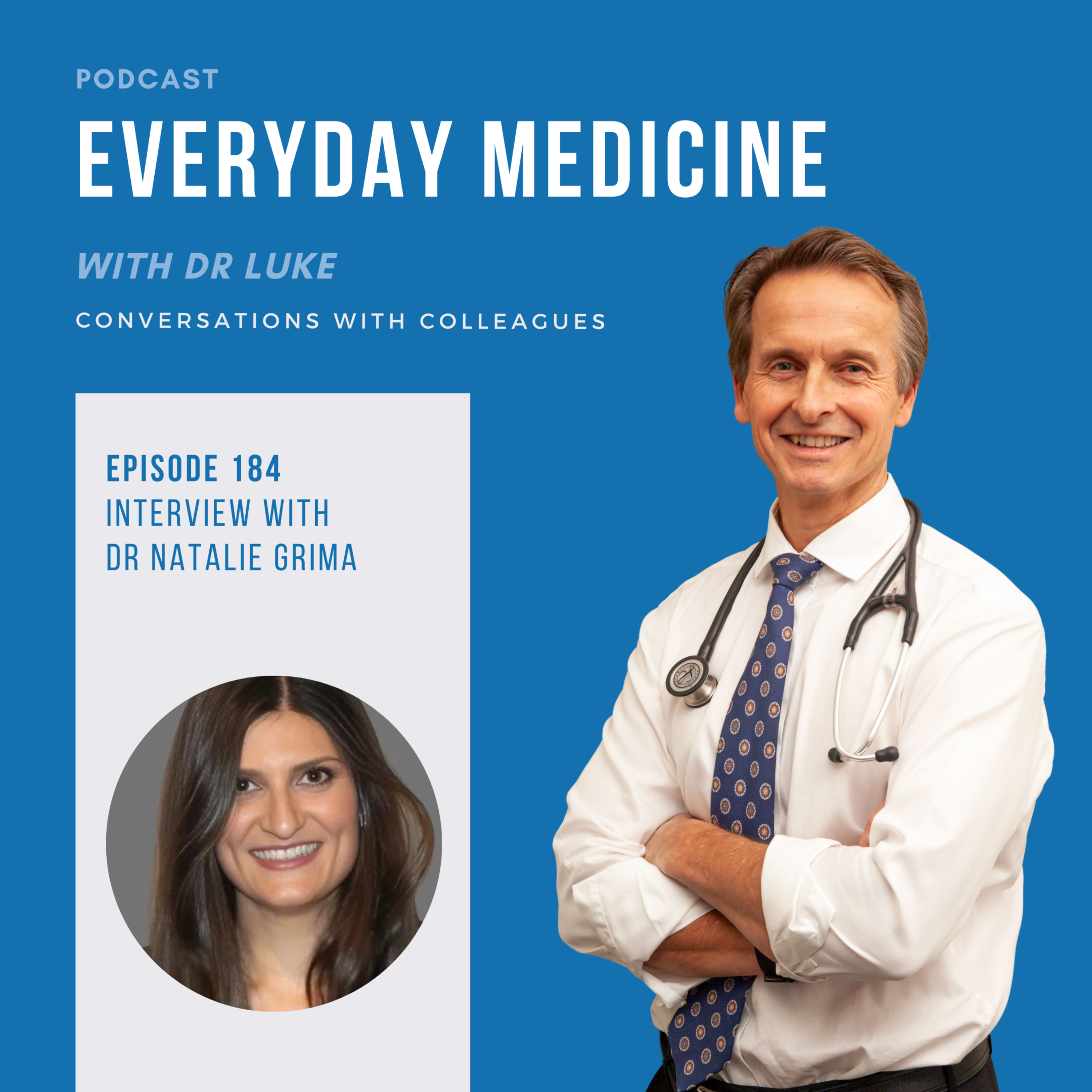
Podcast 184. Memory with Dr Natalie Grima
from Everyday Medicine with Dr Luke Hosted by Dr Luke Crantock
Memory is the cognitive process of acquiring, storing and retrieving information. It's the mind's ability to encode, store and recall experiences and knowledge, allowing for learning, adaptation, and the formation of personal identity. There are different types of memory, including short-term memory, where information is held briefly and long-term memory, where information is held for extended periods. There is sensory memory where information relating to senses such as sight, sound and smell are retained, explicit memory recalling memories or facts and events and implicit memory that influences our behaviour without conscious awareness; for example, like riding a bike or driving your car. Memory storage involves multiple brain regions, but the hippocampus is crucial for forming new memories, especially long-term memories and acts as a gateway for encoding and consolidating memories. The cerebral cortex and prefrontal cortex also participate in memory storage and retrieval. Without memory, our enjoyment of life’s wonderful pleasures and diversity is severely compromised. Unfortunately, memory loss is also a key feature of dementia and is often cited as an early clinical marker of cognitive decline in a patient who is starting to have difficulty coping with the complexity of life, their medication schedule, shopping lists and daily tasks. I was curious to understand how we may improve and maintain our own memories whilst also providing advice in terms of exercises that may benefit our patients coping with early cognitive decline. The history of memory recall starts in Greece with Simonides of Ceos in ~500 BC. Simonides is credited with developing the ‘method of loci’ or ‘room method ‘of memory recall after an earthquake collapsed the roof at a banquet he had just attended, killing all inside. Relying on his visual memory, he was able to accurately identify the corpses by precisely recalling their seating arrangements as he had noticed them while he was reciting poetry to the guests. This method, now popularised by many teaching memory techniques, highlights the value of linking things we need to remember together to enhance their recall. It is also interesting that memory for music and songs is often retained until late in cognitive decline. In an attempt to explore the ideas behind the complex subject of memory in more detail, it was an honour to have Dr Natalie Grima accept an invitation for the podcast. Natalie is a clinical neuropsychologist based in Melbourne and the founder of Neuro Psychological Counselling Australia. She is a senior clinical neuropsychologist at Monash Health and has published widely, completing her doctorate at Monash University and undertaking advanced clinical training at Harvard Medical School. Natalie has a special interest in the diagnosis of dementia, psychiatric conditions and cognitive rehabilitation following acquired brain injuries. She also has an expert knowledge on the subject of memory. Please welcome her to the podcast. References: Dr Natalie Grima: www.neuropychconsulting.com.au https://mocacognition.com/ Simonides of Ceos-Wikipedia
Embed this episode
No transcript yet.