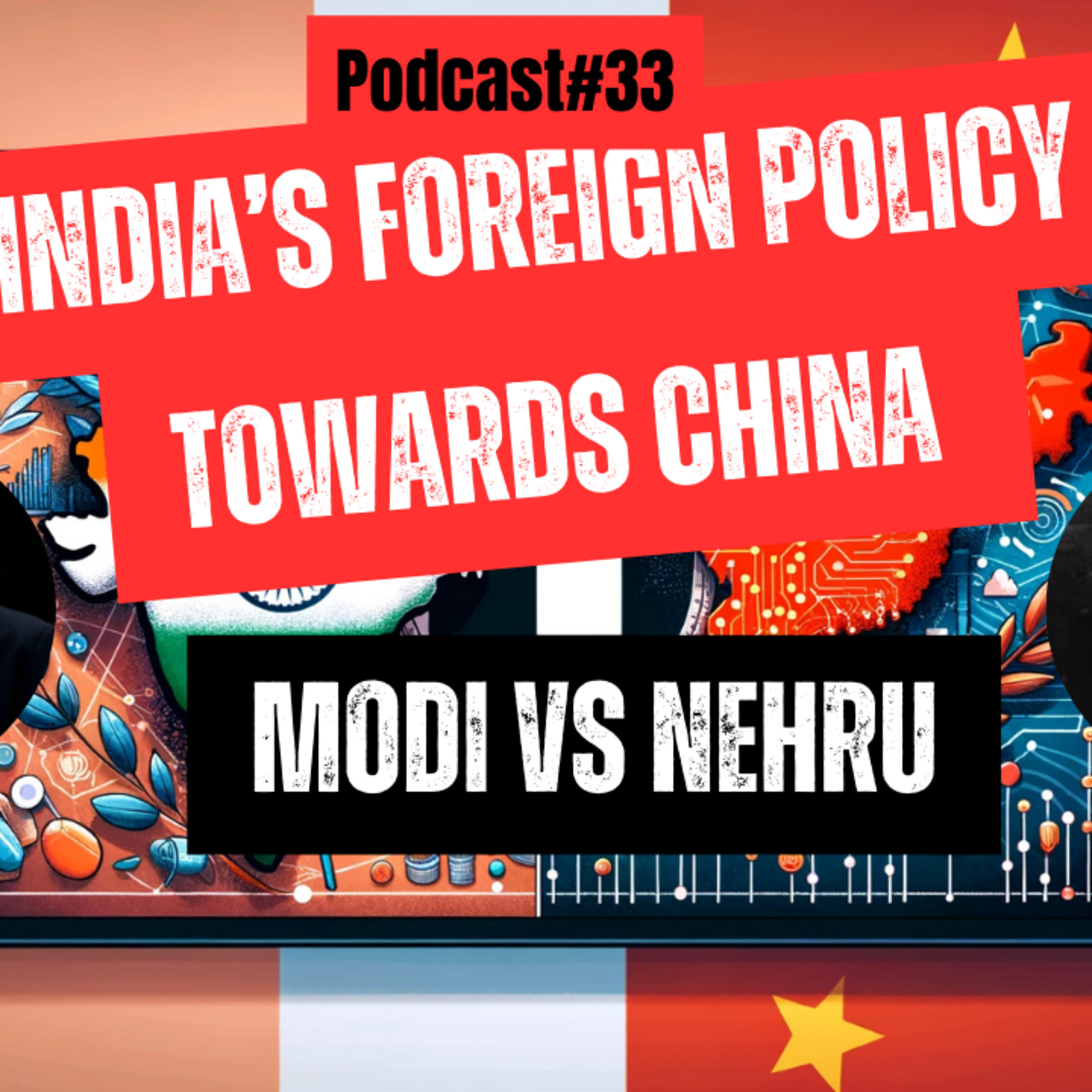
Podcast#33 India's Foreign Policy Towards China | Modi vs Nehru | #narendramodi episode artwork

EPISODE · Dec 31, 2023 · 1H 21M

Podcast#33 India's Foreign Policy Towards China | Modi vs Nehru | #narendramodi

from Emerging World Order 2025 · host Prateek Shukla

Title: India’s China Policy: Modi vs Nehru – A Data-Driven Analysis Introduction: India's foreign policy towards China has been a subject of scrutiny and evolution over the years. Two influential Prime Ministers, Jawaharlal Nehru and Narendra Modi, have each left their mark on India's approach to its neighboring giant, China. In this article, we will conduct a data-driven analysis to compare and contrast the China policies of these two leaders, shedding light on the historical context and key developments. Nehru's Era (1947-1964): Jawaharlal Nehru, India's first Prime Minister, laid the foundation for India's foreign policy. His approach to China was characterized by the principles of non-alignment and peaceful coexistence. These principles emphasized diplomacy and the avoidance of military alliances, as well as the resolution of disputes through peaceful means. Key Data and Facts: 1. Panchsheel Agreement (1954): Nehru played a pivotal role in formulating the Five Principles of Peaceful Coexistence, which became the cornerstone of India-China relations. 2. Sino-Indian War (1962): The border dispute escalated into a full-scale war in 1962, resulting in significant territorial losses for India. This event reshaped India's approach to China. Modi's Era (2014-Present): Narendra Modi, who assumed office in 2014, brought a new vigor to India's foreign policy, including its stance towards China. His approach has been marked by assertiveness and a focus on bolstering India's economic and military capabilities. Key Data and Facts: 1. Economic Engagement: Under Modi's leadership, economic ties between India and China have grown significantly. However, concerns regarding trade imbalances and India's reliance on Chinese goods persist. 2. Military Preparedness: Modi's government has prioritized strengthening India's military capabilities, with investments in border infrastructure and the modernization of the armed forces. 3. Diplomatic Maneuvers: Modi has pursued a pragmatic approach, evidenced by incidents like the Doklam standoff in 2017 and the Galwan Valley clash in 2020. These events showcased India's willingness to protect its interests through diplomatic means and, if necessary, by force. Comparing Modi and Nehru's Approaches: 1. Economic Dimension: - Modi's era has witnessed substantial growth in economic ties, with trade volumes increasing. However, trade imbalances and concerns about dependence on Chinese goods remain. 2. Military Preparedness: - Modi's government has focused on strengthening India's military infrastructure and modernizing its armed forces to better safeguard its borders. - During Nehru's era, the military was ill-prepared, contributing to the 1962 war. 3. Diplomatic Engagement: - Nehru emphasized diplomacy and non-alignment but faced a significant setback during the Sino-Indian War. - Modi's approach combines diplomacy with a firm stance when required, as seen in the Doklam standoff and Galwan Valley clash. Conclusion: India's China policy has evolved significantly, reflecting the different leadership styles and challenges faced by Nehru and Modi. While Nehru's era was characterized by non-alignment and the pursuit of peaceful coexistence, Modi's leadership has witnessed a more assertive and pragmatic approach to protect India's interests. The complex India-China relationship continues to evolve, and the data-driven analysis presented here provides valuable insights into its historical context and current dynamics.

Episode metadata supplied by the publisher feed · Published Dec 31, 2023

Title: India’s China Policy: Modi vs Nehru – A Data-Driven Analysis Introduction: India's foreign policy towards China has been a subject of scrutiny and evolution over the years. Two influential Prime Ministers, Jawaharlal Nehru and Narendra Modi, have each left their mark on India's approach to its neighboring giant, China. In this article, we will conduct a data-driven analysis to compare and contrast the China policies of these two leaders, shedding light on the historical context and key developments. Nehru's Era (1947-1964): Jawaharlal Nehru, India's first Prime Minister, laid the foundation for India's foreign policy. His approach to China was characterized by the principles of non-alignment and peaceful coexistence. These principles emphasized diplomacy and the avoidance of military alliances, as well as the resolution of disputes through peaceful means. Key Data and Facts: 1. Panchsheel Agreement (1954): Nehru played a pivotal role in formulating the Five Principles of Peaceful Coexistence, which became the cornerstone of India-China relations. 2. Sino-Indian War (1962): The border dispute escalated into a full-scale war in 1962, resulting in significant territorial losses for India. This event reshaped India's approach to China. Modi's Era (2014-Present): Narendra Modi, who assumed office in 2014, brought a new vigor to India's foreign policy, including its stance towards China. His approach has been marked by assertiveness and a focus on bolstering India's economic and military capabilities. Key Data and Facts: 1. Economic Engagement: Under Modi's leadership, economic ties between India and China have grown significantly. However, concerns regarding trade imbalances and India's reliance on Chinese goods persist. 2. Military Preparedness: Modi's government has prioritized strengthening India's military capabilities, with investments in border infrastructure and the modernization of the armed forces. 3. Diplomatic Maneuvers: Modi has pursued a pragmatic approach, evidenced by incidents like the Doklam standoff in 2017 and the Galwan Valley clash in 2020. These events showcased India's willingness to protect its interests through diplomatic means and, if necessary, by force. Comparing Modi and Nehru's Approaches: 1. Economic Dimension: - Modi's era has witnessed substantial growth in economic ties, with trade volumes increasing. However, trade imbalances and concerns about dependence on Chinese goods remain. 2. Military Preparedness: - Modi's government has focused on strengthening India's military infrastructure and modernizing its armed forces to better safeguard its borders. - During Nehru's era, the military was ill-prepared, contributing to the 1962 war. 3. Diplomatic Engagement: - Nehru emphasized diplomacy and non-alignment but faced a significant setback during the Sino-Indian War. - Modi's approach combines diplomacy with a firm stance when required, as seen in the Doklam standoff and Galwan Valley clash. Conclusion: India's China policy has evolved significantly, reflecting the different leadership styles and challenges faced by Nehru and Modi. While Nehru's era was characterized by non-alignment and the pursuit of peaceful coexistence, Modi's leadership has witnessed a more assertive and pragmatic approach to protect India's interests. The complex India-China relationship continues to evolve, and the data-driven analysis presented here provides valuable insights into its historical context and current dynamics.

PodParley-generated summary based on available episode metadata and transcript content.

NOW PLAYING

Podcast#33 India's Foreign Policy Towards China | Modi vs Nehru | #narendramodi

0:00 1:21:41

No transcript for this episode yet

We transcribe on demand. Request one and we'll notify you when it's ready — usually under 10 minutes.

Eat to Live Jenna Fuhrman, Dr. Fuhrman Our health is our most precious gift and smart nutrition can change your life. Each month, join Dr. Fuhrman and his daughter, Jenna Fuhrman as they discuss important topics in the world of nutrition. Eat to Live will change the way you eat and think about food. French Your Way Jessica: Native French teacher founder of French Your Way Boost your French listening skills and test your comprehension with this one of a kind series of podcasts. Get the chance to listen to a real conversation between native speakers talking at normal speed AND customise your learning experience through carefully designed sets of questions (2 levels of difficulty) available for download at www.frenchvoicespodcast.com. All interviews also come with the transcript. French teacher Jessica interviews native speakers of French from around the world who share a bit of their life and passion. Where else would you meet in one same place a French yoga teacher based in Melbourne, a soap manufacturer from Provence, or a couple cycling around the world? HOMELAND HOMELAND The Church is a body not a building. It's the bride of Jesus Christ! Jesus is coming back for a mature bride. That means it's time for the church of Jesus Christ to move from milk to meat. This is the hour of maturity!HOMELAND is an announcement that the church is being set free. Only the church has the ability to transform the world. The kingdom's of this world will become the kingdoms of our Lord and Savior!All of creation has been waiting for this moment! Sons and daughters of God are rising up and taking their seat! XXX Tech by SOVRYN Dr. Brian Sovryn The crossroads between technology, sensuality, and metaphysics - and the longest running anarchist podcast in the world! Brought to you by Dr. Brian Sovryn.

Frequently Asked Questions

How long is this episode of Emerging World Order 2025?

This episode is 1 hour and 21 minutes long.

When was this Emerging World Order 2025 episode published?

This episode was published on December 31, 2023.

What is this episode about?

Title: India’s China Policy: Modi vs Nehru – A Data-Driven Analysis Introduction: India's foreign policy towards China has been a subject of scrutiny and evolution over the years. Two influential Prime Ministers, Jawaharlal Nehru and Narendra...

Can I download this Emerging World Order 2025 episode?

Yes, you can download this episode by clicking the download button on the episode player, or subscribe to the podcast in your preferred podcast app for automatic downloads.
URL copied to clipboard!