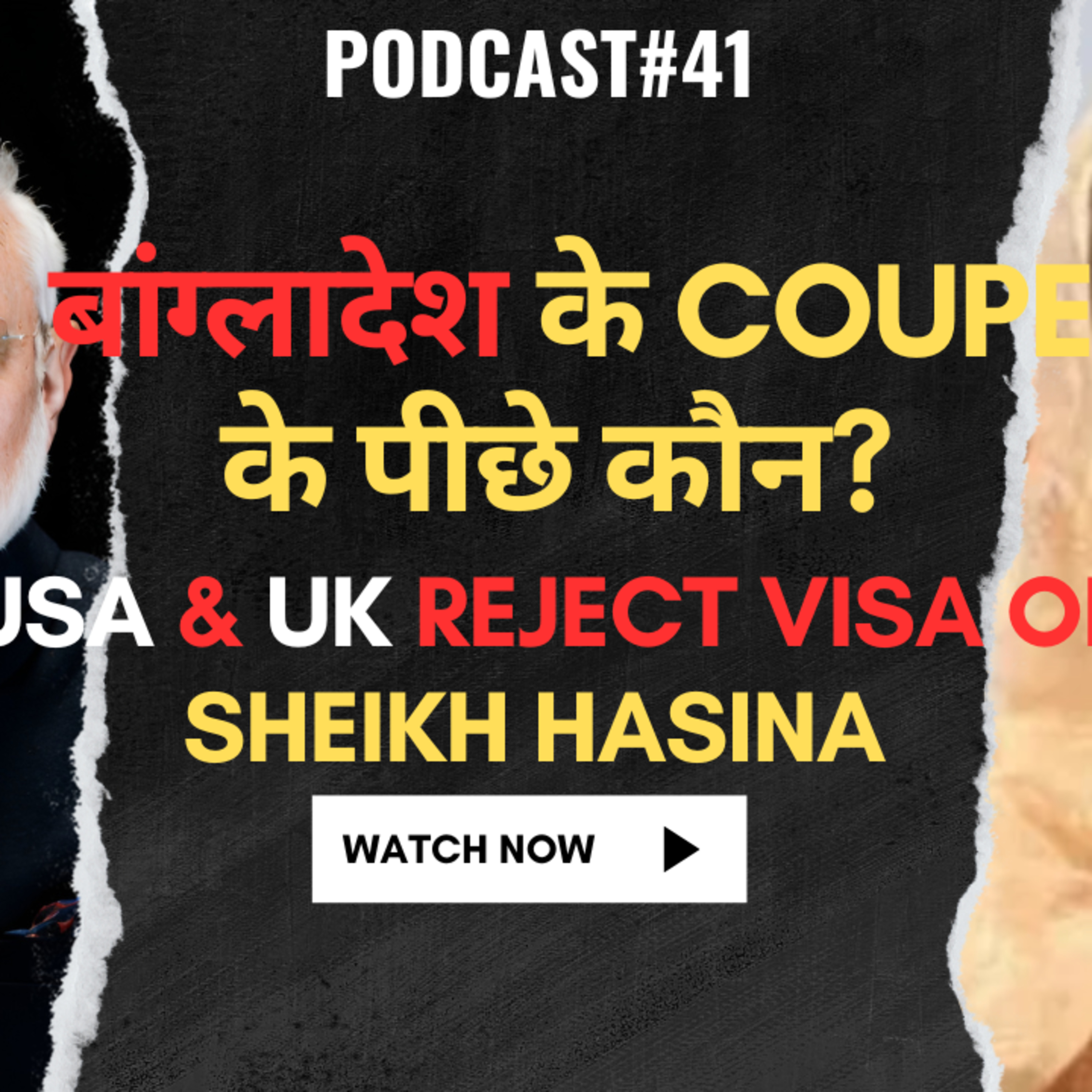
Podcast#40 Behind the Curtain: Bangladesh's Political Struggles | Language Hindi episode artwork

EPISODE · Aug 13, 2024 · 1H 7M

Podcast#40 Behind the Curtain: Bangladesh's Political Struggles | Language Hindi

from Emerging World Order 2025 · host Prateek Shukla

Bangladesh's political turmoil is rooted in a complex history of rivalry, political corruption, and power struggles between its two major political parties: the Awami League (AL) and the Bangladesh Nationalist Party (BNP). The rivalry between these two parties, led respectively by Sheikh Hasina and Khaleda Zia, has shaped the nation's political landscape for decades. ### Key Factors Behind the Current Turmoil: 1. **Historical Rivalry:** - The AL, led by Sheikh Hasina, and the BNP, led by Khaleda Zia, have alternated in power since the 1990s. Their personal and political animosity has driven much of the political instability in Bangladesh. The two leaders have deep-rooted grievances, with both accusing each other of corruption, authoritarianism, and election rigging. 2. **Election Controversies:** - Bangladesh’s elections have been marred by allegations of rigging, voter suppression, and violence. The most recent elections in 2018 were particularly contentious, with the AL winning a landslide victory amid accusations of widespread electoral fraud. The BNP and other opposition parties claimed that the elections were not free or fair, leading to a crisis of legitimacy for the ruling party. 3. **Authoritarian Tendencies:** - The AL, under Sheikh Hasina, has been accused of consolidating power and undermining democratic institutions. The government has cracked down on opposition leaders, activists, and journalists, using laws such as the Digital Security Act to stifle dissent. This has raised concerns both domestically and internationally about the erosion of democracy in Bangladesh. 4. **Judicial and Legal Manipulations:** - The legal system in Bangladesh has been used as a tool for political repression. High-profile cases against opposition leaders, including Khaleda Zia, who was convicted and imprisoned on corruption charges, are seen by many as politically motivated. The judiciary’s independence has been questioned, with allegations that it is being used to target political opponents. 5. **Civil Unrest and Protests:** - There have been ongoing protests and strikes led by the BNP and other opposition groups, demanding fair elections, the release of political prisoners, and an end to government repression. These protests have often been met with a heavy-handed response from security forces, leading to violent clashes and further destabilization. 6. **Role of the Military:** - The military in Bangladesh has historically played a significant role in politics, including staging coups and backing certain political leaders. While the military is currently not directly involved in governance, its role as a potential power broker remains a concern, especially if the political situation deteriorates further. 7. **Economic and Social Issues:** - Bangladesh’s economic growth has been impressive, but it has not been evenly distributed. There are growing frustrations over corruption, inequality, unemployment, and poor public services. These issues fuel discontent, particularly among the youth, and contribute to the broader political instability. 8. **International Concerns:** - The international community, including key allies like India and Western countries, is concerned about the trajectory of Bangladesh’s democracy. However, geopolitical interests often lead to muted responses, with some countries prioritizing stability and economic ties over pushing for democratic reforms. ### Current Situation: As of now, Bangladesh is facing a tense political environment with no clear resolution in sight. The government continues to crack down on opposition activities, and the BNP, despite being weakened, remains a significant force capable of mobilizing large-scale protests. The prospect of another contested election could further exacerbate the situation, leading to more violence and instability. The underlying issues—political rivalry, authoritarianism, economic inequality, and the manipulation of democratic processes—remain unaddressed, suggesting that Bangladesh’s political turmoil is likely to persist in the foreseeable future.

Episode metadata supplied by the publisher feed · Published Aug 13, 2024

Bangladesh's political turmoil is rooted in a complex history of rivalry, political corruption, and power struggles between its two major political parties: the Awami League (AL) and the Bangladesh Nationalist Party (BNP). The rivalry between these two parties, led respectively by Sheikh Hasina and Khaleda Zia, has shaped the nation's political landscape for decades. ### Key Factors Behind the Current Turmoil: 1. **Historical Rivalry:** - The AL, led by Sheikh Hasina, and the BNP, led by Khaleda Zia, have alternated in power since the 1990s. Their personal and political animosity has driven much of the political instability in Bangladesh. The two leaders have deep-rooted grievances, with both accusing each other of corruption, authoritarianism, and election rigging. 2. **Election Controversies:** - Bangladesh’s elections have been marred by allegations of rigging, voter suppression, and violence. The most recent elections in 2018 were particularly contentious, with the AL winning a landslide victory amid accusations of widespread electoral fraud. The BNP and other opposition parties claimed that the elections were not free or fair, leading to a crisis of legitimacy for the ruling party. 3. **Authoritarian Tendencies:** - The AL, under Sheikh Hasina, has been accused of consolidating power and undermining democratic institutions. The government has cracked down on opposition leaders, activists, and journalists, using laws such as the Digital Security Act to stifle dissent. This has raised concerns both domestically and internationally about the erosion of democracy in Bangladesh. 4. **Judicial and Legal Manipulations:** - The legal system in Bangladesh has been used as a tool for political repression. High-profile cases against opposition leaders, including Khaleda Zia, who was convicted and imprisoned on corruption charges, are seen by many as politically motivated. The judiciary’s independence has been questioned, with allegations that it is being used to target political opponents. 5. **Civil Unrest and Protests:** - There have been ongoing protests and strikes led by the BNP and other opposition groups, demanding fair elections, the release of political prisoners, and an end to government repression. These protests have often been met with a heavy-handed response from security forces, leading to violent clashes and further destabilization. 6. **Role of the Military:** - The military in Bangladesh has historically played a significant role in politics, including staging coups and backing certain political leaders. While the military is currently not directly involved in governance, its role as a potential power broker remains a concern, especially if the political situation deteriorates further. 7. **Economic and Social Issues:** - Bangladesh’s economic growth has been impressive, but it has not been evenly distributed. There are growing frustrations over corruption, inequality, unemployment, and poor public services. These issues fuel discontent, particularly among the youth, and contribute to the broader political instability. 8. **International Concerns:** - The international community, including key allies like India and Western countries, is concerned about the trajectory of Bangladesh’s democracy. However, geopolitical interests often lead to muted responses, with some countries prioritizing stability and economic ties over pushing for democratic reforms. ### Current Situation: As of now, Bangladesh is facing a tense political environment with no clear resolution in sight. The government continues to crack down on opposition activities, and the BNP, despite being weakened, remains a significant force capable of mobilizing large-scale protests. The prospect of another contested election could further exacerbate the situation, leading to more violence and instability. The underlying issues—political rivalry, authoritarianism, economic inequality, and the manipulation of democratic processes—remain unaddressed, suggesting that Bangladesh’s political turmoil is likely to persist in the foreseeable future.

PodParley-generated summary based on available episode metadata and transcript content.

NOW PLAYING

Podcast#40 Behind the Curtain: Bangladesh's Political Struggles | Language Hindi

0:00 1:07:20

No transcript for this episode yet

We transcribe on demand. Request one and we'll notify you when it's ready — usually under 10 minutes.

Eat to Live Jenna Fuhrman, Dr. Fuhrman Our health is our most precious gift and smart nutrition can change your life. Each month, join Dr. Fuhrman and his daughter, Jenna Fuhrman as they discuss important topics in the world of nutrition. Eat to Live will change the way you eat and think about food. French Your Way Jessica: Native French teacher founder of French Your Way Boost your French listening skills and test your comprehension with this one of a kind series of podcasts. Get the chance to listen to a real conversation between native speakers talking at normal speed AND customise your learning experience through carefully designed sets of questions (2 levels of difficulty) available for download at www.frenchvoicespodcast.com. All interviews also come with the transcript. French teacher Jessica interviews native speakers of French from around the world who share a bit of their life and passion. Where else would you meet in one same place a French yoga teacher based in Melbourne, a soap manufacturer from Provence, or a couple cycling around the world? HOMELAND HOMELAND The Church is a body not a building. It's the bride of Jesus Christ! Jesus is coming back for a mature bride. That means it's time for the church of Jesus Christ to move from milk to meat. This is the hour of maturity!HOMELAND is an announcement that the church is being set free. Only the church has the ability to transform the world. The kingdom's of this world will become the kingdoms of our Lord and Savior!All of creation has been waiting for this moment! Sons and daughters of God are rising up and taking their seat! XXX Tech by SOVRYN Dr. Brian Sovryn The crossroads between technology, sensuality, and metaphysics - and the longest running anarchist podcast in the world! Brought to you by Dr. Brian Sovryn.

Frequently Asked Questions

How long is this episode of Emerging World Order 2025?

This episode is 1 hour and 7 minutes long.

When was this Emerging World Order 2025 episode published?

This episode was published on August 13, 2024.

What is this episode about?

Bangladesh's political turmoil is rooted in a complex history of rivalry, political corruption, and power struggles between its two major political parties: the Awami League (AL) and the Bangladesh Nationalist Party (BNP). The rivalry between these...

Can I download this Emerging World Order 2025 episode?

Yes, you can download this episode by clicking the download button on the episode player, or subscribe to the podcast in your preferred podcast app for automatic downloads.
URL copied to clipboard!