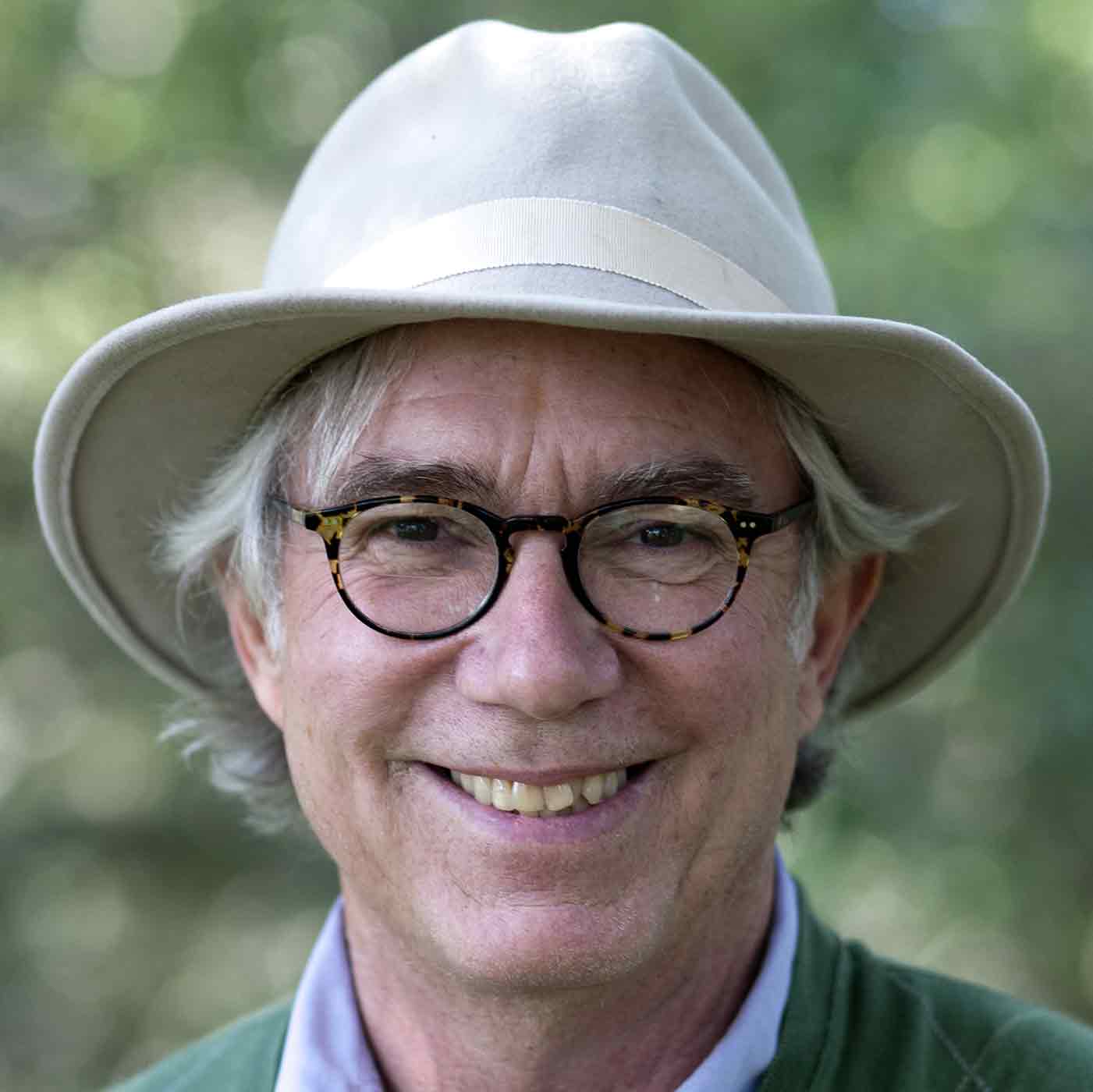
Hi. Oh, good. Thanks for calling. Okay, I'll just put a title on it. Maybe I'll end up putting this on my blog, too. This is Rudy Rucker on June 26, 2015, and I'm being interviewed by Doug Lane for his podcast, which used to be called Diet Soap, but now it's called, what is it called now? Right, Zero Squared. Well, yeah, I have my phone on speakerphone, but it's probably going to suck. Tetralogy.
Thanks, Doug. The fact that you do a podcast has been sort of an inspiration for me that I always wanted to get one together myself, so it's nice. Right, journals, 1990 to 2014. It spans 25 years. Yes, it is. It's something, it came to exist because I've been keeping electronic journals ever since 1990. That was, you know, sort of when I got ramped up into the computer thing. And so I thought it would, I always had in the back of my mind that I would make a book out of these journals. When I was young, I liked Camus' journals.
I liked Kafka's journals, and I liked Andy Warhol's journals, and I thought it would be nice to have a book in my journals. And I also thought, since I have some time, I might as well do it myself as opposed to letting someone else do it. So it was a lot of words. It was like 600,000 words. And usually a novel is like 100,000, so it was quite long. So then I went over it over the last really about three years. I went over it about four times, and then I'd get tired of it, and then I'd come back and go over it. And then I enlisted a couple of guys to proofread it, and then I cut it down to 400,000 words.
Then I published it myself as a paperback, hardback, and e-book. So that right now works? Yeah. I think it was around 2014 or 2013. It was when Turing & Burroughs came out. My main publisher was Tor Books, and I did about, I don't know, maybe eight books in a row with them. And I had a good relationship with them, but then there's this death spiral thing where the sales were going down and they were...
getting less interested in doing it and maybe well not that they ever promoted them but you as a tour author know what that's like uh but then uh and David Hartwell at my editor there was always very supportive but you know it's not entirely his decision of course and then uh I did a novel, Jim and the Flims, and they didn't want to do that, so I took that over to Nightshade. And then Hartwell did pick up one more of my books. It was my autobiography, Nested Scrolls. And there was some hope that that might make it over to the mainstream, because it's a fairly interesting book about a writer's life. But it didn't catch on. And then at that point, Tor said, well, we just can't publish your books anymore. And I had thought I'd found a new home at Nightshade, but then they more or less went bankrupt, or they got bought out by somebody else. And so then I thought, well, screw it. I think I can figure out how to publish myself.
It's not that hard. I mean, it's hard in the sense that I was a computer science professor and it took me seven months to learn how to do it. It's not trivial. But I did figure it out. So now I'm selling the paperbacks via Amazon and making my own e-books too. And the downside is that I don't get much promo that way. But again, I wasn't getting much promo. Anyway, I guess the big thing is that you don't really get onto the shelves of bookstores. And in principle, they can order them, but they won't do it.
So that's kind of, and you don't get reviewed, really. Locus will review them, and maybe a few scattered people review them. The other downside is you don't get a book advance, but the strategy that I figured out for that is now I do a Kickstarter for each of my books, and that way I'm able to raise maybe $5,000 or $6,000 or $7,000, and that's pretty much what I was getting as my advances towards the end of tour, so that's okay. And the sales are less, but of course I get a lot more per unit than I would if it was being filtered through a publisher. Yes.
Right, they're an imprint of Skyhorse, yeah. And that's probably not so bad. Well, I don't think I would go with Nightshade Skyhorse. They're so small, they don't really, I don't know, they don't have much of a presence. And I had a lot of trouble getting paid for my Nightshade book. It took a long time. And of course, they were in Dire Straits now, and probably with Skyhorse running the shop, it wouldn't be so hard now. There's also a question, would Skyhorse buy a book from me? And my books there are...
I mean, aficionados of my work say, you know, I'm at the top of my form, and they're, you know, even better than they ever were, but for, like, a commercial bread-and-butter science fiction publisher, they're not really looking for literary, highbrow, esoteric, countercultural, bizarre novels, and this is what I tend to write, and you yourself do that to some extent, so. Yeah, I think maybe in my future, too, because I had a shot with Tor, I had one book, didn't get a second shot, and now they put the book by-shaded novel, and book. Right.
yeah well also something with publishers i look at their list of the books they have and if i don't see any books that are really very much like my book then i'm not too optimistic there's also a matter of a you have to wait you know maybe six months maybe eight months before you hear back from them and there's this going around hat in hand thing which i'm just tired of at my age you know it's like fuck that and then i mean i'm just begging them for like a fucking scrap off their table and i can get the same money with kickstarter and So, you know, I mean, I'm writing a novel now, and I probably will offer it to Tor. Because if, you know, I'd get less money in the end that way, but, you know, who knows? There's always, it's a bit of a lottery with a publisher. There is more of the possibility of it catching on, you know, because they're putting it out there. So this novel I'm working on now, it's called Million Mile Road Trip.
It has to do with something that's always... I like taking road trips with my wife, and then there's always, like, the Wild West isn't big enough. We've driven Monument Valley, and we did Nevada, and wouldn't it be great if you could just go, and you get California, and that's great, and then you hit the ocean. Wouldn't it be great if you could just keep on driving? That's sort of a fantasy I've had my old life. And people have touched on this. I mean, there are books with endless worlds where people drive around. Terry Pratchett had a world a little bit like that. And then...
Charlie Strauss had a world a little bit like that. But, you know, they each did it in their own style, and I'd be doing it in my own way. And I'm thinking of trying to make it be a young adult book. And my characters are, well, the main two just graduated from high school, and the younger brother of one of them is along, too. He's 13. But then it's a whole thing with the genre. You think about YA. I mean, that wasn't really even a word people used, of course, 15 years ago. They were just some books that had young people in them. And then sometimes, you know, they would be popular with young people.
And then, I mean, if you totally get into the strictures of a, you know, true blue YA, which is, you know, not something I would do, of course, but, you know, you're in high school, you're talking about your first period, you know. Yes. Yeah, it's possible. Yeah. I mean, and you could say Catcher in the Rye is young adult. You could say Huck Finn is young adult. Yes. Yeah. Yeah. I guess you're right. Well, that's, yeah, that's not a type of book that I want to write.
But I had this thing. I just have to tell you because I think it's amusing. One of the characters is a flying saucer, and I've been in turmoil, sort of grappling with myself. Should I let my 13-year-old have sex with a flying saucer? I mean, once I thought of that, it just seemed like such a great idea. The flying saucer has this tiny little aperture on her lower undersurface. She's sort of floppy and rubbery. And I was wrestling with the devil. You can't do that, Rudy. And then I thought, you know, the book has to be fun for me. It has to be fun for me. It has to make me laugh. So now he did it with her. And the scene I'm working on right now, they're in this car, and they're going to drive 100.
you know, a million miles, and the saucer's planted herself to the ceiling of the car, and then she comes back and sits on his lap, and this guy, this 13-year-old Scotty, looks up at the ceiling, and there's this clutch of eggs that are attached to the ceiling. It's going to be fun when the eggs hatch. Well, to some extent, you are looking through rose-colored glasses, because the whole point of Cyberpunk was a rebellion for the fact that the market was just full of bloated crap, you know, and the way it pretty much is now. It was, you know, that never changes, you know. People like these big fat series, you know, and they like,
fantasy there's more fantasy than there used to be but they like these epics and they like having heroes who are in the space navy and they're aristocrats and it's just you know corny crap and uh so there's always that's always the lion's share of the market and the the people who read science fiction well if you go to cons i don't know if you've ever gone to an sf con uh it's it's sort of a sobering experience because you'll find that a lot of the people there aren't really people that you can imagine yourself writing for though now and then some of them have in fact read your books but um One thing that's happened over the years is there's been more fantasy. It's been sort of eating our lunch. And then the other thing that's just I've noticed in the last five to ten years is mainstream is eating our lunch. I mean, like The New Yorker today. I mean, last week's New Yorker. Like, there's a story in there called, I think it's called Grow Light People. And it's a science fiction story, you know. And the front page of the...
New York Times Sunday book section, really, I would say one week out of two, well, maybe I'm exaggerating, but one out of every two novels, it seems like, is basically a science fiction novel. But they don't call it science fiction because, I don't know, well, science fiction, it's just saying this is for morons, you know. But they call it speculative or futuristic or visionary. And it's become a way to write about the present because the present, everybody has the sense. that, you know, it's slipping away from us. William Gibson, of course, he's so great at turning these bon mots, these phrases, and he says, well, science fiction is his way of getting a little distance on the present, you know, just backing off just a little bit and a way of trying to come to terms with it. And that's sort of what I'm doing with transrealism also, a way of just dialing up the weirdness of the present to 11, and then we're sort of able to notice more what we're actually doing. There's things we do that...
It's like we're asleep. It's like we're sleepwalking. I mean, everybody you see is carrying a cell phone and looking at it. And if you had done a jump cut from 19, I don't know, even from 2005 to now, it would really freak you out to see that. But now everybody's doing it. It's always been this way. It's not surprising. And that's where if you do science fiction and you do another jump cut, like maybe everybody's wearing Google Glass shades, you can't see their faces, something like that, it sort of snaps you out of your sort of trance and you'll notice things. Right.
So that's, I mean, as a true blue science fiction writer, I have a lot of resentment and bitterness towards, like every writer, who are always resentful and bitter, that the, you know, these newcomers are getting, you know, they're getting patted on the head, you know, the big critics, the mandarins, you know, they're totally accepting them. But, you know, I'm like the old style, you know, the bad person who writes science fiction, and they're not going to even look at what I write, you know. Who knows? It's, I mean, publishers, it's the thing like that that'll happen. They'll give somebody one shot. You know, it's like they're buying. Nobody knows. It's just, even editors have told me this. They just never really know. It's just so chaotic. It's just so chaotic in the mathematical, physical sense that it's really impossible. It's absolutely no way to predict what's going to catch on. And then, but they publish these books, and that's what people want to write these days, and people like reading them. And, you know, some of them do catch on. I mean, like Jennifer Egan, her books have a...
a science fictional quality. And that guy Steingart, Super Sad Love Story, that's a science fiction book. And Updike wrote one or two. Yeah, so they can be commercially viable. And the thing is, if you stay in the SF bin, maybe you're guaranteed of selling 2,000 copies. And if you go out in the mainstream, I think it's entirely possible that you might sell 200. I mean, people really take a bath there sometimes.
You seem to me actually like somebody who would have a chance of getting out of the SF category and being marketed as mainstream. I mean, you have that literary quality. I mean, is that something that you've thought about, how to do that? Yeah, I definitely want to do that, but I don't follow my contacts. Everything I know is in the field. Yes. Yes, the journals. 1990 to 2014. Yeah, I was a sophomore in college. Yeah. Well, that's an interesting question. It's, you know, highly subjective. I think in 1990, we...
We barely had email. We barely had the web. It really had just started, and it was very hard to do that stuff. You needed a modem, you know, if you remember them. And they made that funny noise. And you weren't really browsing the web at all. So I think the Internet is really, I guess that's the big story over the last 25 years, and the terrorism. But from 65 to 90, that's also quite a jump. It does. To me, it seems...
Like that was maybe longer, but part of this is the way that the human mind works, which is that the first half of your life feels maybe five times as long as the second half of your life. You know, it's a sort of psychological phenomenon. Right. Things are new, and you're being surprised. And so, I mean, the computers weren't there at all in 65, and they didn't, well, they really only started about 86, 87, you know, so there was... Oh, well, that's not true. Well, they're starting and starting. I mean, in my life, I didn't own a computer, like a word processor, until...
Oh, about 84. I wrote my first computer. Yeah, that was like maybe the first home computer, but they were very expensive. I wrote my first 10 books on a typewriter. So, I don't know. It's a tough question. Let's go to the next one. Yeah, that was actually almost a high point of my career, right around 90, 92. I was getting $20,000 advances. I was doing well.
Yeah, the Mondo story. Yeah, you had said you were curious about my exact role with Mondo. Working for them, that wouldn't be accurate. I knew them, and they... Actually, I was the person they got the whole idea of cyberpunk from. It was a word. They vaguely heard it, but they didn't know what it was. And as soon as I got out here, I came out here in 86, and then Allison Kennedy and...
are you serious ran into space on san pablo avenue in berkeley and i went there and i gave a talk on cyberpunk and they they totally got off on it because before that mondo had mainly been about psychedelic drugs and then they had this idea wow this this computer stuff this is kind of sort of psychedelic because you're you're reaching outside of your mind you know and they like to talk about hacking but you know none of them knew jack shit about using a computer i mean later they hired you know some graphic artists who knew a lot about it but like are you serious and allison they you know zilch so then uh I mean, the idea, you know, hacking would be to take, you know, like ecstasy or something and then imagine that you were doing telepathy with your friends.
It wasn't exactly assembly language. Yeah, right. So I kind of turned them on to that. And then they got me to do a few articles for them. Not a large number, because it was frustrating to write for them. Allison, it's just hard to overstate what a marginal kind of personality she had. I mean, likable. I enjoy it. She was exciting. But I'd send her an article, she'd lose it. I'd send it again, she'd lose it. Then they were going to publish the issue in a week, and then she'd write me, well, this article, you have to rewrite it. There's something wrong with it.
And then I'd rewrite it, I'd send it, she'd lose that. And then she'd say I was going to get paid, but she never paid me. So it wasn't a market where I was, after a few times like that, I liked the glamour of being associated with them. They had great parties. They rented this wonderful old house in Berkeley, this enormous old craftsman-style house. And a lot of them lived in there. R.U. lived in there. Allison lived there. Heidi Foley, I think she was living in there. She was with Bart Nagel, who then started doing the art. And he was really the first person that was using graphic tools for a magazine. Everybody else was still doing pace-up. And he was doing...
doing stuff like... uh quark and things like that yeah so that was awesome and my daughter georgia actually went and became their intern and allison was very very very paranoid about the cia you know as if the cia would care about them but uh but she liked the idea of hiring my daughter because she knew i was safe i was a cyberpunk you know i think we had smoked pot together so she figured my daughter wasn't going to be a spy you know and so and that then georgia went on and her career ended up being a graphic designer so it was a really valuable experience for her and she enjoyed it too although again there was that the same kinds of issues that i had were They'd finish an issue, and then Allison would want to throw out the design. But over the years, I must have done five or six articles for them. And then the part where I became really sort of linked with them, the magazine was sort of dying. What happened? Wired showed up, and they were eating Mondo 2000's lunch. That's the second time I've used that expression, eating their lunch. Because you couldn't really buy an ad in Mondo, because Allison, she had this alternate personality she'd put on. She called herself Anne Venable when she was being the advertising exec at Mondo. Then she'd always somehow end up starting an argument with the people who just wanted to buy an ad.
And so Wired was just, you know, steamrolled them. But, you know, at the first, at the very start, there were similarities between them. You know, now Wired has kind of mutated into something a little less radical. But, so, let's see, what was the point I was about? Oh, yeah, the part, go ahead. Well, the part where I finally really got linked with Mondo was they wanted to do a book called The Mondo 2000 User's Guide to the New Edge, and so Allison got quite a good contract for it with Harper Collins in, I think they were working out of San Francisco then. And then R.U. and her and Bart were going to put it together, and then they realized they just were unable to do that. That wasn't something in their skill set. The idea was to take material, by then they had, I don't know, 15 issues, and somebody had to go through the issues and take out articles and cook them down and put, you know, cool little, you know, full-page, half-page bits out of there.
And then they said, well, we need a mathematical logician. Let's go to Rudy, because I have a PhD in mathematical logic. And so then I knew how Allison acted. I knew she was not going to pay me whatever she promised me to pay me. So I sticked my agent on her and made her pay me in advance, which really pissed her off. But she had gotten a $50,000 advance, and I wanted whatever. I wanted $10,000 or $15,000. So then I did it, and it was fun doing it. And it was a very cool book. And it made the cover of Time magazine, which was just, that was insane.
I mean, I felt like such a success. I'd brought cyberpunk to the West Coast, and we were on the fucking cover of Time, you know, and cyberpunk in big letters. They had a picture of one of the Mondo people there, Heidi Foley, and they interviewed me a little bit, and I said something like, I don't really like psychedelic drugs. And then my wife's father, you know, he fixated on that. He says, you don't really like them. You can look it up in the journals. I would have to say maybe 92, maybe something like that. They're my age also, yeah.
Yeah, it was hippie. And then I went through sort of a punk phase more than the others. But I'm the oldest cyberpunk. I'm older than Gibson, and he's older than Sterling. And then Shirley, I think, is about the same age as Sterling. Right.
Well, that's nice to hear you say that. I don't generally think of that as being the case. Cyberpunk really did catch on. The word people really dug it. The reason it was such a powerful word is that it's a synthesis. It takes cyber. Everybody can see that computers are taking over. People are being like machines. Machines are being like people. And then there's this redeeming thing that up until then, computers had always been boring, things that are run by dweebs, some yelling face on a giant screen on a wall, like in those crappy Hollywood movies, and our Star Wars with everybody wearing these dumbass pajamas.
english accents and then but we said let's put punk on it and let's have sex and drugs and rock and roll and let's be counter-cultural and let's have it be funky and street and then people really got off on that because then they said well this we're about to have our souls stolen by the machine but cyberpunk if we come at it that way then we're that's salvation Oh, very much so. Where I was coming from, when I was in high school and in college, it was the Beats, the Beatniks. It was Kerouac, Ginsburg, Burroughs. And they were totally my heroes. And I dug that they knew each other, they hung out, and they changed the country. They changed people's way of seeing reality. And I always thought, that's what I want to do. I want to be like those guys. I want to have this thing. And I just, I still can't believe that it worked out. It was a really...
I once asked Ginsburg, how did you guys get so much ink? And he just says, fine writing. So I wrote as hard as I could. And then Sterling, he really got the ball rolling. And he latched onto my work, which appealed to him. And then, of course, Gibson was just this super bestseller. I've even worked out this analogy where Gibson was sort of like Kerouac. He was the writer who had huge sales. And then Sterling was more like Ginsburg in that he had this polemical side. And then Shirley was more like Gregory Corso, this completely whacked out.
you know, enchanted person. And then my role would be Burroughs, because I was the professorial one, the oldest, the dry wit. That's me. That works for me. John. Yeah, yeah. Well, Kerouac's very cool. Gibson is very cool. It's hard to be cooler than Bill. I don't know. He's confused. Yeah, she said Linklater should be shot.
Oh, no, I liked it a lot. I liked it a lot. Well, it's... Well, the people of my generation... Well, the music, you know, it wasn't music that we were listening to a lot, you know. But I liked, you know, the teenagers getting drunk and stoned. I mean, what's not to like about that, you know? And I had some sort of...
evenings a little bit like that in high school. We never had that much fun. We didn't even have pot in high school. We were just driving around and looking for parties and beer. But yeah, that was a very cool movie. But it was the new generation, and it was interesting to see. I re-watched it not so long ago, and I found it really holds up. Movies like that don't always hold up, but I watched it about a year ago, and I really liked it. Boyhood also. I really worship that latest movie, Boyhood. Oh, it's unbelievable. Yeah.
Yeah, I mean, well, I'm 69, so you want to get the late work, the late style. And I've gotten, well, I had this turning point when I was 50. Before that, I was drinking and smoking pot, and then I stopped when I was 50. And that's maybe changed my personality, or to do that, I had to change my personality a little bit and be a little bit less enamored of shocking people. I do like shocking people anyway. I mean, like, look at this thing with the UFO fucking the boy.
And maybe, I'm still bitter and against the establishment, but there's something, I feel like I've gotten better at depicting people in an empathetic way. And the cyberpunk thing, you can't just keep writing that. I went back to it in my novel, Post-Singular, and that was... I thought of that as a strong cyberpunk novel. It didn't really quite get recognized as that, but it did pretty well. One thing I've done with some of my books, just because I wanted to be read, I put post-singular, and for that matter, the where, Tetralogy, there online as free Creative Commons books. It seems that it doesn't really cut down your sales as much as you might imagine that it would. Cory Doctorow is the great apostle of doing that. It seems to have worked pretty well.
So I like the cyberpunk thing. And, you know, there's always, you know, I still have that basic bad attitude, you know, that sneering contempt for everything that we hold sacred. That's never going to go away. But I like to sort of tie it to my actual real life. Though there with transrealism, what happens, Updike sort of had this problem too. I mean, once you've written about a certain time period in your life, you don't really want to do it again. Maybe twice, but, you know, you can't just do it over and over. I mean, some authors will do that.
You don't want to endlessly write about your relationship with your father, novel after novel after novel, or your mother. But I've sort of burned through most of my life in terms of trans-realizing it. So now I'm actually closer to a traditional novelist in a realist novel in that I will model my characters and scenes on things that I have encountered, but I won't necessarily specifically have it be at a certain stage of my life. Like mathematicians in love, it might be hard to point to a specific character and say, that's Rudy. I mean, there's aspects of me in both of the protagonists, but it's not like in an earlier book of mine, like All the Visions, you know, where it's sort of, you know, a building's romance about me growing up in Louisville, Kentucky. I know that was Secret of Life, sorry. Yes. Well, it is sort of a power fantasy, and it's better for me not to nurture that too much. It's the thing, like if you step up, baseball analogy, if you step up and you plan to hit a home run, you're going to swing too hard, and you're going to strike out.
I would say, I thought David Eggers' book, not so long ago, The Circle, that seemed to me like a book that could have a big effect on society, though. I don't know if it really caught on. In a way, it was sort of making fun of Google, and I was at Google a month or two after that, giving a talk about something, and then I said, have any of you read The Circle? Nobody had read it. They didn't want to read it. Yeah, that was huge. I still laugh when I think about that book. He had such funny things in there.
I'd be happy with 10,000 adults. Oh, yeah, me too. Well, the other thing, it's talking about writer's fantasies, is the one where, the sort of afterlife fantasy, where when you die, suddenly you're going to be like Raymond Chandler. They're going to excavate, you're just stunning, strangely neglected masterpieces. But I've sort of let go of that one, too, because, well, mainly, it's finally sank in that I'm really not going to be there to enjoy that if it happens.
It's sort of like somebody who's very strictly religious, and they say, well, I'm going to flagellate myself every day so I can get into heaven, and then you die, and whoops, there's no heaven. Yeah, it's better to let go of these things if you can. All right. We'll go back to, if you've given up on post-humanism, and you're no longer aiming to make everyone into your zombie and change the world, what are you aiming at? Why do I still write? Well, I write because I enjoy it. It's a craft that I've gotten good at over. I've been doing it for...
Well, I started when I was about 30, so I've been doing it nearly 40 years. And it's something, I'm like a weaver or a painter or a sculptor. I've gotten very skilled at doing this, and it's pleasing to me to exercise the skill. It's something, it's what I do in my time. I don't, you know, I don't have that much to do. I'm not raising children anymore. I don't have a job. But I enjoy doing this. It satisfies me. And I know that I bring pleasure to a few, you know, there's a few aficionados that are going to appreciate it. And even in the background, there's a sneaking feeling that I'd like to leave this monument, you know.
It'll be there. And I get email, oh, not every day, but certainly once or twice a week from somebody just who knows where, you know, anywhere in America or even somewhere else in Australia. And they'll just email me, well, I read such and such a book, and I just loved it. And I'm going to read a lot of your work, and you open my eyes to looking at things in a new way. And then, so it's, you know, saving the world one person at a time. Well, I think...
It's important in your novels to think about what people like. I found, I used to resist doing this, but I try to always have a love story. It's just people want to have a love story. You know, they're together, they break up, they get back together. And your characters, you should have several characters, and they should have interior lives and be empathetic. And don't be afraid to try the crazy shit.
I'm still always telling myself how to write. Just the other day, I realized this routine I was telling you about the saucer laying the eggs on the ceiling of the car, I'd been thinking, oh, I'll do that halfway through the book. I'll save it. And then I realized then, I didn't know what to put in the next chapter. I didn't know what to put on the next page. And I realized you can't save up the goodies. You say, no, no, you can't see the fireworks yet. Just keep on setting them off all the way through the book. Because, yeah, I'll get anxious that if I set off this great Roman candle that I have, then I won't have anything left. But if I just give, something more will come to me.
And I'm a strong believer in the muse. It's a shorthand way of saying something, which is that a lot of my ideas... they don't come from a logical process. They're inspiration. And there's actually, if you get into the computer science and the mathematics, you can actually prove that it is in fact impossible to predict what you're going to do in a novel. There's just no way to get it by logic. And the only way it's going to come is by the churning of your mind day after day is going to then pop this thing up and it'll feel like it came from the muse. And then, and maybe there is, you know, at some deeper level, we have a quantum entanglement with the world and the cosmos is, when I'm really rocking on a book.
I'll get this feeling like the world is dancing with me. I'll be thinking about a certain kind of character, and then I'll go outside to the main street, and I'll see the template for that character, and they'll be saying something, and it's just perfect what they're saying, and I'll jot it down. I often have a scrap of paper in my pocket, and I can jot things down. And that's another reason I like writing. It's not just the craft. I'm not just some sweatshop worker. It's joyful. It gets me high. It raises my consciousness. So just keep thinking about your readers and get high off your writing. That's the best advice I can give.