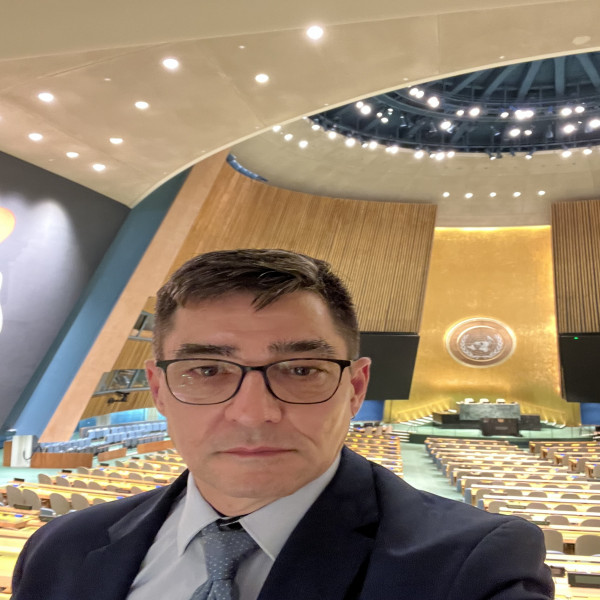
Podcast Then & Now #34 - Teresa Cherfas in conversation with Sergei Davidis episode artwork

EPISODE · Sep 30, 2025 · 1010H 44M

Podcast Then & Now #34 - Teresa Cherfas in conversation with Sergei Davidis

from Rights in Russia · host Rights in Russia

Our guest today is Sergei Davidis, a Russian lawyer, human rights activist and leading member of Memorial. Sergei Davidis has extensive experience in organising various human rights initiatives and political protests in defence of democratic principles in Putin’s Russia. In 2010, Davidis founded the programme in support of political prisoners, which operates within Memorial, a programme he heads to this day. He is also a Memorial board member.In December 2021, a few months before Russia’s invasion of Ukraine, the Supreme Court of the Russian Federation ordered the shutting down of Memorial, Russia’s oldest and largest human rights organisation. On 3 March 2022, Davidis appeared as a witness for the defence in the trial of Aleksei Navalny. On 4 March, security forces raided and ransacked the organisation’s Moscow office. A few days later, due to the increasing risks and virtual impossibility of continuing his work in support of political prisoners in Russia, Davidis decided to leave the country with his family. He currently lives in Lithuania. Together with his team, they track the number of political prisoners in Russia, organise support, and maintain a register according to the stringent standards adopted by Memorial.This podcast was recorded on 25 September 2025.Other platforms where you can find our podcasts include: Podcasts.com, Spotify, iTunes, and Amazon Audible.My Questions1 Could you tell us about the history of your project. When did Memorial decide that it was necessary to keep a record of all those individuals you consider to be political prisoners?2 How do you define political prisoners? As you know, other organisations use other terms – for example Amnesty International refers to ‘prisoners of conscience’? What is the difference?3 How many political prisoners are there in Russia at the moment?4 My understanding is that under Gorbachev, all political prisoners were released and there were none under Yeltsin. When did political prisoners first reappear in Russia?5 Two new laws in particular were introduced at the very start of the war criminalising ‘discrediting’ the Russian military or spreading ‘fake news’ about the Russian military. Could you explain the difference between those two laws and the differences in punishments?6  read that some individuals are given ridiculously long terms in prison for an action which even in terms of Russian legislation would seem to be a minor offence – for example 13 years in prison for donating a small sum to a Ukrainian charity. That is far more than someone would get for murder. How do you explain that?7 Russia these days has a whole range of laws criminalising individuals and organisations, for example the foreign agent laws, the laws branding organisations as extremist or as ‘undesirable’. How far are those convicted under these laws represented among those you classify as political prisoners?8 To what extent is criticism of the Russian leader – Vladimir Putin – criminalised? Are people in prison simply for speaking out against Putin? That would tell us a great deal about the regime, given how focused it is on the personality of the leader?9 If we consider Russia as an authoritarian state, in terms of the numbers of political prisoners in the country and the severity of the sentences, how does Russia compare with other authoritarian countries?10 Your colleague Oleg Orlov was imprisoned for calling the regime ‘fascist’. Do you agree with that classification?11 How much harder is it to do your work, based outside the country?12 To what extent are you able to gauge the impact of your work, both inside Russia and internationally?

Our guest today is Sergei Davidis, a Russian lawyer, human rights activist and leading member of Memorial. Sergei Davidis has extensive experience in organising various human rights initiatives and political protests in defence of democratic principles in Putin’s Russia. In 2010, Davidis founded the programme in support of political prisoners, which operates within Memorial, a programme he heads to this day. He is also a Memorial board member.In December 2021, a few months before Russia’s invasion of Ukraine, the Supreme Court of the Russian Federation ordered the shutting down of Memorial, Russia’s oldest and largest human rights organisation. On 3 March 2022, Davidis appeared as a witness for the defence in the trial of Aleksei Navalny. On 4 March, security forces raided and ransacked the organisation’s Moscow office. A few days later, due to the increasing risks and virtual impossibility of continuing his work in support of political prisoners in Russia, Davidis decided to leave the country with his family. He currently lives in Lithuania. Together with his team, they track the number of political prisoners in Russia, organise support, and maintain a register according to the stringent standards adopted by Memorial.This podcast was recorded on 25 September 2025.Other platforms where you can find our podcasts include: Podcasts.com, Spotify, iTunes, and Amazon Audible.My Questions1 Could you tell us about the history of your project. When did Memorial decide that it was necessary to keep a record of all those individuals you consider to be political prisoners?2 How do you define political prisoners? As you know, other organisations use other terms – for example Amnesty International refers to ‘prisoners of conscience’? What is the difference?3 How many political prisoners are there in Russia at the moment?4 My understanding is that under Gorbachev, all political prisoners were released and there were none under Yeltsin. When did political prisoners first reappear in Russia?5 Two new laws in particular were introduced at the very start of the war criminalising ‘discrediting’ the Russian military or spreading ‘fake news’ about the Russian military. Could you explain the difference between those two laws and the differences in punishments?6  read that some individuals are given ridiculously long terms in prison for an action which even in terms of Russian legislation would seem to be a minor offence – for example 13 years in prison for donating a small sum to a Ukrainian charity. That is far more than someone would get for murder. How do you explain that?7 Russia these days has a whole range of laws criminalising individuals and organisations, for example the foreign agent laws, the laws branding organisations as extremist or as ‘undesirable’. How far are those convicted under these laws represented among those you classify as political prisoners?8 To what extent is criticism of the Russian leader – Vladimir Putin – criminalised? Are people in prison simply for speaking out against Putin? That would tell us a great deal about the regime, given how focused it is on the personality of the leader?9 If we consider Russia as an authoritarian state, in terms of the numbers of political prisoners in the country and the severity of the sentences, how does Russia compare with other authoritarian countries?10 Your colleague Oleg Orlov was imprisoned for calling the regime ‘fascist’. Do you agree with that classification?11 How much harder is it to do your work, based outside the country?12 To what extent are you able to gauge the impact of your work, both inside Russia and internationally?

NOW PLAYING

Podcast Then & Now #34 - Teresa Cherfas in conversation with Sergei Davidis

0:00 1010:44:38

No transcript for this episode yet

We transcribe on demand. Request one and we'll notify you when it's ready — usually under 10 minutes.

MG Show MG Show The MG Show, hosted by Jeffrey Pedersen and Shannon Townsend, is a leading alternative media platform dedicated to uncovering the truth behind today’s most pressing political issues. Launched in 2019, the show has grown exponentially, offering unfiltered insights, comprehensive research, and real-time analysis. With a commitment to independent journalism and factual integrity, the MG Show empowers its audience with knowledge and encourages active participation in the political discourse. Breaking News Show | eTurboNews Juergen Thomas Steinmetz News is relevant to the global travel and tourism industry, human rights and global issues.Breaking news when it happens and only from the source. Eat to Live Jenna Fuhrman, Dr. Fuhrman Our health is our most precious gift and smart nutrition can change your life. Each month, join Dr. Fuhrman and his daughter, Jenna Fuhrman as they discuss important topics in the world of nutrition. Eat to Live will change the way you eat and think about food. French Your Way Jessica: Native French teacher founder of French Your Way Boost your French listening skills and test your comprehension with this one of a kind series of podcasts. Get the chance to listen to a real conversation between native speakers talking at normal speed AND customise your learning experience through carefully designed sets of questions (2 levels of difficulty) available for download at www.frenchvoicespodcast.com. All interviews also come with the transcript. French teacher Jessica interviews native speakers of French from around the world who share a bit of their life and passion. Where else would you meet in one same place a French yoga teacher based in Melbourne, a soap manufacturer from Provence, or a couple cycling around the world?

Frequently Asked Questions

How long is this episode of Rights in Russia?

This episode is 1010 hours and 44 minutes long.

When was this Rights in Russia episode published?

This episode was published on September 30, 2025.

What is this episode about?

Our guest today is Sergei Davidis, a Russian lawyer, human rights activist and leading member of Memorial. Sergei Davidis has extensive experience in organising various human rights initiatives and political protests in defence of democratic...

Can I download this Rights in Russia episode?

Yes, you can download this episode by clicking the download button on the episode player, or subscribe to the podcast in your preferred podcast app for automatic downloads.
URL copied to clipboard!