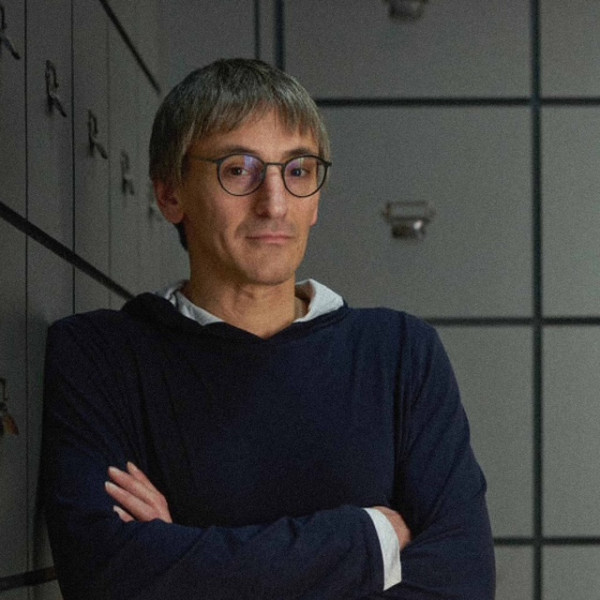
Podcast Then & Now #38 - Teresa Cherfas in conversation with Mikhail Fishman episode artwork

EPISODE · Jan 21, 2026 · 43 MIN

Podcast Then & Now #38 - Teresa Cherfas in conversation with Mikhail Fishman

from Rights in Russia · host Rights in Russia

19 January 2026by Teresa CherfasWelcome to the 38th edition of our Russian-language podcast Then & Now with me, Teresa Cherfas. My guest today, Mikhail Fishman, is known to viewers of the independent television channel TV Rain as the host of his own weekly political programme, I Tak Dalee [‘And So On’]. Since the late 1990s, he has served as editor-in-chief of the Russian edition of Newsweek and also worked for The Moscow Times, where he covered the turbulent political developments of the newly created Russian Federation. In 2022, his book Preemnik [The Successor] about the life and times of Boris Nemtsov was published in Russia. The book became a bestseller. Fishman was motivated to write his book after collaborating with documentary film-maker, Vera Krichevskaya, on her 2016 film about Boris Nemtsov, The Man Who Was Too Free. Four years on, it has now been published in English translation under the title The Successor. Mikhail Fishman is with me today to talk about his book. This podcast was recorded on 19 January 2026.My questionsFirst of all, congratulations on the publication of The Successor in English. Rereading the book in preparation for its English-language publication, how did it strike you after everything that has happened in the seemingly short time between the Russian and English editions? Did you have to rewrite parts of the text to reflect the new realities?Although the book is about Boris Nemtsov, it is in many ways more like a chronicle of democratic changes that took place in Russia – and their complete collapse. In your opinion, what were the most dangerous threats to Russia’s democratic transformation during Yeltsin’s time?How do you assess the events of autumn 1993, when dissident deputies holed up in the White House and government soldiers fired at the building?To what extent did Yeltsin’s character influence the implementation of democratic reforms in the 1990s? When was this most evident?Your book is called The Successor. Why did you choose this title, given that it refers to such a short period of Nemtsov’s political career? Do you think Nemtsov could have become president of Russia?On the eve of the 21st century, Yeltsin appointed Putin as his ‘successor’. Do you remember your own reaction when you first heard this news?Relatively recently, Putin began to describe the Yeltsin era as the ‘wild 90s’, a time of poverty, humiliation and corruption for Russians. You were already working as a journalist and covering the main political events in Russia. How do you feel about this description of the Yeltsin era? How did you experience the impact yourself of what is described in the book as an existential crisis for Russia?Tell us about Nemtsov’s role in the opposition to Putin. Did he have moral authority in the eyes of Russian society?Did Nemtsov’s relationship with Ukraine have any special significance? Why did Ukraine in his view become a litmus test for the fate of Russia, not to mention for Ukraine itself?The book states that ‘in Russia, the democratic experiment ended with Nemtsov’s murder in February 2015’. But in reality, it happened much earlier, didn’t it?What do you think was the main reason for Nemtsov’s murder?Aleksei Navalny also appears in the book. He and Nemtsov were acquainted, but Navalny was a generation younger. How would you describe them, as political figures, as leaders of the opposition?In the book, you write that when Navalny was preparing to return to Russia, he did not take into account Putin’s intentions to invade Ukraine. Were Putin’s intentions regarding Ukraine already known in January 2021?We will soon be marking the fourth anniversary of the Russian army’s full-scale invasion of Ukraine. How do you remember that first day of the war?You wrote that on that day Russia became a full-fledged dictatorship.  What had changed? Was it only then possible to describe the political regime in Russia in this way?The American poet Robert Frost wrote a poem called ‘The Road Not Taken’ about how an individual’s life could have taken a completely different turn, had they chosen a different path when the choice confronted them. Do you think that Russia had a ‘road not taken’?

19 January 2026by Teresa CherfasWelcome to the 38th edition of our Russian-language podcast Then & Now with me, Teresa Cherfas. My guest today, Mikhail Fishman, is known to viewers of the independent television channel TV Rain as the host of his own weekly political programme, I Tak Dalee [‘And So On’]. Since the late 1990s, he has served as editor-in-chief of the Russian edition of Newsweek and also worked for The Moscow Times, where he covered the turbulent political developments of the newly created Russian Federation. In 2022, his book Preemnik [The Successor] about the life and times of Boris Nemtsov was published in Russia. The book became a bestseller. Fishman was motivated to write his book after collaborating with documentary film-maker, Vera Krichevskaya, on her 2016 film about Boris Nemtsov, The Man Who Was Too Free. Four years on, it has now been published in English translation under the title The Successor. Mikhail Fishman is with me today to talk about his book. This podcast was recorded on 19 January 2026.My questionsFirst of all, congratulations on the publication of The Successor in English. Rereading the book in preparation for its English-language publication, how did it strike you after everything that has happened in the seemingly short time between the Russian and English editions? Did you have to rewrite parts of the text to reflect the new realities?Although the book is about Boris Nemtsov, it is in many ways more like a chronicle of democratic changes that took place in Russia – and their complete collapse. In your opinion, what were the most dangerous threats to Russia’s democratic transformation during Yeltsin’s time?How do you assess the events of autumn 1993, when dissident deputies holed up in the White House and government soldiers fired at the building?To what extent did Yeltsin’s character influence the implementation of democratic reforms in the 1990s? When was this most evident?Your book is called The Successor. Why did you choose this title, given that it refers to such a short period of Nemtsov’s political career? Do you think Nemtsov could have become president of Russia?On the eve of the 21st century, Yeltsin appointed Putin as his ‘successor’. Do you remember your own reaction when you first heard this news?Relatively recently, Putin began to describe the Yeltsin era as the ‘wild 90s’, a time of poverty, humiliation and corruption for Russians. You were already working as a journalist and covering the main political events in Russia. How do you feel about this description of the Yeltsin era? How did you experience the impact yourself of what is described in the book as an existential crisis for Russia?Tell us about Nemtsov’s role in the opposition to Putin. Did he have moral authority in the eyes of Russian society?Did Nemtsov’s relationship with Ukraine have any special significance? Why did Ukraine in his view become a litmus test for the fate of Russia, not to mention for Ukraine itself?The book states that ‘in Russia, the democratic experiment ended with Nemtsov’s murder in February 2015’. But in reality, it happened much earlier, didn’t it?What do you think was the main reason for Nemtsov’s murder?Aleksei Navalny also appears in the book. He and Nemtsov were acquainted, but Navalny was a generation younger. How would you describe them, as political figures, as leaders of the opposition?In the book, you write that when Navalny was preparing to return to Russia, he did not take into account Putin’s intentions to invade Ukraine. Were Putin’s intentions regarding Ukraine already known in January 2021?We will soon be marking the fourth anniversary of the Russian army’s full-scale invasion of Ukraine. How do you remember that first day of the war?You wrote that on that day Russia became a full-fledged dictatorship.  What had changed? Was it only then possible to describe the political regime in Russia in this way?The American poet Robert Frost wrote a poem called ‘The Road Not Taken’ about how an individual’s life could have taken a completely different turn, had they chosen a different path when the choice confronted them. Do you think that Russia had a ‘road not taken’?

NOW PLAYING

Podcast Then & Now #38 - Teresa Cherfas in conversation with Mikhail Fishman

0:00 43:53

No transcript for this episode yet

We transcribe on demand. Request one and we'll notify you when it's ready — usually under 10 minutes.

MG Show MG Show The MG Show, hosted by Jeffrey Pedersen and Shannon Townsend, is a leading alternative media platform dedicated to uncovering the truth behind today’s most pressing political issues. Launched in 2019, the show has grown exponentially, offering unfiltered insights, comprehensive research, and real-time analysis. With a commitment to independent journalism and factual integrity, the MG Show empowers its audience with knowledge and encourages active participation in the political discourse. Breaking News Show | eTurboNews Juergen Thomas Steinmetz News is relevant to the global travel and tourism industry, human rights and global issues.Breaking news when it happens and only from the source. Eat to Live Jenna Fuhrman, Dr. Fuhrman Our health is our most precious gift and smart nutrition can change your life. Each month, join Dr. Fuhrman and his daughter, Jenna Fuhrman as they discuss important topics in the world of nutrition. Eat to Live will change the way you eat and think about food. French Your Way Jessica: Native French teacher founder of French Your Way Boost your French listening skills and test your comprehension with this one of a kind series of podcasts. Get the chance to listen to a real conversation between native speakers talking at normal speed AND customise your learning experience through carefully designed sets of questions (2 levels of difficulty) available for download at www.frenchvoicespodcast.com. All interviews also come with the transcript. French teacher Jessica interviews native speakers of French from around the world who share a bit of their life and passion. Where else would you meet in one same place a French yoga teacher based in Melbourne, a soap manufacturer from Provence, or a couple cycling around the world?

Frequently Asked Questions

How long is this episode of Rights in Russia?

This episode is 43 minutes long.

When was this Rights in Russia episode published?

This episode was published on January 21, 2026.

What is this episode about?

19 January 2026by Teresa CherfasWelcome to the 38th edition of our Russian-language podcast Then & Now with me, Teresa Cherfas. My guest today, Mikhail Fishman, is known to viewers of the independent television channel TV Rain as the host of his own...

Can I download this Rights in Russia episode?

Yes, you can download this episode by clicking the download button on the episode player, or subscribe to the podcast in your preferred podcast app for automatic downloads.
URL copied to clipboard!