
EPISODE · Jul 16, 2026 · 36 MIN
Poisoned on Everest: The $20 Million Rescue Scam | Disaster Strikes
from The CRUX: True Survival Stories · host The Crux True Survival Stories
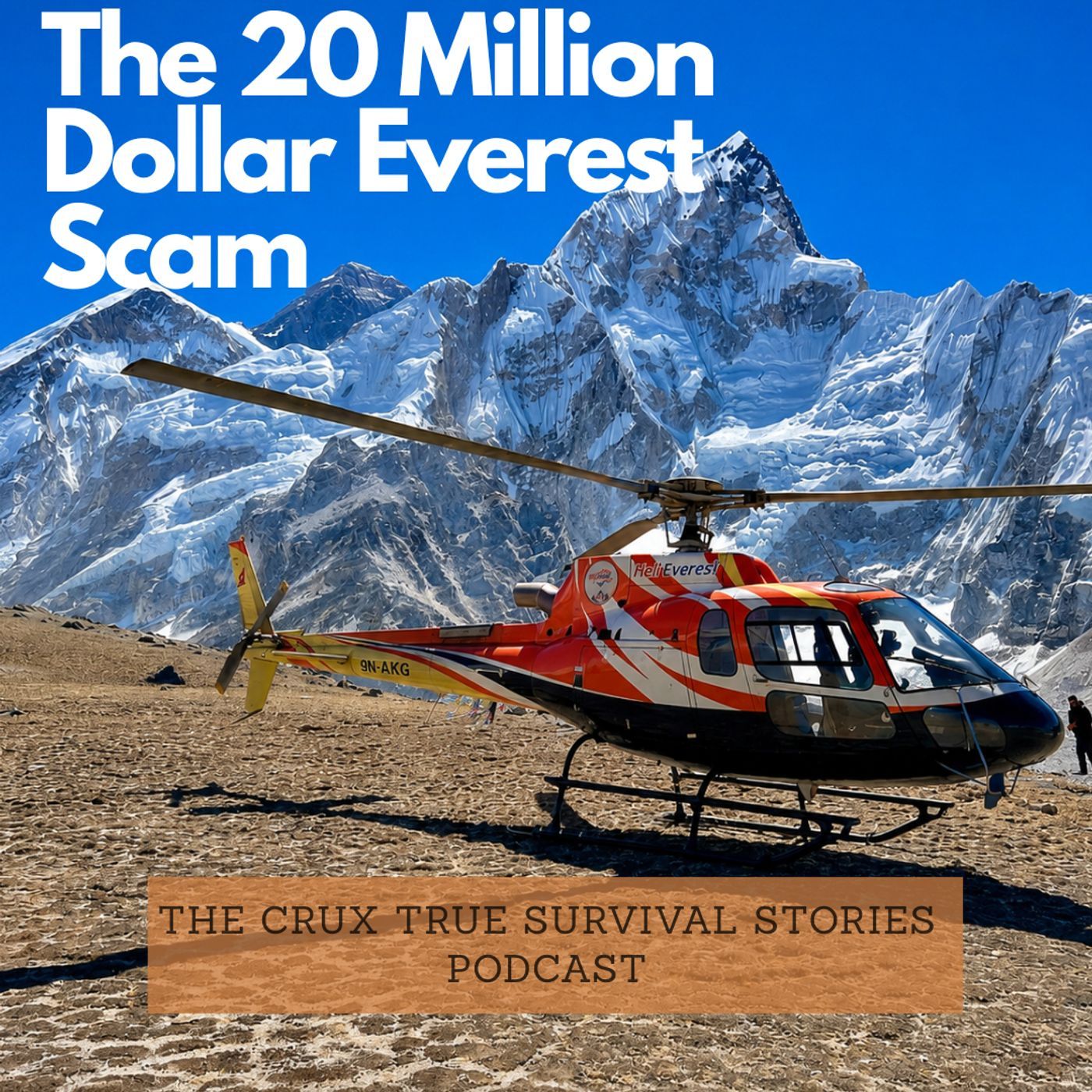
Most people think the greatest danger on Mount Everest is the mountain itself. But beginning in 2018, investigators uncovered an alleged $20 million Everest helicopter rescue fraud that exploited trekkers through unnecessary evacuations, forged medical records, and fraudulent insurance claims. By 2026, Nepal's Central Investigation Bureau had filed sweeping criminal charges, exposing one of the biggest scandals in Everest's history. In this episode of Disaster Strikes, Kaycee McIntosh and Julie Henningsen examine how the scheme allegedly operated, why altitude makes trekkers especially vulnerable to manipulation, and how guides, helicopter companies, hospitals, and doctors became caught up in an investigation that shook Nepal's mountaineering industry. The hosts also separate verified facts from sensational headlines, including what investigators actually concluded about the widely reported poisoning allegations. Whether you're planning an Everest Base Camp trek, dreaming of climbing Mount Everest, or simply fascinated by survival stories, this episode explains how the fraud unfolded, why it damaged trust throughout the Himalayas, and what every trekker should know before accepting a helicopter evacuation. In This Episode 00:00 Everest Betrayal Teaser01:15 Everest Trek vs. Summit Climb04:13 The True Cost of Mount Everest08:52 Sherpas, Guides, and Trust at Altitude15:00 How Everest Guides Are Trained18:11 The Helicopter Rescue Fraud Exposed22:48 What Investigators Found About Poisoning Claims27:29 Following the Money31:59 Fallout Across Nepal's Everest Industry35:13 Altitude Sickness & Trekking Safety Tips40:50 Closing Thoughts Sources Nepal Police Central Investigation Bureau (CIB) — 748-page charge sheet (March 2026)The Kathmandu Post — Original 2018 investigation and ongoing coverageClimbing Magazine — Review of the CIB charge sheet (April 7, 2026)Outside Magazine — Everest guiding industry response (April 2026)ExplorersWeb — Analysis of the investigation and media coverage (April 3, 2026)IBTimes UK — Reporting on hospital commission structures (April 2, 2026)NewsNation / The Hill — CIB statement regarding poisoning allegations (April 7, 2026)Alan Arnette — Everest expedition cost analysis (2025)National Geographic — Sherpa culture and Everest commercializationFrontiers in Physiology (NCBI) — Research on cognitive impairment at high altitudeHimalayan Database — Khumbu Icefall fatality records Poisoning Allegations: The Nepal Police Central Investigation Bureau's 2026 investigation found no evidence that systematic poisoning was part of the helicopter rescue fraud. While isolated references to baking soda appear in the charge sheet, investigators did not conclude that poisoning was used as a widespread tactic. Media reports describing rat droppings or uncooked chicken were not included as confirmed findings in the formal 748-page charge sheet reviewed by Climbing Magazine. This episode distinguishes verified investigative findings from unconfirmed claims. Hosted by Simplecast, an AdsWizz company. See pcm.adswizz.com for information about our collection and use of personal data for advertising.Become a supporter of this podcast: https://www.spreaker.com/podcast/the-crux-true-survival-stories--7265181/support.Listen AD FREE: Support our podcast at patreon: http://patreon.com/TheCruxTrueSurvivalPodcastEmail us! [email protected] https://www.instagram.com/thecruxpodcast/Get schooled by Julie in wilderness medicine! https://www.headwatersfieldmedicine.com/
Embed this episode
Ready to play
Poisoned on Everest: The $20 Million Rescue Scam | Disaster Strikes
No transcript for this episode yet
Similar Episodes
No similar episodes found.
Similar Podcasts
No similar podcasts found.