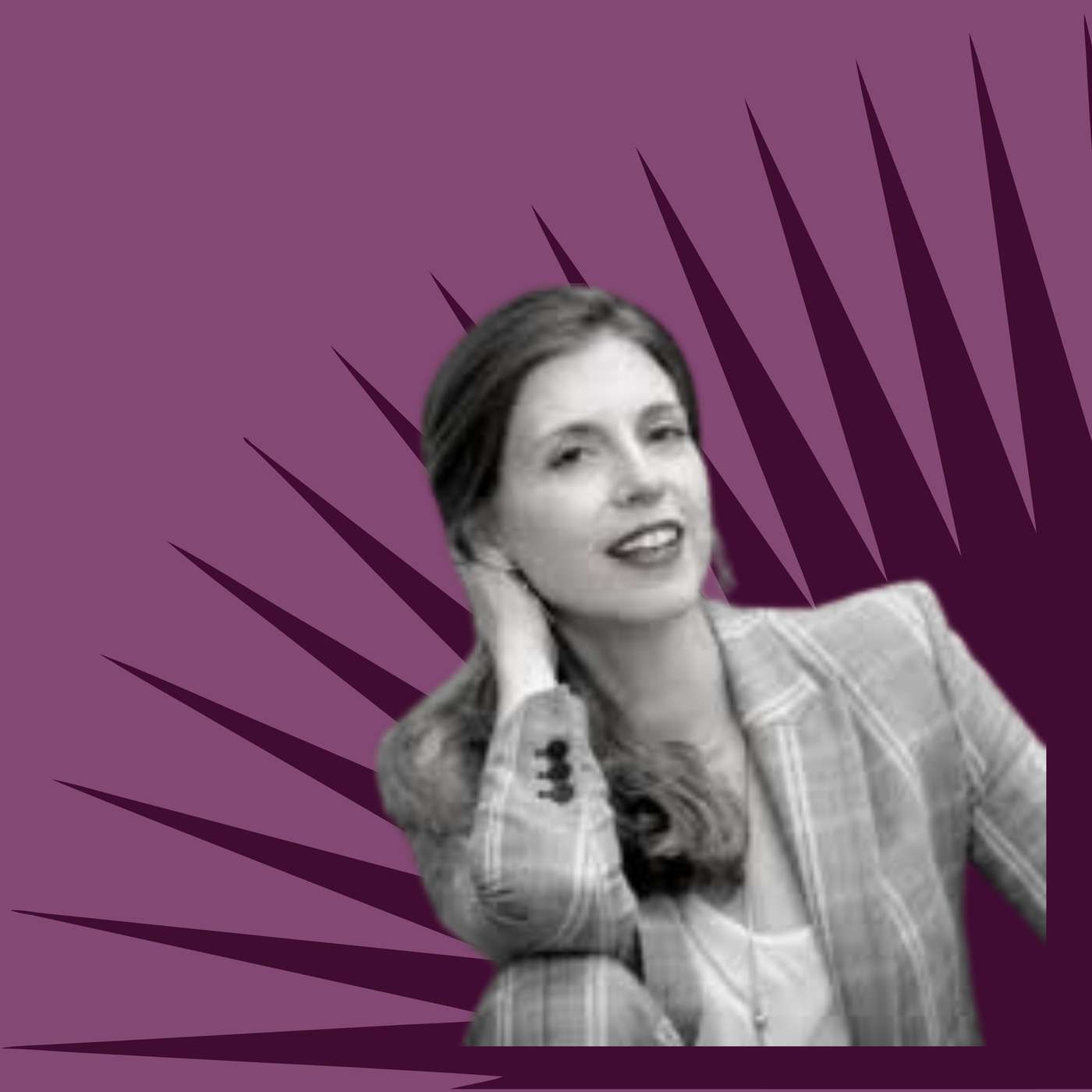
Politics Without Politicians: Hélène Landemore's Case for Citizen Rule episode artwork

EPISODE · Feb 13, 2026 · 46 MIN

Politics Without Politicians: Hélène Landemore's Case for Citizen Rule

from Keen On America · host Andrew Keen

"How can you not be a populist in this day and age?" — Hélène LandemoreIn February 2020, The New Yorker profiled a Yale professor making the case for citizen rule. Six years later, that political scientist, Hélène Landemore, has a new book entitled Politics Without Politicians arguing that politics should be "an amateur sport instead of an expert's job" and that randomly selected citizen assemblies should replace representative democracy. Landemore calls it "jury duty on steroids."Landemore draws on her experience observing France's Citizens' Conventions on both climate and end-of-life issues to now direct Connecticut's first state-level citizen assembly. We discuss why the Greeks used lotteries instead of elections, what G.K. Chesterton meant by imagining democracy as a "jolly hostess," and why she has sympathy for the anti-Federalists who lost the argument about the best form of American government to Madison. When I ask if she's comfortable being called a populist, she doesn't flinch: "If the choice is between populist and elitist, I don't know how you can not be a populist." From the Damon Wells'58 Professor of Political Science at Yale, this might sound a tad suicidal. At least professionally. But Landemore's jolly argument for a politics without politicians is the type of message that will win elections in our populist age.About the GuestHélène Landemore is the Damon Wells'58 Professor of Political Science at Yale University. She is the author of Politics Without Politicians: The Case for Citizen Rule (2026) and Open Democracy: Reinventing Popular Rule for the Twenty-First Century (2020).ReferencesThinkers discussed:●      G.K. Chesterton was the British essayist who defined democracy as an "attempt, like that of a jolly hostess, to bring the shy people out"—a vision Landemore finds more inspiring than technical definitions about elite selection.●      James Madison and the Federalists designed a republic meant to filter popular passions through elected representatives; Landemore has sympathy for their anti-Federalist opponents who wanted legislatures that looked like "a mini-portrait of the people."●      Alexis de Tocqueville warned about the dangers of trusting ordinary people—a caution Landemore pushes back against, arguing that voters respond to the limited choices they're given.●      Max Weber wrote "Politics as a Vocation" (1919), arguing that politics requires a special calling; Landemore questions whether it should be a profession at all.●      Jean-Jacques Rousseau and his concept of the general will has been blamed for totalitarian impulses; Landemore rejects the comparison, insisting her vision preserves liberal constitutional frameworks.●      Joseph Schumpeter defined democracy as "a method for elite selection"—precisely the technocratic framing Landemore wants to overturn.Citizen assembly experiments mentioned:●      The Irish Citizens' Assembly on abortion (2016-2017) is often cited as proof that randomly selected citizens can deliberate on divisive issues and reach workable conclusions.●      The French Citizens' Convention on End-of-Life (2022-2023) found common ground between pro- and anti-euthanasia factions by focusing on palliative care—a case Landemore observed firsthand.●      The French Citizens' Convention for Climate (2019-2020) brought 150 randomly selected citizens together to propose climate policy; participants were paid 84-95 Euros per day.●      The Connecticut citizen assembly on local public services, planned for summer 2026, will be the first state-level citizen assembly in the United States. Landemore is directing its design.Also mentioned:●      Zephyr Teachout is the left-wing populist who called Landemore a "reluctant populist."●      Oliver Hart (Harvard) and Luigi Zingales (Chicago) are economists working with Landemore to apply the citizen assembly model to corporate governance reform.●      The Council of 500 was the Athenian deliberative body whose members were selected by lottery, with a rotating chair appointed daily.●      John Stuart Mill is the liberal theorist whose emphasis on minority rights raises the question of whether Landemore's majoritarianism is illiberal. She says no.About Keen On AmericaNobody asks more awkward questions than the Anglo-American writer and filmmaker Andrew Keen. In Keen On America, Andrew brings his pointed Transatlantic wit to making sense of the United States—hosting daily interviews about the history and future of this now venerable Republic. With nearly 2,800 episodes since the show launched on TechCrunch in 2010, Keen On America is the most prolific intellectual interview show in the history of podcasting.WebsiteSubstackYouTubeApple PodcastsSpotifyChapters:(00:00) - Chapter 1 (00:00) - Six years from New Yorker profile to book (01:14) - Politics as amateur sport (02:08) - What the Greeks got right (04:03) - Citizen assemblies: jury duty on steroids (06:21) - The Yale professor who speaks for ordinary people (07:11) - Rousseau and the age of innocence (08:41) - The gerontocracy problem (09:33) - Do we need a communitarian impulse? (11:30) - Experts on tap, not on top (15:15) - The reluctant populist (17:01) - Can we trust ordinary people? (19:11) - How it works at scale (23:14) - Why professional politicians are failing (26:15) - Max Weber and politics as vocation (29:08) - Leaders who emerge organically (30:04) - Rejecting Madison and the Federalists (32:26) - Finding common intere...

"How can you not be a populist in this day and age?" — Hélène LandemoreIn February 2020, The New Yorker profiled a Yale professor making the case for citizen rule. Six years later, that political scientist, Hélène Landemore, has a new book entitled Politics Without Politicians arguing that politics should be "an amateur sport instead of an expert's job" and that randomly selected citizen assemblies should replace representative democracy. Landemore calls it "jury duty on steroids."Landemore draws on her experience observing France's Citizens' Conventions on both climate and end-of-life issues to now direct Connecticut's first state-level citizen assembly. We discuss why the Greeks used lotteries instead of elections, what G.K. Chesterton meant by imagining democracy as a "jolly hostess," and why she has sympathy for the anti-Federalists who lost the argument about the best form of American government to Madison. When I ask if she's comfortable being called a populist, she doesn't flinch: "If the choice is between populist and elitist, I don't know how you can not be a populist." From the Damon Wells'58 Professor of Political Science at Yale, this might sound a tad suicidal. At least professionally. But Landemore's jolly argument for a politics without politicians is the type of message that will win elections in our populist age.About the GuestHélène Landemore is the Damon Wells'58 Professor of Political Science at Yale University. She is the author of Politics Without Politicians: The Case for Citizen Rule (2026) and Open Democracy: Reinventing Popular Rule for the Twenty-First Century (2020).ReferencesThinkers discussed:●      G.K. Chesterton was the British essayist who defined democracy as an "attempt, like that of a jolly hostess, to bring the shy people out"—a vision Landemore finds more inspiring than technical definitions about elite selection.●      James Madison and the Federalists designed a republic meant to filter popular passions through elected representatives; Landemore has sympathy for their anti-Federalist opponents who wanted legislatures that looked like "a mini-portrait of the people."●      Alexis de Tocqueville warned about the dangers of trusting ordinary people—a caution Landemore pushes back against, arguing that voters respond to the limited choices they're given.●      Max Weber wrote "Politics as a Vocation" (1919), arguing that politics requires a special calling; Landemore questions whether it should be a profession at all.●      Jean-Jacques Rousseau and his concept of the general will has been blamed for totalitarian impulses; Landemore rejects the comparison, insisting her vision preserves liberal constitutional frameworks.●      Joseph Schumpeter defined democracy as "a method for elite selection"—precisely the technocratic framing Landemore wants to overturn.Citizen assembly experiments mentioned:●      The Irish Citizens' Assembly on abortion (2016-2017) is often cited as proof that randomly selected citizens can deliberate on divisive issues and reach workable conclusions.●      The French Citizens' Convention on End-of-Life (2022-2023) found common ground between pro- and anti-euthanasia factions by focusing on palliative care—a case Landemore observed firsthand.●      The French Citizens' Convention for Climate (2019-2020) brought 150 randomly selected citizens together to propose climate policy; participants were paid 84-95 Euros per day.●      The Connecticut citizen assembly on local public services, planned for summer 2026, will be the first state-level citizen assembly in the United States. Landemore is directing its design.Also mentioned:●      Zephyr Teachout is the left-wing populist who called Landemore a "reluctant populist."●      Oliver Hart (Harvard) and Luigi Zingales (Chicago) are economists working with Landemore to apply the citizen assembly model to corporate governance reform.●      The Council of 500 was the Athenian deliberative body whose members were selected by lottery, with a rotating chair appointed daily.●      John Stuart Mill is the liberal theorist whose emphasis on minority rights raises the question of whether Landemore's majoritarianism is illiberal. She says no.About Keen On AmericaNobody asks more awkward questions than the Anglo-American writer and filmmaker Andrew Keen. In Keen On America, Andrew brings his pointed Transatlantic wit to making sense of the United States—hosting daily interviews about the history and future of this now venerable Republic. With nearly 2,800 episodes since the show launched on TechCrunch in 2010, Keen On America is the most prolific intellectual interview show in the history of podcasting.WebsiteSubstackYouTubeApple PodcastsSpotifyChapters:(00:00) - Chapter 1 (00:00) - Six years from New Yorker profile to book (01:14) - Politics as amateur sport (02:08) - What the Greeks got right (04:03) - Citizen assemblies: jury duty on steroids (06:21) - The Yale professor who speaks for ordinary people (07:11) - Rousseau and the age of innocence (08:41) - The gerontocracy problem (09:33) - Do we need a communitarian impulse? (11:30) - Experts on tap, not on top (15:15) - The reluctant populist (17:01) - Can we trust ordinary people? (19:11) - How it works at scale (23:14) - Why professional politicians are failing (26:15) - Max Weber and politics as vocation (29:08) - Leaders who emerge organically (30:04) - Rejecting Madison and the Federalists (32:26) - Finding common intere...

NOW PLAYING

Politics Without Politicians: Hélène Landemore's Case for Citizen Rule

0:00 46:23

No transcript for this episode yet

We transcribe on demand. Request one and we'll notify you when it's ready — usually under 10 minutes.

The Small Business Startup School – Business Notes | Financial Literacy | Retail Psychology – For Professionals & Entrepreneurs The Small Business Startup School Inc. Starting or buying a small business? While personal circumstances may vary, business patterns remain timeless. On The Small Business Startup School, we explore strategies, insights, and practical solutions to help entrepreneurs confidently navigate their journey.Hosted by Ola Williams—a retail entrepreneur, fintech founder, and financial coach with over two decades of experience—this podcast marries financial awareness and retail psychology with optimism to deliver actionable takeaways.Join us to learn, grow, and connect as we uncover the keys to business success.Let’s continue to learn together and be encouraged to keep on connecting! PodQuesting Dwight J Randolph- WolfShield Media PodQuesting: -By WolfShield Media and Dwight J RandolphJoin us on an exciting journey to master the world of fiction podcasting! At PodQuesting, we document our quest to improve and innovate, sharing valuable insights, strategies, and behind-the-scenes tips along the way. Whether you're an experienced podcaster or just starting your first show, our podcast is your go-to resource for everything podcasting.Discover practical advice, creative techniques, and lessons from our own experiences as we explore the ever-evolving podcasting landscape. Ready to level up your skills and embark on this adventure with us? Tune in and join the quest!Have questions or feedback? Reach out to us at [email protected] and visit our website:WolfShield.Media LIGHTS, CAMERA, SMILE! Creatives Club Media Lights, Camera, Smile, is a podcast for anyone with a dream to share something with the world, out of the overflow of themselves - be it their mind, their heart, their personalities, and much more. Each of us are alive in this moment in time, with an innate ability to have ideas and create various things to benefit both ourselves and the people around us for a reason, and here, you will find the encouragement, the inspiration, and the motivation to do just that. Hosted by Cicily, founder of Creatives Club, she dives into various topics surrounding creativity and business. Exploring entrepreneurship for creatives in a corporate reality, sharing tips and tricks in a media centered company, answering questions regarding what a creative actually is are just a few of the things discussed on this podcast. Be encouraged to create for yourself as Cicily gets vulnerable by pivoting the camera to herself for the first time.To submit questions for Cicily to answer, or have her address certain t Kaizen Blueprint Aldo Chandra "Kaizen" is a Japanese term for continuous improvement. This podcast provides a blueprint to learn about health, wealth, relationships and everything else in between. Through our podcast, we strive to inspire, educate, and motivate our audience to cultivate a mindset of lifelong learning, productivity, and personal development. By sharing insights, strategies, and practical tips, we aim to guide listeners on their journey towards realizing their fullest potential, fostering success, and creating lasting positive change.

Frequently Asked Questions

How long is this episode of Keen On America?

This episode is 46 minutes long.

When was this Keen On America episode published?

This episode was published on February 13, 2026.

What is this episode about?

"How can you not be a populist in this day and age?" — Hélène LandemoreIn February 2020, The New Yorker profiled a Yale professor making the case for citizen rule. Six years later, that political scientist, Hélène Landemore, has a new book entitled...

Is there a transcript available for this episode?

Yes, a full transcript is available for this episode. You can read the complete transcript on the episode page.

Can I download this Keen On America episode?

Yes, you can download this episode by clicking the download button on the episode player, or subscribe to the podcast in your preferred podcast app for automatic downloads.
URL copied to clipboard!