
EPISODE · Nov 7, 2025 · 3 MIN
Ponderosa Grove
from Soundwalk · host Chad Crouch
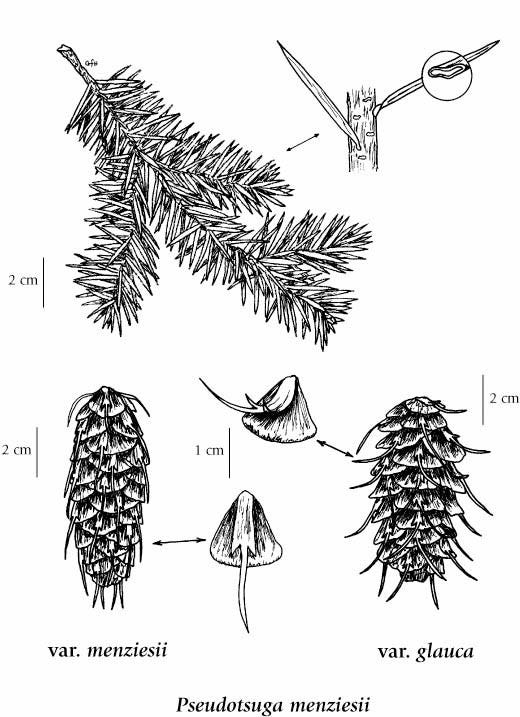
This is a free preview of a paid episode. To hear more, visit chadcrouch.substack.comOne thing I think you come to appreciate after some months or years of field recording, or intentional listening, is the variability of sound that conifers make when played by the wind.Where I live, I’m surrounded by conifers. Douglas-firs abound. They produce a sharp sound in the wind, occasionally what you might call a hiss. Just an hour to the east, beyond the crest of the Cascade Range, a more arid landscape plays host to ponderosa pine trees. The wind on their needles is quite different. Because their needles are flexible and bundled together, they sway and brush against each other in waves, producing a softer sound. More of a shush. Words fail me here. You just have to listen.This recording captures the song of the pines as a backdrop for the birds that make this habitat their home.We hear Western Wood Pewee, Pine Siskin, American Goldfinch, Hairy Woodpecker, White-crowned sparrow, American Robin, Red-breasted Nuthatch, and California Quail—to name names—on a mild June evening near Glenwood, Washington. But what is it about ponderosa pine trees that they produce such a sonorous sound? According to field recordist Gordon Hempton, the pitch is a function of the length of the needle or blade of grass. “We can go back to the writings of John Muir, which — he turned me on to the fact that the tone, the pitch, of the wind is a function of the length of the needle or the blade of grass. So the shorter the needle on the pine, the higher the pitch; the longer, the lower the pitch.”-Gordon Hempton, recordistWhile that sounds plausible and is certainly memorable, it’s not the whole story. It’s not just about length; stiffness, density, bundling, and flexibility all matter too. All the complexity of the canopy structure goes into the sound. The turbulence of the wind moving between needles, branches and trunks, and the brushing of the needles against each other all plays a role. Take a guitar string; the string is fixed at both ends and vibrates at specific frequencies determined by its length, tension, and mass. Needles are only fixed at one end, so they’re more like tines than strings. The frequency of a guitar string follows clear mathematical relationships: a string twice as long vibrates at half the frequency (one octave lower), assuming same tension and thickness. The sound of pine needles comes primarily from aerodynamics: wind flowing around needles creates fluctuations in the air. Needles twice as long do not whisper an octave lower; rather, they produce a lower range of pitches due to the lower frequency of movements and resulting turbulence they create. A string can produce a clear frequency. A needle produces a spectrum of frequencies; a texture. What can be said about all the variety of needles, leaves, and blades of grass and the sounds they make in the wind? Has someone attempted to map them? If there is such an inventory, I did not find it, but I did find the following observations made nearly seven centuries ago in an interesting piece of nature writing. It’s observational, philosophical, and poetic all at once: Wind cannot create sound on its own: it sounds only in connection with things. It is unlike the ferocious clamor of thunder, which rumbles through the void. Since wind sounds only in connection with things, its sound depends on the thing: loud or soft, clear or vague, delightful or frightening—all are produced depending on the form of the thing. Though it may come into contact with earthen or rock pedestals in the shape of tortoises, sounds are not produced. If a valley is empty and immense, its sound is vigorous and fierce; when water gently flows, its sound is still turbulent and agitated—neither achieves a harmonious balance, and both cause man to feel fearful and frightened. Therefore, only plants and trees can produce suitable sounds.Among plants and trees, those with large leaves have a muffled sound; those with dry leaves have a sorrowful sound; those with frail leaves have a weak and unmelodic sound. For this reason, nothing is better suited to wind than the pine.Now, the pine as a species has a stiff trunk and curled branches, its leaves are thin, and its twigs are long. It is gnarled yet noble, unconstrained and overspreading, entangled and intricate. So when wind passes through it, it is neither obstructed nor agitated. Wind flows through smoothly with a natural sound. Listening to it can relieve anxiety and humiliation, wash away confusion and impurity, expand the spirit and lighten the heart, make one feel peaceful and contemplative, cause one to wander free and easy through the skies and travel along with the force of Creation. It is well suited to gentlemen who seek pleasure in mountains and forests, delighting in them and unable to abandon them.-Liu Chi, (1311–1375)Thanks for listening and reading. If you made it this far, consider tapping ‘like’ just to let me know you were here. I often wonder things like, will I lose readers with this big block quote? Are subscribers alienated by a post marked ‘paid’? Ponderosa Grove is available under the artist name Listening Spot on all streaming platforms today Friday, November 7th, 2025.
NOW PLAYING
Ponderosa Grove
No transcript for this episode yet
Similar Episodes
Mar 27, 2026 ·46m
Nov 28, 2025 ·25m
Nov 28, 2025 ·20m
Nov 28, 2025 ·23m
Nov 28, 2025 ·22m
Sep 9, 2025 ·28m