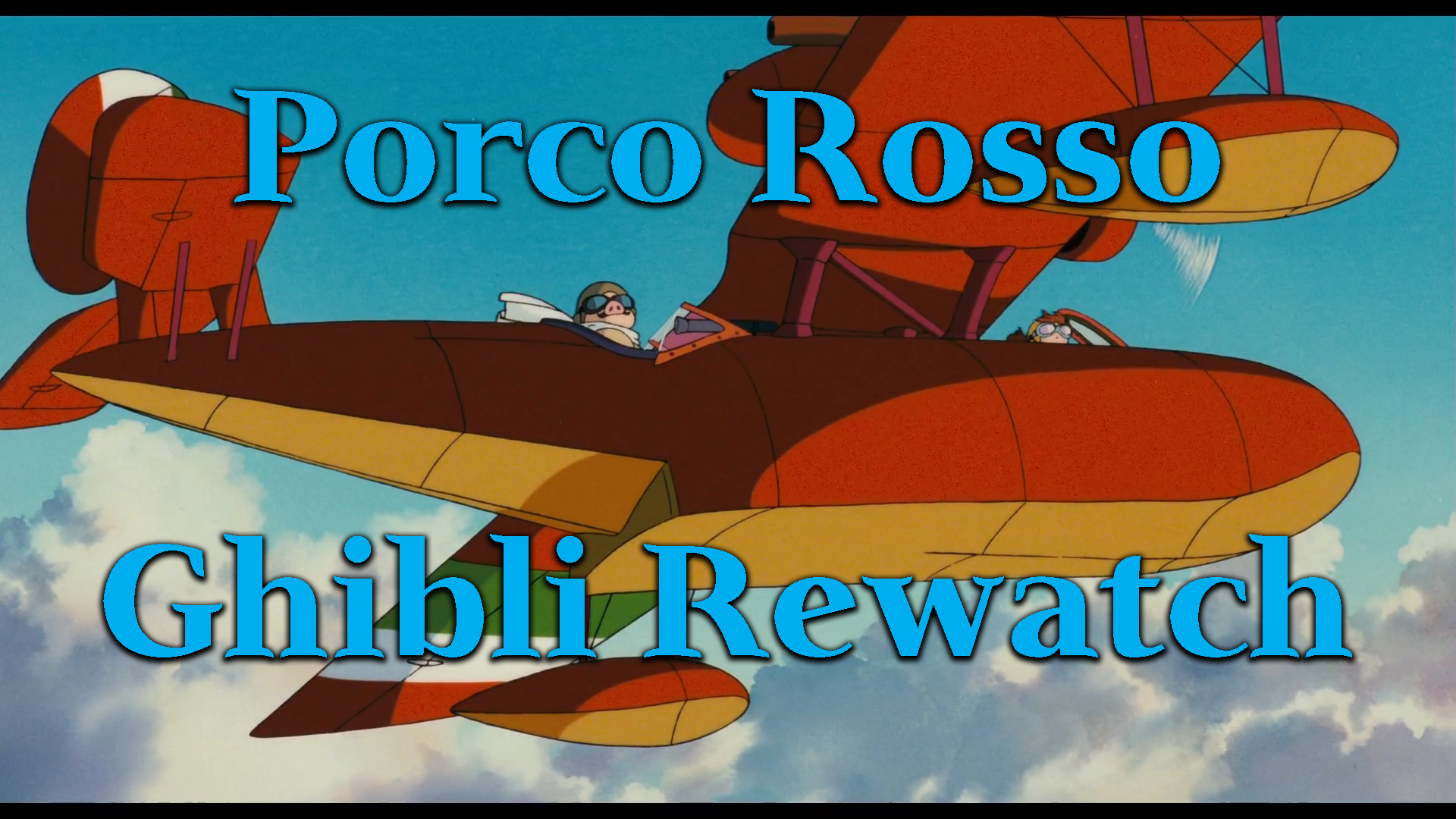
Hello and welcome to the Ghibli Rewatch series of the Overly Animated Podcast, where we'll be going through every Studio Ghibli movie chronologically from the beginning. I'm Dylan Hyson, and today I'm joined by April Collins. And Alex Bonilla. Buongiorno. Yes, a hint at what movie we're talking about, but this is the Ghibli Rewatch series. Join us in rewatching or watching for the first time all the Studio Ghibli movies now that they're available for streaming for the first time ever on HBO Max in the United States and Netflix in most of the rest of the world. New podcast every Wednesday as we go through the whole Studio Ghibli catalog. Find all the ways to contact us at overlyunmitted.com. I'm a Ghibli expert and be joined by Coase with a variety of Ghibli experience. And today we're talking Porco Rosso. Very interesting one to get into. Make sure you've seen Porco Rosso. We're getting into full spoilers for this movie.
Uh, only vague spoilers for the rest of the Ghibli catalog. If you have not seen any other film, any of the other films, uh, we'll be talking, doesn't matter if you've seen sub or dub, we'll be talking about, uh, whatever, uh, the people on have seen primarily subs, but watch whatever you prefer. Let's get into Porco Rosso. We are in 1992 here for our next Hayao Miyazaki film. This one is based on his own very short manga he made as part of a collection of kind of whimsical pig hero stories. It was initially conceived of as a short film for Japan Airlines and then expanded into a full feature. Was it like Poriko tell you, put on your seatbelt if you want to be a seatbelt? I don't know. I don't think it was a safety instructional video. It was going to be like a legit, I think like 45 minute thing. But this happened a few times, I think, with Miyazaki.
up expanding into a full thing he um some some context as we talked about on the kiki podcast he's pretty exhausted after kiki and then apparently he helped in producing only yesterday as well um and those are two similar ish movies so he wanted a change of pace and we got it with porco rosso this is a uh movie about a former world war one pilot now bounty hunter and the pig um porco or formerly known as marco so a lot of interesting things to get into is a different type of movie than some of the previous ones we've been talking about but first uh let's go through what your history is with this movie and um what did you think of it upon watching or re-watching it april So I've seen this movie multiple times and one of my best friends, this is actually his favorite Jubilee movie.
It obviously has a near and dear place in my heart. I like this movie. It's interesting. It captures my attention. I love, love, love the music in this movie so much. I did something interesting because normally I always watch this movie subbed, but I actually watched it dubbed. So I have some interesting, I guess, like feedback about that. For instance, I prefer it like it's like I prefer subs typically, but it was interesting to watch the dub. I didn't like this movie dubbed. How did you like Batman as Porco, Michael Keaton?
oh i yeah no like i think my biggest like i think that kind of checks out yeah well they they like added dialogue and then like changed it a lot so and i found this i found the movie more problematic dubbed versus some interesting you can get into some of those things you notice i haven't seen it dubbed in a while so i don't remember any of that Yeah. So but I mean, I still enjoy this movie. I love it. I don't know why, but I always feel like planes and like aviation has like a near and dear place in my heart. So I guess me and Miyazaki have that in common. But yeah, so I'm still enjoyed it. Still great. I'm super excited to talk about it. Yeah. OK, well, this is the plane movie. So if you like planes, this is the wind rises, probably second.
Yeah. But yeah, okay. A lot of planes. I don't know how much there's to say about the planes, but maybe we'll see. Especially considering I don't think any of us are aviation experts. April just said she loves planes. So we'll see what she has to say about the planes. I've had a lot of friends who were pilots and stuff like that. And my ex was a pilot as well. And I grew up by an airport. How many planes have you flown in? I mean, other than like, have you flown any non-commercial airplanes? Yeah. I've flown in a lot of non-commercial airplanes. And what is it? Like my ex, his family actually owned a plane. So it was like a six-seater plane. Wow.
So infinitely more plane experience than me. And I assume Alex, but yeah. Yeah. So we have a plane expert kind of April here. So Alex, what about you? What's your history with Porco? What do you think of the movie? I'm not a plane expert, so that's out of the way. Are you a pig expert?
Well, I've seen a pig in real life before. That's like the bare minimum. I feel like I probably petted them at some point. Porco Rosso, I just watched it for the first time this weekend. Before this, the only knowledge I had of Porco Rosso was the meme of rather a pig than a fascist. And I think that's most people's entryway into knowing that this movie even exists. Yeah, I don't know if that's a more recent thing, but that's definitely the most current famous thing about the movie. Right, right. So that's literally the only thing I know about this movie going in. So after watching it...
I'd say that this is a fun movie as all Miyazaki movies have been so far. It definitely feels like it has a bit more of a story compared to like the slice of life that have been covered recently, like Totoro or only yesterday. Like that does feel like there's a little bit more connective tissue, but it still feels very loose in that. Like this, the plot points, so to speak, are not exactly like high. I don't feel as high stakes as maybe other movies, but so like.
The movie itself felt very nice, very smooth. But my main takeaway is that Porco himself is a character I really sympathize with. Because the thing is, up to this point, most of the Miyazaki movies have been focusing on kids' perspectives. You had Lupin at the very beginning, and that's sort of an adult. And since then, you haven't really had much in the way of adult main characters until Porco. And I got to say, I enjoy following around a grump for once in this world, in this filmography full of optimism and things will get better. This pig who has been worn down by...
of the heavy ills of society and just kind of just like in it for himself sort of thing. Like that feels almost kind of refreshing as you're going through this list of movies. So while Porco Rosso as a whole, there's stuff that I'm not that into and stuff that's fine. So as a movie, it's okay. But Porco himself is probably one of my favorite characters that I've encountered in this Ghibli rewatch so far. Just because I feel Porco energy a lot in my life. And he's cool. And also he has a cool mustache. But yeah, those are my thoughts.
That's Porco. Good. Porco Rosso. Oh, that's the movie. Okay. Okay. Okay. Well, I like, I like your take on Porco as a character, so we can get into that. Yeah, no, we'll talk about this. We're coming off of three.
kid-oriented films in a row for Miyazaki, and this we go straight into one of his most adult fare here with an adult main character and more of an adult audience. I definitely don't think Porco is just okay. I think this is a great movie. I think the thing you'll hear often with Porco Rosso is I've been responsible for this among many other people. This is the most underrated Miyazaki movie. Underrated. I think you'll hear this song with Porco Rosso. I've definitely been a proponent of calling this the most underrated movie. I think this is right up there with some of his greats just behind the big three for me. I'm fine with putting this in the top five. I think we did a top five podcast a while ago. I think I put this in the top five. I love Porco Rosso. I have a little bit of a complicated role.
relationship with this movie, which we'll go over specifically in some of its kind of feminist aspects. I would love to talk that through in a lot of detail. However, this is, you know, this is like unbridled Miyazaki in a lot of ways, and it really shines through. I think it's pretty incredible start to finish. This is like, you know, it's the best display of planes. You know, you got some great characters. It's just really fun. I love the opening scene. It's so fun with the rescuing the chappy children. Like, it's another line of the great Miyazaki opening scenes. I agree the music's great. I love the ending of this movie. I love the ending credits. You know, there's some really deep flashbacks. And like a big component of this movie, something I was focusing on preparing for this podcast is the...
kind of the overt political themes and perspective of this movie. I think that it is refreshing to see Miyazaki. kind of just go whole hog, there you go, with his political mindset. As I was constructing that sentence in my head, I realized I had to say that. But, you know, this is better to be a pig than a fascist. This is totally Miyazaki's kind of left-wing political mindset, shining through the most that you'll see in any of his films. And I think, in a certain aspect, I think that's maybe the most special part of this movie. And the fact that it's set and grounded in reality in a way that others aren't, I think really encourages that and allows for that type of perspective. So I think this is a special movie. I think it's also just a really unique movie.
to other Miyazaki movies. The closest thing to this is probably Wind Rises, which we'll talk about in like months. But even, you know, I think it's different from that movie and it's like very different from the movies we've been talking about previously and the ones we'll talk about next. So that's probably where I want to start. I mean, I think just at its core, this is like...
I'll be referencing Miyazaki World by Susan Napier, as always throughout the series. She kind of starts her chapter on this by comparing this movie to Casablanca. So it's like a Casablanca-esque Miyazaki version of that movie, like maybe a 40s or a golden era Hollywood-style film. And that's kind of crazy that there's a Miyazaki version of all of that. That's part of the reason why I wanted April on this one, just because she has a film person perspective on it. I don't know, April, do you have thoughts on how this movie functions as a Miyazaki version of an old Hollywood-style film? I can see it fitting into... I was like, whenever I was looking over your outline and...
the 40s Casablanca-esque like yeah I can kind of see that like but I think I think it's a good like comparison so but I do agree that it's like a very Hollywood style like like I would say it's more like Hollywood style wartime versus like Casablanca-esque so uh because it's kind of like it's like definitely like coming out of the war and I love like all of like the like the war talk that takes place between the characters as well like oh i was a world war one fighter like x y and z um and obviously there's the whole scene where he talks about surviving that one battle um but yeah like how does it function for you as like an entry kind of in this like old hollywood style i think it functions very well like i would say that like this would make you appreciate like I guess I'm gonna say actual like Casablanca and things like like movies like that like that sort of style just because like yeah it's animated but it is still more adult and it's still a lot of fun um so I think it would be like a good entry into like that part of film history for sure yeah I feel like that's not like a type of movie that I'm
Personally, I particularly feel like if I was going to watch a movie, I'd want to watch a super old movie. Not really, but this movie kind of makes you want to. It seems so fun and the tone of it. I totally feel like you'd get into more of this type of movie. I think the other thing, too, is that the story itself is interesting. You're not focusing on a love story or anything else. It's kind of just an interesting, this is the other world of it kind of thing.
Well, I would say that actually, like, at least to me, what gives off the old Hollywood vibe primarily is kind of the strained relationship between Porco and Gina. And Gina? Yeah, it's like, well, it's not like an overt love story, but it does feel like a kind of like old Hollywood, like, we're not allowed to show them being intimate, like, physically, so we have to show them, like, having conversations alone in rooms and, like, being wistful about each other. So, like, in that sense, like, at least to me, like, that feels like a big piece of this movie. And one of my preferred parts is, like, seeing their back and forth throughout and, like, down to, like, the ending of the movie is, like, kind of like that.
That's like the last carrot that they dangle at you is like, how does that end? And so like, I think that's a big piece of it. Also, I want to say like the comparing this to older Hollywood is interesting because again, we have to remember this is Miyazaki. This is like one of the most colorful animators that exists. And so like putting something that like in your head, like you've only seen as like black and white movies for the most part, like in this like vibrant environment. It's like, it's a twist that it's a.
It's a combination that fits very well because of how it's handled. And at the same time, there's the fantasy elements as well of the pig man, as well as a lot of the facial stuff and the stuff that you can do with animation. So it does work on that old framework, but I think that what makes this movie feel special is the fact that you're able to apply this vibrance that you don't usually associate with the older films. Yeah, I think that's a great point. A lot of its appeal, I think, comes from it being a fluid, colorful, animated movie version of that type of film. And I agree that kind of the Porco-Gina undercurrent through the movie is probably the best Casablanca comparison. I think that's kind of what you focus on in the chapter. But yeah, for me, it is kind of only an undercurrent because I do think Fio kind of takes center stage for most of the movie with Porco. So it is interesting how he handles it. I mean, it's very Miyazakian in that he's not going to focus on romance. So there is kind of this core romantic through line in the movie, but it's really not something that we dive a ton into. We can talk more about that. But yeah, just like Miyazaki's spin on this, like that's...
kind of my first. topic i feel like i want to get into a ton it's just like how miyazaki uh like how this is like the most miyazaki movie how this plays into the time period of his life right now um or like when he's making this movie and uh i don't start with with a quote definitely the best quote i think from from the susan abyer miyazaki world chapter um she says one can imagine many directors might want to create a post-world war one romance about a war weary aviator and a beautiful shantoose such a movie plays into our notions of a gold time that we are now locked away from lost in the detritus of too many subsequent brutal wars and the more subtle brutalities of modernization few directors however would make that aviator a bounty hunter with a hideout in the adriatic who entrusts a team of milanese women ranging from grandmothers to teenage girls to rebuild his beloved plane. And no other director that I can imagine would make that aviator a pig in exile. Furthermore, this is not simply any Parson aviator, but a former human flying ace that at one point tells an old comrade, I'd rather be a pig than a fascist, suggesting that his exile is not only spatial, but ideological. And finally, this is an anti-fascist pig who loves a woman whose signature song, Les Tempses de Charisse, comes out of the 1871 utopian socialist uprising known as the Paris Commune.
This is a great summary of all of the very only Miyazaki aspects of this movie. It's a pig. It's, you know, this former bounty hunter in the Adriatic. But like, you know, there's the most feminist, I think, Miyazakian type scene is like when all the women work in the factory to the workshop to kind of remake his plane. And then referring to the fact that Gina in the beginning is singing a song that a real old French song that's talking about the socialist Paris commune, which, again, I think plays into a lot of socialist themes that Miyazaki has woven throughout his movies.
In general, in a lot of ways, this is just like such Miyazaki, all these elements. I mean, I think the fact that this, the main character is a pig on top of everything else is, it's something you want to talk about too right away, but it's like, I'm almost distracted by that, but we can, we can get into some of the. the other parts of, I'll bring in another Susan Napier quote right away here. She says, like it's part human, part pig hero, this movie is a hybrid, an enthralling adventure that is also a unique commentary on political and moral commitment, middle age, masculinity, and desire. It is also in many ways the most naked expression of Miyazaki's own longing for a different life, a life of action, freedom, and intense moral significance, one that was far away from the constant work and pressures of the director's normal existence. Its gorgeous animation and fantastic plot can be seen as a kind of therapeutic processing of the traumas of middle age.
I think you could paint this movie as kind of Miyazaki's midlife crisis is kind of the summary of this is like what she's saying. There's like, this is like, what Miyazaki would want to be. It's kind of like his wish fulfillment with Porco. You know, he has, he represents Miyazaki's moral and political stances. He's taking action on things. I mean, you know, even with his interaction with kind of these two basic archetypes of women that we see in Miyazaki's films in Fio and Gina. So I think that's an important context to kind of keep in mind is this being like very much a movie Miyazaki would make at this point of his life. You know, I think he's around 50 or something making this movie. And like this as unbridled Miyazaki and also as his kind of wish fulfillment.
there's another aspect that like we can bring in after that, which kind of like crafts the context for why he made the specific movie. But Alex, any thoughts on that as someone going through Miyazaki's kind of catalog recently for the first time? Does this feel like the most Miyazaki and how about this is like his wish fulfillment? Well, two thoughts. First, you've mentioned a lot about the politics of this movie. I find it interesting that when I was watching, again, remember, the only knowledge I had about this movie was the one line referencing the fascism. So I was going in being like, okay, this is going to be a very political movie. So perhaps because of that expectation, I was kind of surprised that it's not actually that, at least when I was watching it, there doesn't seem to actually be that much overt commentary. It's mentioned in the backdrop or in conversations that don't really affect the story. He's talking to the storekeeper a little bit about the government, but you could blink and that scene goes and nothing.
It doesn't really affect anything. So, like, I would say that while the politics is there, it feels very much like more of a backdrop than the focus of the movie, which I think is actually, it's how it's supposed to be. Like, it's supposed to just be, like, as, like, more of a table setting than anything else. I agree. It's a backdrop as opposed to the main plot, yeah. Right. So, like, with that said, at least to me, like, the main thing that I got out of Porco Rosso is, like, the sense of individualism, the sense of, like, wanting to, like, wanting to do things on your own, like, you don't need help from anybody else, and somebody, and, like, needing to, like, cede to other people when they offer their help. So, like, for example, like, we're talking about, like, the woman coming in.
One of the stuff that I would agree is feminist about this is Porco slowly coming to terms with the fact, like, okay, I guess I can let women help. They're actually capable of doing stuff. It's admittedly quick, but you see his biases being broken down as he sees them in action. And, of course, with Theo, she proves herself, especially in the second half of the... in the second half of the movie. So, like, that's my sense, and I guess you could apply it to Miyazaki, as, like, a person who, like, wants to do everything on his own, but, like, eventually he has this studio where he has to handle, like, other people doing their own projects, and, like, really that's going to help the whole industry if he allows people to help him out. So, like, I guess in that sense. But, yeah, just like Porco, I enjoyed seeing, like, the stubbornness, and that's something that doesn't even, like, go, what I enjoy is that, like, his character doesn't change that much from him, because by the end, like, he's still kind of a stubborn big man, but, like, at the very least, like, he's allowed people in, like, when he needs the help, and people that he...
wouldn't immediately have gone to, but because they prove themselves, he's willing to let them in. And you get that scene where he even talks to Fio a little bit about his past, something which seems like he doesn't do with many people. So yes, I enjoyed Porco's character, and I think that's what resonated with me the most in terms of the main point of the story, is to see how he slowly but surely gets his worldview changed and gains a little bit of faith in humanity over time. Yeah, I think that's a valid hypothesis on how Miyazaki's own life might relate to this character. I know for sure that all the women in the factory that the workshop that helped him make the plane are probably a tribute to all the female animators at Studio Ghibli and kind of like through his experience with seeing everyone help make his movie. So I think like his experiences in Ghibli are definitely crafting. I mean, I think I said in the beginning, that's crafting the context for this movie and how he's very like worn out by this point. And that's kind of a backdrop to his perspective in making the movie. April, any comments on like what Alex talked about or this is like a representation?
of these core Mizaki elements? Wow, you guys covered so much. We're bouncing around a lot of topics right now, we are. No, I definitely agree with Alex that I think like all of the politics of this movie are very like, they're very much like an undertone and they're not really like, because I think that's the other thing is that everyone's like, oh, because they, like their core relation is that, you know, that line. And so I, but like, again, when you watch the movie, like I never even like thought of like those.
like it being political ever in any of my times watching it. So I think that's a really interesting perspective. But. Yeah, well, we can dive into this a little bit. I mean, you know, political in the sense that it's against the rise of fascism in 30s for, you know, like something we would all be against at this point. But, you know, I think he would relate it to current conflicts, which we can talk about in a second. But my biggest argument against the political perspective of the movie only being a backdrop, although I agree it's generally that because, you know, he wants to create a fun movie at the core, and I don't think he's trying to create a political drama. But there's the scene when they're done with the factory, Porco and Fio escape from the Italian fascist police trying to chase them down. You know, it's like there is like the anti-fascist, like that is like a component of the plot. And then there's the Italian air forces.
coming to them at the end, and that's all kind of under the growing rise of fascism and power in Italy at the time. It's definitely an influence on the plot, but the focus is definitely more concerned on Porco's personal journey and kind of what's going on with his conflict with Curtis. Yeah, there is the better a pig than a fascist is how it's translated in the official subtitles, but the other quote works better, I think. And then you do get this line, I think Alex mentioned when he's talking to one of the shopkeepers, war profiteers are villains, bounty hunters are just stupid. The guy talking to his son after Porco, I think, buys ammo or something from them. Oh yeah, at least. Yeah.
Yeah. So like there's a, you get this, this small dabs. Yeah. I think, I think it's like, what's most striking I would say is that a real life, real life history, political history is, is the backdrop for this movie. You know, like the actual locations and this relates to the setting of the movie. The actual locations, I think, are like kind of fictional, although there's clear parallels between real islands and kind of islands that they're all on. And so the setting of this movie, I think, bounces from modern like Italian Croatia, I would say, the Adriatic Sea kind of separating them. But just like actual real life historical context to what's going on, I think, provides power and like potency to the to the messages of lines like this. And I think there is kind of enough of it that it does shine through some context on.
the time when Miyazaki's making this movie in 1992 and why he maybe ends up making this movie versus some other ones. So we got to get into briefly some conflicts in the world at the time. Just before you dive into just a brief comment on the settings, I do want to point out like a lot of times this reminded me of the settings of like Kiki's Delivery Service and Castle of Cagliostro. Like there's a lot of similarity in the vibe of that. The main difference is you're using like Milan, like you're using the names of real life places. But I would say that like, I mean, I think there's just a difference of opinion. I don't think that there's much added in terms of...
so in terms of the setting, like, the effect of, like, putting you in that time and place, it has really down the general European old-style vibe. And I think that comes across, whether you name it Milan or you name it whatever, like, some other fake name, like, I think that comes across all the same. The main thing is the time period. Like, you're saying World War. Like, that itself, like, does have an effect. We're talking about World War I experiences. Yeah, I would say that's mainly what I'm saying. I also do think it's the type of thing that'll shine through more upon multiple subsequent rewatches. You know, it's the type of thing where I'm watching this movie for the sixth time. I'm going to, like, focus more on these more subtle things at this point. So I definitely like the core of the movie.
I think will shine through for the most part on, like, most viewings. I definitely think so. So to get some context, I think, like, another aspect, getting into, like, Miyazaki's perspective making this movie, and we seem to want to go to other topics because this is, like, not a lot of, like, discussion to get into, but I want to, like, note, like, very much his disillusionment with the world shapes this movie, which is interesting because I do think there's a lot of positivity portrayed in the movie. Well, but also, like, Porco himself is very disillusioned with the world as well. And that's why he's, like, maintaining his independence. He doesn't want to join the Air Force or the pirates or anything. Like, he doesn't agree with anybody's ideology. He's just like, I just want to live my life.
life and like not be bothered by any of this. Yeah, I think that's a good argument in favor of Porco being kind of this Miyazaki stand-in character. Here's a quote from Susan. Well, these are quotes from Miyazaki quoted in the Susan Napier chapter. So Miyazaki says, we felt the world was getting better bit by bit. Our history was that things would get better. So when Yugoslavian ethnic wars happened, we were dumbfounded. What was going on? Were we just going backwards? These last years since 1992, I've really been running around in a haze. He also says, I used to fight constantly with my mother when I was an adolescent about whether people are stupid or not. My mother's cherished opinion was that people were hopeless. I always disagreed, but lately it's unconditional surrender.
So very done with humanity from that quote. Another context is the Gulf War also happening around this time. Susan Napier says Japan's involvement in the Gulf War, while hesitant and piecemeal, seemed to Miyazaki and many others on the left to be a betrayal of the country's pacifist constitution. The high-tech nature of the war and the fact that the scenes of Carnage were rarely shown in the media also greatly disturbed the director. In fact, he went so far as to state that after Kiki, he had been planning a film about young love set in modern Tokyo, but had abandoned that idea. As the critic Koji Okuda puts it, in a world of blood, Miyazaki could not make a movie about youth.
Yeah, so I disagree. I mean, I think not soon after he is a big component of Whisper of the Heart. So that movie, I think will get made soon. But yeah, this is, you know, I think this is going to be relevant getting into. wind rises later on too so i think there's probably a lot of parallels between the two but miyazaki upset at world events and um and like humanity and so like maybe channels into the character porso maybe porco maybe why he's making a character a film kind of set with more uh political tones as we talked about it's more of a backdrop but for miyazaki this is like way more than we usually see i think and we'll see from from other films this is like him being blunt yeah but not really in this in this aspect yeah i think well and also like it's important to note we choose an american as the quotas like not really antagonist because like it's not like he's like doing necessarily evil stuff Yeah, like, he's the person who's opposing Porco in this. And, like, the Gulf War was mostly American stuff. Also, I'm aware of that time that he didn't show up to the Oscars because he was angry to the U.S. for being involved in Iraq. So, like, this is, like, also, like, in addition to being generally anti-war, like, which has come out, like, since Nausicaa, but, like, also, like, it does feel like specifically American involvement is annoying to him. And even in this movie, like, the American is kind of portrayed as, like, kind of, like, you know, over-the-top pompous, you know? And, like, that's a reputation that's been gained over the years. But it's just a...
It shows that that specifically is kind of like rubbing the wrong way, as it does with many people I'm sure around the world. Yeah, I can throw it since we're talking about this. I can throw in the Napier quote on Curtis. Miyazaki had also been shaken by the first Gulf War. It's surely no accident. The villain in Porco Rosso is Curtis, a bumptious young American who is equal parts arrogance and ignorance. Although Miyazaki possibly tried to counterbalance that by making Fio, a secondary female character, charming young girl, recently returned from America. Yeah, I think we've been talking about the setting and we can kind of conclude talking about Europe and kind of how it ties into this because this is another entry in Miyazaki's Europa movies, which I'd say like a majority of his movies have been set in Europe at this point. They're always either Europe or Japan. Notably, you're right, like not America. It's always Europe. He has a Europa. He's like a Europa.
He loves it. Not, like, America. And so I don't think he, like, you know, I would say, I don't know if Miyazaki is, like, a bias against America. I think it's just, like, America's the one doing all these terrible things throughout when he's making these movies. If you're anti-war, then by extension, you kind of have to be against these actions America's taking. Yeah, I think so. So, but Kurt, I mean, is there another American character in a Miyazaki movie? I'm trying to, struggling to think of one like Kurt as overtly from America. Well, you have to narrow down what other movies are taking place in the, quote, real world. Like, even that's, like, very few of them. Right, but yeah. I mean, you know, you could call it, like, Kiki, you know, not set in the real world, but, you know, there's all these European characters, and we know by extension, it's kind of
But, you know, so you're right. There wouldn't be like in a parallel for that. But I vaguely remember in Cagliostro, like there's that United Nations thing where like the American is squabbling with the Russians. That's another movie that kind of takes place in the real world, kind of. But yeah, there's probably an American representative. But yeah, just this movie has like a very much pure representation of Miyazaki's obsession with Europe. Another entry into there. Kind of briefly, not super related to this movie specifically, but I wanted to, I thought this was as good of a time to mention it as any, is that we mentioned that basically every one of Miyazaki's movies takes place in either Japan or Europe. There's not a lot of...
of different race representation in these Miyazaki movies. And I think it's worth noting, like the core explanation would be that a lot of his movies take place in Japan or in like specific locations in Europe. However, there are black people in Japan. There are, you know, Latinx people in Japan and they don't seem to make their way into Miyazaki movies ever. So I think we kind of talk about Miyazaki as this like amazing feminist director historically. I definitely don't think that that translates to race in his movies. I mean, I think for sure you need to keep in mind the contextual differences between America and the rest of the world talking about race. It's kind of different. We don't have like the Japan perspective.
on anything. But, you know, we kind of just see two types of people in Mizaki movies, Japanese people, European people. It doesn't really translate into anything else. And I'd say that's the general fault of just the fantasy genre for many years where like, even though like it's a totally different place, but like it's also been portrayed as whitewashed for so many years that that just has become the default. And that's not something that we should continue to perpetrate. But like examples like me as active filmography is like part of, like it's a big piece of the fantasy canon. And that just like, if that's what you imagine when you think of fantasy movie, then that ends up leaking into future stuff. And so that is something to point out as well. Like just these are totally different environments, but that shouldn't mean that they all look the same.
Yeah, and I think it's true of fantasy movies, but, you know, I think that maybe why I mentioned it in this movie is, you know, this movie is maybe not limited by these types of obscuring factors like that, you know, like, there could have just been a black person in this movie, and there's just not, like, there are different types of people around in this time period. I mean, surely not as much as current, I guess, but, you know, you could have portrayed more different types of people considering this is kind of the real world. So I think it's definitely worth mentioning throughout. And I agree that it's like, oh, this is a problem with all fantasy films. I think I hold Miyazaki to the above, not to any standards of archetypal anything. It's Miyazaki, this is the end of the line. So we're going to talk about him on his own in this respect. And I don't know, we'll see. I'll track throughout that. I don't specifically, or maybe I'm forgetting certain characters through the rest of the Ghibli canon so we can kind of keep this in mind as we go. And if we see any other representations of different types of people, we can talk about it. But yeah, I mean, I talked about that in the context of this being Europe.
April, any other comments on like kind of this is Miyazaki's like idealized or like his Europe fantasy and stuff? Maybe like we saw that in Kiki as well. We talked about it there. How do you think it compares to kind of his portrayal of Europe in Kiki? Similar? Yeah, I would say that it's very similar, especially when we actually, I guess, are interacting with the rest of the world. I know we spend a lot of time in the air and in his little hideout. But I definitely like see this, like all of especially because he does call out like Milan and places like that.
It's very similar, very European. He loves Europe so much. Yeah, and I think, I feel like for this movie, for me, like, the fact that it is kind of grounded in reality more, that, like, this would be my Miyazaki Europe movie if I had to choose. Honestly, Cagliostro, too. Like, it's just the castle. But, like, this is what I think of when I think of Miyazaki in Europe. And it is, like, a really cool display. Because it does taste like... Yeah, it literally is in Europe, yeah. It's literally in Europe. Yeah.
we've been, I think we've, we've mostly talked about the politics. I mean, also there's like the depression as a backdrop, the great depression as a backdrop to everything that's happening to this kind of mentioned a few times in the movie. Notable as well. Let's talk about him as a pig. Continue the serious conversation with like feminism. So we'll just put a pig. Let's talk about the pig in the middle of this. Yeah. First time you watch this movie, what is your explanation for why, why Marco turned into a pig based on watching the movie?
Good question. What I found very interesting about this movie is that even though it's a pig man, we mentioned it's a curse. Then we don't really come back to that for almost the entire movie until near the end with Fiyo kissing him. Just like him being a pig doesn't really affect anything. Almost nobody comments on it except to make pig puns. Nobody treats him differently. Why is he a pig then if it doesn't affect the movie?
Because it's fun. You've got to make it exciting for people. Yeah. And also, it also plays into the individualism of the character. He doesn't feel like doing anything that anybody else wants him to do. He doesn't want to join the Air Force. He doesn't want to be a part of a group. He just wants to do his own thing, be a bounty hunter. And so being a totally different, not even being a human, is pushing that to the full limit there. And at the same time, the part to me that feels weird is that we do kind of couch it in this, is it a spell?
We have like little kissing things like it. It also feels like a way of making it feel more fairytale-y, which I'm honestly not that into. Like, I kind of just enjoy the fact that he's a pig and we don't even explain it. Like, that'd be just fine with me. But, like, so I prefer that it doesn't have much of an explanation. I just like weird movies. And, like, this makes it feel, you know, fantastical in spite of its grounded, realistic setting that we spend, like, half an hour talking about. Like, doesn't mean being a pig. Like, that's a good time. And, like, you know, he has those, like, dark sunglasses all the time, hiding his little beady eyes. And he has a pig snout.
It's great. You did see a pig in person once. Yeah, you have seen a pig in person. I like shows with talking animals. That's just a lot of modern animation. Yeah, yeah. So like this fits right in there. But yeah, so like I enjoy the pig stuff. I don't think they do that much with like the like that there is symbolism there, but it's very it's very light. And I'll say that I'm not that much of a fan of like the whole like spell stuff that we like briefly touch on.
Well, good thing it's like barely in the movie. It's like, yeah. Okay. Yeah. So I like your point about how this, like you were talking about how grounded this movie is in reality. And then the main character is a pig. So it's kind of a fun contrast. Yeah. Yeah. Maybe that's why. It just mixes it up a little bit. April, how about these two questions? So like, why is in the context of the movie, what's your reason? What's your read on the plot as to why he's a pig? And then also like, why did Miyazaki just make him a pig? Like in a meta sense. So, okay. Wow. There's a lot of like thoughts racing through my head. So give us all of them. Okay. So I, I like that he's just a pig.
And I think it's funny that like, well, so because it's like a realistic setting and then everyone's just like accepted the fact that he's a pig. Like this is something that happens every day. Well, I mean, not every day because they do, you know, say like, oh, it's the pig pilot and stuff like that. But I like that. It's just like it's just it exists. I think it's like funny because they're like, oh, it's a curse or whatever. And it's like, OK, I guess like whatever. And we just move on with our day. So I really like that aspect. If I had to like try and put context or give it a reason why he was turned into a pig, you could say that like.
it's because he it acts like a pig towards women and i'm like to get into like because he i mean he is a little bit sex well he's not a little bit he is very sexist towards um you know women and has a lot of comments about uh their capabilities and like their place in the world kind of situation so maybe it's like one of those like oh well because you can't respect women you're going to be a pig and that's why like he like feels like oh well maybe if i give you a kiss on the cheek or something it's like no no it's not that kind of curse like It's not about finding love. It's about like me as an individual kind of thing. So, but I guess it like also gives it like that fantasy aspect as well, because again, we're like in a real world setting. We're talking about like, there's undertones of real world, like events that have taken place that, and that are going on in the world. And so it just kind of makes it lighthearted at that point too. And who doesn't love a grumpy pig? Yeah, that's what I'm talking about. Alex is on board with a grumpy pig. But if I had to like say why, I would say that it's probably because of like his attitude towards women and to.
like his like views on the world. Yeah, that's an interesting take specifically. He's like a sexist pig, like literally. That's interesting. Literally. Yeah, I'd say I agree with the idea of it, like also being an extension of just general stubbornness. Maybe not like directly him being piggish towards women, although that is the case, but like more like that's an extension of just like his entire personality of like being like doubtful of anybody being capable of doing anything. Also, but I would say with regards to women, it is noticeable that the times we see him as a man is in that picture with Gina up on the past, as well as we get that flashback of him flying the plane with like Gina when they're kids.
So, like, I think that another possible interpretation is as well, like him drifting apart from Gina over the years. And he's gone so far off emotionally that he's become this pig. And so, like, the day he becomes a human will coincide with the day that he finally decides to engage again with Gina. So, like, the few times we get of him as a human, I think that that also would contribute to any case you make of why he's a pig in the first place. Okay, that's another good one. Maybe as him being a pig, representative of his.
distance from Gina, something like that. So I always thought, I've always kind of bought the in-universe explanation of, the only time, I think this is the one line, is Gina, when they're having dinner towards the beginning of the movie, says, I wish I could release you from that spell. Right. And I think that's literally it. I mean, Theo speculates that maybe if I kiss you, I'll break the curse, but it's like, clearly he didn't tell her anything factual about that. You know, like she's just, she's kind of speculating. So I always like, in my head, it was always like, okay, it was a curse by a witch at some point in the past. And that's it. We don't talk about it. But upon rewatch here, there really, it might not be that. And these symbolic explanations, I think are actually valid. Susan Napier, she says, we never really do find out what transforms Marco into Porco. We assume it's some kind of magical manifestation of survivor's guilt combined with Marco's contempt for the human, for a human race that can produce a fascist ideology and a war that's.
Sacrifices thousands of young men for nothing, but we are never told so explicitly. So this is her explanation. It's kind of like a combination of the stuff that we said, right? Yeah, just very broadly, his views on the world. It's a manifestation of that.
I'd say another thing that goes against the spell interpretation is that there is a moment before the kiss happens where Theo looks up while she's sleeping and she sees Porco but in man form for a brief second before she gets noticed and then he turns back into pig. But the fact that that's happening in a relaxed setting and he's preparing for something, I don't know if that contributes to anything, but just the fact that it happens before the kiss detracts from the possibility that that was actually what fits anything. Maybe it's like a glamour. Is this a Game of Thrones situation? Maybe. Maybe he doesn't actually look like a pig. That's just how everyone else sees him.
Yeah, I mean, yeah, sure. Like, you know, I think you can interpret that Fio scene as just, like, she's, that's her seeing something, like, in her own head, and it's not literal. I think that's possible. In terms of, like, why Miyazaki did this, I think, like, the obvious explanation, if you look into the history of the movie, is he had a manga with a bunch of pigs as characters, and he adapted one of them into a movie, so he kept that aspect. So it's just, like, he could have changed it, though, and he made a major feature, and he kept that really weird aspect, and he's been asked a lot of times, why is this, this is probably one of his most common questions, like, why is this a pig? Miyazaki does not answer things straight, so we really don't get a good explanation from him. I think his default answer is kind of,
It's fun. That is kind of what he says. That's my thing in general with animal stuff. If you've listened to this podcast before, we've had this discussion with Dylan about shows like Amphibia. Why are they frogs? It doesn't have to be explanation. Animal people are fun. We can explore the different attributes of nature and how anthropomorphized stuff we can get. I will say, though, lots of missed opportunities with pig. Maybe not missed opportunities, but they have a lot of restraint in terms of there's not actually that much pig jokes. He doesn't wink. There's some, but not like... There's tons, right? Wordplay. There's no winking. There's no take.
male stuff you know like they don't actually do anything with like the pig body per se it's so in that sense that they have to kind of restrain themselves in terms of like you know it's a pig but we're not really going to talk about being a pig It's restrained, yeah. So I think for the most part, like Mizaki would say, it's fun. There's this brief interpretation in the Napier chapter. Pokoroso means red pig in the translation. Red, communist. Mizaki kind of has these socialist communist beliefs. At one point, he was in a size like, in making the film, all this disillusionment and regret paled up, I had the feeling, I will be the last red. And the vision became that of a single pig flying alone. Not clear if he's joking, but there's a potential explanation for him being the last communist. Also, he was a war pig, so he had the blood of his fellow soldiers. But yeah.
Oh, and here's the last aspect that Pigon discusses. At the end, Curtis is like, wait, let me see your face. Right, and that's after Theo kisses him. After Theo kisses him. What happened?
Nothing. He's still a pig. Is he still a pig? Like, if I read the Wikipedia summary and it said, Curtis, much like Theo, sees him briefly as a pig. I always interpreted this ending. But we don't see that, though. I always interpreted this ending as he changed back fully. I think he's not a pig anymore. Well, I think the problem is that, I mean, I heard the dub does this differently, but the sub leaves it ambiguous at the end. It's definitely ambiguous. If he's come back and stuff. So I think that the point is to be ambiguous. So I'm not sure that him turning back.
fully would make sense with what happens after so um yeah but i yeah we don't see him so like how would anyone know yeah april does he turn back um i like to believe that he doesn't turn back what okay yeah because like i don't know i think like the whole point of it like leaving it ambiguous and everything is to kind of give like that sense of hope at the end of the movie you know like oh well like if Porco can become Marco again, like anything can happen when pigs fly. No, no pigs fly joke. I guess that's an English. No, he did say he had to go fly at one point. Yeah. Who knows how that works in Japanese though, honestly. That must be like a universal metaphor though. I feel like that's a universal thing. Also, maybe this is just like Miyazaki being a huge troll, making him a pig. He's like, haha, that pig's flying. I mean, he's definitely a big troll. So I think him making Porco a pig and then not really saying why I think is his troll. But I mean,
I, I don't know. I think that Curtis like has like a brief moment like Theo did and sees him as a human. And so, which could, you know, you could interpret it as, you know, being symbolic as them accepting Porco as who he is or some, you know, something along those lines. But I mean, I don't know. It's kind of one of those things like, does it really like matter? Because we didn't really care that he was a pig for the entirety of the movie.
Yeah, I mean, I think you can interpret it as Theo kisses him on the cheek before and it doesn't turn him back. But this is like a kiss on the lips. I like for me, there's like a difference there. But maybe there isn't like in the turning someone back from a thing. And probably it's not the kiss that would turn him back anyway. It's kind of this release of internal whatever's going on with the end of the climax of the movie. If you buy into this, it's a manifestation of his internal being. That's kind of the reason he's a thing. I think he turns back. But let's talk about the rest of the ending because it is ambiguous. And that is the ultimate point is it's ambiguous. Theo at the end narrates about everyone's future. I think as we're seeing a few times.
Miyazaki gives epilogues to all of his movies, basically, which I think in modern times, epilogues are kind of seen as, like, weak sauce narrative. But here's the master, and he does have epilogues, so I hope people can note that. But usually it happens in the credits, but for this movie, the credits are, like, very, like, serious, and, like, I love them. Like, they really fit the movie, I think. So we have the kind of epilogue stuff, like, right before that. She says, well, she, like, Porco, like, forces her to leave with Gina, and she says she never sees...
Porco again, but she's friends with Gina. Curtis is a Hollywood star, and she runs the workshop, but she visits the hotel every summer. I don't know how to piece all these things together with her never seeing Marco. She said she never saw Porco again, so maybe she just saw Porco as Marco. It's interesting. But she also kind of like, and then she's like, did Gina and Marco end up together? Like, that's a secret, you know? But if they did, then she'd see him if she was visiting the hotel every summer, I feel like. Unless he's hiding in the basement. Yeah.
I mean, I think like this is I mean, this can tie into our discussion on feminism as our last major topic, too, which this to me, him putting Theo in the boat and like never seeing her again is her is his Cagliostro Clarice moment where he doesn't like Clarice like wants to be with him. And he says no and leaves, you know, like he he's exploring this older male protagonist, like with a with a like. child having feelings for them but like at the end doesn't go through with it kind of subverting what kind of more gross uh type of like these types of movies will do at the end um so i i see that very similarly um but i i think it's uh and you could argue that that's kind of a feminist ending to this uh you know like we don't really marco's never really expressing any any sort of interest in in fio and i know i keep searching back and forth between marco and porco um and uh so does them so does fio fio switches back well gina didn't gina always call him marco though I think probably. Yeah, but she knew him when he was, you know, Marco. Why is he going to change his name to Porco when he becomes a pig? I feel like just keep your name. No, Porco's cuter. You got to lean into it. Lean into it? Yeah, I guess that's how you avoid being bullied. Come on now. Especially if you're a bounty hunter, you got to have a catchy name. That's true. I think it's probably his bounty hunter name, yeah. Porco Lozo. Yeah, so Theo. Like, I struggle with Theo in this movie. I mean, Theo's great. I think she's a great character. But the difference between a Kiki, which is from the perspective of Kiki, and like most of his movies are from the perspective of the young heroine. This movie takes on the perspective of the middle-aged man.
Porco. And as I've kind of alluded to with these Susan Napier quotes, I think there is an element of desire permeating this portrayal of Theo, even if the relationship is never inappropriate, even if she's never really sexualized by the movie. You know, she's like this idealized young girl. Whether it like weeds into in a romantic or sexual sense or not, it's just like this view of her from this male perspective. And I think like it at the very least is very different.
from his other perspectives of female heroes. And you complicate that with Theo liking Porco. And like I said, it is very similar to Clarice and in Cagliostro with the hero. But to me, this is more questionable. Alex, and we talked about that movie, but I feel like this movie, maybe it's because it does more with it. Maybe it's because Theo's more of a component of the movie. I don't know. It's more, it weeds more into this murky territory for me.
Right. And also, I began bringing up the seaplane people here, because their relationship to Fia is very similar to the Sky Pirates in Castle in the Sky. Yes, that's the comparison I was going to do. Yeah, and so, like, even there, it was felt a bit weird to me, and, like, this feels like the extension of it, where, like, there's this, like, fascination with, like, ooh, a girl! But, like, that's kind of their only thing throughout the movie. And, like, the thing is, I enjoy Porco as a main character, but because of that, like, the stuff with Theo feels like, there's, like, parts that work okay, like, when they're flying to get gas, you know, and they're talking about, like, you gotta understand their situation and stuff, and they have banter. So, like, that's all fine and all, but then, like, when it gets to, like, more...
Fio's fascination specifically to Porco or Marco. That part does feel a bit off. I enjoy Fio as a character, but at the same time, I don't think that she's as strong of a character as previous Miyazaki female leads on the basis of her being treated more like a side character in this movie. I like her. She has her moments, but stuff with her does feel a bit weaker than in other movies. It should be noted, we mentioned Fio kissing on the cheek, and then
at the end does kiss him and again it's fio it's this fio's representation of her feelings and you know parko's not indulging in that and the fact that the end he actively distances himself from her which like well and the thing is it it happens from fio's even introduction as a character because like the very first thing we see is like her showing up and then the dad being like hands off so it's like that that's kind of like hanging over the relation the their their interaction for the entire movie because that's how you're introduced it it's like okay yeah i think that's a great point that is kind of an introduction april how do you see fio so fio is okay so you immediately i want to say that she's portrayed completely in the opposite light um as our previous female leads such as kiki and so on and so forth um but again that it is because those movies that come from the female perspective and it feels like in comparison to this it feels like it's an idealized like version like i like it would be incredible if like a man would just like again at this time and everything like it would be such a high compliment for a man to be like and i'm just going to use kiki as an example but um
what's his face he like he praises her all the time like he's so fascinated with her like ability to function um especially because she's a witch but but then we have like fio and like she is very capable she's good at what she does but yet she doesn't like get that like praise or recognition i mean she gets it from her grandpa but it's very much like it's because she's his granddaughter versus like just being a capable capable mechanic and um like aircraft aircraft designer so uh Which which is why, like, I don't like the whole like feel like if she even really develops feelings for Porco, maybe she's, you know, obviously she's fascinated with him because of his, you know, his claim to fame in the aviation world or in this fantasy world. But again, to bring up why the the dove is more problematic for me than the sub is, is because in the dove, like, man, Porco's laying it on thick and they're really driving home the fact that like.
you can't be with this woman like you know like and he's like this cute girl you know and says all of these like like i guess they're like supposed to be nice but they're kind of derogatory especially when he whenever he keeps calling her a cute girl and i'm like can you stop like stop calling her a cute girl like she's a capable woman she's out here making planes um so but in the sub you you kind of get that but you don't get it as heavy as it is um in the dub Yeah, I think he does call her that at least once in the sub. For me, in Japanese, that's more of a normal thing to say, like a cute girl. But yeah, in English, I think that comes across in a different way. Yeah, in English, it definitely comes across in a different way. And maybe it's just how Michael Keaton decided to deliver those lines or whatever. But it felt more derogatory in the dub versus the sub. But even still, I have such complicated feelings about me.
yeah because she's great right like she's like she's a she's an amazing like if you just look at her as just a character she's an amazing character but when you look at her from like porco's like perspective like she has a lot to prove you know she is a young girl you know she's mildly attractive i'm assuming um yeah and like especially because he like makes comments about like her complexion and stuff like that like come on like can you not there's more to her than like her nice skin and how she looks which he like learns a little bit as the movie goes on a little bit and so it's kind of like a plot line yeah like he learns a little bit and there's a lot to be said about like Porco just accepting the assistance from women as well because you like whenever you know all of the family starts to come all of the women of the family start to come and like build a plane and everything like that he's just like well why aren't there men the men are doing other jobs okay we'll tell them to come back and it's like no like if you want your plane fixed it's going to be fixed by women like
deal with it kind of thing so I guess it's nice that like his friend I guess initiates that but it's never like blatantly said and again he still has like issues with like oh well make sure you get sleep at night Theo like whatever let her stay up all night and then go fix your play like yeah and even like the comment like okay it could be like taken that he was trying to be helpful by saying like oh if you change it like half a degree or something like that like that seems like you're like trying to check her work kind of like oh you think you're good you should probably adjust that so it's Yeah, no, I think these are great points. For me, there's like two kinds of things here, which is one, Porco being just like a sexist character. I think that is, can be okay. I think it is realistic. And even like in the beginning, like the very beginning where he goes to save, you know, all of those kids, it's not that, oh, this is a job for you to do. He only, especially in the dub, he only gets up after whoever says, oh, there's schoolgirls on the plane that need to be saved. And he's like, okay, I'll go do it.
Yeah. I mean, I think that's the side of specifically just use a school tour group. So I think it's like, yeah, that's like displaying here. He's not interested in, in helping unless it's like the, for this altruistic cause, but yeah, like just, just like the displaying of him as like just a sexist guy. First of all, very unique in kind of Mizopi's canon. I don't think there's really many displays of sexism in his movies. We can track that as we go, I guess. But you know, I think, I think there's like that. And then there's like just the movie's perspective through the lens of Porco. It's like Fio is, we're only able to see Fio.
through Porco and through this movie. And it's not just Porco. It's like, we've been talking about this movie being kind of the most unbridled Miyazaki. It's kind of like the male, Miyazaki's male gaze onto this character and this movie in general. I think there's like a different way you do it where, you know, you can have like a problematic main character and show that that's more clearly wrong. But let me bring in the Susan Napier quote on this to this kind of like...
brings up a few things, a few aspects of this, I think, are relevant. She says, in Porco Rosso's wish-fulfilling male fantasy, Theo and Gina occupy two ends of Miyazaki's dream continuum, the complicated, resourceful, and beautiful older woman, and the cute, vivacious, and also resourceful young girl. Naturally, they both love Marco, and he responds to both of them. Gina's professional accomplishments and Theo's mechanical expertise make them more than simply idealized cardboard cutouts, however. One of the movie's most charming twists is that they become lifelong friends. So, I think the beginning contains some, like, comments on the perspective of the movie that I want to get into, but it should be noted.
These are both like really good characters, Theo and Gina, containing like a lot of depth to them. So even in kind of like, you could argue Miyazaki's most male perspective work, you know, the number two and three characters are like pretty well characterized women. And yeah, this thing at the end, this notion that they stay friends forever, it is kind of like, and she never sees the guy again. I think that's a pretty cool ending, a pretty cool take on that. And like I mentioned before, definitely the most overtly feminist aspect of this movie is the scene when all the women come to work on the plane from grandmothers to like children. That's like incredibly striking.
And that like feels super Miyazaki, that scene. And it's really good. But I like super agree with what Susan Napier says is this is like the wish fulfillment male fantasy. You get like the idealized like young girl and idealized older woman. And like clearly these characters occupy, there's like archetypes for both of these characters throughout Miyazaki's films. But these are like, for me, this movie is like his perspective kind of finally coming out because you look at the previous movies and most of his other movies and you're like, how can he be so feminist? Like it's this old fashioned like Japanese man of a...
of a past era like how is how are his movies so fan so feminist that's like it's really hard to grasp and i think like it's not because he's this crazy different person like i think he does have these you know he is who he is like you can't like truly like escape from like being from bygone era and learning certain ways and i feel like that finally comes out in this movie like like truly we finally see that this is a part of miyazaki and even at his most male perspective this is not like the most sexist movie ever. And it's not even arguably fairly sexist depending on your perspective on it. But I feel like we're finally seeing his kind of wish fulfillment scenario like here with Theo and Gina. And, you know, it's in, like I said, speaking to like...
to Miyazaki in a positive way even in this wish fulfillment scenario he has two powerful great great women as kind of the wish fulfillment however it's like here we get to see the perspective of that wish fulfillment you know he and he really keeps it in check almost every other movie almost every other thing he makes and he like approaches it the right way from from like from usually young girls perspectives or sometimes like slightly older women's perspective and like he totally and like but this movie is it's finally it like really comes out and I think there's an argument that like you can't do this movie without being true to that kind of perspective. Like what is this movie with a sanitized version of this? Like it would, it's, it's like, if you're going to do the more sanitized version, you make it from Theo as the main character, you know, like, like it does feel right to, to a certain extent because, you know, it is Porco and he does kind of suck. And like, so approaching the perspective of this movie from this, this wish fulfillment perspective, it's, I don't know if it's like, right, but it like, it feels like it fits at the very least.
I'd just say, looping back to where we started on comparing this to a 40s old Hollywood thing, I think that part of the reason that he's been able to restrain himself from romance for so long is because, for the most part, he's been focused on a totally different environment, a story that requires a lot of attention. But putting this in the real world and basing it around that aesthetic invites romance because that was a big thing of these types of wartime movies because you always needed the male lead in addition to the action stuff to have some kind of... quote, anchor, like, keeping him grounded to life, and that was always a love interest. So, like, because we're doing, like, an old-fashioned movie, it makes sense that we're getting, like, more old-fashioned views than we did in previous movies. Like, you're talking about the archetypes of, like, an older, resourceful woman and a young, vibrant woman. Like, that's pretty much like Nausicaa, right? Like, that's, like, the first one that comes to mind for me. But, like, the difference is, like, Nausicaa, A, is the main character, but B, like, has, like, her own goals and, like, a way loftier. So much more agency.
Right. Here, Fio exists primarily to support Porco's goals. And because of that, Fio doesn't get as much to display her... her own personality, you know. We get the moment when she's, like, turning the Sky Pirates on using her logic of, like, hey, you need to, like, show this. Like, using their machismo against them. And, like, that's, like, a pretty good moment for Fio. And, of course, like, we get, like, her convincing Porco that she can do the job of designing stuff. I'll say, like, the part where she's talking about, like, hey, like, what's the most important thing to building? Is it knowledge? And, like, no, it's inspiration. Well, there you go. Like, I don't have knowledge, but I have, like, the inspiration to do it. Like, that itself is, like, kind of, at least to me, like, a big deal in terms of
You know, like, those are opportunities that will usually only go to males that, like, oh, I don't know how to do this, but I'm going to, like, build my way into this job. And, you know, having a woman do that, like, that's at least a little different than, like, how it goes in real life. So, like, I just, like, there are feminist moments, but I just think that the romantic angle, it fits very well with Gina. And that's why, like, I like the Porco-Gina aspect. In part because, like, there's, like, a more, there's more distance going on there. There's more wistfulness. There's a little bit more of a history. Whereas here, with Theo, like, Theo has just met Porco and all of a sudden is an hour there. So, like, I think there's a way to do this right.
I don't think that Theo is, it's just Theo being like in that, like old, old enough to begin entertaining this, but still pretty young. Like that's like just a bad, a bad, a bad chemistry going on there. It's like either you make, you make her older and like you flesh out her backstory a little bit more, or you just like, like get rid of the, of the romance for Porco entirely and just focus on Gina. It's like, it's very close. And that's why like, like, I think that this is an okay movie, but like the, the Theo stuff is like just off enough where like, it kind of, it kind of messes up that, that second half a little bit. So, um, so like there.
I think this is summarizing your thoughts as well. There are feminist moments, but there are also parts because of the way that Theo is positioned so closely to Porco's goals that kind of limit her as a character as well. I kind of want to make a little bit of a distinction between romance, which Miyazaki... basically disavows throughout most of his filmmaking career um but yeah fio kind of like has romantic feelings towards but i think like the desire like the desire of the perspective like yeah it's a problem that feel like has these feelings for porco but like if it was portrayed i think because i feel like cagliostro does it better where it's kind of portrayed as just like she's a kid and she has these feelings and and but you know that movie like has some this element too not to like say it's like amazing in this aspect but well and cagliostro has fujiko as well which we praise is like a pretty feminist character because like she's like she has more of her own age even though like there's a male male character but she's kind of doing her own thing on the side and she's still pretty cool at it like I do think Gina plays that role in this movie. She gets the signal. She goes to alert them. She has her scene with Curtis where she's rejecting him. Gina does get to do stuff. But yeah, it's just the fact that you can tell that Porco sees Theo.
from this, like, romantic lens, even if he's rejecting her, like, it's just that that's an aspect of his perspective on her, and that's the movie's perspective on her, like, I feel like that's the ultimate, um, but the difference, the ultimate, like, sin, I guess, but I guess the argument I was kind of trying to make at the end, um, and I realize this is a very weird argument, but, uh, I feel like at least it's truthful, like, like, Mizaki, like, if Mizaki could be a little bit more restrained with this, um, and it's, I don't think he's restrained in his other movies, I think he just shifts the perspective, but if you're gonna show this perspective of Porto, it feels genuine. the fact that this movie looks at Fio from this lens, because that's how society does look at Fios in our world. I was going to say, especially when you take, like, you consider, like, the time of which this movie takes place. Like, that's exactly how women were viewed. They were viewed as these agents to, if they weren't going to fall within, like, the traditional roles for women, because it was not, like, widely accepted that women went to go work in factories and to pick up, you know, all of, I don't want to say, like, pick up the slack from the men leaving to go do other jobs and things, but, like...
they definitely like stepped up and, you know, did the work, you know, as well as men, if not as better than men. And then, but people still had like a hard time, I guess, accepting it. So, and I think there's also something to be said, like, okay, like Porco, like you, you know, when you're flying the plane, like you weren't the one who built the plane, like, you know, and that's what like, I guess was winning you the fight up to a certain extent. But then, and this is like extreme feminism, like thought process too. But, you know, like.
Those women didn't get credit for building that plane. Like, Porco got credit for winning his fight or whatever in the air. But I guess, like, that dissolves because they start, you know, the fist fight in the water. So that's different. But yeah. But then, like, I mean, you also have to take into account, too, the fact that, like, if Curtis wins, he gets to marry Theo. Theo's put up as a prize. She puts herself up as a prize. Yeah. And her worth is that of the work done by other, you know, the value of the work done on.
porco's plane so i mean that's not a great comparison to make but again like that goes into like the whole like like dowry situation which i mean still exists to this day in some parts of the world but i mean at that time i believe that it's still it still existed to a large extent so Yeah, I think it's totally true that this speaks to the time period. I also think it speaks to now, too. I think we still view Theo's 17-year-old girls in a sexualized sense. And I want to compare this to a current event where there's been a little bit of a reckoning in the art slash comics industry about men who groom younger women at ages like Theo into sexual relationships and the pressure of the industry.
And so I think it's, like, as relevant as ever, this type of thing. And I think that what Porco does at the end of the movie is he kind of, like, goes the opposite route of he does not groom Theo. He pushes her away, tries to push her away before. Like, he doesn't want her to come on the plane, but, you know, the movie forces it on her, like, which, you know, it's the movie's perspective on it. But then, like, he, like, puts her on the ship, never talks to her again, you know? And so I think, like...
Like, there's an element of truthfulness to the perspective that it's portraying. And then it shows like how even a problematic guy like Porco should like eventually like reacts in the situation by not going down that route. Like, it's not like my favorite type of movie. Like, I'd rather see the female main character. I'd rather see like not this type of sexism or problematic perspective portrayed. But like, I do think there's some power to this authentic portrayal and seeing how the characters ultimately react in kind of a non-terrible sense to what happens. Yeah.
Yeah, I definitely I would I agree with that assessment, especially, you know, bringing up the whole like grooming of women that does take place today. So I would definitely agree with that. It's just kind of like nice that, I mean, yes, again, Porco can be problematic and, you know, is a sexist character, but at the end it's, I mean, he is, I guess, like fighting for Theo to have her freedom to not be married, which I mean, it's still kind of sexist, like let Theo fight her own battles, but also like the fact that he puts her on the plane and leaves and never sees her again. I mean, like while that, I mean.
I wouldn't call that a sad ending. I would call that a very happy ending for her, especially because she does get to become friends with Gina and they're, you know, they become such good friends that they're in each other's lives until the end. So, which you also, I guess, kind of don't see as much portrayed because a lot of the times media likes to pit women against each other. So that's why it's like a striking ending with that. Yeah. Yeah. Like it's very striking because again, like you just don't really get to see that. They often would like pit women. Like I love that Gina and VO don't feel threatened by the other person in any way, shape or form. So.
Yeah, I agree. And, and I, to conclude this, I realized that the argument I'm making is like kind of a little bit of a weird and different argument from the ones I do typically portray. And I don't think I'm saying like what I'm, what I was talking about with like the power of being authentic to that is, is right. I think if you disagree with it, like totally, I don't even fully accept that. Like I said, it's a difficult movie for me to process, like even still, but I'm like, if Alex is like, it didn't, you know, ultimately there's parts that don't work for me. I'm like, it still does work for me. So I was kind of trying to explain why and why I still do think this movie is great. But it is, it is challenging. It's a, it works, but yes, it's challenging.
Because, I mean, compared to, like, other Miyazaki films, you know, we do get it from the woman's perspective. And so having it, you know, from Porco's perspective, I mean, you're obviously going to see that change in, I guess, how the world is viewed. But, I mean, it's kind of one of those, like, coming to an acceptance of, like, this is what it was. You can't necessarily change that. As a generous take on what the movie's doing, yeah. Yes. Which could be true, but, yeah, the positive perspective take on what the movie's doing, I guess.
Yeah. Alex, anything else on this topic? Just one, Cagliostra, I think, does this all a lot better while still also being in an old-timey setting. It handles this stuff a lot smoother, I think. So the idea that just because we're in the old setting excuses it, I just can't be totally on board with that because I've seen Miyazaki do better with a similar premise. I mean, it's not excusable. Yeah, just the context, yeah. But also, I don't want to lose the thread. It's small, but Porco improves as a character over the course of this movie. And that, I think, is something important.
to the interpretation of him. We can say he's a problematic character because of the sets of stuff he says, especially in the first half of the movie. But I think that the movie does a good enough job of showing that over time he comes to accept the new worldview as he's forced to come back into society. And he accepts Theo's help. Theo is the one who devises this whole plan of challenging Curtis again and offering herself up. And he goes with it. You can argue that he should maybe step in to stop this. But at the same time, she's allowing Theo to make her own decisions in that sense as well.
just like, and of course at the end, like he makes the final decision to like put her away because he realizes where that's going. So like, I just, I, on the whole, I think that it remains a feminist movie just because like, while it does display sexism in different parts, I think that overall the movie does a good job of showing Porco improving in that aspect over the course of the movie. Yeah. Do you think he improves? And like, we were talking about kind of like bookended with his decision with, with Theo at the end. To wrap up the category in person, I agree that category handles this type of thing.
better. It's different still because of the different perspective. I do think Porco would be, for me, a better move than Cagliostro, but mostly for other reasons. We haven't talked a lot about the plane scenes, which I think are incredible, spectacular animation. I think the surrounding political context in this movie makes this movie really, really strong in a way which Cagliostro treats kind of whimsically with stuff that's going on. But that's kind of what it's going for. It's kind of a different genre of movie. I think the characters are stronger in this movie, et cetera, et cetera. I think this movie has a lot, just as a quick, not to make the point being comparing it to Cagliostro, but it's kind of like the strengths of this movie that I wouldn't necessarily hit on a ton. Because I do think Fio and Gina, as I talked about, really good character, I think Porco.
is, like, I'll talk about a really, really great main character. So, you know, I think Curtis is a really fun villain. The mama Aito head ends up being really funny. The scene with him, like, knocking everyone else out of the way to take the picture. That's a good shot, yeah. It's, like, one of my biggest laughs in a Miyazaki movie, honestly. It is in the context of all these grown pirates lusting over this 17-year-old girl, which, again, similarity to, I mean, you know, it's, like, playful version of, like, lusting or whatever, but, you know, that's what we assume is at the core badly. But, yeah, like, you can make a comparison to Castle in the Sky.
More creepy in that movie because it's a 13-year-old girl there in there. But it's also even more playful, I guess, in that movie. But this is kind of like another recurring element that Mizuki shows sometimes of older men focusing on, at the very least, girls, which is weird in the context of the rest of his feminism. It is probably truthful, I guess, in how the world works. But it's interesting. And it's played for comedic purposes. I think we talked about it a little bit in that movie's podcast, too. Okay.
quickly some some things to start to wrap up april any plane comments on how this movie handles i would love to know like the extent of miyazaki's aviation knowledge because like it it felt very accurate um and like like wonderfully animated as well. Like I felt like you could, I could have been watching a like actual movie of a dog fight or something along those lines. So I like that we kind of kept it grounded in a sense that, you know, they weren't doing like crazy flips all over the place, which would not happen, especially with that type of aircraft. So I just think that that's like a lovely thing is that he could be true to the.
yeah i guess the care like the industry um and also i think that the american curtis is like a nod to one of the people who like helped the white white brothers uh yeah he shares the name with a real real guy yeah so i think that's especially cool like glenn hammond curtis yeah yeah i was like i don't remember his name exactly but there's a section on the wikipedia article right now about uh all the played and expertise really That's great. And I think Miyazaki, in addition to storyboarding every scene in every of his movies, insists on also animating every frame of the plane scene specifically. So a lot of that in this movie.
One of the engines says Ghibli. And I was like, man, why aren't Ghibli movies like Pixar where they have like A113 in every movie? Like they should just have the word Ghibli hidden somewhere in every movie. Yeah. I mean, I think Ghibli comes from a plane. So I don't know if it was like the literal, like historical use of Ghibli, but I think he got it from like a random plane. So that's how it starts with anyway. So it's appropriate in this case, I would say. Yeah. I mean, yeah, it's not a lot of deep discussion. Like we've talked about past stuff with the planes, but it's a huge aspect of this movie. And it's a plane comment.
Well, yeah, I'll say I'm not as into plane animation. So that probably plays into my opinion of the movie, since that's a big deal with it. But the scene when Theo and him are in the secret hideouts, and he's talking about the story of him getting knocked down in the clouds, and then you see all the planes going up into the sky, and it's like a representation for maybe heaven or the afterlife. That scene in particular was just one of the most beautiful shots I've seen in any of these movies. So that part stood out to me. I agree. That's like that. Just that scene.
we haven't talked about yet. I think that's one of the standout scenes of the movie. Absolutely. Based on Roald Dahl's story, They Shall Not Grow Old. Apparently it is a pretty straight adaptation of that story, that scene that they tell. But yeah, that's a really gorgeous scene. Very powerful in the placement and the animation and everything. That was like the main scene we hadn't talked about. I would have wanted to talk about too. Oh, I want to talk about Hotel Adriano. I think in terms of animation, just the background shots and the animation on the hotel and the surrounding Adriatic Sea, I think is a real highlight for me too.
Alex, any other scenes you want to highlight from the movie? Animation-wise, the scene I enjoyed was the ending of fights between, well, like the fist fight between Curtis and Forka. With each round of punches, you've got the more bulges coming out, like red spots. Forka can barely see out of one eye. So I just love when you can get a little grotesque with it. So they did well to take advantage of that opportunity. I love seeing facial stuff.
I do really like the dogfight. For me, the most striking part is the character aspect of Porco. He doesn't kill, and he's not trying to kill Curtis, whereas vice versa he is. Is that a Michael Keaton thing? Because Batman doesn't kill him.
I don't think that this is... Unless it's the recent films. Well, it's not Christian Bale, is it? It's Michael Keaton. Maybe that's why they got him. Oh, by the way, I haven't commented on the dub. I watched like 15 minutes of the dub. My only thoughts are A, Michael Keaton does not bring the same energy that the Japanese voice actor does. He sounds very like chill, which is just not what Porco Rosso is. So that's a misunderstanding of the character. And B, Susan Egan is really cool. And she should do... Steven Universe is voice actress as well. So she's good. Those are my thoughts on the dub. Nice. And Gina in the...
The original voice by Tokiko Kato, who's a singer and sings the ending song, I think, too, and sings Gina's performance towards the beginning. That scene is very striking, too. Just seeing Gina's singing that song we mentioned, Time of the Cherries, in the hotel. Yeah. Yeah. I was going to talk about a different scene. But April, comments. You said you love the music for this movie. So we talked about that song. And then at the end, there's once in a while talk of the old days that plays over the credits, which I really love that song in the context of the movie. Comments on those are just the actual score by Joey Saishi.
the actual score um because i i you know i've said this in multiple podcasts but i love whenever like a the music can enhance what's taking place and doesn't take away from what's happening um especially like whenever like we're in the air like i i just really enjoyed that music it was like very lively and like alive and i was like yeah i'm up in the air too but i'm not really i'm sitting on my couch so you can feel like you can feel the scene more whenever like the music plays into it and again like Obviously, I noticed it, but if you don't notice the music, I feel like that's always more effective as well because it adds so much to what's taking place in front of you. Yeah, I think Hisaishi's Porco soundtrack is great. It's so different from his other stuff. We've seen already an incredible range of Hisaishi music in these different movies. Yeah, this one is really good.
What I was going to say was, but Porco not killing at the end definitely reminds me of Aang in the Avatar series finale. So I could see that being inspired. I mean, it's, you know, different tones, I guess, but, you know, Avatar takes from Miyazaki a lot of times. Well, it also just plays into the whole anti-war stance of all of his movies. Like, you know, Porco may have left it because he doesn't feel like killing. Yeah, and I think it's a more personal detail. I think it's a strong personal detail to Porco that really does speak well to him.
Just him not killing him. In the beginning, he tries to save the school kids. Like I mentioned in the beginning, that's really one of my favorite scenes is just the kids gleefully being kidnapped. They're just so excited. I love it. Are we your hostages? Are you real pirates?
It's really, it's maybe my favorite scene. What is it? Like, they're just like running around and they're like, this isn't a playground. And they're like, oh, what's up here? And they're like, okay, but only for a second. Yeah. And then they all start jumping off. They start abandoning the place. Yeah. The Mama Ito is also very funny, but the picture just in general. Yeah. It's a whole nother, there's like a pirate federation. It's a very like not explored mythological detail of this movie. There's one scene where they like provoke Porco and that's kind of it. It kind of, what is it? It makes me think of.
uh like in john wick um like you don't conduct business on continental grounds kind of thing like yeah they go into between the countries and the city yeah okay i like it yeah it's more about more pirates too um okay april anything else you can think of from the movie you want to hit on um No, I feel like we hit everything. And I got to have my feminist rant, so that's great. That is great, yeah. It's a taxing discussion at the end there, but it's a necessary and complicated thing for this movie to talk about. Alex, anything else from Porcaresa? Pigs are cool, you guys. Wait, Alex, have you seen a plane in real life?
Have I seen a plane in real life? Yeah, because we asked if you've seen a pig. Oh, well, that's actually a good point. I don't think I've seen a one-person plane in real life. I've seen a commercial plane. Yeah, I've obviously been on an American Airlines flight, but I've never been on one of those... A little set stuff!
Yeah, yeah. One of those things. You're like, yeah, sure. I'm frightened by them. As someone who follows sports and knows many athletes who have died. As you should be. All the more reason I admire Porto for his bravery and continuing to fly in that thing. And yeah, like we've got through some serious discussion here, but I hope that doesn't overshadow the fact that this is a fun movie that you can like put it on and it'll like, you can just like.
lay back in your seat and just let it wash over to you. Like, it's not actually that much, like, stressful going on in this movie, so, like... Also, 90 minutes. That helps. Yeah, also 90 minutes. So, yeah, it's just a fun, relaxing movie. Maybe not, like, in the top tier of Miyazaki to me, but, like, it has its fans, and for good reason, because Borko is fun.
Yeah, I would say that's a good summary of this movie's place in the canon. There's certain people, potentially me included, that would put this pretty far up there for Miyazaki, but then, you know, not necessarily as canonically great as, I don't know what canonically means in this context, as some of the spiritual movies. General course, general opinion. But I'm glad people have exposure to Porco Rosso now from it being on streaming, because I do think of the Miyazaki major movies is one of the least viewed ones in the US, at least. So I'm happy people are getting to see it. Glad we got into all these aspects of Porco Rosso. And next week.
Big shift to Ocean Waves, the one nobody has seen. So we're very excited to talk about Ocean Waves. And then Pompoko, which is another one that has two words ending in... Oh, wait, no, it's only one word ending in O. Never mind. But just Porco Rosso, Pompoko, they sound similar. Those do sound similar, yeah. So we got the last major Miyazaki movie for a little bit here on the Ghibli Rewatch series. But we have the least major movie to talk about next time. But some people consider Pompoko a major one. And then some whisper the heart, and then I'm getting into one. Okay. So let us know what you thought of Porco Rosso, our discussion on Porco Rosso. Find all the ways to contact us at overlyanimated.com.
Consider supporting us at Patreon, patreon.com slash overlyanimated. Thanks to our current patrons, especially our patron of the podcast, Steve. And thanks as always to our patron executive producers, Ryan Sebalx, Patrice Hugh, Michael Needle, and Phonition. Back for Ocean Waves next week. Thanks for listening, guys. We'll see you then. Bye. Bye.