
EPISODE · Jul 21, 2026 · 15 MIN
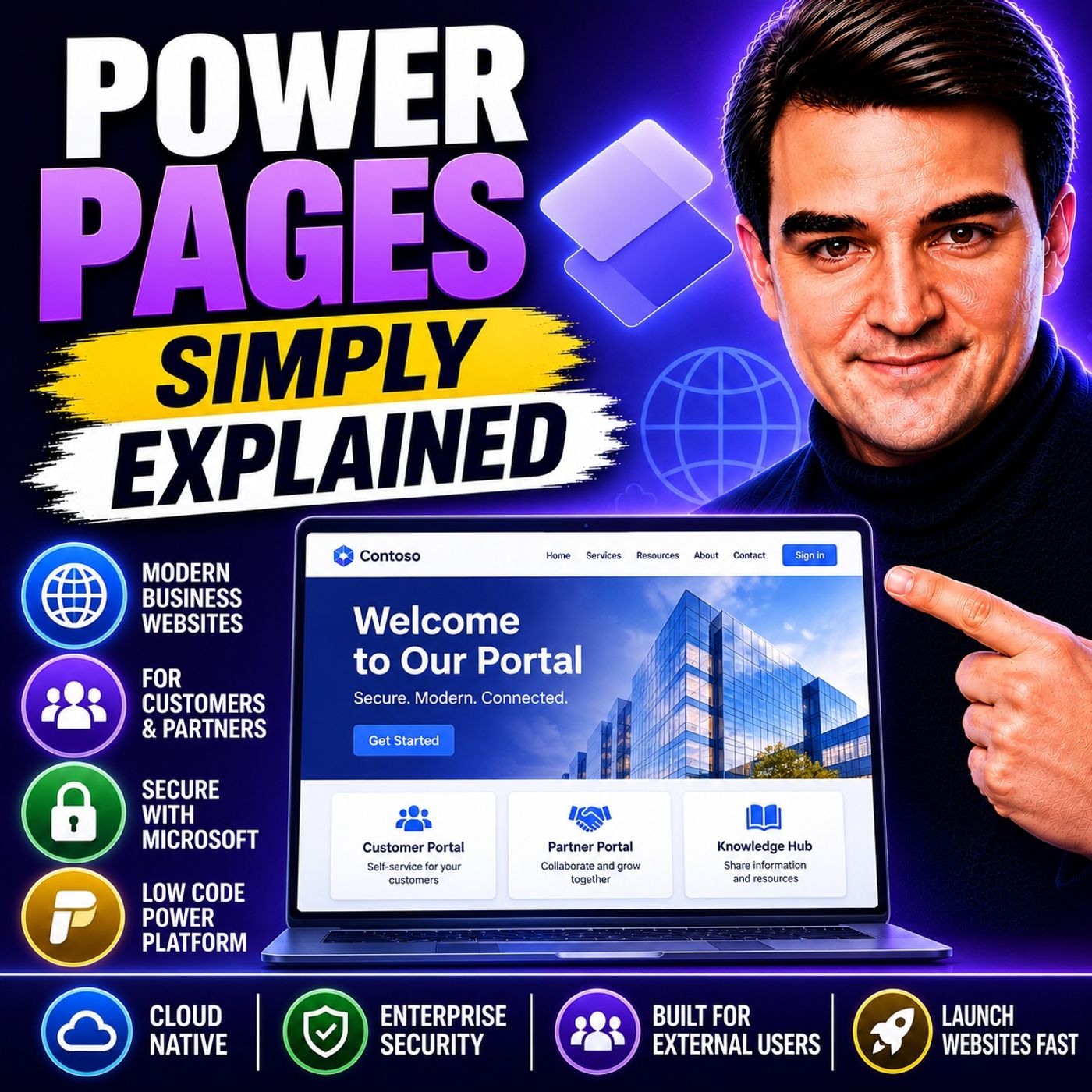
Power Pages - Simply Explained
from M365.FM - Modern work, security, and productivity with Microsoft 365 · host Mirko Peters - Founder of m365.fm, m365.show and m365con.net
Welcome to another episode of Knowledge Nuggets with Mirko Peters. In this episode, we're exploring Microsoft Power Pages, Microsoft's low-code platform for building secure, external-facing business websites. Modern organizations need more than marketing websites. They need customer portals, partner hubs, supplier dashboards, volunteer registration sites, and self-service platforms that connect directly to business data. Traditionally, building these solutions required web developers, expensive hosting, and months of development. Power Pages changes that by allowing organizations to build secure, data-driven websites that integrate seamlessly with Microsoft 365 and Dataverse—without starting from scratch.WHAT IS POWER PAGES?Power Pages is Microsoft's low-code platform for building external business websites. Unlike Power Apps, which focuses on internal employee applications, Power Pages is designed for users outside your organization, including:CustomersPartnersSuppliersVendorsContractorsCitizensVolunteersThink of Power Pages as the secure front door to your business data. Visitors can securely log in, submit forms, check information, update records, and interact with your business processes while Microsoft manages the hosting, infrastructure, security, updates, and scalability behind the scenes. Rather than creating static websites, Power Pages creates interactive business portals connected directly to live enterprise data.FROM POWER APPS PORTALS TO POWER PAGES Power Pages wasn't built from scratch. Originally known as Power Apps Portals, Microsoft rebranded the product in 2022 to give it its own identity within the Power Platform. Today, Power Pages stands alongside:Power AppsPower AutomatePower BIMicrosoft CopilotThe redesign introduced:A modern Design StudioSimplified licensingImproved securityBetter development experienceAI-assisted website creationExisting Power Apps Portal customers were automatically upgraded without rebuilding their sites.DATAVERSE: THE FOUNDATION Every Power Pages website is built around Microsoft Dataverse. Dataverse stores business information such as:Customer accountsOrdersSupport ticketsInventoryProjectsService requestsPower Pages acts as the presentation layer while Dataverse stores the underlying business data. When a customer submits a support request, updates their profile, or checks an order status, they're interacting directly with Dataverse through a secure server-to-server connection. Because Power Pages connects directly to live business data, organizations eliminate manual imports, spreadsheets, and duplicate data entry. Microsoft has also introduced Native Dataverse Authorization, allowing external users to receive security permissions directly within Dataverse, providing stronger security, improved auditing, and more granular access control.BUILDING SITES WITH DESIGN STUDIOPower Pages includes a visual Design Studio that simplifies website creation. The experience is divided into four primary workspaces. Pages Create pages visually using drag-and-drop controls, including:TextImagesFormsListsNavigationSectionsEvery form can connect directly to Dataverse tables. Styling Customize:BrandingFontsColorsThemesLayoutMost websites require little or no CSS customization. Data Manage:Dataverse tablesFormsViewsRelationshipsWithout leaving the Design Studio. Setup Configure:Site settingsAuthenticationIntegrationsAI capabilitiesGo-live configurationEverything needed before publishing your website.SECURITY BY DESIGN Security is one of Power Pages' strongest features. New sites are private by default, preventing accidental exposure before administrators intentionally publish them. Microsoft provides enterprise-grade protection including:Web Application Firewall (WAF)Content Delivery Network (CDN)DDoS protectionMicrosoft Entra ID integrationSSL certificatesManaged hostingAuthentication supports providers including:Microsoft accountsGoogleLinkedInOpenID ConnectSAML identity providersOrganizations define Web Roles that determine which users can access pages and which records they can view or modify. Combined with Table Permissions, Power Pages enforces row-level security so users only see the business information they are authorized to access. Microsoft also introduced Deep Scan, which analyzes websites for security weaknesses and recommends improvements before production deployment.LICENSINGPower Pages uses standalone licensing separate from Power Apps. Pricing is based primarily on:Authenticated usersAnonymous website visitorsOrganizations can start with a free 30-day trial that includes Dataverse storage and full development capabilities. Because Microsoft manages hosting, infrastructure, maintenance, security, and updates, organizations avoid the operational complexity of traditional web hosting platforms while benefiting from predictable cloud pricing.Become a supporter of this podcast: https://www.spreaker.com/podcast/m365-fm-modern-work-security-and-productivity-with-microsoft-365--6704921/support.
Embed this episode
What this episode covers
Welcome to another episode of Knowledge Nuggets with Mirko Peters. In this episode, we're exploring Microsoft Power Pages, Microsoft's low-code platform for building secure, external-facing business websites. Modern organizations need more than marketing websites. They need customer portals, partner hubs, supplier dashboards, volunteer registration sites, and self-service platforms that connect directly to business data. Traditionally, building these solutions required web developers, expensive hosting, and months of development. Power Pages changes that by allowing organizations to build secure, data-driven websites that integrate seamlessly with Microsoft 365 and Dataverse—without starting from scratch. WHAT IS POWER PAGES? Power Pages is Microsoft's low-code platform for building external business websites. Unlike Power Apps, which focuses on internal employee applications, Power Pages is designed for users outside your organization, including: Customers Partners Suppliers Vendors Contractors Citizens Volunteers Think of Power Pages as the secure front door to your business data. Visitors can securely log in, submit forms, check information, update records, and interact with your business processes while Microsoft manages the hosting, infrastructure, security, updates, and scalability behind the scenes. Rather than creating static websites, Power Pages creates interactive business portals connected directly to live enterprise data. FROM POWER APPS PORTALS TO POWER PAGES Power Pages wasn't built from scratch. Originally known as Power Apps Portals, Microsoft rebranded the product in 2022 to give it its own identity within the Power Platform. Today, Power Pages stands alongside: Power Apps Power Automate Power BI Microsoft Copilot The redesign introduced: A modern Design Studio Simplified licensing Improved security Better development experience AI-assisted website creation Existing Power Apps Portal customers were automatically upgraded without rebuilding their sites. DATAVERSE: THE FOUNDATION Every Power Pages website is built around Microsoft Dataverse. Dataverse stores business information such as: Customer accounts Orders Support tickets Inventory Projects Service requests Power Pages acts as the presentation layer while Dataverse stores the underlying business data. When a customer submits a support request, updates their profile, or checks an order status, they're interacting directly with Dataverse through a secure server-to-server connection. Because Power Pages connects directly to live business data, organizations eliminate manual imports, spreadsheets, and duplicate data entry. Microsoft has also introduced Native Dataverse Authorization, allowing external users to receive security permissions directly within Dataverse, providing stronger security, improved auditing, and more granular access control. BUILDING SITES WITH DESIGN STUDIO Power Pages includes a visual Design Studio that simplifies website creation. The experience is divided into four primary workspaces. Pages Create pages visually using drag-and-drop controls, including: Text Images Forms Lists Navigation Sections Every form can connect directly to Dataverse tables. Styling Customize: Branding Fonts Colors Themes Layout Most websites require little or no CSS customization. Data Manage: Dataverse tables Forms Views Relationships Without leaving the Design Studio. Setup Configure: Site settings Authentication Integrations AI...
NOW PLAYING
Power Pages - Simply Explained
No transcript for this episode yet
Similar Episodes
No similar episodes found.
Similar Podcasts
No similar podcasts found.