
EPISODE · Apr 17, 2026 · 46 MIN
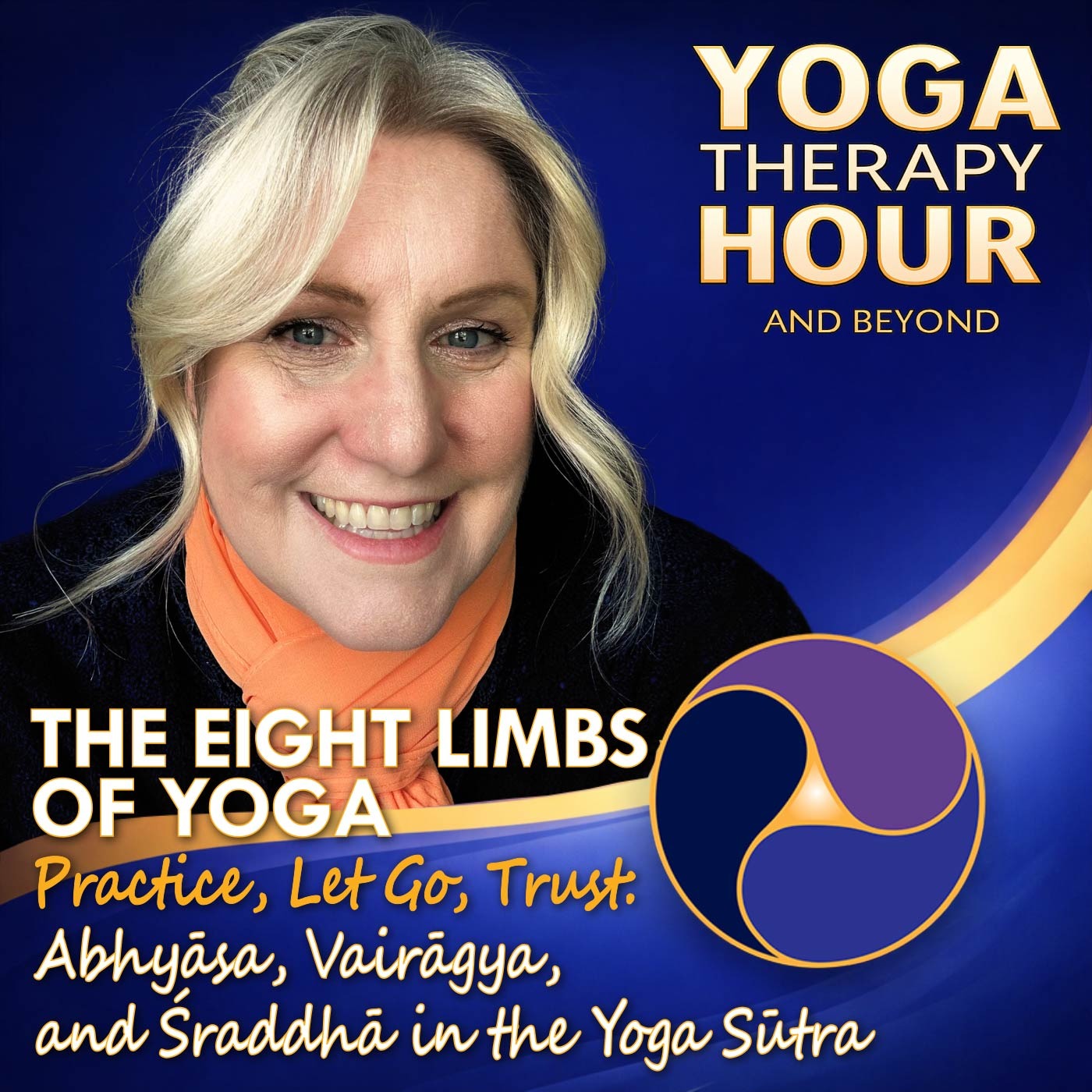
Practice, Let Go, Trust: Abhyāsa, Vairāgya, and Śraddhā in the Yoga Sūtra
from Yoga Therapy Hour with Amy Wheeler · host Amy Wheeler
In this solo episode, Amy Wheeler explores three foundational teachings from Patañjali’s Yoga Sūtra that describe how real transformation unfolds over time: abhyāsa (steady practice), vairāgya (letting go of attachment), and śraddhā (deep trust in the process).While these terms are often translated simply as “practice and detachment,” Patañjali presents them as a sophisticated framework for understanding how the mind stabilizes and how human behavior gradually shifts. Amy reflects on how these teachings describe the ongoing work of regulating the mind, working with habitual patterns, and cultivating a steadier relationship with our internal experience.The conversation begins with Yoga Sūtra 1.2 — yogaḥ citta-vṛtti-nirodhaḥ, the well-known description of yoga as the process of working with the fluctuations of the mind. Amy explains how these fluctuations influence behavior, emotional reactions, communication patterns, and the way we show up in relationships and daily life. From both a yogic and modern nervous system perspective, the mind tends to move along well-worn pathways shaped by conditioning and repetition.Patañjali offers a clear response to this reality.In Yoga Sūtra 1.13–1.14, he introduces abhyāsa, the disciplined effort to remain steady. Amy discusses how abhyāsa is not about intensity or dramatic breakthroughs. Instead, it reflects the quiet power of consistent practice over time. When a practice is sustained for a long period, practiced without interruption, and approached with care and sincerity, it begins to stabilize the mind and reshape patterns of behavior.Yet practice alone can lead to striving and tension if it is not balanced by vairāgya.Drawing from Yoga Sūtra 1.15, Amy explores vairāgya as the capacity to release our grasp on outcomes. This teaching does not suggest disengagement from life. Rather, it encourages freedom from excessive craving for particular results, identities, or experiences. In practical terms, this means continuing to practice while allowing the process to unfold naturally, without becoming trapped in cycles of evaluation, success, or failure.This balance between effort and release becomes essential in both personal practice and therapeutic settings. When individuals become overly attached to outcomes, the nervous system often moves toward anxiety, urgency, or self-criticism. Vairāgya creates space for psychological flexibility and a steadier relationship with change.Amy then introduces śraddhā, described in Yoga Sūtra 1.20, as a quiet but essential quality that sustains the path. Often translated as faith, śraddhā can be understood as a grounded sense of trust or confidence in the process of practice. It is the willingness to continue even when change is gradual or difficult to perceive. In therapeutic contexts, śraddhā often appears as hope, openness, and the willingness to keep engaging with practices that support healing and growth.Together, abhyāsa, vairāgya, and śraddhā form a practical framework for transformation:· Abhyāsa encourages us to return to practice consistently.· Vairāgya helps us release the need to control outcomes.· Śraddhā sustains our commitment to the path.Amy reflects on how these teachings continue to shape modern yoga therapy, where long-term behavioral change, nervous system regulation, and self-awareness unfold gradually through repeated experience rather than quick solutions.This episode invites listeners to consider how these three principles might influence their own lives: how we practice, how we release attachment to results, and how we cultivate the quiet trust that allows meaningful change to emerge over time.
Embed this episode
NOW PLAYING
Practice, Let Go, Trust: Abhyāsa, Vairāgya, and Śraddhā in the Yoga Sūtra
No transcript for this episode yet
Similar Episodes
No similar episodes found.
Similar Podcasts
No similar podcasts found.