
EPISODE · Apr 23, 2026 · 5 MIN
Pratt, Kansas
from The Timberline Letter · host Ed Chinn
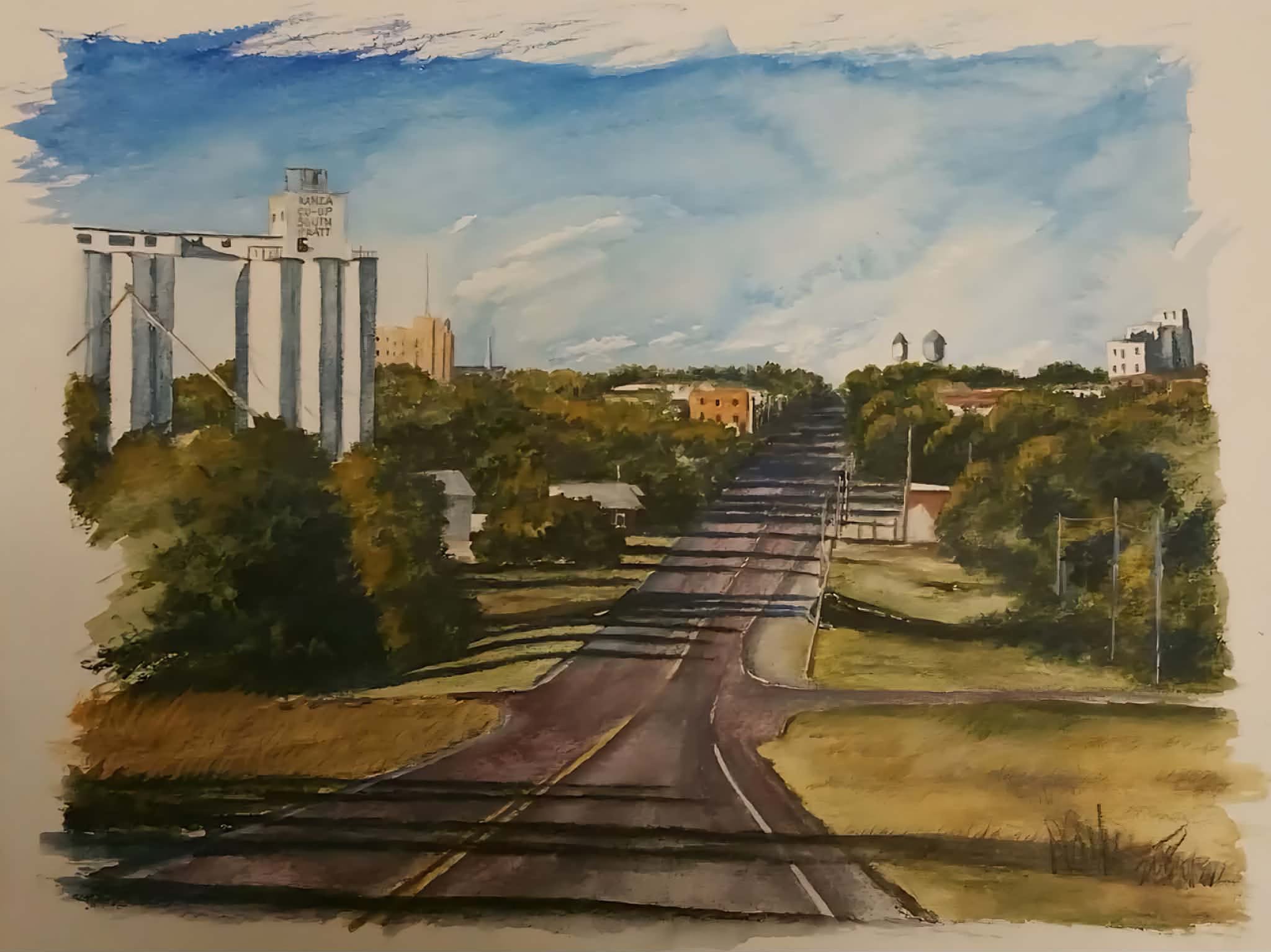
Following our recent essay, A Place in the World, about the Chinn family farm, here is Part 2—Pratt, Kansas.There was something about the way Jack Chinn said “Pratt;” as crisp as a bite of celery. The very sound of the word carried expectancy.Pratt was Dad’s place in the world. It was also that for my brothers, Vernon and Carl, our mom, and for me. Our place was an anvil; there Heaven’s hammer forged our Chinn identity.Like much of Kansas, Pratt County is a latticework of section roads engraved across America’s heartland prairie. One mile apart and running north and south, east and west, that grid contains over a thousand miles of dirt roads.As a teenager, I mowed the sides of those roads. Day after day, summer after summer, I crisscrossed the county on a John Deere tractor and mower rig. Is it merely coincidence that I now see life on a grid of issues, relationships, and propositions? Would my mental software be different if I had been born in Brooklyn or raised in the Rockies?The streets in Pratt ran on that same east, west, north, and south grid; graceful canyons, rivers of red brick streets flowing between the walls of stately oak and locust and maple trees. Not many towns could claim a Main Street over two thousand miles long. But Pratt could. Main was part of a highway which ran from the Rio Grande to Canada. As a boy, my imagination flowed up and down that line, US 281, across Dad’s folding maps. My fingers moved over the map’s ridges, taking my mind past the rivers and state lines into exotic places called Aberdeen and Mineral Wells and George West.First Street, which crossed Main in the middle of Pratt, was about twelve hundred miles long. That line, US 54, ran west across Kansas, the Oklahoma and Texas Panhandles, and New Mexico. To the east, it reached all the way to Illinois.The north side of town was bordered by the Rock Island (now Union Pacific) tracks, and the south side at the Santa Fe (now BNSF) crossing. Each line ran beside a depot and a gleaming white grain elevator. Pratt supported a hospital, high school, movie theater, library, two banks, two mortuaries, and a thriving downtown. There were nearly thirty churches.Somewhat famously, Pratt also includes twin water towers. As a 1950s prank, high school boys climbed the towers and marked one COLD, the other HOT. Instead of treating it like graffiti, the people of Pratt embraced it—something funny, something worth keeping.In those days, life’s borders barely reached the city limits. Family, school, and church produced a strong local culture, one that thrived and largely eclipsed any larger identity. Television had not yet opened the door to a national life. We knew little about life in New York City, or even Kansas City.Pratt was an island of trees, homes, parks, grain elevators, and church steeples rising from an immense sea of farms and ranches. Life on the land pulled men and women close to embrace them, whisper promises, and sometimes to cripple or kill them.I remember prairie compounds, great wood barns, tractor widows, and the way the wind so elegantly raked its fingers through wheat fields. Agricultural life asked people to throw steel blades into the soil, wrestle with banks and merchants, and call on the mercy of God; all in order to pull daily bread (and maybe an estate) out of the ground.For ag people, the scent of rain was the kiss of God; they had to have it and could do nothing about it but pray. So, their lives bent around that Big Sky, its beauty and bounty, as well as its destruction and death.I recall the way men and women stood firm in their place in the world, accepting the limits and losses that came to them. Over time, the lines between themselves and their place fused—soil and soul, horizon and hope. In that long submission to land, seasons, and God, something took hold: a steadiness, a gravity, as the same hand that shaped the landscape quietly set them in place as well.The Timberline Letter is a reader-supported publication. To receive new posts and support my work, consider becoming a free or paid subscriber. This is a public episode. If you'd like to discuss this with other subscribers or get access to bonus episodes, visit timberlineletter.substack.com/subscribe
Embed this episode
Ready to play
Pratt, Kansas
No transcript for this episode yet
Similar Episodes
No similar episodes found.
Similar Podcasts
No similar podcasts found.