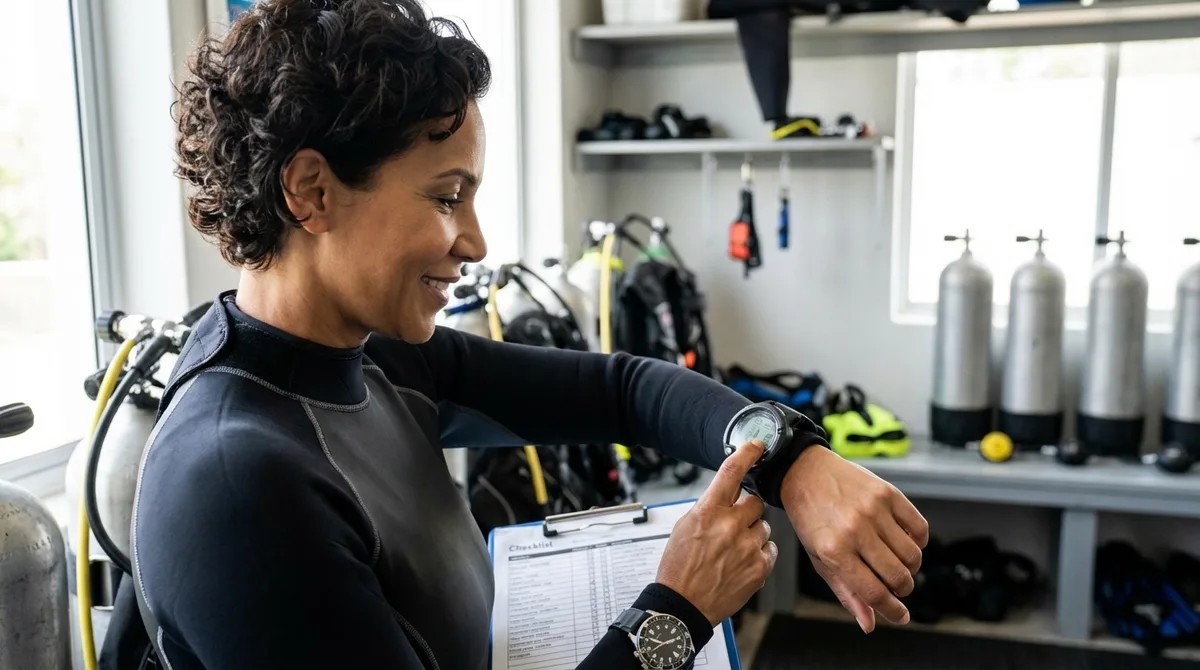
Pre-Dive Computer Checklist: Setup and Safety Verification
from The Scuba Gear Lab
A dive computer that fails at depth transforms a relaxing underwater adventure into a dangerous guessing game—and the problem almost always traces back to rushed pre-dive setup. In this episode, Marcus Okafor walks through the systematic verification checklist he's refined across thousands of dives, from tropical reefs to cold-water wrecks. Whether you're a new diver still learning your equipment or an experienced one who can't shake that nagging feeling you've forgotten something, this step-by-step routine covers everything from battery checks to algorithm configuration so you can focus on enjoying the dive instead of worrying about your gear. Check your battery status before suiting up—anything below 30 percent means you should replace or charge before diving, not discover the problem mid-trip like Marcus did on a Palau live-aboard. Condensation or water droplets visible behind the screen glass signals o-ring failure or case damage, meaning your computer is already compromised and will likely flood completely at depth. Forgetting to switch out of gauge mode leaves you with zero decompression information mid-dive—always verify you're in the correct dive mode (air, nitrox, technical) before descending. When diving enriched air, your computer's oxygen percentage must match your cylinder analysis exactly; diving 32 percent nitrox while your computer assumes air gives you dangerously misleading no-decompression limits. Test audible alarms in setup mode before every dive—silent alarms from malfunctioning speakers can't warn you about ascent rate violations when you need it most. Accurate time and date settings aren't just cosmetic; your computer uses timestamps to calculate surface intervals and residual nitrogen loading between dives. Read the full article: https://thescubagearlab.com/pre-dive-computer-checklist
Embed this episode
No transcript yet.