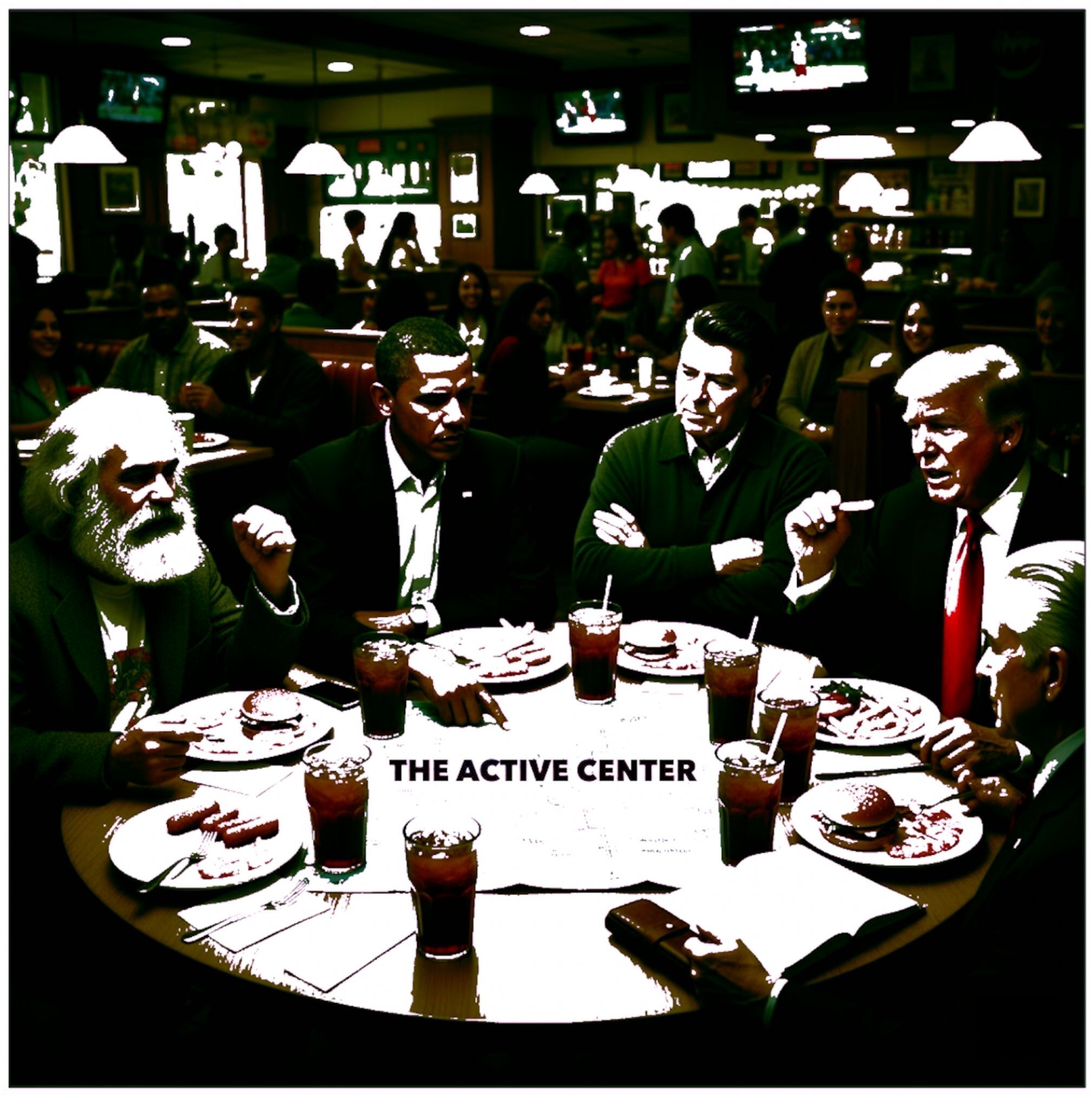
President Trump's Tariff Policy: A One-Year Review (Feb 2026) episode artwork

EPISODE · Feb 9, 2026 · 5 MIN

President Trump's Tariff Policy: A One-Year Review (Feb 2026)

from The Active Center · host David Sepe

1. The Presidential Rationale: Why Tariffs? From the perspective of President Donald Trump, tariffs are not merely a tax, but a "beautiful" geopolitical tool and an "American economic miracle." His primary arguments for the current policy are: Reciprocity and Fairness: Trump argues that the U.S. has been the "piggy bank" for the world. By implementing Reciprocal Tariffs, he aims to match the duties other countries place on American goods. National Security & Borders: In 2025, the administration invoked the International Emergency Economic Powers Act (IEEPA) to tie tariffs to non-trade issues, specifically using 25% tariffs on Canada and Mexico as leverage to stop the flow of illegal drugs and migrants. Revenue Generation: Trump views tariff revenue as a replacement for traditional taxes. He intends to use the billions flowing into the Treasury to fund further corporate tax cuts (as seen in the 2025 "One Big Beautiful Bill Act") and to reduce the national debt. Industrial Revitalization: By making foreign goods more expensive, the goal is to "force" companies to move manufacturing back to the U.S., thereby "hollowing out the trade deficit" and rebuilding the defense-industrial base. 2. The Economist's View: Skeptics and Traditionalists Traditional economists generally view tariffs as a regressive tax on domestic consumers. Robert Reich (Former Labor Secretary): "Trump’s tariffs will be paid largely by the American working class and poor... It will be a massive transfer of wealth from most Americans to the super wealthy and giant corporations." Joseph Stiglitz (Nobel Laureate): "Virtually all economists think that the impact of the tariffs will be any bad for America and for the world... They will almost surely be inflationary." Jim Stanford (Canadian Economist): "The tariffs would apply each time parts cross the border... That 25 percent would be compounded on each step. The impact on costs would be astounding." Nancy Qian (Northwestern): Points to the "uncertainty" of the policy as the greatest harm: "Uncertainty about what the U.S. wants and how long before U.S. policy changes again is getting in the way." 3. Data Review: Are the Tariffs Working? (Feb 2026) Based on data from the Bureau of Labor Statistics (BLS) and the U.S. Treasury as of early 2026: Evidence they are "Working" (The Trump View) Treasury Revenue: Customs duties hit $195 billion for Fiscal Year 2025, a 150% increase over 2024. Treasury Secretary Scott Bessent noted revenue is heading toward a $500 billion annual pace. Industrial Production: Industrial output in tariff-sensitive industries rose 3.5% through mid-2025, suggesting some domestic capacity is being utilized. Inflation Resilience: Core inflation (excluding food/energy) dropped to 1.4% in the final three months of 2025 (though critics argue this was distorted by the late-2025 government shutdown). Evidence of "Not Working" (The Skeptics' View) The Trade Deficit: Despite the "Reciprocal" push, the 2025 trade deficit reached nearly $840 billion by November, a 4% increase over 2024. This was caused by a "front-loading" surge where companies rushed to import goods before the tariffs took effect. Household Cost: The Tax Foundation estimates the average tax increase per U.S. household at $1,300 in 2026. Job Losses: Hours worked converted to full-time equivalent jobs are projected to decline by 447,000 due to the higher cost of production inputs. GDP Impact: Most models (Penn Wharton and Yale Budget Lab) show a long-term 0.5% to 0.9% drag on GDP growth due to reduced capital flow and higher investment costs. 4. The Treasury "Pot": Where is the money going? President Trump and Secretary Bessent have outlined three primary uses for the tariff revenue currently sitting in the Treasury: Deficit Reduction: Aiming to shrink the fiscal deficit toward 3% of GDP by 2028. Tax Offsets: Funding the extensions and expansions of the 2025 tax cuts, essentially shifting the tax burden from "income/production" to "consumption." National Security: Funding border security initiatives and the replenishment of the defense-industrial base.

1. The Presidential Rationale: Why Tariffs? From the perspective of President Donald Trump, tariffs are not merely a tax, but a ”beautiful” geopolitical tool and an ”American economic miracle.” His primary arguments for the current policy are: Reciprocity and Fairness: Trump argues that the U.S. has been the ”piggy bank” for the world. By implementing Reciprocal Tariffs, he aims to match the duties other countries place on American goods. National Security & Borders: In 2025, the administration invoked the International Emergency Economic Powers Act (IEEPA) to tie tariffs to non-trade issues, specifically using 25% tariffs on Canada and Mexico as leverage to stop the flow of illegal drugs and migrants. Revenue Generation: Trump views tariff revenue as a replacement for traditional taxes. He intends to use the billions flowing into the Treasury to fund further corporate tax cuts (as seen in the 2025 ”One Big Beautiful Bill Act”) and to reduce the national debt. Industrial Revitalization: By making foreign goods more expensive, the goal is to ”force” companies to move manufacturing back to the U.S., thereby ”hollowing out the trade deficit” and rebuilding the defense-industrial base. 2. The Economist’s View: Skeptics and Traditionalists Traditional economists generally view tariffs as a regressive tax on domestic consumers. Robert Reich (Former Labor Secretary): ”Trump’s tariffs will be paid largely by the American working class and poor... It will be a massive transfer of wealth from most Americans to the super wealthy and giant corporations.” Joseph Stiglitz (Nobel Laureate): ”Virtually all economists think that the impact of the tariffs will be any bad for America and for the world... They will almost surely be inflationary.” Jim Stanford (Canadian Economist): ”The tariffs would apply each time parts cross the border... That 25 percent would be compounded on each step. The impact on costs would be astounding.” Nancy Qian (Northwestern): Points to the ”uncertainty” of the policy as the greatest harm: ”Uncertainty about what the U.S. wants and how long before U.S. policy changes again is getting in the way.” 3. Data Review: Are the Tariffs Working? (Feb 2026) Based on data from the Bureau of Labor Statistics (BLS) and the U.S. Treasury as of early 2026: Evidence they are ”Working” (The Trump View) Treasury Revenue: Customs duties hit $195 billion for Fiscal Year 2025, a 150% increase over 2024. Treasury Secretary Scott Bessent noted revenue is heading toward a $500 billion annual pace. Industrial Production: Industrial output in tariff-sensitive industries rose 3.5% through mid-2025, suggesting some domestic capacity is being utilized. Inflation Resilience: Core inflation (excluding food/energy) dropped to 1.4% in the final three months of 2025 (though critics argue this was distorted by the late-2025 government shutdown). Evidence of ”Not Working” (The Skeptics’ View) The Trade Deficit: Despite the ”Reciprocal” push, the 2025 trade deficit reached nearly $840 billion by November, a 4% increase over 2024. This was caused by a ”front-loading” surge where companies rushed to import goods before the tariffs took effect. Household Cost: The Tax Foundation estimates the average tax increase per U.S. household at $1,300 in 2026. Job Losses: Hours worked converted to full-time equivalent jobs are projected to decline by 447,000 due to the higher cost of production inputs. GDP Impact: Most models (Penn Wharton and Yale Budget Lab) show a long-term 0.5% to 0.9% drag on GDP growth due to reduced capital flow and higher investment costs. 4. The Treasury ”Pot”: Where is the money going? President Trump and Secretary Bessent have outlined three primary uses for the tariff revenue currently sitting in the Treasury: Deficit Reduction: Aiming to shrink the fiscal deficit toward 3% of GDP by 2028.

NOW PLAYING

President Trump's Tariff Policy: A One-Year Review (Feb 2026)

0:00 5:42

No transcript for this episode yet

We transcribe on demand. Request one and we'll notify you when it's ready — usually under 10 minutes.

No similar episodes found.

No similar podcasts found.

Frequently Asked Questions

How long is this episode of The Active Center?

This episode is 5 minutes long.

When was this The Active Center episode published?

This episode was published on February 9, 2026.

What is this episode about?

1. The Presidential Rationale: Why Tariffs? From the perspective of President Donald Trump, tariffs are not merely a tax, but a "beautiful" geopolitical tool and an "American economic miracle." His primary arguments for the current policy...

Can I download this The Active Center episode?

Yes, you can download this episode by clicking the download button on the episode player, or subscribe to the podcast in your preferred podcast app for automatic downloads.
URL copied to clipboard!