
EPISODE · May 12, 2026 · 51 MIN
Pricing AI at a loss: How Intercom launched outcome-based pricing before the market existed
from The Chief AI Officer Show · host Front Lines
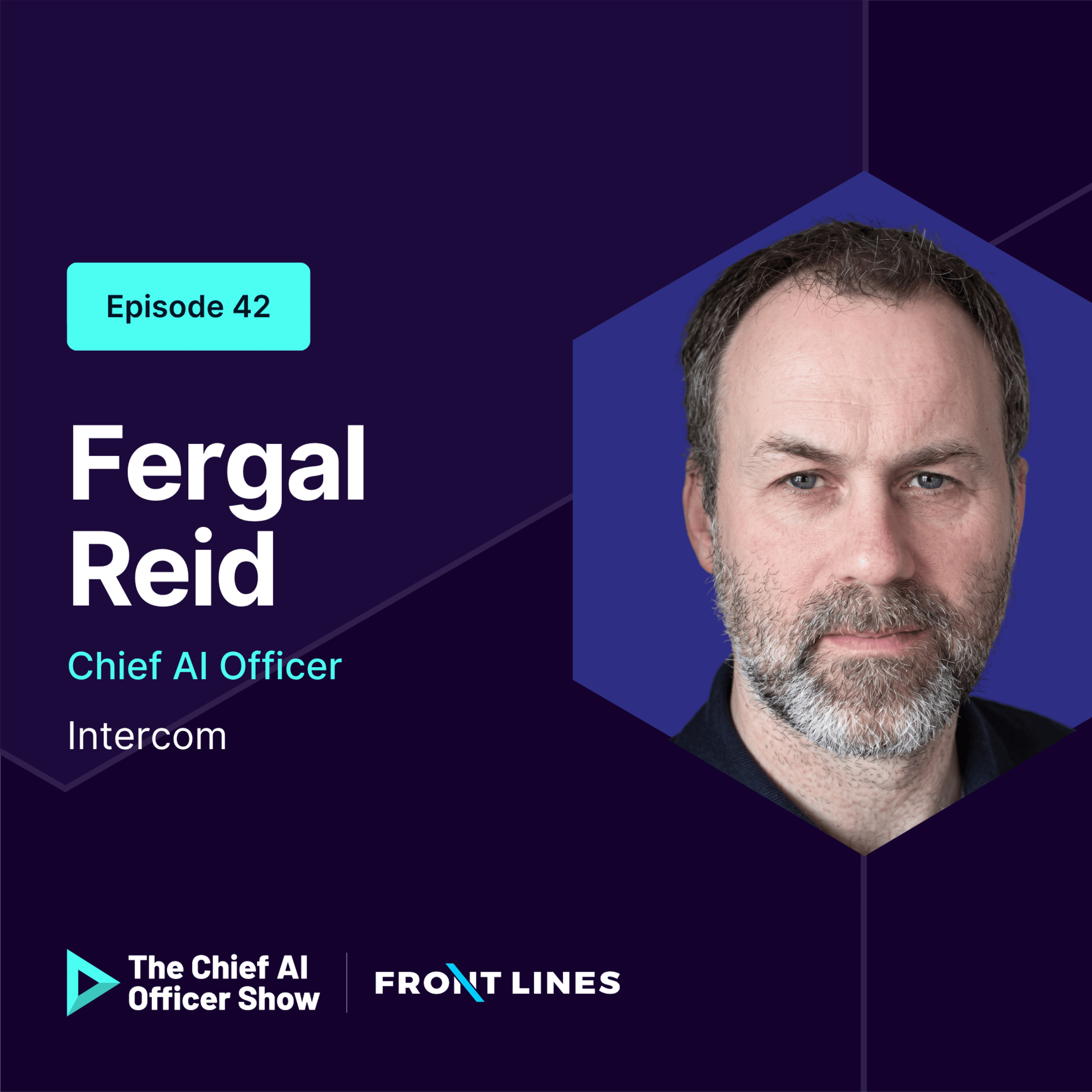
Intercom launched outcome-based pricing before the market had a framework for it, before inference costs made it profitable, and before customers knew how to budget for it. Fergal Reid, Chief AI Officer, was inside that decision and he shares exactly how they modeled their way through it, what two bets he personally owned, and why they went to $1 per resolution knowing it was a loss.That pricing story is inseparable from their model strategy. Fergal walks through the production data that led them to conclude that Opus 4.5 didn't outperform Sonnet 4.0 on their RAG customer service task, what that told them about the limits of general intelligence at the application layer, and why it pushed them to build Apex, their own model trained via reinforcement learning on an open-weight base specifically for customer service. With 85% of Intercom's own support volume now fully automated, the bets held.Topics discussed:Outcome-based pricing mechanics: the $2 beta, the loss-leader move to $1, and the two assumptions Fergal had to ownWhy Opus 4.5 failed to outperform Sonnet 4.0 on a production RAG task and what that signalsIntelligence saturation at the application layer and why more general capability stops moving the needleBuilding Apex: using reinforcement learning on open-weight models to reshape expertise distributionThe internal bet on going all-in on Fin over a Copilot bridge productWhy outcome-based pricing is now a customer expectation for high-value AI products, including a new $10/outcome productWhy 85% automation in customer service still hasn't driven fast adoption, and what actually moves the curveWhy Fergal takes the possibility of recursive self-improvement seriously when most application-layer leaders don'tListen to more episodes: Apple Spotify YouTube
Embed this episode
NOW PLAYING
Pricing AI at a loss: How Intercom launched outcome-based pricing before the market existed
No transcript for this episode yet
Similar Episodes
No similar episodes found.
Similar Podcasts
No similar podcasts found.