Welcome to the Tweed Trends podcast. Hey, Evette, what's trending today? Hey, I'm Evette, hey girl. And you are tuned in to Tweed Trends.
It's the quickest way to find out what's trending today. Black Lives Matter simply refers to the notion that there is a specific vulnerability for African Americans that needs to be addressed. It's not meant to suggest that other lives don't matter. It is to suggest that other folks aren't experiencing this particular vulnerability.
Barack Obama. Hey there, welcome back to Tweed Trends. We're gonna take a tiny little pivot today. We're gonna not talk about a lesser-known figure in history.
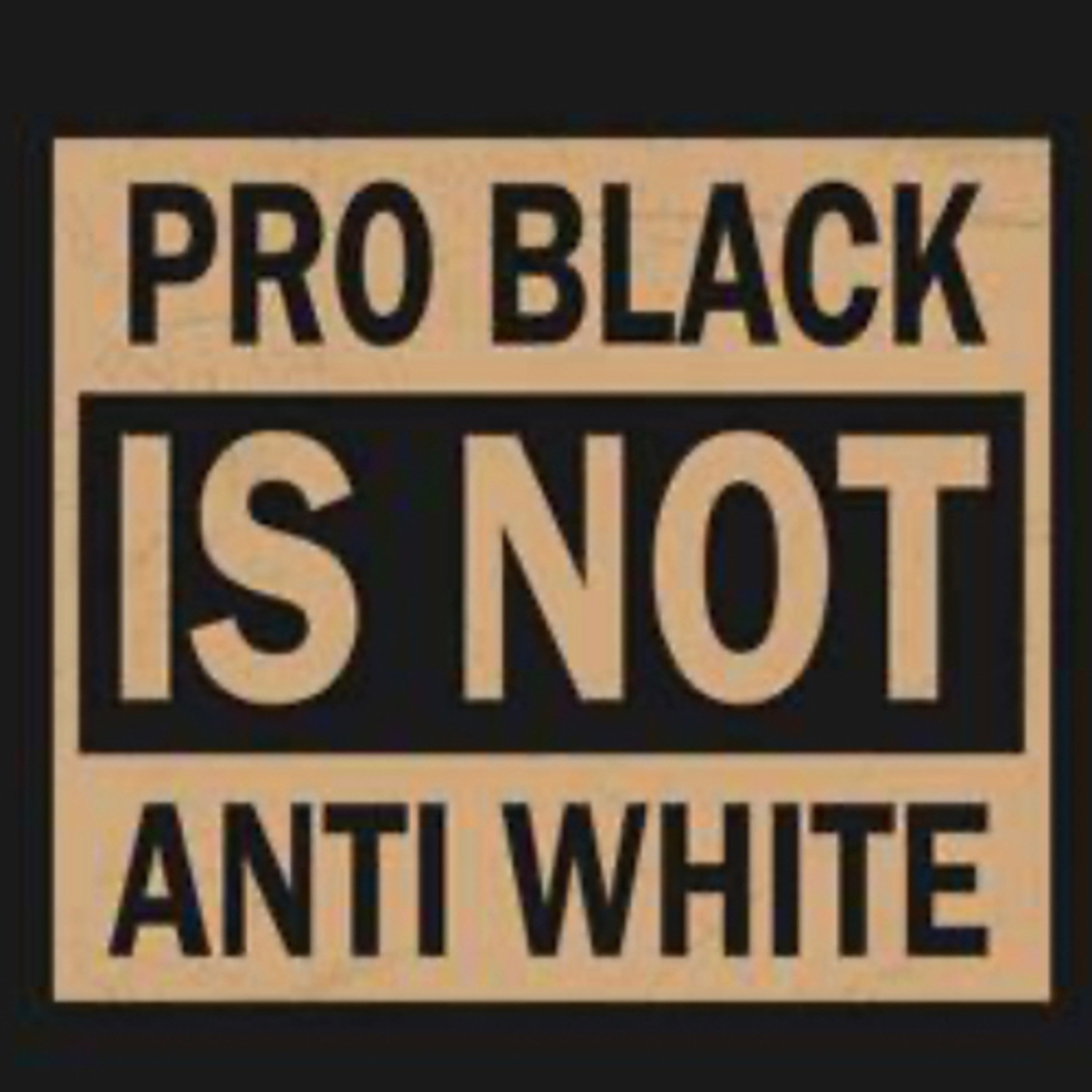
We'll get back to that tomorrow. Instead today, I want to talk about a topic that I heard while listening to Urban View earlier today. And I can't remember who show what I was listening to, but basically the guess that they had on there was stating the fact that for me to be pro-black does not mean that I'm anti-white. It's not an equivalent statement.
To say this here does not equal that over there. It's just not that cut and dry. I can love me and love you as well. I can love the nighttime and still appreciate the day.
So why does it seem like black and white is binary where it's either a yes or a no, the light is on or it's off. It's a one or a zero, but there's no gray area in between. It's not like I can't love myself. Like I have to not love myself or I have to keep it to myself.
I can love myself, but don't say it out loud because as soon as you say it out loud, now I feel some type of way about it. It shouldn't be that way. I don't understand why that thought process is the way that it is. There have been so many wounds that have been inflicted upon us, not just by other people, but even by ourselves.
It's great to know that we have been on this journey and have reached a point that the cruelty and the things that were done to us and the things that were said to us, we've been able to almost transcend those things and love ourselves again. To love everything about ourselves, all of the things that were said that were negative and bad, especially as being a black female, all of the things that were said and done. We talked about the fact that there were cities that made laws about the fact that black women couldn't wear their hair out, they had to wear head scarves, and how we had to turn that one upside down on his head. Any way to try to continue to love self.
So now we get to a point where we're just fed up. We're loving ourselves and we're loving each other. And still, there's violence against us. And so then we have the courage to say, you know what, black lives matter.
And even in saying that, people then kind of turn around to us and they're like, well, don't say that, don't say it like that, because all lives matter. Well, sure they do. But the ones that are being challenged are the black ones. So that's why we feel the need to have to say that black lives matter.
In a way, almost it's not even so much to tell you that black lives matter, but to remind ourselves even that black lives matter. So when these various shootings and killings are happening, then it's like reminding ourselves, hey, we got to speak up, we got to speak up, we got to stand up, we got to do something. Because if we sit on the sidelines and don't do a thing, then it's going to continue to happen. And pretty soon, you know, you'll look around and wonder why you're the only ones still there.
Well, because it took out everybody else. And so, and this kind of loosely ties to a situation that happened at work. I'm the only black person that works at my company. And quite often, I find myself questioning myself about different things.
Like, I wonder what they think when I say things and when I do things, I wonder. And we had a meeting and usually at our meetings, it'll start off with a question. And we'll go around and everyone will get to answer the question. And this last time, the question was, if a genie gave you one wish, what would you wish for?
And the way that the question thing goes is that one person will start and then they call on somebody. And then you continue to call on people until all the people have had a chance to answer. And then the last person goes back to the owner of the company and then he gives his answer and then we go into our meeting. Well, for this particular day, we go, questions get asked, go around, round, round, round, round.
We're on a Zoom, so you know, those of us who hadn't been called on yet, we raised our hand. And in that way, people in the group knew who they could call on. Well, I was the last person called on and they asked the question, what if a genie gave you a wish, what would you wish for? And so many of the different things that were said was like an unlimited supply of money, perfect help, you know, all of these things for self.
There was one other girl, she's Hispanic, and she wished for health for her mother. Her mother has been having some health complications. She was the only person that wished for something for somebody else, everybody else wished for something for themselves. And it was things like, you know, money and fortune and stuff like that.
And I guess that's the typical answer. And then it got to me and I went to answer it and I began to cry. And I hate when I cry in front of people. But what I was about to say was something that typically makes me cry.
I said that I would wish for peace and an end of violence. And usually when people answer the questions, they give a reason behind why. And I started to leave it there and I said, you know what, no, I need to let them know why I'm saying this. So I told them.
I said, you know, many of you may not know. I'm from Charleston, South Carolina. I don't live there currently, but I'm from Charleston, South Carolina. And I personally knew two of the people in the mother and manual killings.
And it was senseless. That guy did not know, not a single one of those people. None of them had done anything to him or anyone that he knows. But something inside of him said, I don't like them and kill these people.
And I cried, I cried. And I ended up turning my camera off. I could pull myself back together. And you know, and everybody was like, oh, you know, in the chat, oh, we've had, you're so sorry.
We're starting to hear that. Yes, the world does need peace. And as sweet as it was for them to take two seconds out to type something in the chat, it was like that moment came, it was there. And like steam, it just kind of blended into the atmosphere.
And that was it. And I didn't expect anybody to have any great aha moments or anything like that. But to me, it was one of those things where I needed them to know and understand that this isn't fun and games and a joke for me. What I do and go through on a day-to-day basis in the same for you guys clearly.
Because you guys are thinking of things for self. And I'm thinking about you and me. I'm trying to look out for everybody. But it was just a question, the beginning of a meeting.
Why did you take it so seriously that? And it's like, being black is serious. I can't change that. I can't hide it.
When you see me, you see my blackness. My blackness comes in the room before I do. And whatever experience a person has with black people, that gets put on me too. And I don't even know it.
So yeah, for me to be pro-black, doesn't mean I'm anti-anything. It just means that I have a knowledge and an understanding of what is happening in this world around me. And I want it to change. And with that, I'm going to go ahead and wrap it up.
Because I didn't realize I talked so long in that last segment. Thank you so much for joining me. Thank you for hanging in there with me and letting me get that off my chest. We'll be back to highlighting lesser known individuals in black history tomorrow.
In the meanwhile, if you have any thoughts or ideas or just want to reach out, you know where to find me on Twitter and Instagram at HEVET. Or just look for the hashtag tweet trends.