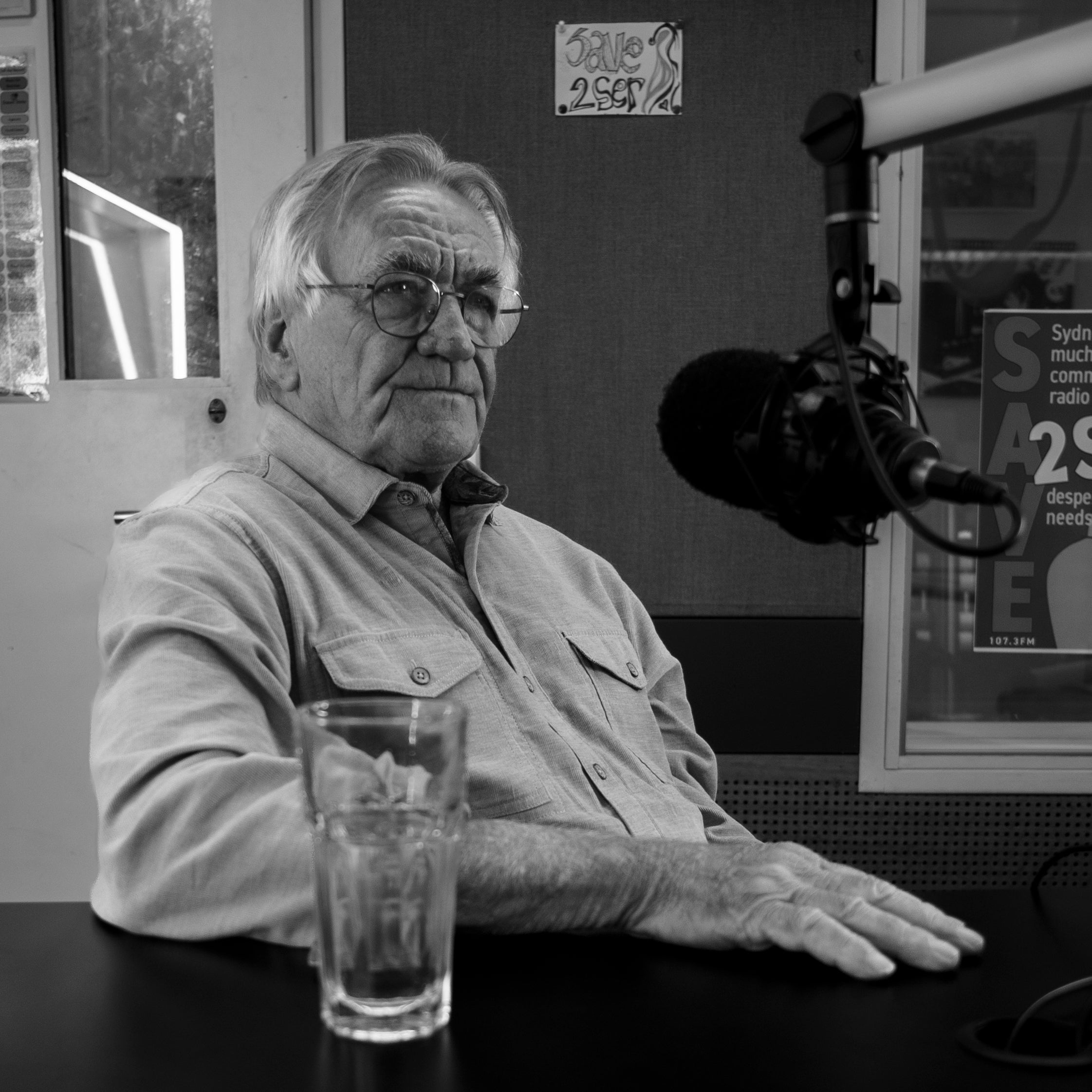
Hi there and welcome back to Fourth Estate, the show where we talk media, politics and everything else in between. From Gadigal and Sydney, I'm Tina Quinn. Today we return to our ongoing in-profile series where we sit down with some of the most influential figures in Australian journalism to reflect on their careers, their craft and the experiences that have shaped both. Our guest is veteran political journalist Barry Cassidy. If you're joining us for the first time, I'd encourage you to head back and listen to part one of this discussion, which is...
available now in your podcast feed. In that episode, we traced Barry's journey from a small country newspaper in regional Victoria to the Federal Press Gallery in Canberra before his decision to leave journalism and join Prime Minister Bob Hawke's office as press secretary. When we pick up the story today, Barry is back in journalism, but based in Washington as the Australian's United States correspondent, while his wife, Heather Hewitt, is serving as the ABC's DC correspondent. It was there that he received a call from Carmel Travers, who was then Network 10's head of news and current affairs, with an offer that would once again change the course of his career. Yeah, I was still there. She was visiting Washington for whatever reason and she asked to catch up. And she said that whenever you come back to Australia, come and see me because...
I want to make a few changes with her news and current affairs, and so I did. And what she wanted to do was change the look of Meet the Press, their Sunday morning program. Welcome back to Meet the Press. Our guest today, Malcolm Turnbull, chairman of a committee that has recently reported to the government on a list of options for a republic. And staunch monarchist and liberal member for Warringah, Tony Abbott. The objective, I believe, is to have a head of state who is not solely appointed by the government and who is seen as a bipartisan figure with cross-political support. OK, a two-thirds majority of the parliament, Tony Abbott. I don't know of many issues that would be agreed upon by two-thirds of the parliament. Do you think it's workable?
Look, I think it's very hard to make it work. As we've just heard from Malcolm, this whole Republican issue is drowning us with words, it's overwhelming us with paper, and yet still the Republicans can't come up with a specific proposal. Well, that's not all that complicated. Well, it is. I mean, we've got Malcolm's draft constitution, we've got John Hurst's draft constitution, we've got Professor Winnerton's draft constitution. They're all different. You get 20 different Republicans and you get 20 different versions of Republicans. But that won't be the case when it comes to a vote. And some of the Republicans will oppose whatever Republic Keating...
comes up with because the minimalist Republicans will oppose a maximalist Republic and the maximalists will oppose a minimalist. This is all academic to you because you simply oppose a Republic in any form. Well, I think it's a bad principle. I think our existence... It was launched two years earlier, hadn't it, with David Johnston. Yeah. And it was... Obviously, it was a rival to the Sunday program on Nine and it was considered somewhat... A bit of a stiff rival. It was a poor custom to it, yeah. When I say stiff, I mean, the whole... I guess the atmosphere of it was quite stiff. It was a bit formal. It was a bit formal, yeah. They didn't have much fun, a lot of fun at all. And you like to have fun, don't you, Barry? Yeah, I do. But I also suggest because...
I know looking back now, you think that everybody had panel programs, right? And they do now. But there were no programs, panel programs going on in Australia in the way that they were then. And so I suggested to her getting a program started as well. And I got that going. It was called The Last Shout. The Last Shout. And it was just insane. I mean, we just got...
the craziest people on. And it went to air at about 11 o'clock at night and that's where it belonged because of the nature of it. It was really loose, a really loose program that we'd pick up on. Was it live? No, it wasn't live. We'd never do a program like that live. And it was fairly heavily edited at times, I think. But, you know, when you're...
When you're putting on people like Ann Summers and John Stone, who was a very conservative head of treasury at the time, and there were some real characters. I remember being on a train station once, and there was this homeless guy, or at least he appeared to be, and he was quite drunk. And I was walking along with Ann Summers, and he said, Ann Summers. And she thought, well, you know, my very good work. in terms of women's liberation, is starting to hit the spot with people. She said, I love that late show that you're on. What has the world come to? But it was a fun show. Bob Ellis, characters like Bob Ellis used to come and debate with Catherine Greiner. Yeah, you'd never get away with it now. And it was, as I said, it found its spot late at night.
Well, yeah, it was on 11.30 at night. 11.30, was it? Was that late? Was that late? And what night? A week? It wasn't a five-night-a-week program. No, no, it was one night a week. And it was just something that we played around with just to try and get the whole concept of panel programs going. I was reading an old Sydney Morning Herald media column from the time, and the media columnist referred to it as the most underrated half hour on television. Most outrageous, I would have thought, but it was fun to do. It had a following. It had a following. So one night a week, and then you'd also do Meet the Press on a Sunday. On Sundays, yeah. On a Sunday as well. And were you also appointed the Bureau Chief, the Canberra Bureau Chief for Network 10 at that time? Eventually.
I was in the Bureau and Alan Jones started up a television program for 10. And he decided that I should be his correspondent. And one day a week or two days a week or whatever, but I would be the contact and he would do the live crosses with me into his program. And he called me up and said, when you're in Sydney, come and see me. And I went to his warehouse and somebody left me in the door and he was down the far end of this long room sitting at the table. And I went down and he introduced himself and said, right, well, you've got the job and you're going to bring down the prime minister. I said, wow, really? King was the prime minister at that point. I said, how am I going to do that? And he said, I'm going to feed you all the information and you'll put it to air.
And we'll bring down Paul Keating. And I said, what's the issue? And he said, the piggery. He was obsessed with Paul Keating's ownership of the piggery. And Paul Keating did have a few problems. He shouldn't have been involved in an investment like that, and particularly for some of the people who were involved. But he was persuaded. And I said, right, there's one problem with this. You cannot be my source. I cannot rely on you as my source. It's going to have to go beyond that. It's just too deadly for me, right? And he said, well, I can tell you my source. And he told me it was a very well-connected Labor Party figure.
And I won't name him, but he's no longer with us. And so I decided that I would just do my own thing, but not take instructions from Alan, but take on board what he was saying. And most of it was stuff that was on the record anyway. Most of it was being reported. And that was a lousy experience for me. And in the end, it was a lousy experience for him. It didn't last very long. He never could translate from radio. I transferred from radio to television. It just didn't work for him. And the program didn't last very long. So late 1995.
Yeah. And the ABC decides to lure you back. How do they lure you back? Yeah. Kerry O'Brien was hosting 7.30 at the time. Well, they just brought him on to do the national edition because it had all been – they had state-based editions. Yeah, so then it became national, yeah. Every weeknight for the past 29 years, you've been able to switch on to a locally produced current affairs program. For next week, that will all change as the ABC heralds in a new era of national current affairs.
Welcome to the program. Federal Parliament today began an historic debate on a controversial bill designed to strike down the Northern Territory's unique right-to-die laws. In its first hours of scrutiny in the Parliament... So, I assume he was one of the drivers behind it, and he wanted me to do it, and by that stage... Had you known Kerry previously to that? Yeah, I knew him well, yeah. We were pretty much friends from the time we first met, I think. Perhaps when I was press secretary of Bob Hawking, he was working for Channel T, but it wasn't as close as it might have been at times. But we did become close friends. This was probably five years by then, six years since I'd left Hawke's office.
And I'd work in America and then I'd work with Channel 10. So I guess I certainly felt that way, but the ABC shared the view that I could, again, go into a position with the experience that I had without being politically partisan. So there was enough of that gap between – I think there was. And in any case, the kind of reporting that the ABC demands upon you, and despite all of these people who say that the ABC is biased and whatever, it's just not true and it's difficult anyway. Even if you carried some of the great prejudices and you were biased in a particular action, you try and report that way. Just try it. It's not on. They do have restrictions around – you can interpret –
stories. You're an interpreter of the news, and you analyse the news, but you cannot express an opinion on the ABC, and that's the way it ought to be. And that's the way I handle it with 7.30, and that's the way I handle it later on with Insiders. So you were political editor for 7.30. Kerry O'Brien was obviously anchoring the program. Political editor Barry Cassidy joins me now. Barry, it's been the first real chance, I would have thought, to test the mood of the Parliament. What insights have you had just from the first cut and thrust of the debate this afternoon? Well, I think the first thing to say is that we saw six speakers today. They were chosen to kick the debate off in the main chamber.
And I threw up some very odd bedfellows on both sides. Kevin Andrews, the sponsor of the bill, as you know, is a Liberal, a Conservative Liberal. And the two speakers in support of him were Leo Maclay from the Labor right and Lindsay Tanner from the Labor left. And on the other side, against the bill, first we heard from Chris Gellis from the Liberal Party, and she was backed up by Anthony Albanese from the Labor left and Nick Dondas from the country Liberal Party in the Northern Territory. So it's a rare debate for the federal parliament. It just tells you that you can't make any assumptions about where the support or opposition will come from. And for once, there is a large pool of politicians ready and prepared. And you did that for the next four years. Did that mean going back and basing yourself in Canberra?
Yes, it did. Well, that was our second time around living in Canberra. We ended up having about 18 years there, all up. You know, that was pretty much the Howard years. And Howard was the dominant political figure. Welcome to this special edition of the 7.30 report, after the Prime Minister finally bit the bullet this morning and set March 2 as his and John Howard's date with history. A win for Paul Keating would deliver 16 years of unbroken government for Labour. A win for John Howard, to use his own analogy, would be the greatest comeback since Lazarus.
The predictions from pundits range from a narrow victory for Labor all the way through to a landslide for the Liberals. Tonight, we'll highlight the issues and personalities likely to dominate this campaign. We'll talk to some of the central players and take a strategic look at the seats most likely to determine the outcome around Australia. First up, political editor Barry Cassidy. Paul Keating called this election for March the 2nd because the phony campaign was going nowhere. But after two short news conferences, we have a clear picture of where the real one will go. As expected, John Howard is running on the it's time factor.
that Labor has been in office too long and has lost the stomach for economic and industrial reform. For five weeks now, the political leaders have travelled the length and breadth of Australia, hitting the marginal seats that will ultimately decide this election. The new and revised budget deficit figure of $8 billion has been Labor's biggest headache in opposition and the justification for the coalition to cut hard in the coming budget. A state government has formally named a new tax after the Prime Minister and the Treasurer in Canberra, the Howard and Costello Bill. It's the New South Wales government's way of sheeting home the blame after they and the other states left Canberra last week $1,500 million out of pocket. A potential PR problem for the Howard government, and so the fight back began in...
question time today. The financial imposts announced yesterday by the New South Wales government are directly the result of your fiscal negligence. Until today, the government, or some of its ministers, held out the prospect of an apology over the stolen children when the report was properly digested. But today, the final word from the Prime Minister. My government does not support a formal national apology. It believes that to do so is to indicate in some way that present generations of Australians are responsible and can be held accountable to the errors, wrongs and misdeeds of earlier generations. But the tax plan will take two years to implement, even longer for it to take effect.
And so far, the coalition has straight-battered questions on what it will do for jobs in the meantime. And of course, all of that dovetailed neatly with the line that Kim Beasley was pushing all day, that the top 20% of wage and salary earners will get 80% of the tax cuts. It was a last-minute attempt to try... At the end of the first week of this election campaign, the superficial and the shallow is streets ahead of substance. With five days to go, credibility on taxation has come down to an argument about the price of a Teletubby.
At least that's what the Treasurer and the Alternative discussed when they passed off this morning. In the blue corner, Peter Costello implies a Teletubby will be cheaper under a GST. That's because the 22% wholesale sales tax comes off. But in the red corner, Gareth Evans says that's wrong because the Teletubby is now taxed only on the wholesale cost, not on the retailer's mark-up price. So he says a GST will make the toy dearer. This is important because the same principle applies to a whole range of goods subject to a high mark-up. According to the tax reform documents, residential rents and rental properties are not GST-free at all, so the landlord either absorbs the extra costs...
or he puts the reins up. There's also a sense that the Democrats in the Senate certainly could well be in for a good result. We can't be certain about very much on election eve. We can be certain about this, that the Democrats will be the big winners out of this election. They wouldn't be any bigger than Labor if Labor gets up. No, no, but they'll still be calling the shots in the Senate if they end up with nine or ten senators, no matter who wins in the House of Representatives. And that's quite an achievement for Meg Lees, who was rather despondent just 12 months ago when Cheryl Curnow defected. But now she's a big player. If the Howard government was to lose tomorrow, it would be the first since Scullin, the first since the Great Depression, who failed to be re-elected for a second term. But then again, if John Howard wins...
He'll be the first Western leader to win an election with a major new tax as a central part of his platform. So either way, political history is going to be created tomorrow night. I say it is an immensely proud moment for me tonight to lead back into government the Liberal Party of Australia. It wasn't a particularly dramatic period in Australian politics and that's why I didn't want to do it for long. I knew that when I first took it on. Four years was about it. Heather was anxious to go and have another experience working overseas. Brussels came up and we put this novel idea to them about how about you pay just one wage and we'll do it month about and we'll share the one position on the one wage. It was a bit of a novel idea and luckily the ABC thought at the time that it would probably work because we had similar interests and similar capabilities.
And so they took it on. This double act. Yeah. Pretty amazing experience. And you based yourself out of Brussels, as you said. And the geopolitical situation in Europe at that time, there were some extraordinary things happening. Yeah. Yeah, it was really around the old Yugoslavia and tensions there. And Kosovo was a constant. We went there two or three times. Driton Bika is on his way to confront the ghosts of the past year. We are 28 kilometres from Pristina, Kosovo's capital, headed for Vustri. Driton, his wife and five children fled from the Serbs 13 months ago. He knows his house and his coffee shop were destroyed.
But he has never seen it. He has never been back. Until now. Driton was one of 114 refugees forced to leave Australia at the weekend. Like so many of them, he considered detention as an alternative to going back to war-ravaged Kozobo. But it was barely freedom that the refugees saw from the buses as they crossed into Kozobo. The military presence is everywhere. Without it, even now, there would be no security. Madeleine Albright had just spent two days looking at NATO peacekeeping efforts in Bosnia. But it's in Kozobo where the real problems are. Despite the existence of 37,000 NATO troops, Kozobo is potentially explosive.
The Secretary of State discussed that situation first with the European Commission. A day from now, Palestinian leader Yasser Arafat and Israeli Prime Minister Ehud Barak will be in the same room talking to one another. That they are meeting at all without preconditions is an achievement in itself. But beyond that, nobody is overly optimistic. The Israelis, though, want a narrow focus aimed at stopping the violence. They insist the summit cannot and should not deal with longer-term issues. NATO forces fired 31,000 rounds of depleted uranium ammunition during the Kosovo engagement.
And just as it emphatically defended its tactics then, the Alliance is just as convinced that its choice of ammunition had no hidden risks. Let me underline that there is no link of any kind that has been discovered between the very low levels of radiation. And yet, indisputedly, soldiers from Italy and Belgium have contracted cancer since COSBO at an alarming level. They must be left wondering, if not completed uranium, then what? Barry Cassidy, ABC News, Frosty. We didn't have much of a travel budget then, though, and I found myself spending a lot of time in...
in Brussels, just trying to cover events from there. Occasionally, you'd get away to do a foreign correspondent or something. I went to Brome because I managed to persuade the ABC that the Pope only had a few months to live, and therefore it was a story worth doing. You lived for a couple of years after the story. And while we were there, I think the Concorde crashed in Paris, and we were there in no time, and I was sort of on the ground there within four or five hours of that crash happening. This was the scene after the Concorde, fully laden with fuel, crashed into the ground and set off a huge explosion. Seconds before it crashed, an amateur photographer took this dramatic picture of flames billowing from the rear of the aircraft, giving investigators a rare insight.
into what may have gone wrong. Because the plane had only taken off 90 seconds before, there were many eyewitnesses. In daylight, rescue workers have made rapid progress in recovering most of the charred bodies from the wreckage, but it will take much longer to identify them all in the temporary morgue in downtown Paris, a grim task awaiting German relatives who are now arriving in the French capital. This extraordinary amateur video reveals a pilot desperately trying to keep a doomed aircraft in the air. The voice recorder demonstrates the pilot knew the plane was on fire even as it raced along the tarmac, but too late to abort. Once in the air, he tried to do a half-turn to a nearby airport rather than a full-turn back to Charles de Gaulle.
During that manoeuvre, it crashed into a hotel. Air France has now revealed that the pilot insisted on a replacement reverse thrust mechanism before the plane took off, and that repair work is now the main focus of their investigations. For whatever reason, it now appears an engine not only failed, but exploded and then got into the fuel line. Barry Cassidy, ABC News, Paris. So sometimes those sorts of things happen, but basically we spent the time parked in Brussels. Well, if you've just joined us, you're listening to Fourth Estate. I'm Tina Quinn, and today we're speaking with our latest in-profile subject, Barry Cassidy, about his amazing life and career in journalism.
quite consequentially, while you were in Brussels. You get a visit from two Aussie mates, one being the photographer, Mike Bowers, whose dad, the aforementioned Peter Bowers, and the other, your former colleague at the 7.30 Report, Gavin Morris, who had, I think, by then taken a posting with CNN in London. And you guys go for a meal. What was born out of that dinner? Well, before that happened, I'd had a call from Max Utrecht. She was a London correspondent for the ABC, and he'd just been appointed as a head of news and current affairs back in Australia. So he was going home. And he phoned me up from London and said, you should come over and we'll have a chat because you've been...
Banging on for a while now, but a Sunday morning television program, right? Political program. And now's your chance. And so I went and saw him, came back to Brussels. And there was Gavin and Bowers. And I told them what had transpired. And I said, I think this is going to happen. So we'd be serious about it. And we sat down that night.
put together a program that is remarkably most aspects of what was decided that night as what finally went to air. Good morning and welcome to Insiders, the morning after a crucial by-election in Melbourne. Voters went to the polls in the outer metropolitan seat of Aston. Everybody said it was going to be tight, and this morning, everybody's an expert, it was tight. So close that maybe this time next week we'll still be waiting for a winner. Let's look at the raw figures. You'll see from this... So that was, of course, Insiders, and you returned... With a spot for Mike, of course, called Talking Pictures. Yes, yes, which is still to this day. And still there, still there to this day. 25 years later. And so...
2001, July 2001 was the first program. And so the first, and I believe, I think the first panel was, you had, well, you had Paul Kelly who was giving political analysis from Canberra, who was then at the Oz. Paul Kelly, political commentator for The Australian. What do you make of it all? The first point to make, Barry, is that the Howard government has certainly improved its position. John Howard's done an awful lot better in the Aston by-election as opposed to the Ryan by-election earlier on in the year. It's also true to say, however, that Kim Beasley can take something from this.
The Labour Party's got a swing of about 4%. You had your panel with Christine Wallace, Malcolm McGregor and Piers Ackerman. Yeah, Malcolm McGregor, now Catherine McGregor. Now Catherine McGregor. And Piers Ackerman, yeah. We've seen an enormous growth in cynicism and disenchantment with the political process. It's a bit rich hearing that from you, Piers, since you're paid a large salary each week to promote cynicism and disenchantment amongst voters. I mean, I think the media have got to take quite a considerable responsibility. Well, it's not true, Christine. We try to determine truth and we look for accuracy. But we're not trying to promote cynicism. We applaud those people who come out with something that's straight up and down. I think your particular jaded, bile-ridden columns aren't helpful.
all that much in disrespect, and voters are reflecting that kind of sentiment. Is there that level of disenchantment? Look, there has been for some time, Barry, and it's not purely an Australian phenomenon. I think throughout the English-speaking world, we're seeing the decline of traditional political loyalties, along with declines in other institutions. But I'm with Chris on the point that I think the media have fuelled the cynicism in forcing candidates to talk in homogenised spin. You don't hear anyone utter the truth. Well, I disagree. We had Tony Abbott talking the truth last week. And people like Chris Wallace, the Financial Review, and the ABC came down on him like a ton of bricks.
I look enthusiastically at people who can promote simplicity and honesty. What about this attack on Kieran Bolton for living at home? I mean, what a low... And then Prime Minister John Howard was your guest. He was the first guest. Yeah, yeah. Yeah, and there'd been a by-election the day before, and so we kind of built the starting date around that. The Prime Minister joins us live in Curably House. Good morning, Prime Minister. Good morning, Barry. Excuse the voice, I've got laryngitis. And probably not helped by going to the football last night. That's right, it's been wallaby-ized. That was a decisive result. A wonderful result. Congratulations. Now, you clearly learned lessons from the Ryan by-election, and you responded to those lessons. What are the lessons of Aston?
Well, I think it's still too close to call the result. I draw some comfort from the fact that if there were an unstoppable... John Howard actually did better in that than people expected. Because he was down for the count. And they bounced back and did really well in that by-election. And I've spoken with him about it since then. And he was persuaded that he was on the way back. And then that vindicated it. And then, of course, after that, other things happened as well. I mean, 9-11 happened in the United States. Well, it was Tampa, 9-11. And suddenly John Howard had the biggest national security election of all time on his hands. And he was so well suited to that. And so he went on and won the election that he was expected to lose.
What you originally planned for Insiders was very much, you wanted a Sunday morning show. You almost wanted it to be this, that the premise was a bunch of journalists sort of sitting around, maybe possibly after a big night, having a coffee, you know, pouring over the papers on a Sunday morning. You know, open neck shirts, you didn't want anything too stiff or anything like that. Yeah. That was Gavin Morris' insistence. No ties. No ties. It's Sunday morning and it's got to look like Sunday morning. That was his advice.
But, you know, the thing about – people were saying then that the Sunday morning political genre was covered and because Meet the Press was still going and – Sunday on 9. But Laurie Oaks had an interview on Sunday morning. That was essentially it. Sometimes they would have a long cover story or something that touched on politics, but it was essentially an interview. And what I had in mind was something – Far more wide-ranging than that. And a lot of videotape, but really getting the press gallery involved, not in a stiff and formal way, but just allowing them to be a bit loose and enjoy themselves and go through the issues of the week. So it was a very different concept than what already existed. What do you think really worked about?
Insiders as a program in terms of – because it ended up becoming the most watched daytime television program in the country. Yeah, it was. Yeah, yeah. I think it was the way that we presented politics to them. It was important, I think, that the journalists not be too opinionated. And I think even though there were people coming onto the program who had very diverse political views, that we somehow presented it in a way that people enjoyed the conflict rather than get angry by it. Although some of the panellists sometimes got angry. We put Gerry Henderson up against David Maher, you know. That's instant magic. Great television. And so you'd be annoyed with David Maher and you'd be annoyed with Gerry.
Jared Henderson, but, you know, you might be backing one or the other, but you'll enjoy the encounter just the same. We were often referees sometimes. You know, they had a cheeky sense of humour about it. And, you know, at times they would come out of the studio and then they'd go off and share a cab to the airport and everybody was happy. And the New South Wales police made that. Jared, you made a fool of yourself. There's a transcript there. But it doesn't mention terrorism. It wasn't sectarian violence. I saw terrorism. We saw it on the screen just then. That's not what you just quoted.
Gerard? You can't even read your own quotes. Gerard? David? Take a second to sort this out. We'll move on. We can't sort it out. We'll come back to it. It's not resolved by emoting on television. It makes it more difficult for the government. I'm not emoting. I am very angry about this, but I've done a bit of work on this, Gerard. Well, I've done a lot of work on it too, and I've had a lot of involvement with asylum seekers, but you're emoting. The best way to handle this, it's very hard, that if all the advocates quieten down a bit, I think this government can resolve it. That's utter bullshit. The higher the level of rhetoric, the less likely there will be a decision. That is utter bullshit. It's not utter bullshit, David. This is a public issue, and it has to be resolved publicly. Well, that makes you feel better. It makes me feel appalling. Well, it makes you feel better. On
I really assume that they wouldn't lose huge numbers in the House of Reps. I mean, I don't know what they're probably showing. Now, but that would not have been the situation had they gone to a double dissolution election before the climb back. But, Lenore, the problem with your argument is that they went to an election in 2007 on ETS. on addressing climate change and they didn't get it through. So they go to another election. I mean, I'm with you. I think they should call a double dissolution and just see what happens. I mean, it can't make matters worse. But I don't think the current mood of the opposition is going to say, OK, well, the Australian people want this to happen, we'll let it happen. They're not thinking like that. No, no, I wasn't suggesting that. But it's based on the pessimistic assumption about the outcome of the election. Our national conversation is pretty sure because Kevin Rudd has started it. But both sides of politics are actually failing. Whatever moment it is Australia is in at the moment, neither Kevin Rudd nor Tony Abbott can actually get the people's attention. Now, Tony Abbott has said nothing for the last three weeks. He made an announcement about three weeks ago. He's not saying anything because precisely...
is winning the debate by not saying anything. How do you win the debate if everybody thinks he's an absolute stinker? It's not the issue. Labor's successful in turning it to be an issue about... Rudd versus Abbott. I wouldn't want the government spending 30 or 40 odd million dollars of your own money on ads that, to me, are actually incomprehensible, but you certainly don't want big business to be able to spend 100 million at the other end. Look, our system itself is a stake here. Where's the figure of 100 million come from? Well, I mean, this is a pretty big campaign. That's just, that's Labour spin. I mean, one line in your paper, and Labour repeats it, doesn't make it true. 100 million dollars. Oh, do you think they spent 5 or 10 on this campaign? That's a pretty big campaign. Wait till we get to 100 million. Let's count the number of ads, Andrew. I watched the State of Irish in the other night, and I think they're clearly outspending the government. Yeah, well, look, that's their money. The government's got the money pulpit. No, we're tax payer subsidised by the tax cons. I'm upset. I'm upset.
I've seen $70,000 of my money on these political ads by the government. Do you think the fact that you knew how the sausage was made as well, having worked for Hawke, having been a political advisor and that sort of thing, do you think that gave you a bit of an edge to doing a new sort of political program? Yeah, and I wanted to draw on that experience as well and kind of... Sort of explain politics along the way. You know, I had cab drivers say to me at times that they learned Australian politics through watching that program. Or there was one day I got into a cab and I'd been doing the program for about 10 years and one of the cab drivers said, I know that voice. You do that Sunday morning radio show. Well, I didn't. There was a replay on radio, right? But he'd never seen me. He'd only heard the voice. And he said the same thing, that he'd learned so much about politics. And the thing was never to leave the audience behind, to kind of probably put these debates in context, explain them and take the audience with you on it, rather than just invite the journalist to come in and opinionate on it.
I think the formula held pretty well. In terms of looking at what Insight is like now, I mean, when you were hosting it, there was, as you said, there was this greater sense of informality. It felt... less produced. There was maybe a little bit more argy-bargy between the panellists. We don't really see a lot of that now. What do you attribute that to? Do you think the show itself has changed? Do you think it's a less compelling program? No, I wouldn't say that, but it's different. We had an executive producer called Kelly Mayo, who was a very creative videotape filmmaker, and she wanted to inject that kind of humour into the program. I think some of our videotape support around the program...
gave people a bit of a laugh, right? That politics wasn't just something to get angry about. And I was really conscious of that, that you don't want people getting too partisan and angry in the way that you present to politics. So try and get a bit of sense of humor into it. A lot of that kind of high production stuff is gone, but that's a judgment they made. And maybe it was partly because of costs, you know, which is people are far more conscious of that these days than ever before. But apart from that, the format is still largely what it was.
The program's changed as well in the sense of, you know, during all the years that you hosted it, it was from Melbourne and you would fly all the players to Melbourne to do the program. Of course, now it comes out of Canberra, which in some ways makes sense. But do you think it's led to there being less of a diversity of panellists on the couch? It is all literally Canberra insiders. Yeah. I think there was some advantage from doing it.
In Melbourne, first of all, I've always had strong views that Melbourne is neglected and too much of it. Sydney would claim that the ABC is not a Sydney-centric organisation, but it's just inevitable if so much of it, if 80% of your staff, 80% of your activity is out of Sydney, that's the way it's going to happen. And I thought it was important for Melbourne to have live programs like that. But also, even though a lot of the journalists came from Melbourne and Sydney, it's just... I think running a program outside of Canberra gives it a different sense. And it just has a bit of an impact on the mindset of the panellists. I just wanted them to have a kind of an in-house press gallery type of conversation about everything. It had to have a different feel to that. And it's easy to get caught in that bubble if you're broadcasting material out of Canberra. Because, of course, as I said, the couch would be much more diverse. You would have journos from the press gallery, but you would also be made up with...
writers like David Marr from Sydney or other political watchers, Virginia Trioli in Melbourne, based in Melbourne. So you had political watchers and spectators and commentators and analysts, but it was probably a broader church. Yeah, we had columnists, and not columnists who sometimes focused entirely on politics but often wrote about politics. They were an important contribution to make, but so too did some of the radio announcers. Ravi Epstein appears on Insiders now, and he's an excellent panellist. And these people in Virginia Trioli, they sit there day in and day out and take all of these calls from people, and they really are a touchstone. They do get an idea of what people are feeling and why they feel the way they do. And they're so articulate. They present so well. And so, to me, they were no-brainers in terms of panellists. So you've got to broaden it out so that it's not the press gallery talking to itself. You've got to have a range of people from – it's hard to get them beyond Sydney and Melbourne. It's just too expensive to bring them in, and it's not convenient for people anyway. But a broad cross-section, I think, is important.
Around this time, I mean, it was a pretty amazing period in Australian political history, the Howard years, and then, of course, the rise of Kevin Rudd and Julia Gillard. You wrote a book about this period called Party Thieves, and the central thesis of your book was that both Kevin Rudd and Malcolm Turnbull, on the liberal side of things, were both autocratic men who... basically stopped listening to their colleagues. Do you think that's what perhaps led to both being torn down so mercilessly? It was probably an unfair description for Malcolm Turnbull because the party thief was really, in my view, Kevin Rudd became such an autocrat around it. Whereas Malcolm Turnbull, the Liberal Party, a lot of people in the party themselves thought he was the party thief and that he was coming in with all these progressive ideas and small liberal ideas that they couldn't live with. And maybe I didn't properly explain that at the time. But the book was essentially about an election.
80% of it was about Kevin Rudd and the downfall of Kevin Rudd and what went wrong through that period. What do you think did go wrong? I think it was his management style and the demands that he made on people, that he had to control everybody. The one thing that really annoyed me for somebody who had worked in the system was the way that his staff were given authority over cabinet ministers. He had a press secretary. I've given you some examples of how I was treated as a press secretary. I can tell you it was very different during the Rudd period when he gave them the authority to try and push around cabinet ministers.
I think I tell the story of one of them who was in Darwin. He had laryngitis. And he'd been designated by a press secretary in another office, in the prime minister's office, to go out and be the spokesman that day. They would designate a minister every day to go out and front the meeting, talk across all the portfolios, which is really a dangerous way to do it anyway. I think ministers should stick to their own portfolios. And I was just offended by that whole concept that staffers, paid staffers, could have some authority over ministers. And I couldn't understand why the ministers allowed themselves to be humiliated in the way that they did. And in the end, they didn't. And they rose up.
And they threw him out. They put up with it for a long time, but clearly it was simmering away and they didn't like it at all. Do you think this is also when we started to see more and more politicians really making more political decisions over ones that were rooted in good policy? Because I've heard you lament that Rudd was the one who introduced a different kind of politics. Yeah, he did. I just thought he took autonomy away from too many of them. And he had some really talented ministers. But I don't know how they...
how they put up with it. But I just don't think that they had the ability to do very much at all without it getting the tip from the Prime Minister's office. But I also mean in terms of, you know, he seemed in permanent campaign mode and a lot of his decision making was, and that is something that we see now. We see a lot less political bravery from our politicians because it all seems to be around how is this going to play? How is this going to play politically? Yeah. And Kevin Rudd did take control of all of that, but it struck me very early on when he called this.
People's Forum. And he had people in, and there was this moment when he walked into the room, and maybe it was a moment that shouldn't live in my memory, but he walked in and he just sat on the floor at the back of the room and just sort of looked over the landscape and thought, yeah, this is my doing. I've done this. I've brought all these people together. And I thought, what kind of an image is that? Too much of it was about showmanship and not enough of it about what came out of that summit anyway. In the end...
How did that change Australia? You got all of these people to get a handpick, by the way, most of them. And what did they do? How did they change the country? They all felt terribly important at the time and that they were part of something big, but nothing came of it. In terms of the night that he was unseated, one of the things that was so shocking about that was that it came to much, it wasn't just to much surprise of the public, but also the press gallery. Nobody seemed to be aware that this was coming. Even some of the ministry were unaware. Do you remember when you first got wind of it?
Yes, along with everybody else. It all kind of broke at about the same time. Were you shot? Not at all, because I'd said on Insiders about 10 days beforehand that Julie Gillard would be Prime Minister within a few weeks. And I got into a bit of strife about that from the heads of the ABC because they didn't think I'd substantiated it, and I couldn't. But I knew it was right. I knew it was coming. It was just timing.
And I was told that morning, and it confirmed, that eventually, very soon, it would happen. But I wasn't able to kind of, you know, as I say, substantiate it and give it any credibility beyond what I knew to be true. And so when it happened, what surprised me was it took 10 days from the point that I was told to when it actually happened. And there was a bit of hesitancy on the part of some of the players, some of the key players. They just hesitated for a bit, and then they went for it. And the hesitation, of course, was because they were worried about the ramifications, whether it was right or wrong. They worried about...
the public reacting again to a leadership change. Good morning, welcome to Insiders. As political weeks go, that one was hard to beat. The country has a new Prime Minister, the first woman in the job, and the first time a party has dumped a serving Prime Minister in his first term. Just two years ago, Kevin Rudd won the heart of a nation with an apology to the stolen generations. One year ago, he still maintained the highest approval rating ever. But the decline in popularity was sudden and decisive, and so was his political assassination. Sudden, decisive and secret. So secret that when the news finally broke, it's fair to say more politicians got their news from the ABC than from any other source.
But you know, the thing is that when Malcolm Turnbull took the leadership from Tony Abbott, he did better in the next election than Tony Abbott would have done. Not that Tony Abbott would agree with that. And Julie Gillard did better, in my view, than Kevin Rudd would have done. I think Kevin Rudd was headed for defeat. No doubt about it. It was falling apart. He went off to an international conference on climate change. He came back a different person. He wasn't as equipped to be leader any longer. What did that was? It was one of the Paris agreements, one of the agreements around it, and he was the chair of it, and he wanted a result and didn't get it.
So he sort of lost his confidence a little bit, perhaps. He was losing confidence, and he'd already lost the trust anyway and the faith of a lot of his senior ministers. So he was in no position, and Julia Gillard was somebody who was so well-respected and liked within the party, they wanted to get to that point at some point, and they thought, right, this is the time. And then Gillard, as you sort of sat back and watched the way the media treated Gillard over the ensuing three years, were you... Were you somewhat ashamed of...? Well, no other leader had been treated like that previously. It was really shocking. She was given no chance by the media. She was almost friendless in that regard. But she had a lot of law supporters within the party, and I think that kept her going. The one thing she got in a mess over was the changes she was making around her...
around climate change amounted to a carbon tax, and it didn't. It wasn't a carbon tax. It wasn't a tax as such, but they drove her mad to the point where eventually she conceded in an interview with Heather, by the way. And she just sort of, you know, I think she just got her at that point in her life. What the hell? Why am I even playing some antics? Okay, it's a tax. You know, from that point on, it was, I think it was all downhill.
She, of course, was then unseated by Kevin Rudd, who never really kind of went away. He was the looming force over her prime ministership. And then Tony Abbott won the next election. You didn't look at his leadership too fondly. No, but again, I think the public reacted very badly to Kevin Rudd then getting the leadership back from Julia Gillard. But again, I would argue that he saved more seats than Julia Gillard. And so that's the kind of paradox about all of that, because Australians don't like that kind of constant change of leadership.
And there's so much of it. It happens in Britain as well. You've got a situation in Britain where Labor won the thumping majority in less than two years, and there's pressure on the Prime Minister. Especially coming off so many years where there was such stability. You had eight years of Hawke, you had five years of Keating, then Howard for 11 years. You had Fraser for a long time, and you'd want to go back a bit further than that. Like, I was born in 1950.
I only experienced my second prime minister when I was almost 17. So that's real stability. Yeah, but they didn't like that period at all. And they lost trust in the system, I think. So the damage that it caused was sort of simmering in longer term than I think it was at the time. All right, the Tony Abbott and then Malcolm Turnbull years.
Well, that was never going to work. And that's when the party was kind of at the crossroads. And it became a choice and a dangerous choice between the ideology and the right wing bent of Tony Abbott against the more centrist Malcolm Turnbull, who had the support of the moderates, the center left, the moderates, the small old liberals, as they were. And look, it shocked me to see it happen in the way that it did, because when I first went to Cameron through the Fraser years, the moderates in the Liberal Party held a lot of power. And they were really good people, really good people. And it served the party well to have that element. And yet when they started to drift away and the Teals then came along and took a lot of their support away, and the reaction of so many people within the Liberal Party, and the vice president at the time, Tina McQueen, firstly said, good riddance, gave them the two-finger salute, we can do without you. You can't. You can't. This was supposed to be the broad church of the Liberal Party. And they think they could just flick off the rather large section of moderates and not even try and entice them back.
And of course, the irony is that Tina McQueen, then having achieved the right-wing party that she wanted, was now defected to One Nation anyway. So that really surprised me that they could allow that to happen. I can understand why the Abbott and Turnbull forces were going to be one another, because they were fighting about ascendancy within the party. But then it became more than that. They were fighting about the heart and soul of the party. And the loser, whoever lost that battle, that part of the party was going to disappear. And that's why that confrontation was so toxic.
Do you think we'll see a lot more Liberal politicians who do defect to One Nation? Yeah, they will. And while that's going on, Angus Taylor just said the other day that he really feels for the people who are leaving the Liberal Party. He didn't do the Tina McQueen and say, well, good riddance. He's trying to keep the links open so that he doesn't lose them forever and they don't leave with resentment. And they feel as if when the time is right that they'll come back. And that's smart. That's the way to deal with it. But they're going to go through a period where One Nation will have more people, more members in the federal parliament than they have.
And that will probably arrive at the next election. And, you know, they might both be in their 20s, but the likelihood is, in my view, and this is just, you know, in a sense throwing it out at a dartboard, but I really do think that one nation will have numbers in the high 20s and the coalition will be in the low 20s. And that's going to be an interesting time in politics. But you see, in the end, they will have achieved nothing because Labor will still have a dominant position. They will still be governing in majority. And the rest of them are fighting over the spoils of opposition.
And until the conservative forces are genuinely united. And meanwhile fueling very toxic debates. Yeah. How do they get back? How do they get back unless they are more united and driven by a common cause? And the common cause at the moment, of course, is to get rid of labour. And that's what's driving a lot of the people who have joined One Nation is they saw what happened at the last election and they thought, well, maybe the Liberal Party is no longer the vehicle. I want to get rid of labour. And I don't think the Liberal Party any longer is popular enough or effective enough to do that for me. So I'll join One Nation. And One Nation is gaining all the time. And so they think, right, they've made the right choice. This might get them there.
It won't. They'll get part of the way and it'll hit a ceiling. And the ceiling they'll hit is that they'll be taken far more seriously as a political force. They'll come under a lot more scrutiny and people start looking at their policies more closely and that's when they'll hit the ceiling. They'll never get to the point where they'll get enough numbers to cover. Sunlight is the best disinfectant, right? Yep. I mean, from the moment that they do...
overtake the coalition, which I think that day will come, the One Nation supporters will be so convinced that they're only partway there, and they'll just keep going. They'll keep going until they're in office, and that part of it, I just can't see it. So 18 years at the helm of Insiders, the program that you helped create, and also we should mention Offsiders, which you launched in 2006, and you hosted for about seven years as well. My God, that's a massive two hours on a Sunday morning, and not even taking into all the prep I'm guessing you do all week. We had two minutes of transition between the two programs, and they were both live.
I would take that time to take my coat off so they had a different look. And then one panel would go out and the next one would come in. And before you knew it, we were back on air. Was Sunday mornings your favourite day of the week? Saturdays. Sunday mornings. It robbed me of a lot when I look back on it. A lot of family time, a lot of things that I could have done, I suppose. But I'm really proud of what's happened with off-siders. It's taken a really important spot in the media landscape. And it approached a sport in a way that nobody else ever did. And that is that it didn't go on primarily to be a scoreboard and to talk about the sporting events.
the politics and the issues behind sport, and particularly women in sport. And right from the start, it was important for us to have women on the panel. And then eventually Kelly Underwood took over the program. I think we achieved our way. I was talking to Mike Bowers the other day and he said that off-siders got onto women's sport before women's sport got onto women's sport, you know, really sort of put it on the map here in Australia. Yeah, I think it played an important role, but it also played a role in, I think, starting to take a closer look and more scrutiny into the politics of sport and, you know, what's going on behind the scenes. And I think administrators in sport started to pay attention and they were regular watchers of the programme, still are. You stepped down following the election that would see Scott Morrison, who'd come to the prime ministership originally, you know, in a leadership coup, which will be...
the final unseating of Malcolm Turnbull. He was voted into government at this 2019 election, an extraordinary result. It was thought to be the unlosable election for Labour. And it was a prelude to some really incredible years in Australian politics. You stepped down at the end of 2019. What brought about that decision? Well, I didn't want to go on doing it forever. As I said, it cost you a lot to lose your weekends for almost two decades. But apart from that, I felt...
I was in two minds about whether it was the right call and then COVID happened, and I knew then that it was. The timing was – I wouldn't have wanted to do a live television program through that period. Well, I was wondering, actually, because did you lament at all not being in the Insider's Chair during that time when you had Scott Morrison? leading the country, as it were, through COVID, but also, I guess, the rise of the premiers. It was an incredible time. It's a good political story, but the thing is that I've been doing it for a long time, and I've seen a lot of good political stories. What kind of happened is that with live shows, and especially when insiders and off-siders were back-to-back, the green room, you'd have all of these sports people coming wanting to talk politics and the political reporter wanting to talk sport, and it was a great atmosphere, and doing a live show was fun. And you'd all go to lunch afterwards, right? During COVID, having to do it.
themed on a screen, it wouldn't have been the same. I think I would have been very disillusioned very quickly. So you weren't exactly, you know, watching it, you weren't exactly jumping at the bit, I guess, to get back in the chair, even during those years. No, because I wouldn't have had the, look, I like to have fun when I'm working. I like to enjoy what I'm doing. And I think I would have found that period very frustrating. And it just gave me a bit of time to think and take a break from everything for a while and deal with COVID. Be a spectator for once. Yeah, I was for quite a while.
After you stepped down from Insiders, you did come back to the ABC for a bit to host One Plus One. Yes, I was one of several hosts. And that was a new thing for me as well. I hadn't done extended interviews. And it was just nice to be able to do interviewing that wasn't adversarial, that I wasn't taking somebody on over something. What I was trying to do was to draw out the best of them and give them an opportunity to talk about their lives and their feelings.
and what they were really interested in. So that was a completely different experience for me. I started with just a country fire captain, for example, after the bad bushfires. And that's the kind of thing I wanted to do. I wanted to take it out to people that were not well-known and didn't get an opportunity to go and be interviewed on television because they were famous or because they were celebrities. I wanted to make them celebrities just for a moment anyway. So I did enjoy that.
Charlie Magnuson, welcome to One Plus One. Thank you, Barry. Let's start with the day that the fire threatened Bawley Point. It was December 5th. Where did that fire start? Well, the original fire, which was the Currowland Fire, started between the Clyde Mountain and the Clyde River. You wouldn't be totally conscious of what you were confronting when you left to do the rescue, and you suddenly find there's blaze on both sides of the road. You look around and there are three mothers on board the fire. How do you feel? Well, I can tell you I felt angry with myself for a few days for taking them in there, but the next day those three mothers turned back up to get on the truck, which alleviated some of my anger. I was angry with myself, you know, like, for putting those girls in such a...
An awkward situation, but they all turned up the next day and they all said to me they felt safe. What's the secret, do you think, to a good interview? Giving people the opportunity to tell their story, just like you've done with me today, I suppose. But look, just be... First of all, and you obviously do this, but you research it and you try and get to know as much of the person as you can before you take off. But it's just the key to interviewing, no matter whether it's a political interview or an interview like this or whatever, is to listen.
So often with political interviews, and I've said this to people who start out with it, it's that they prepare their questions. And I ask them, when you've done your interview, and it might last seven or eight minutes, did you ask all of those questions? Yes. Is there a question that you asked that wasn't on that list? And quite often, no. And it's because they prepare it, and they're so conscious of their own performance, they're not listening. And the best interview is when somebody says something that provokes you to follow it up, and you chase that down, and then suddenly you've got the story, and so you have to listen.
You have to listen and you don't commit to what's on the paper. Do you think the nature of political interviewing is also just more difficult because politicians, there's nothing, there's very little sort of genuine responses that you're going to really get from them. Now they're so trained in obfuscation. Yeah, they are. And also you can't always, anyway, prepare an interview that's going to necessarily work.
I've done interviews with Peter Dutton where I didn't know how he was going to respond to my questions, whether he was going to stand by something I knew not to be true when he made certain accusations about refugees in Papua New Guinea and that they'd started a riot, when in fact I knew and I'd only just got my hands on what the police commissioner up there had said and that it wasn't their fault and the dispute was not about this, that they'd invited a young kid onto the refugee, onto their compound. It was over a turf war, over a soccer pitch between the locals. And the refugees, right? I knew this. And I thought, what if Peter Dutton then says, well, yeah, that's true. I know that now. I didn't know how the interview was going to go. He dug in. And he claimed, no, you've got it all wrong. You've got it all wrong. And I said, well, to start, this kid wasn't 12. He wasn't eight. He was 12 or something. And he got so many facts wrong. So you've got to be prepared. You don't know which way they're going to go. I want to ask you about the recent disturbance of Mattis Island. Now, you recently linked that to a situation where you said that a five-year-old boy was led away by three asylum seekers. And that caused the mood to elevate.
Quite quickly. Now, that's not true, is it? Of course it is true. It's not true. It is true, and the briefing that I've had is particularly succinct and clear. A briefing from... Who gave you this information? Well, Barry, I have people, senior people on the island. We also have, obviously, significant contacts with the governor and people of Manus. Well, you didn't speak with the police commander, clearly. I can give you the facts in relation to it, or you can take a true division. Well, let me give you what I understand the facts would be. The boy wasn't five. He was ten.
It didn't happen on the day of the disturbance. It happened a week before the disturbance. And there's CCTV footage outside of tent number one that shows the boy went inside and the people are packing fruit into plastic bags. They gave him the fruit and he left. So let me give you the facts. The fact is that, as people would understand, Manus Island is home not only to the regional processing centre, but also to the naval base there as well. The point that I was making, and certainly the definite clear advice that I received, was that there had been a ramping up in terms of the mood on the ground over a period of time, which included a sexual assault, to which you made no reference, separate to any of the things that we're talking about here. Well, the sexual assaults are talking about. Two people have been charged with sexual assault. They deny the charges. So as you would imagine... But they deny the charges.
So let it go to court. You're an ex-Queensland policeman. You know that you're presumed innocent, don't you? Of course, but you're going to the mood on the ground, which is not something you need to prove beyond reasonable doubt in court. You're talking about what the elevation of the mood was on the ground, and it was elevated by the allegations around the sexual assault. Now, let that go through the courts. Elevated by this incident involving the five-year-old boy? Well, just let me finish. So you've got the sexual assault, as you say, which can be heard in court. Everybody deserves innocence, and I don't make any judgment about that. But I'm saying that that did elevate the mood on the ground. And second to that, there is this incident which is being investigated by the police. Now, that will run its course. The police are investigating this incident around the five-year-old boy? Yes, they are.
Do they understand he's 10 and not 5? Well, I'll leave the detail to them to explain. Well, the detail is important in these matters. Well, it is, but if your claim is that the mood on the ground hadn't been elevated... No, it's not my claim. The police commander says that there's CCTV footage showing that the boy was waiting outside the gate. He was looking for food. Food was placed into a plastic bag and given to him. He was 10 years old. It happened a week before the disturbance, and he left.
That's the extent of it. Now, how is that relevant to anything? Well, Barry, I'm not sure whether you can be the judge during an executioner. No, the police commander has said this. So let's allow the police investigation to be conducted. Well, why didn't you do that? I've received different advice from that. Why didn't you let the investigation happen before you preempted it? I was asked why the mood had elevated on the ground on Manus Island. These two incidents fed directly into that. And one of the more difficult interviews I did was after the 2019 election when Bill Shorten lost. And Tanya Plibersek had already been lined up as my guest. And I spoke to her on election night. And I thought, yep, I was...
convinced she was going to stand. So I prepared an interview around that and just tried to establish what her priorities would be and what sort of a leader she would be. And my first question was, I presume you're going to stand. No, I'm not. No, I'm not. And I prepared a 12 or 15-minute interview based on the fact that she was. Oh, dear. And you've got to start from there. And nothing that I had in my hands was going to help me through that. So I then had to just go for it and get through it. So those sorts of things are going to happen on live television. You've just got to have your wits about you.
You now host a podcast called Back to Back Barrys with The Guardian with the other Barry in that duo and the title is Tony Barry, who used to, he was the numbers cruncher really for a pollster for the Liberal Party, for the coalition. I'm guessing that's a relationship. The relationship you have with him dates back much further than the podcast that you do now. Not that far. I'd only met him two or three times. Okay. Whose idea was the show? Well, the idea was Lenore Taylor's for the editor at The Guardian. And that's where Back to Back Barry's. It's a play on Back to You, Barry. And, of course, she and Mike Bowes are good friends. And so Lenore came up with the idea. And it was her idea that it would be the two, that Tony Barry and I should do it. She just figured it would work. But the guy who claims credit for it is Laurie Oakes. I get Laurie Oakes. Yes. The first time that I met Tony Barry was...
After one of the state elections, and I went into the studio with John Fain on a Sunday morning, he was called in to follow up on the election. And Tony was one guest and I was the other. And we're bouncing off each other really well. And Laurie Oates must have been down for the election or whatever. He heard it. And he said, there's a podcast here. You two should be doing it. He said to Tony Barry, not to me, who's also a friend of his, he said, you should be doing a podcast with Barry Cassidy. That would work.
And as it turns out, we've done it and it's getting good numbers. So I didn't really know him that well. I've got to know him really well now, of course. But I think it does work because we come from different sides of the political spectrum. But we meet in the middle a lot. And when we don't meet in the middle, we're respectful to one another. And we make our decisions clear and then move on. Sort of setting an example maybe for the rest of us. Yeah, maybe. But I think we get a lot of feedback about it. And I think that's what people do like about it, that we don't go in there to prove.
one another wrong. We don't go in there to push a political barrow and then get all huffy if we don't get our way. It's a matter of just people getting an idea of the perspectives from either side and figuring out where the common ground is. Do you think having an open mind and being curious is actually one of the most essential tools when it comes to being a journalist? Yeah, it is. And, you know, I think that's part of the...
part of the problem in politics now that too many of the people who are in politics either as politicians or staffers or whatever have come through a rather rigid process um their experience in life has only been that uh politics and same with political journals now there are more of them than ever than ever that are that are kind of you know you know they're politically partisan you know who they are and you know you know where their where their allegiances lie and it's because that the nature of journalism has changed the point where um once you had um A lot of journalists gathering the news, but all of a sudden you had a bunch of people gathering the news, lots of them, not as many these days, unfortunately.
But now you've got a handful of people gathering the news and then a whole tribe of people feeding off that news and opinionating on it and analysing it. And it's gone the other way. And so many of these people are politically prejudiced, politically committed. And I don't think that's particularly helpful for the system. You know, people – I know that readers and viewers, they're quite frustrated by it. And it's not very effective anyway. You look at what is happening at Sky After Dark and with The Australian and The Telegraph and it becomes –
I think so locked in, that's so predictable, it's not influential. And except with Sky After Dark and the Oz, they are influential to liberals or to a certain element of the Liberal Party. And they believe that that's the world. That's the world out there. And if they're getting a good run there, then they must be performing well. They must be doing well. And they're getting this false sense of security. So it's a real echo chamber. And so now it's at the point where...
That kind of driven prejudice that exists at Sky After Dark is damaging the Liberal Party because it's forcing them into a position where they're a minority. They're not the broad church anymore. When you look back at everything that you've done, Boy From The Bush, and the career that you've charted over the ensuing decades, can you believe it? Do you sometimes go, Jesus? I do. I often...
Well, you've lived it. More so when I was in the early stages of working in the press gallery and I was finding myself in the world's capitals and, yeah, I would really reflect on it then. Not so much now because I've become a bit more accustomed to it. But what I do know is there are lots of boys from the bush and lots of girls from the bush, right? And they all have – and that's the wonderful thing about Australia, that you don't necessarily need private school contacts, university contacts or whatever it might be that gives you an opportunity in life and then it's up to you to make something of it. It is a country that allows for that. And eventually if you just get your opportunity and you've got some skills.
they'll be recognised. And I think that's simply what happened to me. I got lucky when I was writing for the four-page federal standard in Chiltern, which led to a serious job in journalism. And from then on, it was just a question of me, you know, using my own skills and impressing people and taking it from there. So, you know, I'm not unique. There are plenty of people out there like that. There's lots of sliding doors moments in your life, clearly. There are, there are. You know, I was offered a job with Channel 9 once when I was, I'd only been in the press gallery in Canberra for two years.
and they wanted me to be political correspondent, or at least they wanted me to go in and compete to be political correspondent. That was part of the problem. They didn't offer it to me directly, but what they said was, you're getting there, and you do your bit, and you'll be political correspondent within a year. That kind of approach. If I'd done that, I just wonder, too, what I'd end up doing. I don't think it would have worked for me. I think I probably would have gone to other parts of Channel 9 and said, look, I used to be a sports reporter once. Can I have another go at that? I just don't think it would have worked out. The ABC was a good fit for me, as it turned out. Yeah. Barry Cassidy, it's been an absolute pleasure having you in today. Thank you so much for joining us.
Well, that's all for this special two-part profile of veteran political journalist Barry Cassidy. If you've been tuning in via radio and would like to hear the full discussion, just head to the Fourth Estate podcast. You can find it wherever it is that you get your podcasts. And if you do so, please subscribe, leave us a rating and a review. It helps other people discover the program as well. Now, if you have any thoughts on today's episode, we'd love to hear from you. You can email us. Fourthestate at 2scr.com is the email address. You can also find us on X, formerly known as Twitter. Our handle is fourthestateau. A huge thank you to the team who helped bring this episode together, Adam Parker and Amelia Crouch on editorial, David Tom on video, David Belota-Sarah and Yasmin Rianzi on socials.
and photographer Matthew Smeal. I'm Tina Quinn. Thanks so much for listening and we'll catch you next time on Fourth Estate. Bye for now.