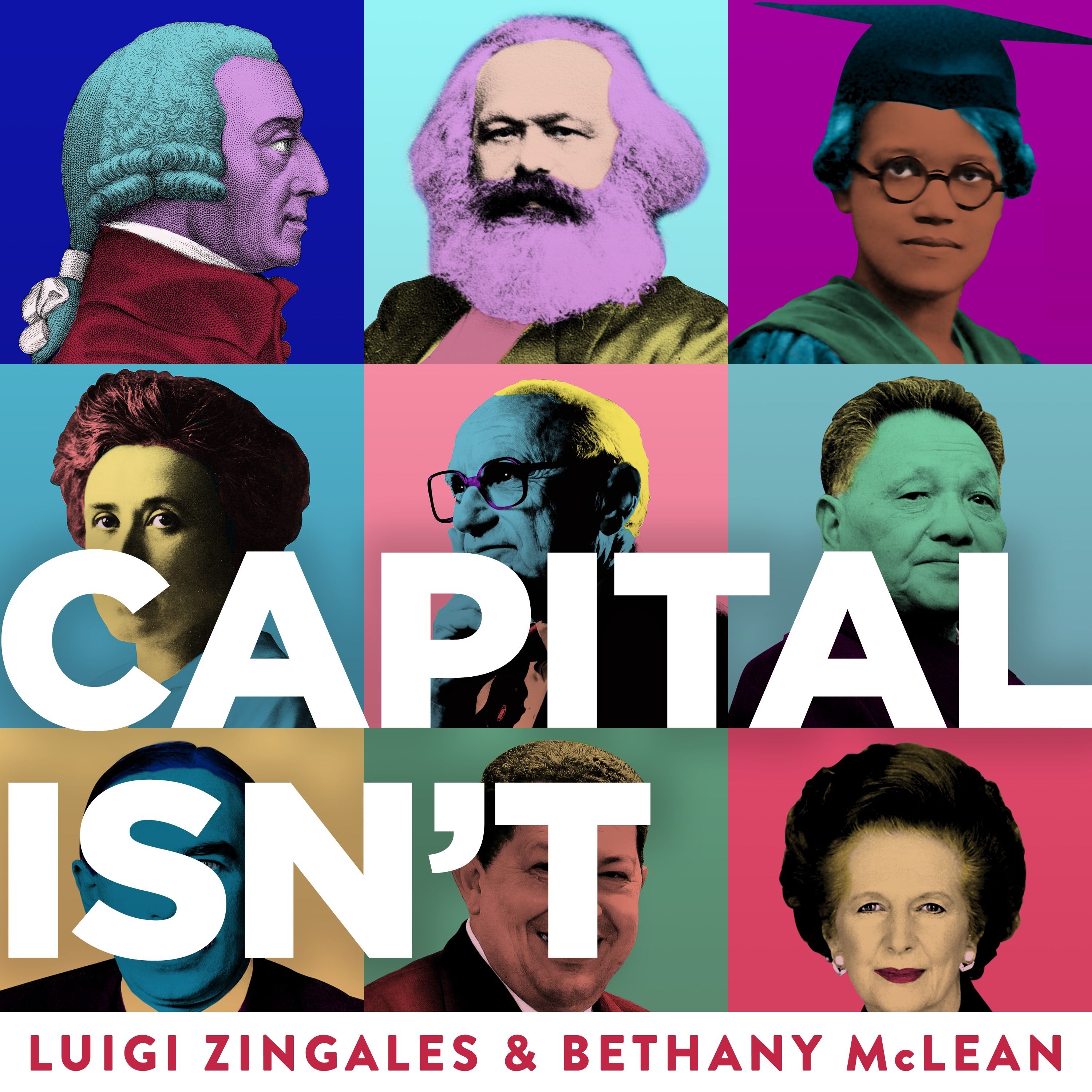
Profit or Purpose? OpenAI's $300 Billion Question, with Rose Chan Loui episode artwork

EPISODE · Apr 17, 2025 · 47 MIN

Profit or Purpose? OpenAI's $300 Billion Question, with Rose Chan Loui

from Capitalisn't · host University of Chicago Podcast Network

All too often, capitalism is identified with the for-profit sector. However, one organizational form whose importance is often overlooked is nonprofits. Roughly 4% of the American economy, including most universities and hospital systems, are nonprofit.One prominent nonprofit currently at the center of a raging debate is OpenAI, the $300 billion American artificial intelligence research organization best known for developing ChatGPT. Founded in 2015 as a donation-based nonprofit with a mission to build AI for humanity, it created a complex “hybrid capped profit” governance structure in 2019. Then, after a dramatic firing and re-hiring of CEO Sam Altman in 2023 (covered on an earlier episode of Capitalisn’t: “Who Controls AI?”), a new board of directors announced that achieving OpenAI’s mission would require far more capital than philanthropic donations could provide and initiated a process to transition to a for-profit public benefit corporation. This process has been fraught with corporate drama, including one early OpenAI investor, Elon Musk, filing a lawsuit to stop the process and launching a $97.4 billion unsolicited bid for OpenAI’s nonprofit arm.Beyond the staggering valuation numbers at stake here–not to mention OpenAI’s open pursuit of profits over the public good–are complicated legal and philosophical questions. Namely, what happens when corporate leaders violate the founding purpose of a firm? To discuss, Luigi and Bethany are joined by Rose Chan Loui, the founding executive director of the Lowell Milken Center on Philanthropy and Nonprofits at UCLA Law and co-author of the paper "Board Control of a Charity’s Subsidiaries: The Saga of OpenAI.” Is OpenAI a “textbook case of altruism vs. greed,” as the judge overseeing the case declared? Is AI for everyone, or only for investors? Together, they discuss how money can distort purpose and philanthropy, precedents for this case, where it might go next, and how it may shape the future of capitalism itself.Show Notes:Read extensive coverage of the Musk-OpenAI lawsuit on ProMarket, including Luigi’s article from March 2024: “Why Musk Is Right About OpenAI.”Guest Disclosure (provided to The Conversation for an op-ed on the case): The authors do not work for, consult, own shares in, or receive funding from any company or organization that would benefit from this article. They have disclosed no relevant affiliations beyond their academic appointment. Hosted by Simplecast, an AdsWizz company. See pcm.adswizz.com for information about our collection and use of personal data for advertising.

All too often, capitalism is identified with the for-profit sector. However, one organizational form whose importance is often overlooked is nonprofits. Roughly 4% of the American economy, including most universities and hospital systems, are nonprofit. One prominent nonprofit currently at the center of a raging debate is OpenAI, the $300 billion American artificial intelligence research organization best known for developing ChatGPT. Founded in 2015 as a donation-based nonprofit with a mission to build AI for humanity, it created a complex “hybrid capped profit” governance structure in 2019. Then, after a dramatic firing and re-hiring of CEO Sam Altman in 2023 (covered on an earlier episode of Capitalisn’t: “Who Controls AI?”), a new board of directors announced that achieving OpenAI’s mission would require far more capital than philanthropic donations could provide and initiated a process to transition to a for-profit public benefit corporation. This process has been fraught with corporate drama, including one early OpenAI investor, Elon Musk, filing a lawsuit to stop the process and launching a $97.4 billion unsolicited bid for OpenAI’s nonprofit arm. Beyond the staggering valuation numbers at stake here–not to mention OpenAI’s open pursuit of profits over the public good–are complicated legal and philosophical questions. Namely, what happens when corporate leaders violate the founding purpose of a firm? To discuss, Luigi and Bethany are joined by Rose Chan Loui, the founding executive director of the Lowell Milken Center on Philanthropy and Nonprofits at UCLA Law and co-author of the paper "Board Control of a Charity’s Subsidiaries: The Saga of OpenAI.” Is OpenAI a “textbook case of altruism vs. greed,” as the judge overseeing the case declared? Is AI for everyone, or only for investors? Together, they discuss how money can distort purpose and philanthropy, precedents for this case, where it might go next, and how it may shape the future of capitalism itself.

NOW PLAYING

Profit or Purpose? OpenAI's $300 Billion Question, with Rose Chan Loui

0:00 47:35

No transcript for this episode yet

We transcribe on demand. Request one and we'll notify you when it's ready — usually under 10 minutes.

LIGHTS, CAMERA, SMILE! Creatives Club Media Lights, Camera, Smile, is a podcast for anyone with a dream to share something with the world, out of the overflow of themselves - be it their mind, their heart, their personalities, and much more. Each of us are alive in this moment in time, with an innate ability to have ideas and create various things to benefit both ourselves and the people around us for a reason, and here, you will find the encouragement, the inspiration, and the motivation to do just that. Hosted by Cicily, founder of Creatives Club, she dives into various topics surrounding creativity and business. Exploring entrepreneurship for creatives in a corporate reality, sharing tips and tricks in a media centered company, answering questions regarding what a creative actually is are just a few of the things discussed on this podcast. Be encouraged to create for yourself as Cicily gets vulnerable by pivoting the camera to herself for the first time.To submit questions for Cicily to answer, or have her address certain t The 48 Laws of Power by Robert Greene (Full Audiobook) Robert Greene Amoral, cunning, ruthless, and instructive, this multi-million-copy New York Times bestseller is the definitive manual for anyone interested in gaining, observing, or defending against ultimate control – from the author of The Laws of Human Nature.In the book that People magazine proclaimed “beguiling” and “fascinating,” Robert Greene and Joost Elffers have distilled three thousand years of the history of power into 48 essential laws by drawing from the philosophies of Machiavelli, Sun Tzu, and Carl Von Clausewitz and also from the lives of figures ranging from Henry Kissinger to P.T. Barnum.Some laws teach the need for prudence (“Law 1: Never Outshine the Master”), others teach the value of confidence (“Law 28: Enter Action with Boldness”), and many recommend absolute self-preservation (“Law 15: Crush Your Enemy Totally”). Every law, though, has one thing in common: an interest in t Rich Dad's Guide to Investing II Robert T. Kiyosaki II Full Audiobook II Robert T. Kiyosaki Investing means different things to different people… and there is a huge difference between passive investing and becoming an active, engaged investor. Rich Dad’s Guide to Investing, one of the three core titles in the Rich Dad Series, covers the basic rules of investing, how to reduce your investment risk, how to convert your earned income into passive income… plus Rich Dad’s 10 Investor Controls.The Rich Dad philosophy makes a key distinction between managing your money and growing it… and understanding key principles of investing is the first step toward creating and growing wealth. This book delivers guidance, not guarantees, to help anyone begin the process of becoming an active investor on the road to financial freedom. Stansberry Radio - Edgy Source for Investing, Finance & Economics Porter Stansberry: Interviews w/ Alex Jones, Jim Rogers, Rick Rule, Doug Casey, T. Boone Pickens, Harry Dent, & James Altucher Porter Stansberry is the outspoken founder of Stansberry Research - now one of the largest and most recognized investment research firms in the world.Stansberry Radio puts you in tune to hear Porter’s commentary on the latest financial and economic news. Listen to Porter interview renowned experts.

Frequently Asked Questions

How long is this episode of Capitalisn't?

This episode is 47 minutes long.

When was this Capitalisn't episode published?

This episode was published on April 17, 2025.

What is this episode about?

All too often, capitalism is identified with the for-profit sector. However, one organizational form whose importance is often overlooked is nonprofits. Roughly 4% of the American economy, including most universities and hospital systems, are...

Can I download this Capitalisn't episode?

Yes, you can download this episode by clicking the download button on the episode player, or subscribe to the podcast in your preferred podcast app for automatic downloads.
URL copied to clipboard!