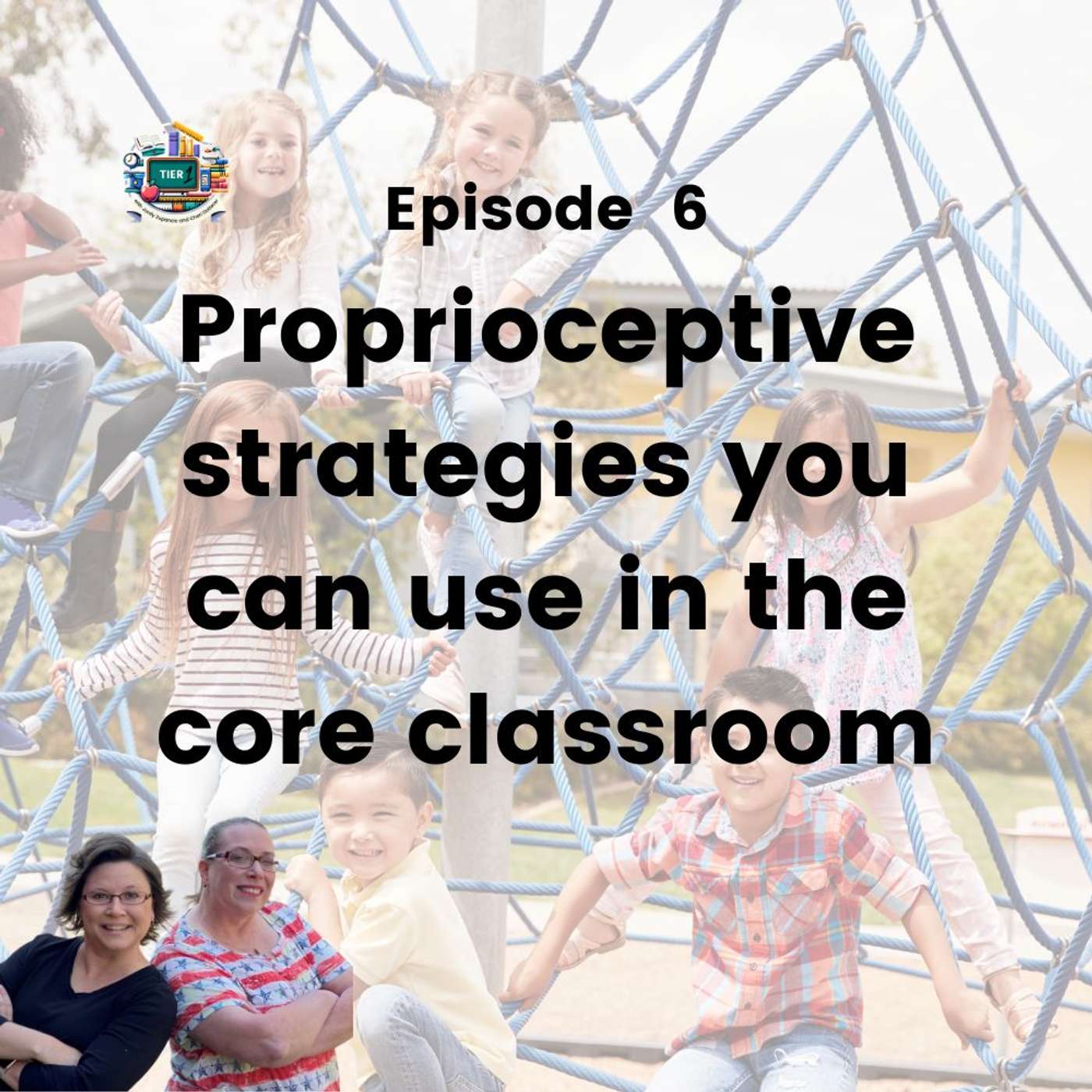
Proprioceptive strategies you can use in the core classroom: T1I S1 E6 episode artwork

EPISODE · Apr 16, 2024 · 20 MIN

Proprioceptive strategies you can use in the core classroom: T1I S1 E6

from Tier 1 Interventions · host Jonily Zupancic and Cheri Dotterer

In the latest Tier 1 Interventions podcast episode, we had the pleasure of delving deep into the often overlooked but crucially important sensory strategies that can significantly enhance classroom learning. Joined by my co-host Jonily Zupancic, we explored proprioceptive input—a key element that can transform the educational experience, especially for students who struggle with memory and recall.What is Proprioception?Proprioception refers to the sensory input that tells us about the position of our body parts and the effort needed in movement. It’s like a hidden sense that helps the brain process how much pressure to apply, for instance, in holding a pencil or stabilizing oneself in a chair. In this episode, we discussed how proprioceptive activities, such as carrying books, using therapy balls, or even simple tasks like brushing hair or squeezing putty, can prime the body for learning.Classroom Strategies That WorkWe highlighted several practical strategies that teachers can implement right in the core classroom settings:       1. Dynamic Seating and Movement: Encouraging small movements, like pushing a cart of books or using a therapy ball as a seat, can help wake up the body’s sensory receptors, making students more receptive to learning.       2. Task-Based Activities: Incorporating activities that involve squeezing, tearing, and cutting can engage the proprioceptive sense during more sedentary tasks, helping to maintain focus and engagement.        3. Structured Physical Tasks: Simple structured tasks, such as wall push-ups or carrying a set of books to another classroom, offer joint compression that helps ground students and prepares them mentally for academic tasks.The Impact on LearningProprioceptive input is essential for physical coordination and cognitive processes, particularly memory and retention. When students engage in proprioceptive activities, they are more likely to remember and recall information because their bodies and brains are fully activated and prepared for the task at hand.Engage, Educate, EmpowerThe core message of our discussion is clear: by integrating sensory strategies into daily classroom activities, educators can create a more inclusive and effective learning environment. These interventions are not just beneficial for students with specific sensory needs; they enhance learning for all students, making the classroom a dynamic, engaging, and supportive space for everyone.Join Us Live to learn how math teachers, intervention specialists, OT, and other support personnel can impact students using the same interventions, creating consistency across all environments. Join Us Live to increase working memory for students with visual, conceptual, and multi-sensory interventions.Join us live to spark student attention and focus through unique instructional techniques that can be expanded for all Multi-tiered System of Supports (MTSS) levels.Join us live to foster self-regulation and self-awareness for independent work structured by differentiated adaptive resources.Listen to the entire workshop and get more details about Adaptive Condensed Curriculum Math Interventions and Focus Triggers.REGISTER HERE for our next workshop. Spring 2024 dates: April 20, 2024 and May 18, 2024. 9:30 am- 12:00 pm Eastern Daylight Time (NY).Subscribe and Stay InformedSubscribe to the Tier 1 Interventions podcast for more insights and strategies. Whether you’re a teacher or therapist looking to spice up your classroom techniques or an educational professional aiming to broaden your understanding of sensory integration, this episode is a must-listen. 

In the latest Tier 1 Interventions podcast episode, we had the pleasure of delving deep into the often overlooked but crucially important sensory strategies that can significantly enhance classroom learning. Joined by my co-host Jonily Zupancic, we explored proprioceptive input—a key element that can transform the educational experience, especially for students who struggle with memory and recall.What is Proprioception?Proprioception refers to the sensory input that tells us about the position of our body parts and the effort needed in movement. It’s like a hidden sense that helps the brain process how much pressure to apply, for instance, in holding a pencil or stabilizing oneself in a chair. In this episode, we discussed how proprioceptive activities, such as carrying books, using therapy balls, or even simple tasks like brushing hair or squeezing putty, can prime the body for learning.Classroom Strategies That WorkWe highlighted several practical strategies that teachers can implement right in the core classroom settings:       1. Dynamic Seating and Movement: Encouraging small movements, like pushing a cart of books or using a therapy ball as a seat, can help wake up the body’s sensory receptors, making students more receptive to learning.       2. Task-Based Activities: Incorporating activities that involve squeezing, tearing, and cutting can engage the proprioceptive sense during more sedentary tasks, helping to maintain focus and engagement.        3. Structured Physical Tasks: Simple structured tasks, such as wall push-ups or carrying a set of books to another classroom, offer joint compression that helps ground students and prepares them mentally for academic tasks.The Impact on LearningProprioceptive input is essential for physical coordination and cognitive processes, particularly memory and retention. When students engage in proprioceptive activities, they are more likely to remember and recall information because their bodies and brains are fully activated and prepared for the task at hand.Engage, Educate, EmpowerThe core message of our discussion is clear: by integrating sensory strategies into daily classroom activities, educators can create a more inclusive and effective learning environment. These interventions are not just beneficial for students with specific sensory needs; they enhance learning for all students, making the classroom a dynamic, engaging, and supportive space for everyone.Join Us Live to learn how math teachers, intervention specialists, OT, and other support personnel can impact students using the same interventions, creating consistency across all environments. Join Us Live to increase working memory for students with visual, conceptual, and multi-sensory interventions.Join us live to spark student attention and focus through unique instructional techniques that can be expanded for all Multi-tiered System of Supports (MTSS) levels.Join us live to foster self-regulation and self-awareness for independent work structured by differentiated adaptive resources.Listen to the entire workshop and get more details about Adaptive Condensed Curriculum Math Interventions and Focus Triggers.REGISTER HERE for our next workshop. Spring 2024 dates: April 20, 2024 and May 18, 2024. 9:30 am- 12:00 pm Eastern Daylight Time (NY).Subscribe and Stay InformedSubscribe to the Tier 1 Interventions podcast for more insights and strategies. Whether you’re a teacher or therapist looking to spice up your classroom techniques or an educational professional aiming to broaden your understanding of sensory integration, this episode is a must-listen.

NOW PLAYING

Proprioceptive strategies you can use in the core classroom: T1I S1 E6

0:00 20:20

No transcript for this episode yet

We transcribe on demand. Request one and we'll notify you when it's ready — usually under 10 minutes.

The 48 Laws of Power by Robert Greene (Full Audiobook) Robert Greene Amoral, cunning, ruthless, and instructive, this multi-million-copy New York Times bestseller is the definitive manual for anyone interested in gaining, observing, or defending against ultimate control – from the author of The Laws of Human Nature.In the book that People magazine proclaimed “beguiling” and “fascinating,” Robert Greene and Joost Elffers have distilled three thousand years of the history of power into 48 essential laws by drawing from the philosophies of Machiavelli, Sun Tzu, and Carl Von Clausewitz and also from the lives of figures ranging from Henry Kissinger to P.T. Barnum.Some laws teach the need for prudence (“Law 1: Never Outshine the Master”), others teach the value of confidence (“Law 28: Enter Action with Boldness”), and many recommend absolute self-preservation (“Law 15: Crush Your Enemy Totally”). Every law, though, has one thing in common: an interest in t Welcome to the BeauMovation Podcast. Noluthando Tshabalala Season 1: The Power Of Identity with 11 dynamic guests. Temps de Dol Temps de Dol Soy 1 de 4. Lo he sido dos veces. Aquí te traigo mi tiempo de duelo para que, si también estás transitando un proceso de duelo gestacional sepas que no estás sola. Hablemos. Escuchemos. Visibilicemos. Y, sobretodo, acompañemos. KoperCrabb Podcast Navene Koperweis & Chaney Crabb The #1 place for underground musicians to hang out, KoperCrabb Podcast is a weekly podcast hosted by drummer Navene Koperweis and vocalist Chaney Crabb of the band Entheos.

Frequently Asked Questions

How long is this episode of Tier 1 Interventions?

This episode is 20 minutes long.

When was this Tier 1 Interventions episode published?

This episode was published on April 16, 2024.

What is this episode about?

In the latest Tier 1 Interventions podcast episode, we had the pleasure of delving deep into the often overlooked but crucially important sensory strategies that can significantly enhance classroom learning. Joined by my co-host Jonily Zupancic, we...

Is there a transcript available for this episode?

Yes, a full transcript is available for this episode. You can read the complete transcript on the episode page.

Can I download this Tier 1 Interventions episode?

Yes, you can download this episode by clicking the download button on the episode player, or subscribe to the podcast in your preferred podcast app for automatic downloads.
URL copied to clipboard!