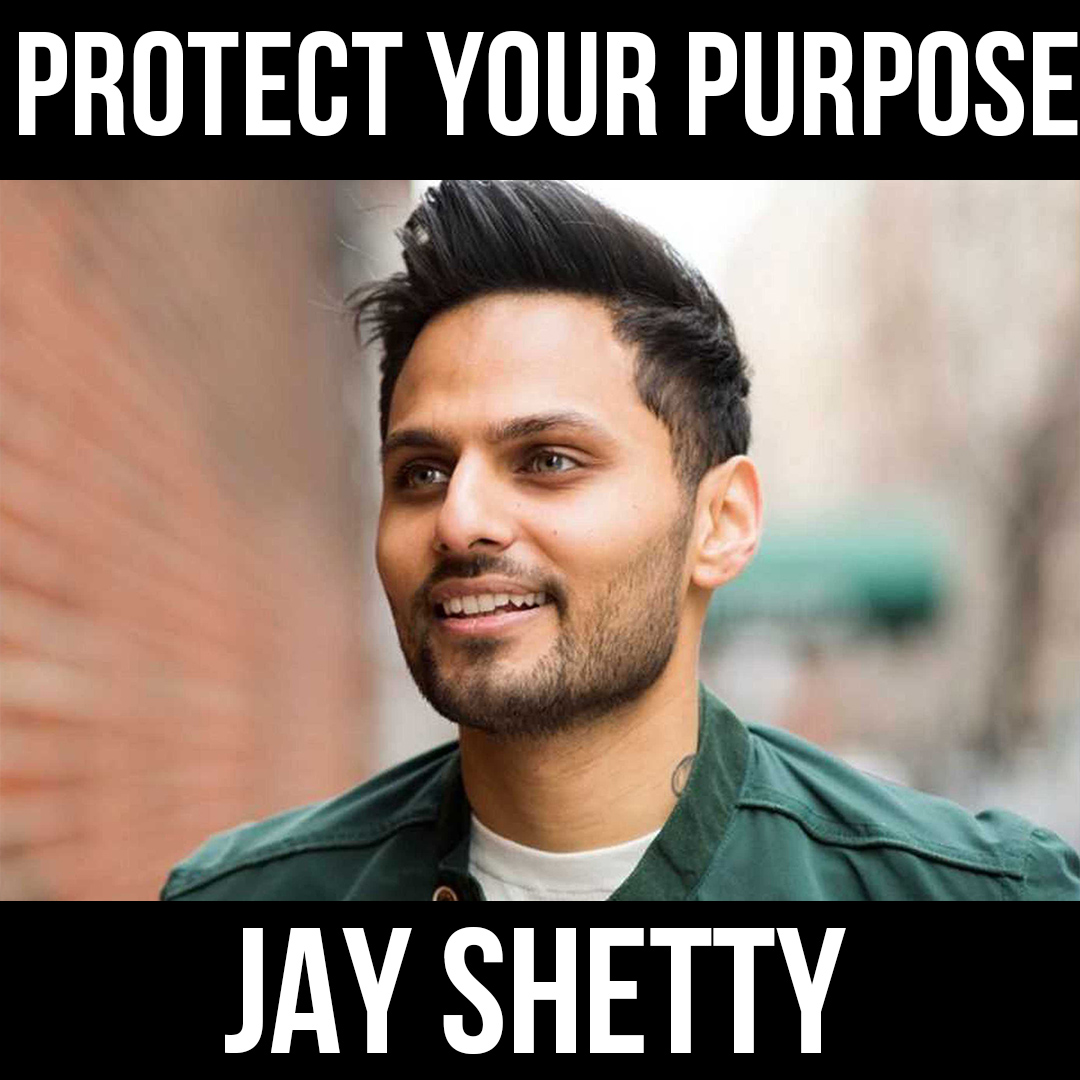
This is the end of my show. Welcome back to Mass Out, everybody. I am so excited to have this gentleman to my left here today. I've been chasing him for a long time, and he probably doesn't need an introduction if you're watching this on YouTube because I know so many of you know him.
But if you don't know who he is, let me just give you some background on this man. Number one, this person has had 7 billion views on their YouTube channel, 7 billion views. He's had 34 million people following him on social media, which is just absolutely remarkable. And 300, he had one video on Facebook, he had 360 million views.
Number one viewed video on all of Facebook in 2018. And I'm so excited to share with you that he's written this new book called Think Like A Monk. Open your mind for peace and purpose every day. I read this book in two days.
So all the accolades that this man has, the most impressive thing isn't what I just shared with you. It's that my mom has a massive crush on you. I'm not kidding. So mom, I've embarrassed you to millions of people, but my mom's crush is here today.
Jay Shetty. And thank you so much. I'm so grateful for this. Honestly, like just walking into your home today and experiencing your energy firsthand.
Thank you. Like you feel the power of your energy on social media. I feel it when I'm following you, but I feel the presence right now. So I just want to say thank you honestly.
Thank you. I just feel like a big hug this morning. That's the world to me. I was just literally telling you before we went on that there's nobody on social media who grabs me like you do.
Thank you, man. I really appreciate it. And I told you why and I should tell them it's the convergence of I think your visual, your auditory, your look and your voice, but mainly just the depth of your message is so special. This is not a person who post content that you're going to scroll through.
This is somebody who posts something and affects you. His videos move you and this book move me. Thank you. And I usually if a guest is on, I'm very excited about their book, but in this case I'm highlighting everywhere.
And I think let's start somewhere. There's 11 sort of points in the book that you go through, but I think in this time and this day and age with all the kind of current events that are happening in the world, one of the things you talked about in there is ways to find calm in the chaos. Could you talk a little bit about that? Yeah, absolutely.
I think we're just living in uncertain times. We're living in chaos. As you just said it, we're living in times where we're constantly surprised by what's going to happen next. And it's not a good surprise.
Like it's not like a birthday surprise. It's a negative surprise sometimes. And I think what's happened is that we've started to recognize and I really trust the people listening and watching right now, we've started to realize that the answer is not going to come from outside of us. We can't just keep waiting for suddenly the stock market to be perfectly aligned.
We can't keep waiting for the political climate and the environment to be perfectly aligned. What we need to do is find in, more importantly, not just find, but create that peace and that calm within us. And that's why I talk about thinking like a monk, because when you look at the brains of monks across the world, they have the calmest, happiest brains on planet Earth. And I want to give people access to how to have that, because when you start getting access to that, now you don't need the weather to be perfect.
Now you don't need to wait for everyone to give you love every single day. Now you're not dependent on anything outside of you, but you recognize that you can create calm. You're not going to look for calm. And so that's the perspective that I want people to do.
It's beautiful. I was reading in the book where you're talking about these monks. You measure their gamma waves, even at sleep. And they are higher than everybody else.
And everybody else. And so you tapped into this. Ironically, you graduate from college. They just need to know the background on this, as I understand it anyway.
And kind of in your family, it's sort of like you're a doctor, a lawyer, or a failure. There's my three options. Yeah. And you end up graduating, but before I graduate, you go away and go live with the monks.
You literally, how did you make this decision? And what overall would you say was the impact that happened to you while you did that? Yeah, absolutely. So yeah, I did a background.
I grew up a teacher's pet until the age of 14. So I was an obedient kid, probably at the perfect sun, worked really hard at school. And then at 14, I went the opposite way. I started rebelling.
I started experimenting with everything under the sun. And at 18, I was at this interesting point. I think everyone is, if you think back to being 18 and everyone is listening and watching, think about being 18 years old again, and how impressionable you were, and what kind of decisions you were making. I used to go and listen to CEOs, entrepreneurs, experts, celebrities speak.
And once I was invited to hear a monk speak. And I thought to myself, what am I going to learn from a monk? Like there's nothing to learn from a monk. What's he going to teach me?
How to be silent? Who cares? And I said to my friends, I would only go if we went to a bar afterwards. Like that was my, like I want to invite you.
Okay. That describes where you really were. And I end up going, and this is what I love about that moment. The best moments in your life are sometimes the most humbling ones.
I was humbled because I went into that environment expecting to get nothing and having my life transformed. So what ended up happening is I felt, and you've probably felt this when you meet people, when I was 18, I'd met people who were beautiful. I'd met people who were powerful. I'd met people who were rich.
I'd met people who were famous. I'd met people who were successful. But I don't think I'd met anyone who was truly happy. And even now, if I asked you to count on your hand, how many people you know that are truly content, satisfied and happy, I think we'd struggle.
And I felt that from him at 18. And the great thing is I know him now, I've known him for the last 14 years, this particular book, he's still the same. And so he's maintained that. And so I started getting fascinated with him.
So I spent every summer vacation with him from age 18 to age 22, every summer vacation, I spent half of it, interning at big finance companies, steak houses, bars, fancy suits, and I'd spend the other half living as a monk in India. That's remarkable. Robes sleeping on the floor and meditating. My gosh.
And then when I graduated, I decided that the monk path was more fulfilling than the banking path. And so I chose it. What a remarkable young life. It was my first experiment.
You know, it's like you're literally testing it. And I never judge myself. And that's what I love about being able to live life in that way. Like I didn't judge myself when I was at the monastery.
I wasn't like, oh, no, I was just drinking last week. I can't do this. And then when I was out there with the guys, I wasn't like, oh, no, I should be meditating. I was just like, let me really experience each life to it for less.
And then I can decide which one really fills me with joy. It's amazing. You're talking to me because just this week I was on a show. They said, what topic would you like to cover?
But then they left it open to me. And I said, I think I should be happiness because it's so rare for most people in the world that people have asked me on the show. When I started the show, I was fascinated because your show's had 54 million downloads the first year, right? And so what do the people that you interview have in common?
They're some of my best friends. Some of your best friends are on your show. And I thought, well, I wonder when I do it. Is it going to be their drive, their ingenuity, their charisma, their work ethic, their brilliance?
And many of them have all of those qualities. But I think you would agree with me that even top performers that we work with, some of them have a touch of not so happy going on in their life, even the people that you think have their whole world together, they too see happiness. And I'll be honest with you, because I'm such a fan of yours, I thought, well, almost like what you thought. What do I have to learn from you about happiness from a monk perspective?
I didn't think the same. And they started to read the book. First, there were many revelations for me. Secondly, there were some things in the book that I think I do practice pretty well.
But the way you phrase it and position it is beautiful, as is your norm. So one of the things you say early in the book, you talk about selfless sacrifice. And there's this great quote that I'll mess up in there that one of the monks had shared with you about that in the shade that you don't want to sit in, point the tree, right? Yeah, yeah, yeah.
So this was the statement that when I'm sitting in that room as an 18-year-old thinking about going to a bar, this was that statement that penetrated my heart. And I was like, oh, because so he was making the point that if you have any gifts and if you have any talents in the world, if you're not using them in the service of others, then worth nothing. And the way he put it and he was quoting another writer and he wrote that, plant trees under who shade you do not plan to sit. And what that means is most of us plant trees or we do things for people because we're expecting that one day they're going to reciprocate and do something back for us.
And he was like, real service is when you do things for people that can't do anything back for you at that time and you're not expecting anything. And for me, for my 18-year-old mind, I was like, oh, I thought my skills were just to impress women and make money and just do what everyone else does. And when he was doing that selfless sacrifice and service, I was like, I want to test that. Because either this man is a genius or he's completely crazy.
But if he's given up and he went to IIT, so he went to the Indian Institute of Technology, one of the best universities in the world, he was a number one student and he gave that all up to be a monk. So I was like, there's something there because you don't just give that up, especially in India the pressure to perform and to be a top grade student is so high that to walk away from that, like his family and everyone would have just completely. So I was like, I want to follow that part. Wow.
I'm fascinated by you because now that I'm in your presence, everyone should know that Jai and I have communicated for a very long time. We have tons of each of us, but we have a rare on the show that I'm in the presence of somebody. And I feel your energy when you speak about this. I think I had this impression that someone who's sort of monk related is just sort of just, there's this feeling I get that's just it's strong peace, but it's strong too.
There's an energy about you. And one of the things that I think that you eventually over came, you talk about beautifully in the book and I see every day, people ask me often. There's all these memes out there. We all hear, hey, you know, whatever one's opinion about you is none of your business.
But people really struggle with finding a pathway to happiness because they are borderline obsessed with the thoughts and opinions of other people. And you discuss that a little bit too. How would you tell someone who's struggling with this? Which is 99% of the people who are listening to this?
How they might deal with that or overcome it. Yeah, I give this analogy in the book about how we're all like method actors. I'm a big movie fan, like I'm a big movie fan. And so for me, some of my favorite actors are like, he's a ledger who played The Joker in The Dark Knight.
You've got Daniel Day Lewis, who's an incredible method actor. Now I talk about in the book how Daniel Day Lewis at some points, he was wearing the clothes for Gangs of New York in his normal life. To the point that he even got pneumonia in his normal life because he's wearing these old, raggedy clothes. And he goes at one point, he almost went crazy pretending to be someone that he wasn't.
And when I heard that, I thought, wow, isn't that all of us? Like you wear a certain role to work. You wear a certain role at home. You wear a certain role with your friends.
And in playing all those roles, you end up method acting and forgetting who you are. And for me, that's what I'm just seeing across and in and of myself. And I see myself do that. You become who you think other people want you to be.
And so for me, the first step in that is writing down everything you're chasing right now. Like this is a great strategy in a tool. If anyone's listening or watching, get a pen and paper. If you're not, take a screenshot of this time code right now and come back to this because I want you to sit down and I want you to write down everything you're chasing right now.
Whatever it is. Make that list. Second question. Where did that idea come from?
Did that idea come from your mom, your dad, your friend, your brother? Did that idea come from me? Or did that idea come from me? Or did that idea come from you?
Did it idea come from your heart and your mind? Or was it born because it was influenced by your friend who just got promoted? Your friend who just got proposed to? Your friend who just sold their company for $100 million?
Was that the reason? Because then that may not be your dream. And then the third question you have to ask yourself is this my dream or this is the question? Is your dream really your dream?
And when you go through that exercise, you want to keep the stuff that's yours and you want to distance yourself from the stuff that's not. What incredible advice. You know, I'm a little, bro, I got to tell you, there's such wisdom for such a young man. I'm a little bit further down the road, age wise.
And wisdom wise. I'm excited to learn from your love, man. Certainly not. But I appreciate you saying that.
I mean, I can validate what you just said. I think dream catching in your life can become something that gains momentum as you vibrate a little bit higher frequency. You can do a track things. I'm a big believer in that.
And I have many times achieved a dream or two that when I got there was completely empty. And every time that I got to those dreams when they were empty, they were not my dreams. They were something that I thought someone else wanted me to do or something that I saw someone else have that I wanted a place, a destination, a home, something. And you're 100% right.
But the times when I got clear on things that I really wanted, that really mattered to me. And when they were good enough that they materialized in my life, what great joy they brought me. And they're usually extremely simple things as you will as well. I love hearing you say that.
It's nice to get validated on that because I think you've achieved so much in your life and it's incredible to see what you've achieved. And I think that's what people forget is that the things that you bring you joy because you achieved what you wanted to achieve. Let's talk about that for a minute. You talk about Dharma.
How do you figure that part out in your life? Yeah. So Dharma is a fascinating concept. I absolutely love it.
And the loose language terminology for it is purpose or calling or your mission and vision in life. Like what are you meant to do? It's kind of like what you're meant to do. And the thing about Dharma is Dharma talks about how we think we have to learn lots of stuff.
And actually Dharma is unlearning and bringing out what you already have. So one of the things I mentioned in the book is that you can't be anything. There's two lies we've been told growing up. The first lie is you're nothing.
You're stupid. You're worthless. You're not going to make it. And I'm sure many people are listening and watching and heard that from teachers, parents, aunts, uncles, whoever it is.
And then the other lie that we're actually told, and I don't think it's a lie. I think it's positive but sometimes it's misconstrued is you can be anything. And we all know that's not true too. And it's unfair because sometimes people get misled.
You're exactly right. The point of view is you can't be anything you want but you can be everything you are. And what I mean by that is you have a genius, a potential, a power inside of you that you don't know yet why because you're inexperienced. It's not that you're unqualified.
It's your inexperience. So people are saying, I'm stuck. I don't know where my life's going. I don't know my purposes.
So you're perceiving yourself to be unqualified or unqualified. Actually, you're just inexperienced. You just haven't done enough things to let the magnet of your life tell you what it's attracted to. So for me, that's what Dharma's encouraging people to do.
And this beautiful verse from this Vedic text, the monk text called the Manus Smithi. And it says that when you protect your purpose, your purpose protects you. And what I love about that, and you'll appreciate this because I know you're someone that I feel is living this, a purpose is like a rare gem and you have to protect it. People will tell you that gem is worthless.
They'll tell you that that gem is not going to make it. They'll tell you that that gem that jewel has no value. And that's why you have to protect your own purpose because the world is going to constantly try and pull you away from it. So Dharma is a, it's not a belief system.
It's a fact that you've got skills, genius, potential sitting inside of you and you have not seen it yet. And I've seen this across the board. I literally just got a call from the, I got a call from the CEO of Instagram probably about three to six months ago. It's been a while now.
And she called me up and she said, Jay, we just had, I don't think I've told the story anyway. So you've sparked the out of me. But she goes, we've just had this call. Sorry, we've just had this talk from this speaker that we brought in.
And this speaker spent years in a refugee camp. And in this refugee camp, not only did he figure out how to survive, he actually got his mother to save up for a computer. And he coded a game. He told himself how to code.
And he coded a game that helps people understand how not to be violent in a refugee camp. And then he used Facebook to promote it. And they said, we were so inspired by him that we brought him in to speak to Instagram and Facebook. And then we asked him the question.
We asked him, what has had the impact on you? Like, what kept you inspired? And this guy goes, oh, I used to watch this guy called Jay Shelly on Facebook. And literally when she told me that, and she said literally the whole audience was in tears at his story.
And I said to her, I said, I need to talk to him right away because I need to tell him, I'm like, dude, you just inspired me. Like, my, like, I'm like, dude, your life is way harder than mine's ever been. And if you can realize that you have the potential in a refugee camp to teach yourself how to code and to help people not be violent, I mean, you're inspiring more lives isn't it? And I'm like, dude, you're inspiring so many more lives than I ever, like, it's just beautiful.
To me, that story, I'm not sharing it to show my role in his life. I'm sharing it because I'm like, if he can find a way to find his Dharma, then we haven't gone any excuses. It's funny, but right before you told the story about him, I was going to tell you that it's so obvious to me that you're in your home. And that's perfect evidence of it.
It's so obvious to me that I sit next to you. And the book, guys, I want you to get this book. It has my full endorsement. And the reason it does, first off, is because this man that you're hearing these incredible words from wrote it.
But it's a unique book because it talks about these principles that are eternally true. But there's also what I would call fundamental strategy. I was going to say basic, but it's not basic, it's fundamental strategies. I was surprised in a book that talks so much about happiness that you get as granular as a morning routine, which I'm a huge believer of.
And I think sometimes, but you do it differently. And so I'm looking at a few things about it because we wanted to read the book. Just so you know, guys, we're at 1% less than the book so far. You're very good.
But it's true. But so talk a little bit just tactically for a second about importance of it and the way that you perceive a morning routine. Yeah. So the beautiful thing about monk life is half the day is self and half the day is service.
That's how you're taught to live. So the morning hours are for you to fill yourself. It's almost like putting on mental, emotional and physical armor. Like that's what a morning routine is.
Our days are tiring. Our days are busy. Our days are draining. Well, guess what?
If you didn't put your armor on in the morning and you're going out to battle, how many knives are going to cut you? How many swords are going to pierce you? How many wounds are you going to come home with? How many of you come back home feeling wounded?
I come back home feeling wounded sometimes. But guess what? If you put your armor on in the morning, a warrior would never go out onto a battlefield. And life can be a battlefield.
Work can be full of conflict sometimes. Your relationships can be damaging sometimes. Your friendships can be toxic sometimes. So we are warriors in one sense.
And so without wearing that, so for me, a morning routine is putting on emotional armor, which is meant to protect you for the rest of the day. And that way, even if you do get pierced or you do get popped or you do get cut, you're protected. And I know that when I'm morning routine is at its best, I feel protected. Whereas when my morning routine is weakened, I feel weak.
And so for me, the morning routine as I get strategic about him, there's two principles you have to know. Location has energy and time has memory. If you do something in the same place every day, that place now holds that energy. And this is huge.
It's just so big and I'm grateful for that reaction because people don't realize how powerful this is. When I meditated in temples that were 5,000 years old in South India, it was easier to meditate because people have been meditating there for thousands of years. And so when you find a space in your home, and even if you've got, I lived in a 500 square foot apartment in New York four years ago, and I just had a tiny corner which I dedicated to my sacred practices. So if you don't have to have a big home to do this, you don't have to be wealthy to do this, you can find just a corner in your home that you dedicate your meditation space or your reflection space.
So first, the location has energy. Second thing, time has memory. And this is something that people underestimate. When you do something at the same time every day, you remember it and time remembers it.
That's why we struggle to work out at different times every day. It's why we struggle. Like why do we feel hungry at the same time every day? Generally, people hungry at the same time.
Most people, if you've got a regulated diet, you're full hungry. You're full tired at the same time every day. You will look towards that Coke can or that sugar or that chocolate bar at the same time every day. And so when you're meditating at the same time, if you're exercising at the same time.
So what I recommend to people is your morning routine needs four aspects and it's simple and I call it time. It's about making time in the day. The time stands for T-I-M-E, T stands for thankfulness. There needs to be even if it's five minutes, five minutes of thankfulness of gratitude every single morning and that has to be gratitude that's specific.
It can't be gratitude that's generic. So generic gratitude is something that anyone can be grateful for. Or I'm grateful for the sky. I'm grateful for air.
I'm grateful for water. That's cool but it's generic gratitude. Specific gratitude is I'm grateful for the fact that I have someone calling me this morning. I'm grateful for the fact that I can still call my parents.
I'm grateful for the fact that I have this person in my business who is having such an impact. I'm grateful. Specificity. Yeah, so thankfulness.
Second one is insight. I think this is one thing that a lot of people are missing which I recommend people listening to you. It's like podcasts, books and make it easier for yourself. If you get this book, leave it open on your bedside table.
Leave it open on your kitchen table. Leave it open on your dining table. I guarantee you will read more and what you read will speak to you. I think people underestimate that but literally when you have it open and you'll just flick to a chapter randomly and you'll pick up one line, it will impact you and it will speak to you.
It's an insight inside every day. Em is meditation and I believe meditation is different for different people. As monks we did walking meditations. We did beach meditations.
We did visualizations. We did breath work. Find your meditation practice. I give a ton in the book.
And fourth, obviously exercise which you can speak to even more than I can. I exercise to keep fit. You look amazing too though. But it's an exercise.
Everyone needs to find it five minutes a day. Fifteen minutes a day of exercise. That can just get the moving and guess what? If you like sport, play sport with a friend.
If you want to shoot hoops, go and shoot hoops. You don't have to sit on a treadmill. No one's telling you to do that. Make it fun and playful.
Brother. I've been in personal development and business entrepreneur space for a long time. Those are two gigantic revelations that I've never heard before. I'm telling you that.
I'm reading it and I literally stopped the book and I brought both my kids in. We talked about this idea of that space having an energy to it. I want to validate it because I just think you're incredible. Everybody says why I want you to get the book and it's why if you're not, you must be following J on these different platforms.
Not just one either. You need to be on YouTube. You need to be on Instagram and Facebook. I share this with you because I'm sure he's a hero of yours.
When I was very young, well when I was young, actually about your age ironically, I run on the beach in Hawaii and it's early in the morning because I did my morning run speaking about exercise and passing me by on the beach with this man I saw from a distance anyway. He gets by and he starts to build the other way and it was Wayne Dyer. A lot of people is probably don't know. You should check out Wayne Dyer's work.
He's one of the Godfathers of, I mean he was somebody that's really made an impact. I end up getting a chance at long story short sitting on the beach with him for about an hour as the sun comes up talking about life. You talk about just the two of us right. However, one of the principles he taught me that day and you articulate it quite frankly more beautifully and more specifically than he did, but I want to validate it again because these are things that you're not getting on any other podcast.
What Jay and I are talking about right now. And he asked me, he said, are you going to write a book and do you prepare speeches? I said, I do and he says, one of the things I do is I have lots of the greatest books in the world surrounding me when I write because these books have that time and energy in them. And he believed that it gave him the great wisdom of all of these people when he just surrounded himself in that familiar space.
So for you to now put this in your book about a morning routine is remarkable because I was just a passing thought that's really written nowhere. So thank God for your book. I appreciate that man. And he just sparked actually Phil Knight, Shudag, Nike.
He talks about how he actually has a room where he keeps his books like a library, but he takes his shoes off when he enters that room because of the wisdom and the weight and the energy and the gravitas he believes is book told. And so even as monks we would never wear shoes around books because it was considered shoes of dirty and you wear them outdoors and books are so pure that you don't want to take dirt into that space. And supposedly Phil Knight, he does the same thing. And I was like Phil Knight's thinking like a monk.
Yeah, he's thinking like a monk. But it's just so interesting what you're saying about the books holding energy. We believe that books are sacred. You don't kick books.
You don't keep books on the floor because they have knowledge and they're meant to raise you up. Wow, wow, wow. There's so much in there. I went through a couple more things.
I wanted to have the book but I'm so fascinated by you. I got a couple of personal things on it. But one of the things you say, look, I've said this before and again I just like the way you approach it with more depth than I've covered it before. I just said this this week to somebody.
They'll be like, it's crazy. And I talked about it. I said, some of your low self esteem and your lack of confidence is actually an ego issue that you have. And the person stared back at me like, how in the world is someone with no confidence or low self esteem struggling from an ego issue?
And I don't know that I articulated it well enough. Although it's in one of the podcasts that I released one of my solo podcasts but you articulate it right on. So talk about that for a second. Yeah, so it's an interesting concept and it's talked about in the Bugard Gita, another monk text.
And in the book it talks about how like ego is demonstrated in two ways. So ego is either I am the best in the world and I think I'm better than everyone or ego says you're the worst in the world. You're the worst than everyone. You're much worse than everyone.
Or you say my life is the best and the greatest, my life is the worst. My life is far worse than anyone else. So the ego likes to push you to the extreme. It doesn't like to give you balance and honesty and reality.
It wants to make you feel like, you've got the worst life in the world and no one else understands it. No one gets that. Only you get the worst. Or you're the best and no one else gets you.
You're untouchable. And people miss that. How does that make sense? Exactly.
Like you said. But it doesn't make sense because ego wants to be the top or the bottom. But the top of the bottom. Yeah, it's going to be the bottom of the bottom of the bottom of the top of the bottom.
Very well said. Yeah. And so we get lost in that and we don't think of it as ego. And that's why the only antidote to either ego is self honesty, is being honest.
And honesty is, I'm good at these things. I'm great at these things and I suck at these things. Right? And that's honesty.
And we could all sit down me and you could sit down with a list of our skills and map out what we were great at, what we were average at and what we knew we were terrible at. And that's honesty. That keeps you so away from either ego. Do you think part of it too is that when you're suffering from my life is the worst, that you're focusing on you and you're centering on you and there's an ego connection to that too.
And that this path, what you talked about earlier about getting into the service of other people removes you from you, which begins to remove the ego. Absolutely. I mean, that's a huge point. You just made right.
You just drop some serious. Like, you know, please don't underestimate that point. I'm listening. Like the challenge with all self-centeredness is that all you then indulge yourself in is your own pain.
Right? You just indulge, you just submerge and like immerse yourself in pain because it's all about you. Yeah. And you know, I think Gandhi said it best is that you find yourself when you lose yourself in the service of others.
And what I love about that statement is that what he means by that is and empaths get this mixed up sometimes. So I want to clarify because a lot of people are empaths or listening like, Jay, I'm always trying to help people but then I get screwed over. So here's the answer. You're not helping people so that they can thank you.
You're not helping people so that they can be grateful to you. You're helping people because you know it's the right thing to do. But more importantly, you're helping people because you get to understand and experiment and experience different parts of yourself. When I helped kids growing up in India that were, they didn't have food and we were giving them free food, I learned so much about myself.
When I was able to go and give talks that helped people or now I make videos or podcasts, you learn more about yourself when you help people. You don't learn anything about yourself when you're just sitting there, filling out a quiz, going, who am I? You learn about yourself when you help people. And this is what we don't realize.
I can't remember who said it recently. If someone's saying about Jeff Bezos but they were saying that the scale at which you succeed is the depth of the problem you solve. And so even if you look at someone like Jeff Bezos who's extremely successful, he's successful because he's solved a problem that many people have. He'll get to success because he's solved a problem.
So even if you look at monetary success, even if you look at financial success, it comes from service. Any success comes from service. A musician is famous because they're serving. They're serving you by understanding your feelings, making music, you now feel comforted so you follow them.
They have served you. So don't think of service as just charity and giving money which are beautiful things which we all should do. But don't just limit your life to thinking I serve on the weekends or I serve once a year. You can serve every month.
This podcast is a service. It's your service because you're serving people by giving them an alternative to just watching some trash show. But they're actually here learning from you and learning from the people that you bring on the show. I've watched you to that point.
This is a personal thing because I'm such a believer that you move the needle in the world that you can help change consciousness. I'm in my little way because in my small way I would love to think I'm in that ocean that you see other like a drop of water and altering the consciousness of the world. Just a scoach, not me but who I can share with people in my own messages. And I believe you're one of those people.
And so I will tell you as I've watched this meteoric rise of yours, I've actually privately a few times, not every day but a few times I've actually prayed for you that you would keep this level of humility. And so this is an interesting thing I wanted to ask you but it will serve everybody else. There is this balance isn't there of wanting this book to do well. You don't want to sell two copies.
You want to do very well. And when you put a video out, there's probably this, there's got to be a little part of you that's like how well did it do. And I think that line right there, I'm not even sure if you or I know the answer entirely, but do you struggle with that balance of I'm doing this in the service of people yet I'm sensitive to the response of what I'm doing? Because I think someone listening is right now who's going to have a sales presentation tomorrow.
They want to be in the service of that person but there's this part of them that isn't that balance we talked about earlier about what's the response going to be? How am I going to be received? I want people to like me. I want to do it.
How do you navigate that? That's a great question man. That's huge. And the answer, let's take that sales person.
And more time that person spends in empathy, their customers pain and what the customer's really looking for, the better they're going to be received. So that service mindset always helps because if you're thinking about, and I said this to my team and we were writing the book and everything I was working on, I said if I sit here right now and all I'm thinking about while I'm writing the book is being a best selling book, then guess what? I'm now not writing the book. I'm now living in the future and I'm not living in the present.
And so the only way to make this a best selling book is to do the process properly. And I don't think, and this is what I do, and this is the only thing that's helping me. And again, I go through it all the time. After my first video went viral three, four years ago, I stopped creating because of the pressure that I wouldn't be able to live up to it.
So I actually got scared because I was like, oh well, what if the next video doesn't do as well? Everyone's going to think I'm tanking. You get into that self-doubt and that self. And I got into that space.
Thank you for being honest about that. Yeah, not really. I didn't want to make a video again because I was like, this video just got 40 million views. How am I ever going to beat that?
Right? And you get scared. I'm not putting anything out. I'm just going to stop.
I'm not feeling better by not putting anything out. And actually, if I just serve more, I'll learn more. So the way I've made sense of it, and there's a lesson in the Gita that explains it too, is that you have full control over the preparation, the process, and the practice. But you have no control over the potential result.
But all of those three things are the result in and of themselves. And so if you get addicted to the process of writing, the practice of connecting with the right people who can help share your work. And like you said, I am focused on the process of making sure that the most people in the world have the opportunity to buy this book. But then if they choose not to buy it, I can't control that.
But I can control making sure that it's in front of everyone and that I believe in the context. And that to me is not attachment. That to me is not ego. That to me is trying to live your best life.
I mean, if you didn't just try it, if you're like, I wrote this book, but who cares? I mean, that's not service either. Because the way I explain it, and I'm not claiming that this is it, and I'm not trying to say, I'm here, I'm trying to say that I think we all feel this way. If you or me see an amazing movie, we want to tell everyone about it.
If you read an amazing book, you want to tell everyone about it. If you found the cure to cancer, you tell everyone about it. For me, I got to live an incredible life. Thanks to these amazing teachers I met.
I just want to tell everyone about it. That's what I'm doing. But I want to tell everyone, because of how powerful it was. That's the best description I've ever heard of.
There's this line I've always tried to teach of, you want to have outcomes, but yet you need to separate from them. And that's a difficult thing when people are trying to achieve different things. That was perfectly stated, absolutely being addicted to the process of it, but actually separating from what you can't control. I absolutely love it.
I'm just curious. Tell us something about being a monk and living with them that would surprise us. Okay, we're talking about that. So we had, that's a good question.
But we had snoring and non-snoring room. They try and be compassionate, right? So I'm a non-snorer. I don't snore when I sleep, and my wife agrees now too.
Do you have a lot of excitement? Yeah, I'm in the non-snorer room. But the snoring room, we would always joke around with the snorers because we'd always joke about how they all sound like different motorcycles. So we'd be like, oh, that guy's like a Harley Davis or that guy's like that guy's like, Yeah, yeah, yeah, monk's like, he's human, I'm playful.
And you know, it's almost like monk life kind of makes you more childlike, not childish, but childlike, because you start seeing things for what they truly are and you don't get caught up in stuff. So you can laugh at each other. So another thing is we had these sacred suites or sacred items that are prepared and offered and everyone gets to share them. And you don't eat a little sugar as monks and you don't eat sweet stuff.
But these kind of natural, sweetened items came out like once a week and some monks would wrestle over them. Like, you know, like basically like rapping over who's going to get there. So these are the behind the scenes. I love that it's humanizes.
Yeah, it's like monks are normal people and most people haven't been monks their whole lives. So it's not like, yeah, it's like I became a monk when I was 22 and I'm not now my friends, some of them became monks at 22, some of them became monks at 30. It's not like there are monks that become monks at five. That does exist.
But the majority of people now are not doing that. They may have been at more time in their life not one than they were one. Exactly. And so for me, yeah, I'm glad you asked me that question because yeah, monks are humorous.
They're funny that like my teachers are hilarious. If I'm with them, I'll just laugh the whole time. Really? Yeah, because they just see that and I'd love to introduce you to when my teachers travel here a lot.
I would love that. I'd love to introduce you to him actually. He's around 70 years old and I've been among for 40 years and he grew up in Chicago. So he's an American man, but he lives in India.
I've been among for 40 years. I believe it, but he is hilarious. Oh my goodness. And anytime with him, I don't stop laughing.
Well, present people are more joyous than in and of itself, right? Yeah, exactly. You're not dealing with that. You're not dealing with the baggage of the past or the anxiety of the future.
So when you are present, you can just laugh, you can be joyous and be entertained. And yeah. With the bliss of the moment. Dude, I want to keep going because I just want to give him one more gift because you're a treasure bro.
I want you to know that I want you and I just spend some more time together. I would love. I often mean you already, but I often mean you today you have your energy in person surpasses all expectations, which is very like, I mean that. People listening is going, boy, can these guys contact other people?
I know it's from the romance. He's very good. He's very good. So, okay, so someone would pay a lot of money to do this, but I'm going to let him do it for free for a second.
Sure. Someone says I'm watching this and I really have this energy about me after listening to this or watching this and I want to change my life. And maybe I don't have super high self esteem right now and potentially I lack a little bit of direction or maybe I know what I want to do, but I don't have the confidence to get there. If you just want to turn my life around, I want to have some of these emotions that it seems as if you experienced on a pretty regular basis.
What advice or counsel, just in general, would you give somebody who wants to live a better life? Yeah. And my first role would be that we do this wrong because we do either or or we do them in the wrong order. So, in life, there are two aspects that impact everything.
Our thinking and our actions. And I read a quote the other day that was saying that the mistake we make is that we either act without thinking or we think without acting. And I think that's what most people are. If you're feeling stuck or you're like, I'm not sure what I'm doing right now, you're either doing too much thinking or you're doing too much acting, so you're just doing a lot of stuff but you don't know why you're doing it or you're just sitting there procrastinating every day and you're doing it.
So, I'd say it's both. So, the first thing I would say to you is take a moment and speak to three different people. Speak to a family member, a friend and a colleague and ask them this one question. What strengths do I have?
What do you think is my superpower? What skills do you think I bring? Emotional, strong, soft, hard, whatever it is. Do that first.
Get that sense check. Second thing, for the next month, take off every weekend eight days because there's eight Saturdays and Sundays all together in a month and book a different course, workshop, seminar, online, offline, go to an event, shadow a friend, go and spend time with an uncle who's doing the career you want, go and have eight new experiences. And after each of them, sit with yourself and ask yourself. Did I like that?
Yes or no? I like to ask yourself, why did I like it or why did I not like it? And ask yourself, would I like to do it again? And if the answer is yes, yes, yes, yes, well go do it again.
And if the answer is no, no, no, don't do it again. Leave it out. But if you've had eight, and this is the problem, we do that over a year. We do that over eight years.
And that's why life feels slow and boring and lethargic and stuck. But it's just in the next eight days in a weekend, just test eight new things and you'll have just a great experiment. And the worst thing that will happen is you'll find eight things that you don't like. But I guarantee you that even if you have a sense of that reflection in the beginning.
And what I don't get why we don't do this enough is we do it with food and movies all the time. Like you just, Ed is such a kind man. Like I got here, it's slightly late because of traffic and then he let me eat my lunch because I wanted to be full of energy. I need to find out where that place is because it's local to hear.
My team got it ordered for me. It was amazing. And it's like, you know when you eat something whether you like it or not. You know when you watch a movie whether you like it or not.
You know when you read a book whether you like it or not. But why don't we ask ourselves after meeting people, completing projects or going to places. Most of us keep meeting people that take our energy. Most of us keep going to places that drain us of our energy.
And most of us keep working on projects that just disturb our energy. All you have to do is ask yourself, does this bring me alive? Why does it bring me alive? Really important to know why it works and do I want to do it again?
Deep insight there. Rather what you describe right there everyone is like the ultimate pattern interrupt. What you're saying is you're going to do this over eight years or ten years and you can just do this in the next eight weekends or the next four weekends eight days. What a massive pattern interrupt.
Okay, listen, every single person who's watching this or listening this wants more of you. If they aren't already where do they find you number one? Yeah, absolutely. Come and find me on Instagram.
I'm Jay Shetty. Come and find me on the podcast on purpose. Listen to my podcast and they've had any impact at all. Genuinely, I mean, if it's even like a tiny bit of impact on you, my genuine proposal is read the book because it's the next level.
I get to break it down and I get to go into the stories, the studies and the strategies that really make all of this livable and practical. And they can get it everywhere? And you get it everywhere? All across the world.
We've got 36 languages coming out on this year. I'm so proud of you. I'm so grateful for you. I'm so happy for you.
Thank you, man. I'm genuinely. This was so much fun. I can't wait for lots of offline conversation.
It flew by, didn't it? I mean, I don't know how long we've been talking about. I wish we could go another hour. But I want to thank you.
Thank you so much. I'm grateful. No, I'm very grateful to be here. Okay, everybody.
I told you to be great. You all told me it would be and it exceeded my expectations. So please go get the book and follow Jay on his social media, YouTube everywhere and keep doing it with me as well. On Instagram, as you know, every day I run the max out two minute drill.
When I make a post, I take the first two minutes because I want to interact with you. It's why I do it. So if you're following me and you have your notifications on, if you make a comment in the first two minutes, you're involved in a daily drawing. If you miss the first two minutes, you can also qualify by replying to other people's comments.
And also, if you just make a comment every day, we add up to people at the end of the week. My great team and winners, we just commented any time every day. You can win coaching with me 15 minutes with one of my guests. Take us a scene.
You speak. Max out. Dear my book. Sometimes people write on the jet with me.
It's just cool stuff. We surprise you for engaging with me and I want to encourage you to do that. If you've enjoyed today's program, please share it with people that you care about and that you believe in. God bless you and Max out.
This is the end of my show.