Proxy Wars Evade Accountability episode artwork

EPISODE · Jul 29, 2025 · 28 MIN

Proxy Wars Evade Accountability

from The Chris Abraham Show · host Chris Abraham

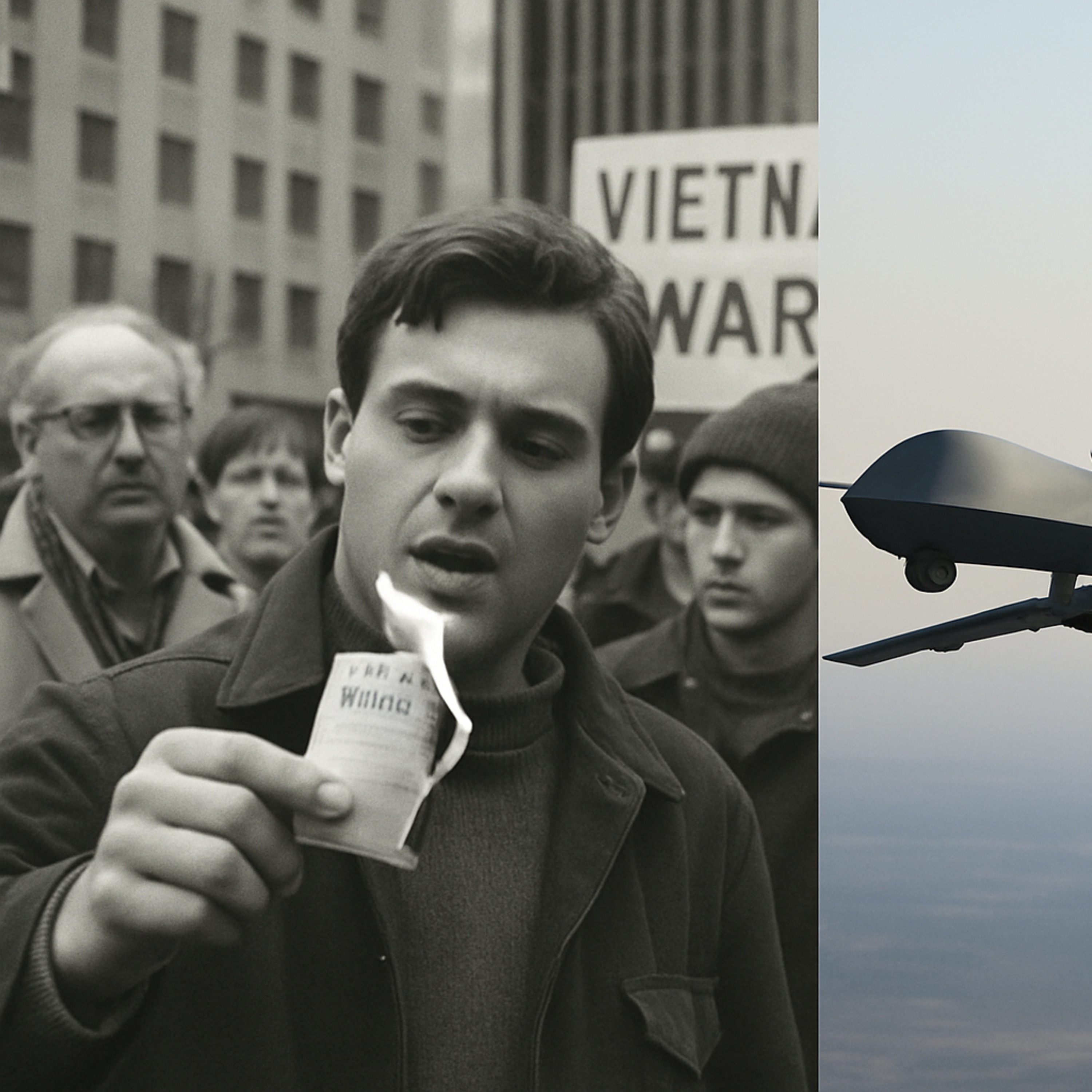
Proxy wars are the modern state’s perfect crime. They allow powerful nations to pursue strategic goals without the domestic consequences that traditionally forced wars to end. During Vietnam, American soldiers died in large numbers. Draft notices landed in every community, and the war’s human cost was unavoidable. Protests carried weight because every household had skin in the game. My mother marched against that war with me still in her belly, and the United States eventually left because the nation could no longer stomach the blood price.Since then, the way the West fights has changed. Iraq and Afghanistan were the first hints of this evolution: long, grinding wars, but fought with an all-volunteer force. Without a draft, there was no nationwide grief, no flood of body bags to provoke outrage. The public was insulated, and the wars dragged on for decades. Even with thousands of American deaths, the pain was quarantined to military families while the rest of the country lived as if nothing was happening.Today, Ukraine represents the pinnacle of this strategy. NATO countries supply weapons, intelligence, and money, but not troops. Ukrainians and Russians die in staggering numbers, yet Western nations suffer no direct casualties. There are no folded flags on American porches, no soldiers at the door to deliver devastating news. Without domestic blood, there is no pressure to end the war. Western publics can support Ukraine indefinitely because the price they pay is financial, not human.Israel’s war in Gaza follows a similar pattern, though with its own complexities. The casualties are overwhelmingly Palestinian, with significant Israeli losses, but again—Western nations bankroll the conflict and provide diplomatic cover while remaining physically untouched. Protests in the U.S. and Europe lack the force of Vietnam-era demonstrations because no American lives are on the line. Activists can be dismissed as naïve, fringe, or ideologically confused because they are not backed by a grieving nation.Proxy wars are insulated from democratic accountability. They avoid the political reckoning that comes when mothers bury their sons and fathers receive folded flags. They are fought with other people’s sons, on other people’s soil, and the societies funding them never feel the true cost. Even earlier efforts to shield the public from war—embedding journalists, hiding casualty numbers, relying on drones—only dulled the pain. Proxy warfare removes it completely.This is why these conflicts can persist for years. There is no shared sacrifice to unite or divide the home front, no mass protests to force leaders to justify the war’s continuation. The suffering is exported, and the moral burden is outsourced. For the powers behind them, proxy wars achieve strategic goals while keeping domestic populations comfortably detached.Wars fought this way will never be won through hearts and minds because the hearts and minds of the countries pulling the strings are never truly engaged. The people who suffer most are those with no choice and no voice—the civilians and soldiers whose lives are consumed by a conflict they did not start. That is the cold, brutal efficiency of the modern proxy war: it achieves its ends without ever forcing the societies behind it to confront the real cost of their actions. In that sense, it is not just a strategy. It is, in the purest and darkest terms, the perfect crime.

Proxy wars are the modern state’s perfect crime. They allow powerful nations to pursue strategic goals without the domestic consequences that traditionally forced wars to end. During Vietnam, American soldiers died in large numbers. Draft notices landed in every community, and the war’s human cost was unavoidable. Protests carried weight because every household had skin in the game. My mother marched against that war with me still in her belly, and the United States eventually left because the nation could no longer stomach the blood price.Since then, the way the West fights has changed. Iraq and Afghanistan were the first hints of this evolution: long, grinding wars, but fought with an all-volunteer force. Without a draft, there was no nationwide grief, no flood of body bags to provoke outrage. The public was insulated, and the wars dragged on for decades. Even with thousands of American deaths, the pain was quarantined to military families while the rest of the country lived as if nothing was happening.Today, Ukraine represents the pinnacle of this strategy. NATO countries supply weapons, intelligence, and money, but not troops. Ukrainians and Russians die in staggering numbers, yet Western nations suffer no direct casualties. There are no folded flags on American porches, no soldiers at the door to deliver devastating news. Without domestic blood, there is no pressure to end the war. Western publics can support Ukraine indefinitely because the price they pay is financial, not human.Israel’s war in Gaza follows a similar pattern, though with its own complexities. The casualties are overwhelmingly Palestinian, with significant Israeli losses, but again—Western nations bankroll the conflict and provide diplomatic cover while remaining physically untouched. Protests in the U.S. and Europe lack the force of Vietnam-era demonstrations because no American lives are on the line. Activists can be dismissed as naïve, fringe, or ideologically confused because they are not backed by a grieving nation.Proxy wars are insulated from democratic accountability. They avoid the political reckoning that comes when mothers bury their sons and fathers receive folded flags. They are fought with other people’s sons, on other people’s soil, and the societies funding them never feel the true cost. Even earlier efforts to shield the public from war—embedding journalists, hiding casualty numbers, relying on drones—only dulled the pain. Proxy warfare removes it completely.This is why these conflicts can persist for years. There is no shared sacrifice to unite or divide the home front, no mass protests to force leaders to justify the war’s continuation. The suffering is exported, and the moral burden is outsourced. For the powers behind them, proxy wars achieve strategic goals while keeping domestic populations comfortably detached.Wars fought this way will never be won through hearts and minds because the hearts and minds of the countries pulling the strings are never truly engaged. The people who suffer most are those with no choice and no voice—the civilians and soldiers whose lives are consumed by a conflict they did not start. That is the cold, brutal efficiency of the modern proxy war: it achieves its ends without ever forcing the societies behind it to confront the real cost of their actions. In that sense, it is not just a strategy. It is, in the purest and darkest terms, the perfect crime.

NOW PLAYING

Proxy Wars Evade Accountability

0:00 28:12

No transcript for this episode yet

We transcribe on demand. Request one and we'll notify you when it's ready — usually under 10 minutes.

Frequently Asked Questions

How long is this episode of The Chris Abraham Show?

This episode is 28 minutes long.

When was this The Chris Abraham Show episode published?

This episode was published on July 29, 2025.

What is this episode about?

Proxy wars are the modern state’s perfect crime. They allow powerful nations to pursue strategic goals without the domestic consequences that traditionally forced wars to end. During Vietnam, American soldiers died in large numbers. Draft notices...

Can I download this The Chris Abraham Show episode?

Yes, you can download this episode by clicking the download button on the episode player, or subscribe to the podcast in your preferred podcast app for automatic downloads.
URL copied to clipboard!