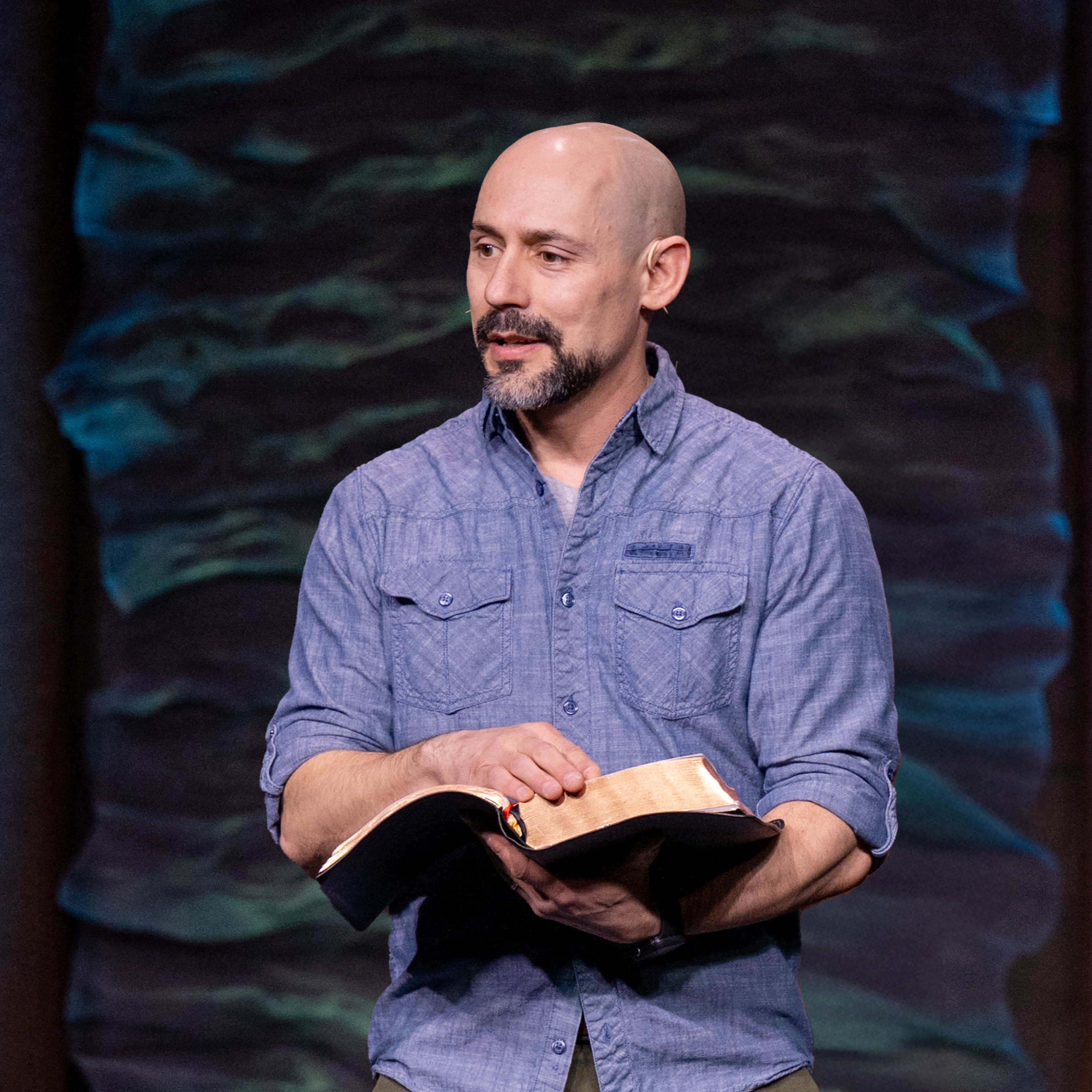
Good morning, Tabernacle. My name's Martin. I'm one of the pastors here. And I can be a real fool sometimes. In the last service, I got an amen to that. All jokes aside, if you know me well, you're probably not surprised by that statement. There's a whole bunch of examples. In fact, I was thinking about this. There's probably never been a sermon I've preached where the illustrations were easier for me.
And I think that's because my life has been one of those where I make a lot of stumbles and silly choices along the way. I thought about just all the different expressions I could give. I was thinking about how I've got all these friends in my life that continuously tell me, hey, you keep doing this one exercise in life, and every time you do, you end up walking funny for like a week because your back's all messed up. Maybe don't do that exercise. And yet, still I deadlift. I've got friends that'll tell you how often I stick my foot in my mouth trying to say things, and yet still, you guys let me have a microphone.
I thought about the amount of relational mistakes I make that are difficult and challenging over time. I think about just the silly things that I do to embarrass my children, and they continue to ask me not to. But as I was reading Psalm 14, I realized this is different gravity. This is not the ha-ha, funny-funny, man-you-can-be-foolish fool. This was a statement that God is making that he says not once, not twice, but three times in fact.
Now, if you're wondering what I mean by that, we're going to be in Psalm 14. I'd invite you to open that up. But I'd invite you to make a note to look this up later. Psalm 14 is almost identical to Psalm 53. Almost word for word the same. There's a handful of verses at the end that shift. That's why it's a separate psalm in itself. But David and the Holy Spirit saw fit to say this to us, not once, but twice. And then the Apostle Paul thought, you know what, I'm going to quote most of it in Romans chapter 3.
And I thought to myself, there's only one or two reasons why God would be so clear with us that we need to have it not once, not twice, but three times. And we always say here, if it's repeated in scripture, it's probably worth paying attention. So that's the first option. The second option is so that I can say I actually preach two psalms for the price of one today. Take your pick of which one that is. But as I realized the gravity of this psalm and what God was saying to me personally, I recognized that maybe it was something that I should go a little bit deeper than the surface level, funny, funny, I can be a fool. And I realized that when I look back at my life, there's a very specific period of my life where I was.
An absolute fool. I was about 16 years old, and I know some of you know my life story. Many of you probably don't. I forget that the podcast has been going for a very long time now, and not everybody has gone way back to listen to things. So I assume that I should probably confess this regularly to you, but at about 16 to 22, I was living in an area of my life where I was making just some absolutely terrible life choices. I got into drugs and alcohol pretty early. I really struggled with them, and I found myself trying to just do that as well as I could. If you've ever met me, I'm kind of that guy that I just want to do the thing big, and I did that with that.
That was foolish enough. I made those choices. I was living my life in a way that I was consistently walking down the wrong path. But what hit me square in the face as I was reading this and studying for this was that there were friends of mine that were good enough to look me in the face and say, what are you doing with your life, man? Maybe you've gone too far. And my answer to them was that my father had passed away at 12 years old from a drug overdose and that my desire was to follow his path as far as I could and prove that I was strong enough to not fall into the same trap that he did. At 16, 17 years old, I made the dumbest statement I think I could possibly make.
I was a fool. Everything about my life denied God. With that said, let's take a look at what the Bible says about being a fool and get a much better definition than I can give. In Psalm chapter 14, it leads with, the fool says in his heart, there is no God. They are corrupt. They do abominable deeds. There is none who does good. The Lord looks down from heaven on the children of man to see if there are any who understand, who seek after God.
They have all turned aside. Together they have become corrupt. There is none who does good, not even one. Have they no knowledge? All the evildoers who eat up my people as they eat up bread, and they do not call upon the Lord. They are in great terror, for God is with the generation of the righteous. You would shame the plans of the poor, but the Lord is his refuge. Oh, that salvation for Israel would come out of Zion when the Lord restores the fortunes of his people. Let Jacob rejoice and let Israel be glad.
This is the word of the Lord. And I love David because he is so raw and we have been in the Psalms long enough now to know, we've heard some familiar terms. We know that David is pouring out his heart. He's clear about what he's challenged with. But I love verse seven and we're gonna come back to this because David does not leave us without hope. In fact, his prayer is for the hope of his people. And that is good news today. As we consider, am I alone in the room as a fool? See, I think that when we read this passage, it's very easy to read that first line. The fool says in his heart, there is no God. And it is true. Fools deny God.
but maybe not in the way that we think. Maybe this isn't all about the atheist. Now, first off, let me go ahead and say, I think this absolutely applies and speaks to the atheist. The man or woman who denies the existence of a creator God, says that they're not real, calls him the spaghetti monster in the sky, whatever it may be. I absolutely believe that David is saying that that is complete foolishness, and I will agree with David on this.
I mean, no disrespect or disregard. This is not an us versus them. This is absolutely the reality that it is foolish to believe that there is no God. I believe that the evidence is so overwhelming that it is unbelievable to me that there are people out there that still say that there is no creator. The scientific evidence is all there. And trust me, I would love to spend the next 35 minutes boring you with every bit of that. But the book that we read, that we rest our faith upon, that we remind ourselves is the greatest revelation about our God and through our God is the most reliable text in human history. That is not my opinion. That is not Christian doctrine. That is fact.
There has never been a book that has been examined and dug into as much as the Bible, and yet it continues to prove archaeologically, scientifically, theologically, sociologically, God is who he says he is. It is foolish to believe anything else. But I don't think that that's the primary audience today. I would be absolutely foolish myself to think that in a room this size that nobody is denying that there is an existing God, but I think the vast majority of us here today would say that we believe that there is a God. That's probably how we came here. That's probably what we're here for. But I think there are a couple of pieces for us as well.
Number one, I think it is very important that we realize that we have all been fools. Titus chapter three clarifies this for us if we didn't get it from the passage itself. It says, we were all foolish, disobedient, and led astray. Why do you think David is so clear? He repeats it over and over again. To see if there are any who understand, there are none who do good, who seek after God. None, not even one.
Have they no knowledge? They have all together become corrupt. He is giving us a broad term here. So we have to dig in. We have to understand why. He's not talking about a small subset of people. He's not talking about just them. He's talking about us. Before we knew Christ, we were fools. We lived in ignorance. And I think that's an important word to define ignorance because ignorance is not just how we use it as kind of a mean term to say you're not that intelligent. It is an ignorance of not knowing, not having the information. There was a time where you and I did not know the grace of our God. We were fools.
For me, it is an important and cathartic reminder for me to stand here before you and confess my past because I have to remember where I came from to remember the truth of what God has done for me. I think far too often in the church today, we are so far from our past that we get this hoity-toity attitude that I know, I am redeemed, I am grace-filled, I know, and we forget that we were all fools. Scripture continues to remind us that we must look at that. We must never let it be our identity, but we must understand who we once were to know who he truly is. Amen?
So church, as we look at this, I'm glad I'm not alone. I think there's one other group, maybe two, that we also need to discuss. I think when I see this passage and I look at scripture, when it's talking about foolishness, this is not just talking about, yes, we were all there, we all denied him, but there is a group of individuals within the church that, by and large, confess God with their mouth, but live a totally different life. It is not lost on me that as we read that first line, it says, the fool says in his heart that there is no God.
Romans 10.9 is a verse we often quote to direct people towards salvation here. It says, if you confess with your mouth and believe in your heart that there is, or that Jesus is Lord and that God raised him from the dead, you will be saved. It would seem that this is a matter of the heart. Whether it be a denial of God or an acceptance of God, it is more than lip service. It is more than what we say outwardly. It is more than just getting in the water for baptism. It is a genuine decision of the heart to choose to follow him. So I would ask you, what gives the most light? What sheds the most light upon what our heart actually believes?
I would argue that it's our lives. How many here have been in a place where you've looked in the mirror and realized, I confess God with my mouth, and I deny him with my life? Now, for me, there have been times. See, the part of that story that I really hate to tell about my past is that at 16 years old, I stumbled into a church. I read the book of James. I tried to memorize it, because as I say, there was a cute girl there, and I wanted to impress her. But I had heard the gospel. I had no excuse.
and I chose to go out and live my life in a wanton denial of who God was. I knew he existed. I have to admit that to you today. I knew that God existed, and I still lived my life completely devoid of him in any way, shape, or form, mostly because the idea that God existed means that I'm not God, and I didn't really like that at 16. Can I confess to you at 44, it's still a hard pill to swallow? He's God, I'm not, that's hard. But there are fools in this room that continue to confess God with their mouth, and yet their life says nothing of him. Sunday, we go to church every week.
Monday through Saturday, well, that's a different story. That is foolishness. In there is a nuance. There is, I think, a group of people that often just look down the aisles and they have that, well, I'm doing better than they are. The pretty good guys. And this is a dangerous one because we can convince ourselves that pretty good is good enough. The problem with pretty good is that it is an eternity away from righteousness.
Pretty good is a comparison trap and there's nothing in scripture that tells you that you should behave well and that is the indicator of knowing the Lord. There's nothing that God is talking about. He's not telling us that being a fool means that we just don't behave really good. That is foolish in itself, but it is not being the fool because we all struggle and fall, don't we? See, Paul in Romans 11 quotes this passage, but then he goes on in verse 23 to clarify it just in case anybody messed it up. For all have sinned and fallen short of the glory of God. He was not saying that we're all fools because we stumble. He is saying we are fools when we deny God continuously. Church.
There are atheists who are fools, and there's a lot of church pointing at them. There's a lot of people within the church that are practical atheists, living their lives as if God does not exist. There are those that are struggling to realize that pretty good is not good enough, and there are those that are just wrestling with the fact that every day is a battle with my own foolishness. And then there is the righteous. Can I get a show of hands of the righteous today? You know, every service has gone the same way, and I laugh each time because I think that maybe we're missing something.
because there's not a hand in the room. Online, out in the lobby, I'm sure you guys are doing much better. But do we understand what righteous is? See, we have to know this to be able to move on. There is one that is righteous, and that is Jesus Christ. But Jesus Christ imparted his righteousness on us with what he did on the cross some 2,000 years ago. We are righteous, church, and redeemed by his blood because what he did was sufficient for all of the sin, all of the foolishness in this room, and everything that will still mess up in the future. We are righteous, and we are redeemed by the blood of Christ. So can I get one more show of hands for the righteous today? It's a totally different mood. There's still a few hands down that I'm like, guys, it's still okay in Buckley to raise your hand on a Sunday morning. Some guys just won't play along.
God is with the righteous. We have to know that we are made righteous by the blood of Christ. Otherwise, the idea of this fool and the foolishness, it does encompass so many more. It does encompass all of us at one time in our life, but we have to understand that God is with the righteous. It's interesting to me. As I was looking at examples of this, I realized that David was a great expression in every direction of what is being said in this passage. It's not lost on me. He wrote it for us, and yet he was the example that we can use. See, David's life, God was with him.
We know this from a very early age. God was with David in pure obscurity. Before David was ever the guy that slew Goliath, before David was the king, before he was the hero of the faith that we often see him as, he was a young boy whose father didn't see fit to bring him out when he was asked to see all of his sons. Can you imagine how that would feel? But God was with him in obscurity. God was with him on those cold nights in the field with the sheep. When he faced the bear, man, I would have loved to have got more details on that story, but God was with him. God was with him.
When for years after being told he would be king, he had to survive the fact that the current king was hunting him. He would play the harp to soothe Saul and Saul would in turn throw spears at him. God was with him. Why do you think the spears missed? God was with him when his son tried to overthrow him as king. Some rough family dynamics there. God was with David, not because David was good and righteous. We know the end of David's story, but because God had made a promise to him that he would have a throne that would continue everlasting.
It is God's promise that makes us righteous. It is God who makes us righteous, not ourselves. But David is such a great example of this. One, because he wrote the psalm that we're talking about. Two, because he carries it through the entire way. The hard part that we have to recognize is God is with us. He's with us in obscurity. And I want to say to that person here today that you feel like nobody sees you. I'm sorry. We're not always very good at that as humans. But God is with you.
God is with you in the loneliness. God is with you in the cold nights where nobody else knows that you're crying yourself to sleep. God is with you in the pain and the trials and the struggles of this life. He is with you all along the way. God is with the generation of the righteous, as it says in verse five. But God opposes the foolishness.
This is where we have to be very real with ourselves about our own foolishness because God is with the righteous. But each of us as righteous have still been foolish at times. We've toyed with it. Sometimes we lean into it. Sometimes we become the fool. And the danger is that we live in that and that becomes who we identify ourselves as. We are not. We are righteous and redeemed. But God does oppose foolishness in our lives. But that is how he is with us. Follow me with this. The end of David's story was not an illustrious one.
David makes one of the greatest mistakes in the Bible. He goes from such heights in his kingdom and such good things to seeing something that he believes he deserves and he takes it at whatever cost it has. He sees it, it is beautiful, and he takes it. He goes further and then to conceal his behavior, he has what would likely have been one of his dear friends or mighty men killed to cover up the sin that he has already wrought on this. You remember what God did? God didn't leave him or forsake him.
God didn't punish him in the means that we might punish somebody, but instead God sends his prophet, Nathanael, to talk to him. I love this story. If you haven't read it in a while, go back. 1 Samuel, it's in the 20s somewhere. He sends Nathanael to him and Nathanael tells him essentially a story about what David did without using his name. And I love it because David's probably got a busy day that day and he's not thinking real clearly. And he's like, yeah, that guy's terrible. Nathanael says, that was you. But do not miss what happens next. David pleads with the Lord.
The Lord was with him throughout his foolishness. He never left him. He sent conviction to him. That for us today is the Holy Spirit. God convicts us of our sin, not to poke us and prod us and punish us and be mean, but so that we know that we can be restored. He sends Nathaniel and David pleads with him and begs him. But God does allow the consequences of sin to hit him. And I need to say today, because I wouldn't be no preacher if I did not tell you this, sin will always cost death.
If you think for a moment the sin in your life is one that you can tuck and hide away and it will never have a consequence in your life, you are sorely mistaken. Sin always gets its due. It will always cost blood. And if you don't bring it out into the light and offer it to Christ and allow him to take the punishment for it, to forgive it, it will cost you dearly. The sins of our past, one of the reasons I'm so transparent with mine is one, because I know what God's done with it. Number two, it's because I never want to get so far away that I forget what God did there. Church,
God opposes foolishness and sin in our life, but he does it in a way that allows him to bring it back to something. And David repents of his sin. God still punishes him. God still sees those consequences come through in his life. But it's amazing how David responds. In one of the most painful situations that I could possibly imagine for David, he dusts himself off and he gets back to work. He dies an old man having served God well and having made mistakes. I would like that said about me because God did something amazing. God did what God does. And when we repent, when we seek him, the Lord restores.
I need us to hear today, for those that, when I talk about that sin in our past, that sin that we have maybe let fester for too long, that we're convinced will never bother us, I also have to tell you that we bring it to light so that the Lord can restore. My friends, I tell you about who I was when I was 16 years old and the mistakes that I made and the stupid comments and the things that I thought, but today I stand before you, a man who is sober, restored, and redeemed. I appreciate the fact that we get excited when people's lives are changed because the God that does that is a God that can do it for you. There is nobody that is too far gone for God to restore.
He desires to restore you. He desires to restore his kingdom. He wants that all should come to a saving fight of Jesus Christ. And that means you. You are not too far gone. But we have to go to him. I don't know much about restoration. I really don't. I wish that I had a great illustration for you. But what I do know is to restore a car, a home, even a piece of furniture. It means to make it like new. I am not dusted off. I am not simply cleaned. God took me down to the basics and remade me. And your stories are even more amazing.
I love to have this vantage point. I look out, and I've said this a million times, I'll say it every time. I look out at the faces in this room and I can see marriages that are restored because they came to the table to confess their sin and repent and ask, what makes wars within us, as James would say? And then he answers it, it's our flesh. And we've come to the table and we've seen our marriage restored because Jesus can do that. I see people in here that have had the same background I did and had the drugs and the alcohol and they've gotten the best of them and they continue to fight that battle and bring it back to the Lord and the Lord has restored them. I see in this room people that have lost everything financially and they've given it over to God and God has restored them financially. I see people in this room that their family sitting next to them have been convinced they would never come through these doors and yet the Lord has restored or begun a restoration process in their life. Praise God for the stories of the lives changed in this room.
I think that when I look at David's life, the story that's the most interesting is the story of Ziklag. David, at this point, is not yet king. Saul is still chasing him, and due to what I'll call a tactical error in his strategy, they leave all their women and children in Ziklag, go off to battle, and when they come back, the wives and the children have been taken. David's people respond, maybe not terribly graciously. They're prepared to stone him in mutiny. I can only imagine the heartbreak in David's mind when he realizes that his own people have turned against him. These were the men that I was leading just moments before I was a hero, and now...
Everybody around me is gone. But the Lord restored even that. David went to God and said, God, should I follow? Should I pursue them? And the Lord said, yes, you should pursue them. And they went, and I love scripture because it's so clear. They went and they restored everything. God restored everything that had been taken from him. Even when it feels like there is nobody for us, the Lord desires to restore us to what he knows he has for us. I'm glad he's done that in my life. I'm glad he's done that in your life. But if we think that it is just that,
It is just our lives here on this earth that God restores, then we are still short-sighted. And this is where verse seven is so important to me today. Would you read it one more time with me? This is a verse that I think sometimes we might gloss over and be like, oh, that seems a little like, I don't know, Old Testament-y. I don't understand the whole like Zion and Israel part of it. Let me give you a really simple explanation of it. It says, oh, that salvation for Israel would come out of Zion when the Lord restores the fortunes of his people. Let Jacob rejoice and let Israel be glad.
He's talking about Jesus. Zion can be referred to in many ways in scripture, but one that is clear is that it refers to Jerusalem. David knew that his savior would come out of Jerusalem where Jesus would give his life on the cross for us. He was pointing forward to a hope that would be part of his lineage, which is part of God restoring David. It is remarkable the layers of restoration in the life of David, but it's not just about his earthly life. It was about generations to come. It was about you and about me. It was about every life changed here at the tabernacle, but it's even more than that. It's our eternity.
Church, sometimes I think we distill the gospel down to Jesus, or I was an addict and I messed up my life and then there was Jesus and he made my 80 years on earth way better because I accepted him. Did you know that it's more than that? It points to a future hope. A hope of a day where our Lord will return. Where Jesus will come back for his bride. He has gone to make a place for us. And one day Zion for us will be when the Lord is restored all things new.
I could not be more grateful for that truth because my life on this earth, there will still be difficult circumstances. There will still be brokenness. I will still fail time after time. I will be a fool and foolish on a regular basis. I will hurt people that I love. I will make mistakes. And though the Lord will restore those things, there will be no perfect restoration of me on this earth. And yet the Lord that gave his life as a sacrifice, a perfect atoning sacrifice for all that I have done, has saw fit to say, hey, and don't worry, I'll be back to make all things new.
Would you look with me at Revelation chapter 21? In verse three, we read this. It says, and I heard a loud voice from the throne saying, behold, the dwelling place of God is with man. He will dwell with them and they will be his people. God himself will be with them as their God. He's talking about a time where Jesus will reign on this earth. He will wipe away every tear from their eyes and death shall be no more. Neither shall there be mourning, nor crying, nor pain anymore.
for the former things have passed away. Church, we felt loss of late. We've lost great saints, loved ones, and I don't claim to know all the loss that we have felt, but this is the hope that the early church pointed to, knowing that one day, afar off, their savior would come, and we continue to look at that same hope of Jesus' return as one day restoring all things to new. And in verse five, it says, and he who was seated on the throne said, behold, I am making all things new. Church, all things new.
is the hope that I look forward to, even when things are broken, but it is not lost on me. That before Jesus came, they were told that their Messiah would come and they looked forward to it. But they looked forward to it in such a way that they had an expectation of who Jesus would be. They thought, surely the conquering king will come and relieve us from the Roman occupation. Are we in a place where we have an expectation of what Jesus is going to do in our lives and we are missing the eternal hope that he has promised us?
Are we so certain that the job should be restored, that the healing should happen in this way, that we miss the fact that God will one day make all things new? And I want to be very clear. I know that in the midst of our trials, that is not always the encouragement we need to hear. But overarchingly, it is absolutely the hope that we need to hold on to, that our Lord will make all things new. So as fellow fools, there are those of us that deny that there is a God. There are many that deny God with every action of their life. There's some of us that think we're doing pretty good.
And yet that in itself is a foolish denial of who God is. But the hope is that God is with the righteous and that he will restore his people. And if we will come before him and repent, he will restore us here. But there will come a glorious day where he returns and our hope of restoration will be forever. Will you bow your heads with me? Father, thank you. Lord, for the restoration that we see here on this earth. God, for the lives changed by the power of your Holy Spirit in our life. Thank you, Lord, that when we look to you,
You are faithful and just to forgive us our sins and to cleanse us from all unrighteousness. Lord, you make us righteous. We need not fear a God that loves us so much. But God, thank you that there is even more to the story. That despite our challenges here on this earth, there will be a complete and a total restoration. That one day we will see you again. And that in those moments, there will be no more tears. There will be no more pain. You will do what you have promised to do and restore your people. Oh Lord, that salvation would come out of Zion. Let that be our hope, our cry and our prayer today, Lord.
Would you bless your people as we seek you with our whole hearts? Lord, we love you and we give you the glory in all of it. Amen.