
EPISODE · Jun 11, 2026 · 1H 22M
PSYCH 027: Radiotracer Imaging with Positron Emission Tomography and Single Photon Emission Computed Tomography: Fundamental Principles, Methodology and Role in Neuropsychiatric Research
from Clinical Deep Dives · host Dr Manaan Kar Ray
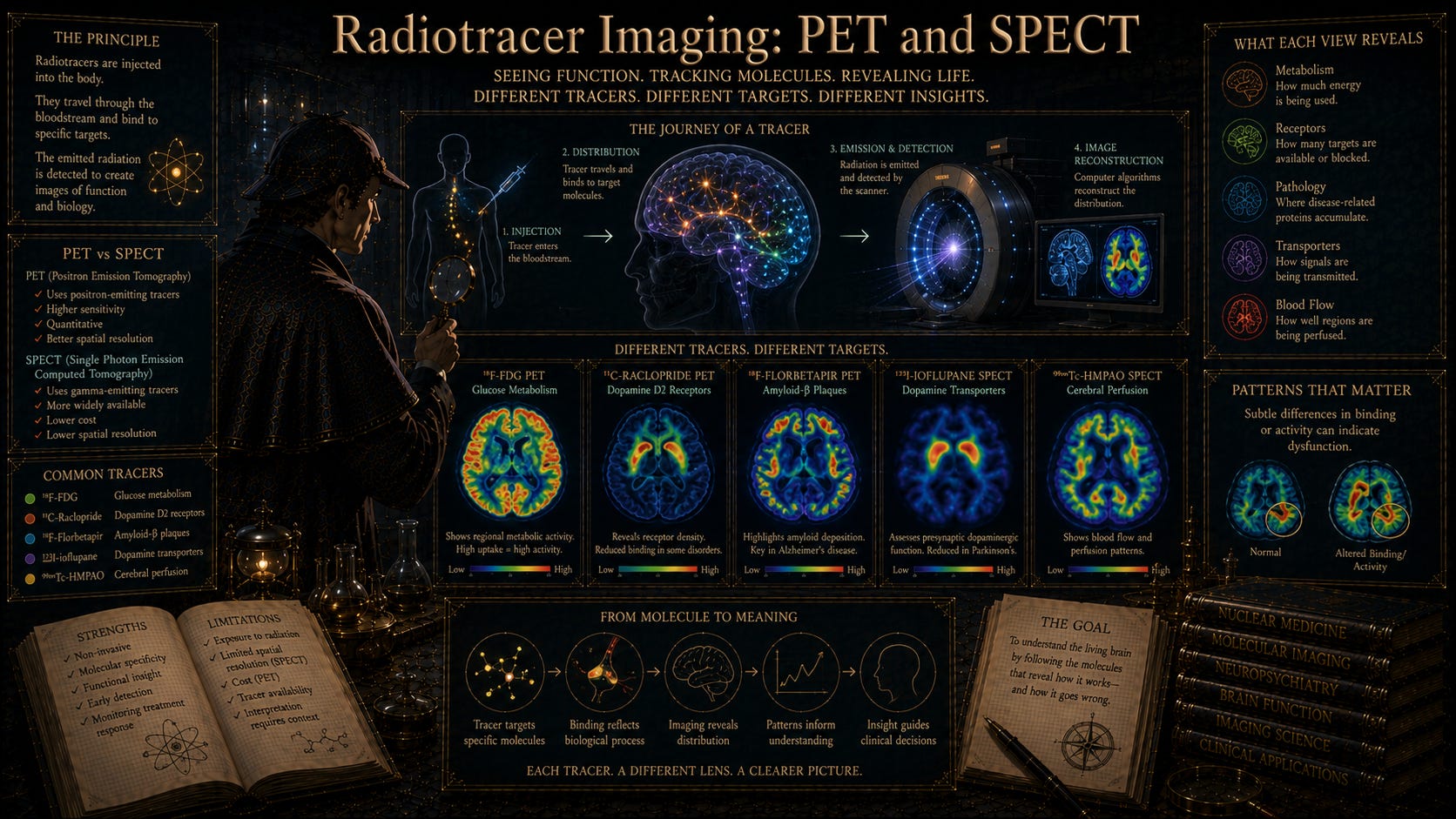
While MRI shows structure and EEG captures electrical activity, radiotracer imaging reveals something different: the brain’s molecular activity in action. This chapter explores PET and SPECT - techniques that allow us to track specific biological processes in vivo.In this episode, we examine how radiolabelled tracers bind to particular receptors, transporters, or metabolic pathways, enabling us to visualise neurotransmitter systems and functional activity. These methods provide a window into processes such as dopamine transmission, glucose metabolism, and receptor availability.We explore how PET and SPECT have advanced our understanding of psychiatric disorders - particularly in areas such as schizophrenia, addiction, and mood disorders - by linking symptoms to underlying neurochemical dynamics.A key strength of these techniques is specificity. Unlike broader imaging methods, radiotracer studies can target particular systems, offering insights into mechanisms at a molecular level.However, these approaches are complex, resource-intensive, and primarily research tools. Interpretation requires caution, and findings are often probabilistic rather than definitive.This chapter highlights a powerful idea: that understanding the mind requires not only seeing the brain, but tracing the chemistry that animates it.Key Takeaways* PET and SPECT use radiotracers to visualise molecular processes in the brain.* These techniques can assess neurotransmitter systems, receptor binding, and metabolism.* They provide high biochemical specificity compared to other imaging methods.* Radiotracer imaging has advanced understanding of disorders such as schizophrenia and addiction.* These methods are primarily used in research rather than routine clinical practice.* Interpretation is complex and findings are not always definitive.* Molecular imaging links symptoms to underlying neurochemical processes. This is a public episode. If you'd like to discuss this with other subscribers or get access to bonus episodes, visit drmanaankarray.substack.com/subscribe
Embed this episode
NOW PLAYING
PSYCH 027: Radiotracer Imaging with Positron Emission Tomography and Single Photon Emission Computed Tomography: Fundamental Principles, Methodology and Role in Neuropsychiatric Research
No transcript for this episode yet
Similar Episodes
No similar episodes found.
Similar Podcasts
No similar podcasts found.