
EPISODE · Jul 1, 2026 · 1H 1M
PSYCH 047: Sensation, Perception, and Cognition
from Clinical Deep Dives · host Dr Manaan Kar Ray
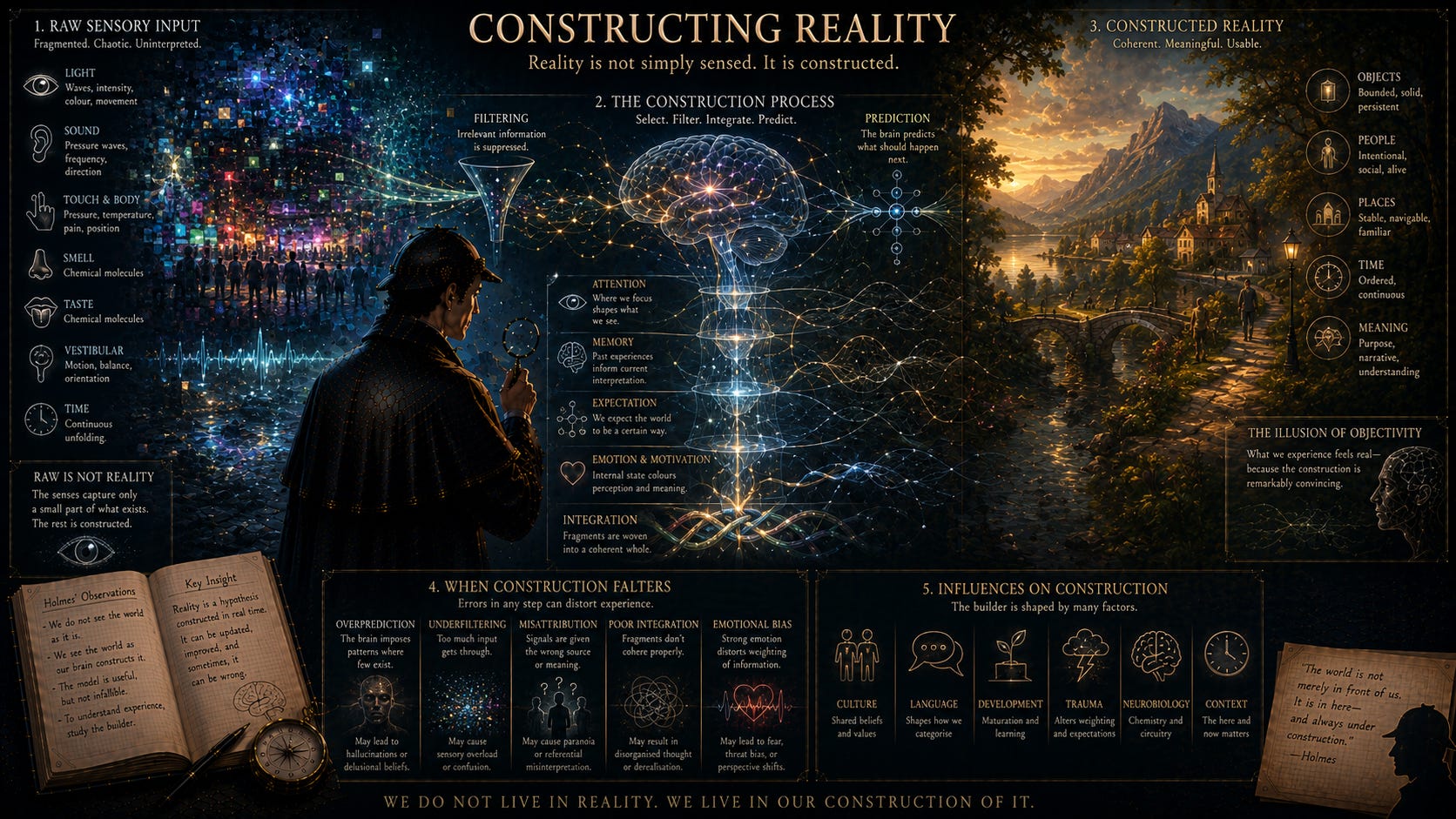
This chapter explores how the mind transforms raw sensory input into meaningful experience. Sensation begins as the detection of physical stimuli - light, sound, touch - but perception is the act of organising and interpreting these signals into a coherent reality.The key insight is that perception is not passive. The brain actively predicts, filters, and shapes incoming information based on prior knowledge, expectations, and context. What we experience as “reality” is therefore a constructed model, not a direct reflection of the external world.Cognition builds upon this foundation. It encompasses attention, memory, language, and executive function - the processes that allow us to think, plan, decide, and act. These systems are deeply interdependent: attention selects what enters awareness, memory provides context, and higher-order cognition guides interpretation and response.A central theme is the balance between bottom-up and top-down processing. Bottom-up processes are driven by sensory input, while top-down processes reflect expectations, beliefs, and prior experience. When this balance is disrupted, perception can become distorted - contributing to phenomena such as hallucinations, delusions, and cognitive biases.Clinically, this chapter reframes symptoms not simply as “abnormal experiences,” but as alterations in how the brain constructs reality. Disorders of perception and cognition are thus disorders of interpretation, prediction, and meaning-making.Key Takeaways* Sensation is the detection of stimuli; perception is their interpretation.* The brain actively constructs reality rather than passively receiving it.* Cognition includes attention, memory, language, and executive function.* Perception arises from interaction between bottom-up and top-down processes.* Prior experience and expectations strongly shape perception.* Disruptions in these systems can lead to hallucinations, delusions, and cognitive distortions.* Clinical symptoms often reflect altered reality construction rather than simple deficits. This is a public episode. If you'd like to discuss this with other subscribers or get access to bonus episodes, visit drmanaankarray.substack.com/subscribe
Embed this episode
Ready to play
PSYCH 047: Sensation, Perception, and Cognition
No transcript for this episode yet
Similar Episodes
No similar episodes found.
Similar Podcasts
No similar podcasts found.