
EPISODE · Jul 6, 2026 · 46 MIN
PSYCH 052: Neuroscience of Psychoanalytic Object Relations
from Clinical Deep Dives · host Dr Manaan Kar Ray
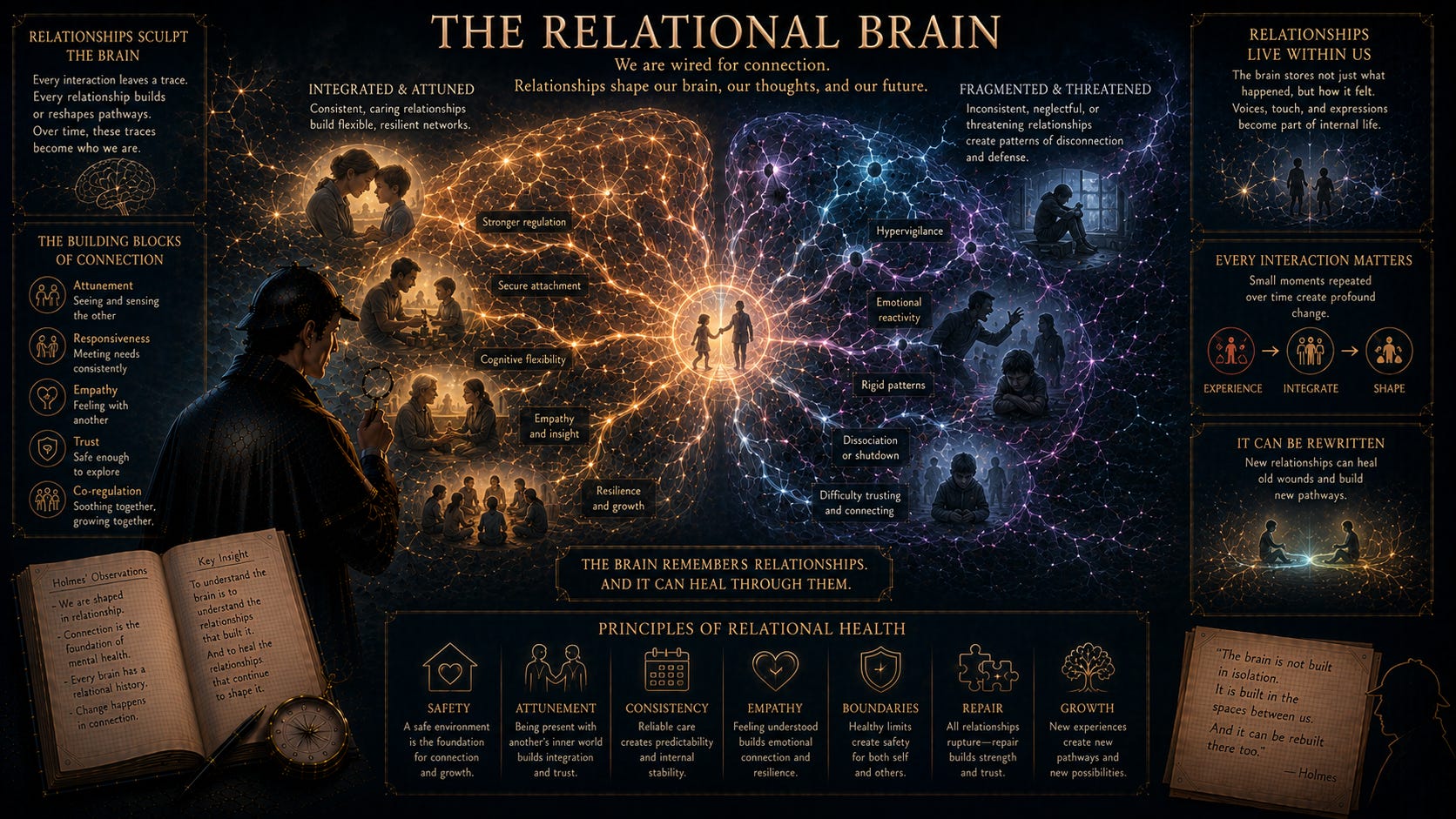
This chapter bridges two historically separate domains: psychoanalytic object relations theory and contemporary neuroscience. It explores how early relationships are not merely psychological experiences, but biologically embedded processes that shape the developing brain.Object relations theory proposes that internal representations of self and others are formed through early interactions with caregivers. These “internal objects” influence how individuals perceive relationships, regulate emotion, and experience themselves. Neuroscience now provides a framework for understanding how these representations are instantiated within neural systems.Attachment relationships play a central role. Early experiences of attunement, safety, and responsiveness influence the development of neural circuits involved in affect regulation, stress response, and social cognition. Disruptions in these relationships can lead to enduring patterns of dysregulation, vulnerability, and maladaptive relational expectations.A key theme is internalisation. Repeated relational experiences become encoded as stable patterns within the brain - shaping expectations of others, guiding interpersonal behaviour, and influencing emotional responses. These patterns operate largely outside conscious awareness, echoing psychoanalytic concepts of the unconscious.The chapter also highlights the integration of affective neuroscience, particularly the role of limbic systems, prefrontal regulation, and right-hemisphere dominance in early development. It suggests that psychotherapy itself can be understood as a relational process that reshapes these neural patterns over time.Clinically, this synthesis reframes disorders not simply as isolated dysfunctions, but as disruptions in relationally constructed neural systems. Healing, therefore, occurs not only through insight, but through new relational experiences that allow the brain to reorganise.Key Takeaways* Object relations theory focuses on internalised representations of self and others.* Early relationships shape neural development and emotional regulation.* Attachment experiences influence stress response and interpersonal functioning.* Internalisation links repeated relational experiences to enduring neural patterns.* Much of relational functioning operates outside conscious awareness.* Psychotherapy can reshape maladaptive relational and neural patterns.* Mental disorders often reflect disruptions in relationally constructed systems. This is a public episode. If you'd like to discuss this with other subscribers or get access to bonus episodes, visit drmanaankarray.substack.com/subscribe
Embed this episode
Ready to play
PSYCH 052: Neuroscience of Psychoanalytic Object Relations
No transcript for this episode yet
Similar Episodes
No similar episodes found.
Similar Podcasts
No similar podcasts found.