
EPISODE · Jul 10, 2026 · 1H 3M
PSYCH 056: Epidemiology in Psychiatry
from Clinical Deep Dives · host Dr Manaan Kar Ray
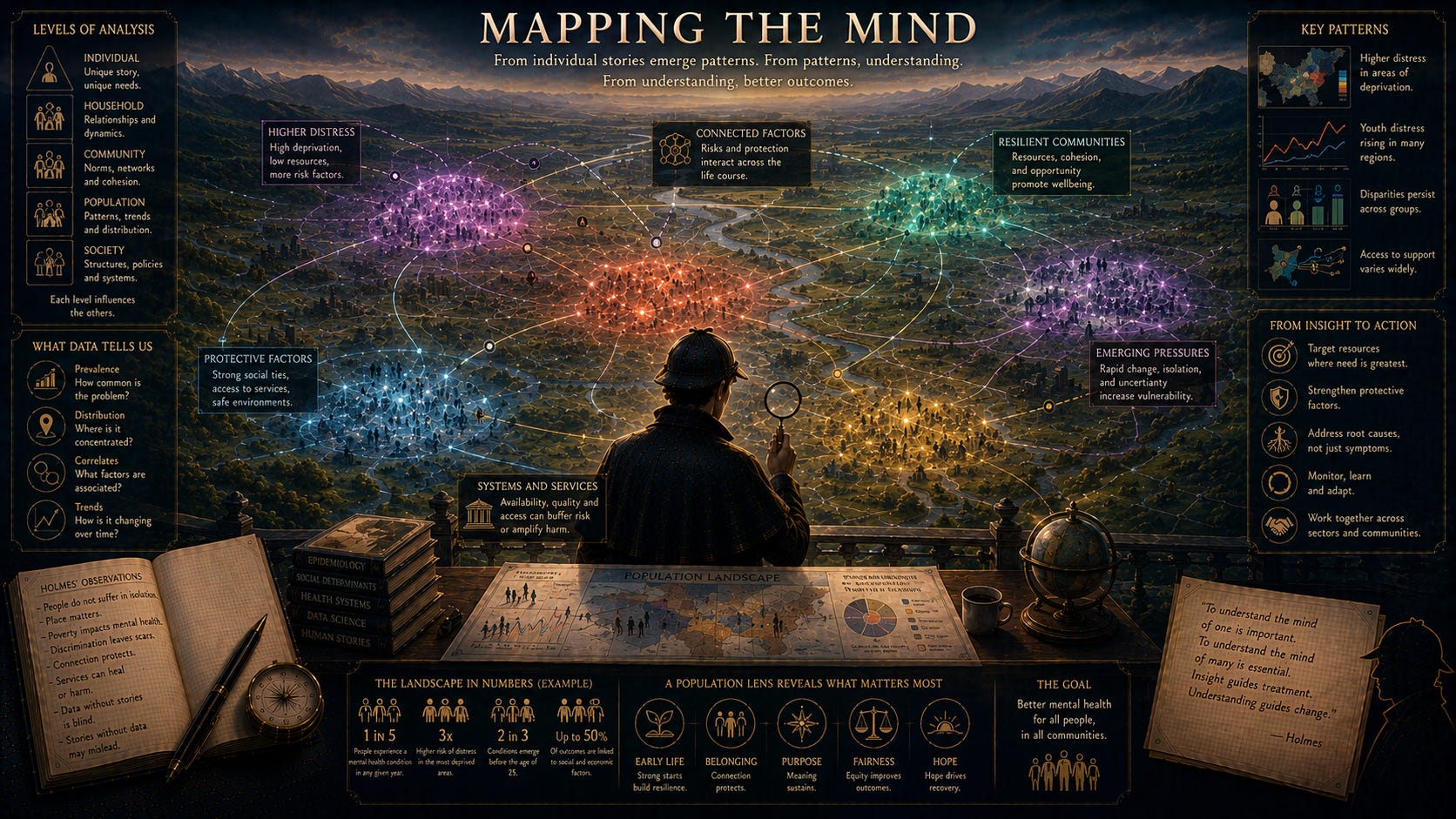
Epidemiology provides the lens through which psychiatry steps back and examines mental illness at the level of populations. Rather than focusing on individual cases, it asks broader questions: how common are disorders, who is affected, and what factors influence risk and outcome?This chapter introduces the foundational concepts of psychiatric epidemiology, including incidence, prevalence, risk factors, and protective factors. It emphasises that mental disorders are not randomly distributed - they follow patterns shaped by biology, environment, social context, and time.A key theme is measurement. Defining and identifying psychiatric disorders in populations is inherently complex. Diagnostic criteria, cultural variation, reporting bias, and study design all influence what is observed. Epidemiology is therefore not simply about counting cases, but about understanding how those counts are constructed.The chapter also explores causal inference. Associations between variables do not necessarily imply causation. Epidemiology uses study designs - such as cohort, case-control, and cross-sectional studies - to move closer to understanding causal relationships, while recognising inherent limitations.Clinically and at a systems level, epidemiology informs prevention, service planning, and policy. It identifies high-risk groups, tracks trends over time, and evaluates interventions. It transforms psychiatry from a purely clinical discipline into a public health enterprise.Ultimately, this chapter reframes mental illness as both an individual experience and a population phenomenon - requiring both clinical insight and epidemiological thinking.Key Takeaways* Epidemiology studies the distribution and determinants of mental disorders in populations.* Incidence and prevalence are key measures of disease frequency.* Mental disorders follow patterns influenced by biological, social, and environmental factors.* Measurement in psychiatry is complex and influenced by diagnostic and cultural factors.* Association does not equal causation; study design is critical.* Epidemiology informs prevention, policy, and service planning.* Psychiatry operates at both individual and population levels. This is a public episode. If you'd like to discuss this with other subscribers or get access to bonus episodes, visit drmanaankarray.substack.com/subscribe
Embed this episode
Ready to play
PSYCH 056: Epidemiology in Psychiatry
No transcript for this episode yet
Similar Episodes
No similar episodes found.
Similar Podcasts
No similar podcasts found.