
EPISODE · Jul 16, 2026 · 58 MIN
PSYCH 062: Psychiatric Interview, History, and Mental Status Examination of the Adult Patient
from Clinical Deep Dives · host Dr Manaan Kar Ray
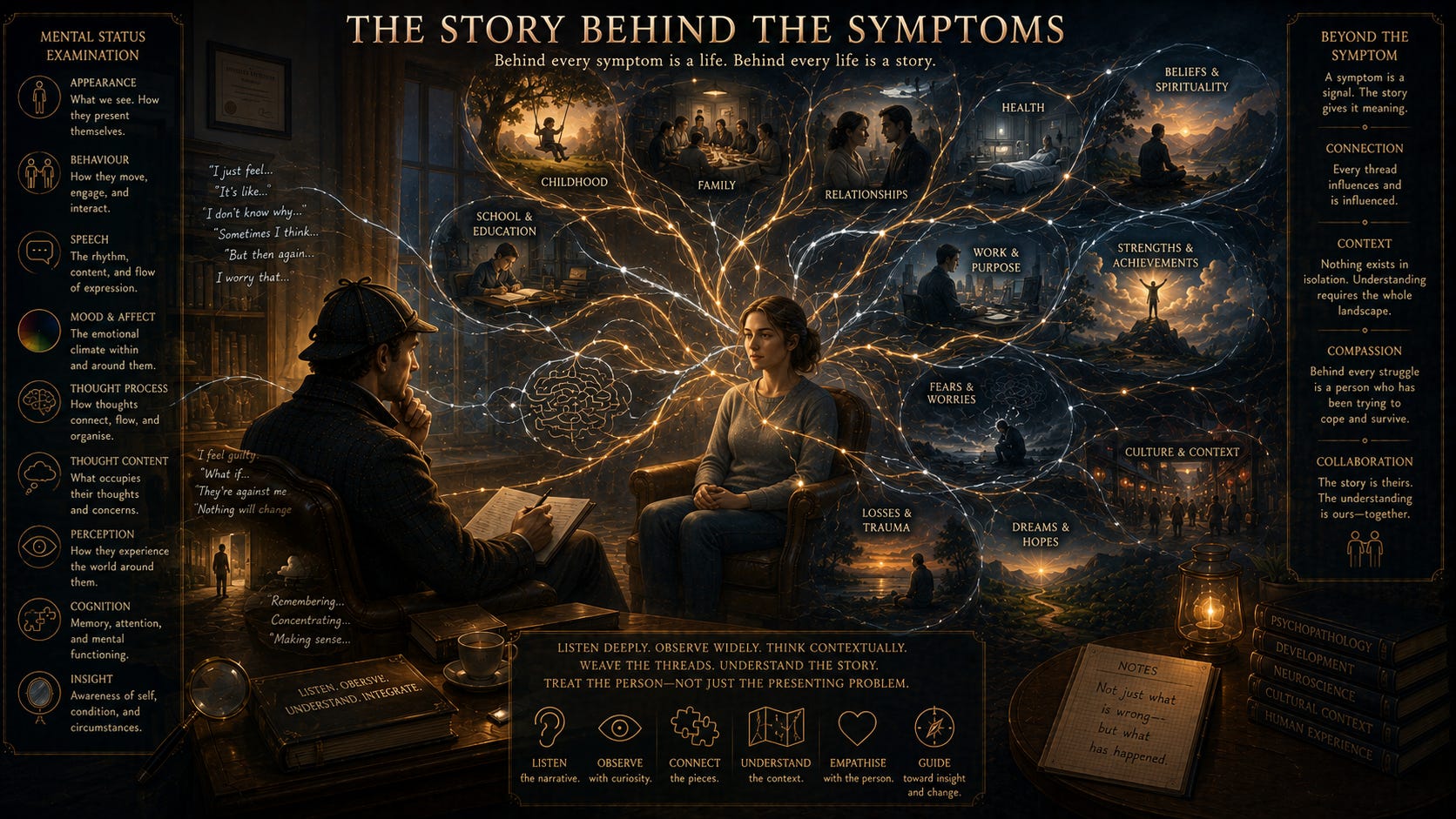
This chapter explores the foundations of psychiatric assessment: the psychiatric interview, the comprehensive clinical history, and the mental status examination (MSE). Together, these form the primary tools through which psychiatrists understand the experiences, symptoms, strengths, and struggles of the people they seek to help.Unlike many areas of medicine, psychiatry relies heavily upon narrative. The patient’s story is not merely background information—it is often the central source of diagnostic and therapeutic insight. The interview therefore becomes both an investigative process and the beginning of a therapeutic relationship.The chapter examines the structure of the psychiatric interview, including techniques for establishing rapport, gathering information, and creating an environment where sensitive experiences can be explored safely. Effective interviewing requires both scientific rigour and human connection. Information must be gathered systematically, yet patients must feel heard rather than interrogated.A detailed psychiatric history provides context for current symptoms. Presenting concerns are understood within broader developmental, medical, social, occupational, cultural, and family histories. Patterns emerge not from isolated facts but from the relationships between them.The Mental Status Examination offers a structured snapshot of psychological functioning at a particular moment in time. Appearance, behaviour, speech, mood, affect, thought processes, thought content, perception, cognition, insight, and judgement are all examined systematically. Together, they transform subjective observations into clinically meaningful findings.The chapter also emphasises that assessment extends beyond symptom collection. Skilled clinicians listen for themes, contradictions, emotions, values, strengths, and vulnerabilities. What is not said can sometimes be as important as what is disclosed.Underlying the entire process is the challenge of balancing objectivity and empathy. The clinician must gather reliable information while remaining attentive to the person’s lived experience.Ultimately, this chapter demonstrates that psychiatric assessment is not simply about diagnosing illness—it is about understanding people.Key Takeaways* The psychiatric interview is the foundation of psychiatric assessment.* Building rapport is essential for obtaining accurate and meaningful information.* Psychiatric history integrates presenting problems with broader life context.* The Mental Status Examination provides a structured assessment of current psychological functioning.* Observation is as important as questioning.* Effective assessment requires both empathy and clinical objectivity.* Psychiatric formulation emerges from patterns across history, examination, and observation.* Understanding the person is as important as identifying the diagnosis. This is a public episode. If you'd like to discuss this with other subscribers or get access to bonus episodes, visit drmanaankarray.substack.com/subscribe
Embed this episode
NOW PLAYING
PSYCH 062: Psychiatric Interview, History, and Mental Status Examination of the Adult Patient
No transcript for this episode yet
Similar Episodes
No similar episodes found.
Similar Podcasts
No similar podcasts found.