
EPISODE · Jul 17, 2026 · 43 MIN
PSYCH 063: The Psychiatric Report and Outline for a Psychiatric Examination
from Clinical Deep Dives · host Dr Manaan Kar Ray
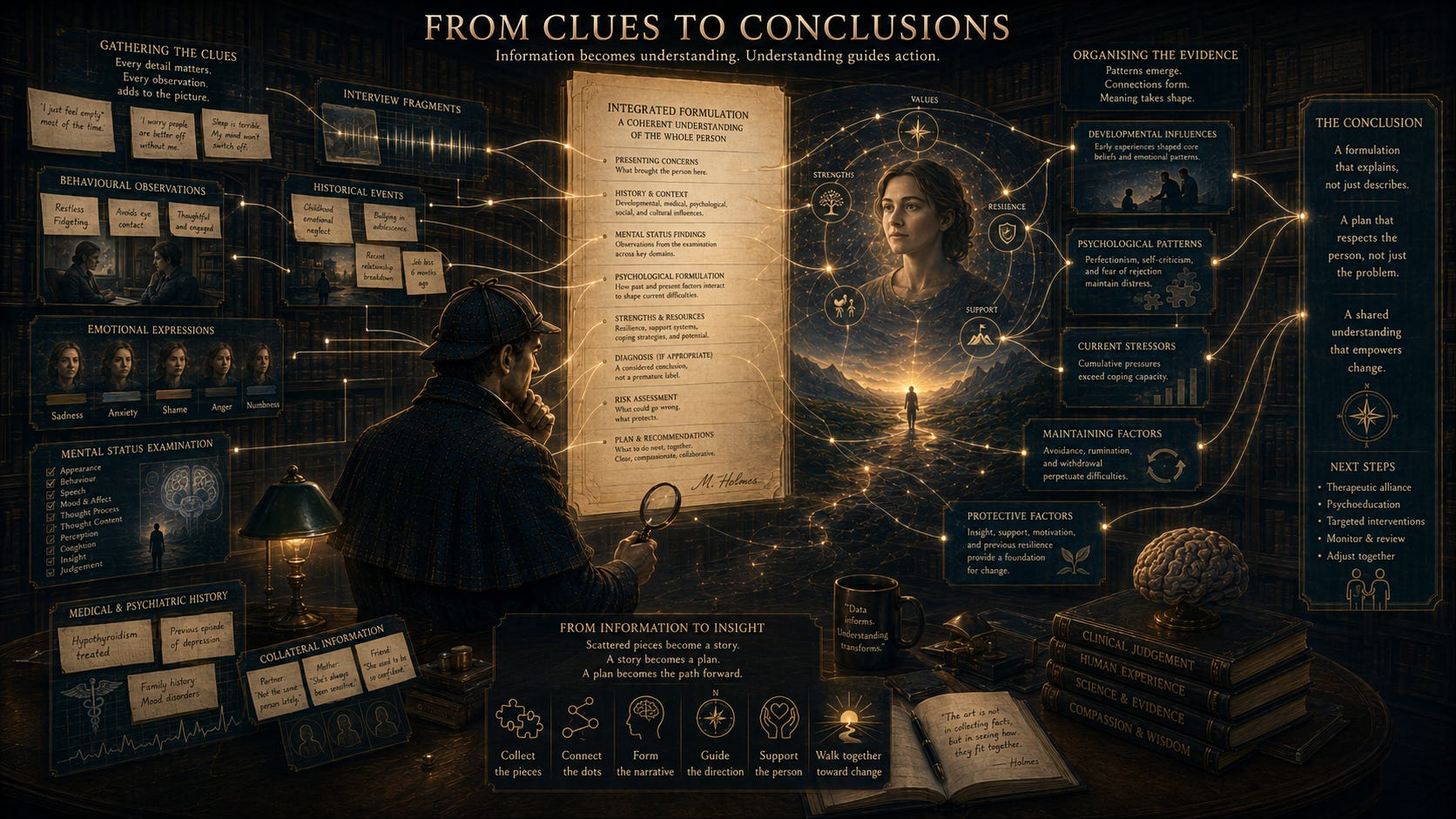
This chapter explores the art and discipline of transforming psychiatric assessment into a structured psychiatric report. While interviews and examinations gather information, the report is where that information is analysed, organised, and communicated.Psychiatric reports serve many purposes. They guide clinical care, facilitate communication between professionals, support legal and administrative processes, and create a lasting record of clinical reasoning. A well-written report does more than document findings—it demonstrates how conclusions were reached.The chapter examines the structure of a comprehensive psychiatric examination and report. It moves systematically through identifying information, presenting concerns, psychiatric history, medical history, personal history, family history, mental status examination, formulation, diagnosis, and recommendations.A central theme is the distinction between information and interpretation. Facts alone do not create understanding. The psychiatrist must evaluate reliability, identify patterns, weigh competing explanations, and integrate multiple sources of information into a coherent formulation.The report becomes a bridge between observation and judgement. Symptoms are not simply listed; they are understood within a broader context of development, personality, relationships, biology, culture, and life circumstances.The chapter also emphasises clarity and objectivity. Effective reports avoid unnecessary complexity while remaining sufficiently detailed to support clinical decisions. Precision matters because reports often influence treatment plans, legal proceedings, occupational decisions, and future assessments.An important challenge lies in balancing descriptive neutrality with clinical interpretation. The psychiatrist must accurately represent the patient’s experience while also providing professional opinions grounded in evidence and reasoning.Ultimately, this chapter demonstrates that psychiatric reporting is not merely an administrative task. It is the process through which clinical observations are transformed into meaningful understanding and practical action.Key Takeaways* Psychiatric reports organise assessment findings into a structured and clinically useful format.* Effective reports distinguish clearly between observation, history, and interpretation.* Comprehensive psychiatric examinations integrate multiple domains of information.* Clinical formulation connects symptoms to broader biological, psychological, and social factors.* Objectivity, clarity, and precision are essential principles of report writing.* Reports communicate clinical reasoning, not merely clinical findings.* Documentation influences treatment, communication, and medico-legal decision-making.* Good psychiatric reports transform information into understanding. This is a public episode. If you'd like to discuss this with other subscribers or get access to bonus episodes, visit drmanaankarray.substack.com/subscribe
Embed this episode
NOW PLAYING
PSYCH 063: The Psychiatric Report and Outline for a Psychiatric Examination
No transcript for this episode yet
Similar Episodes
No similar episodes found.
Similar Podcasts
No similar podcasts found.