
EPISODE · Jul 21, 2026 · 1H 12M
PSYCH 067: Medical Assessment and Laboratory Testing in Psychiatry
from Clinical Deep Dives · host Dr Manaan Kar Ray
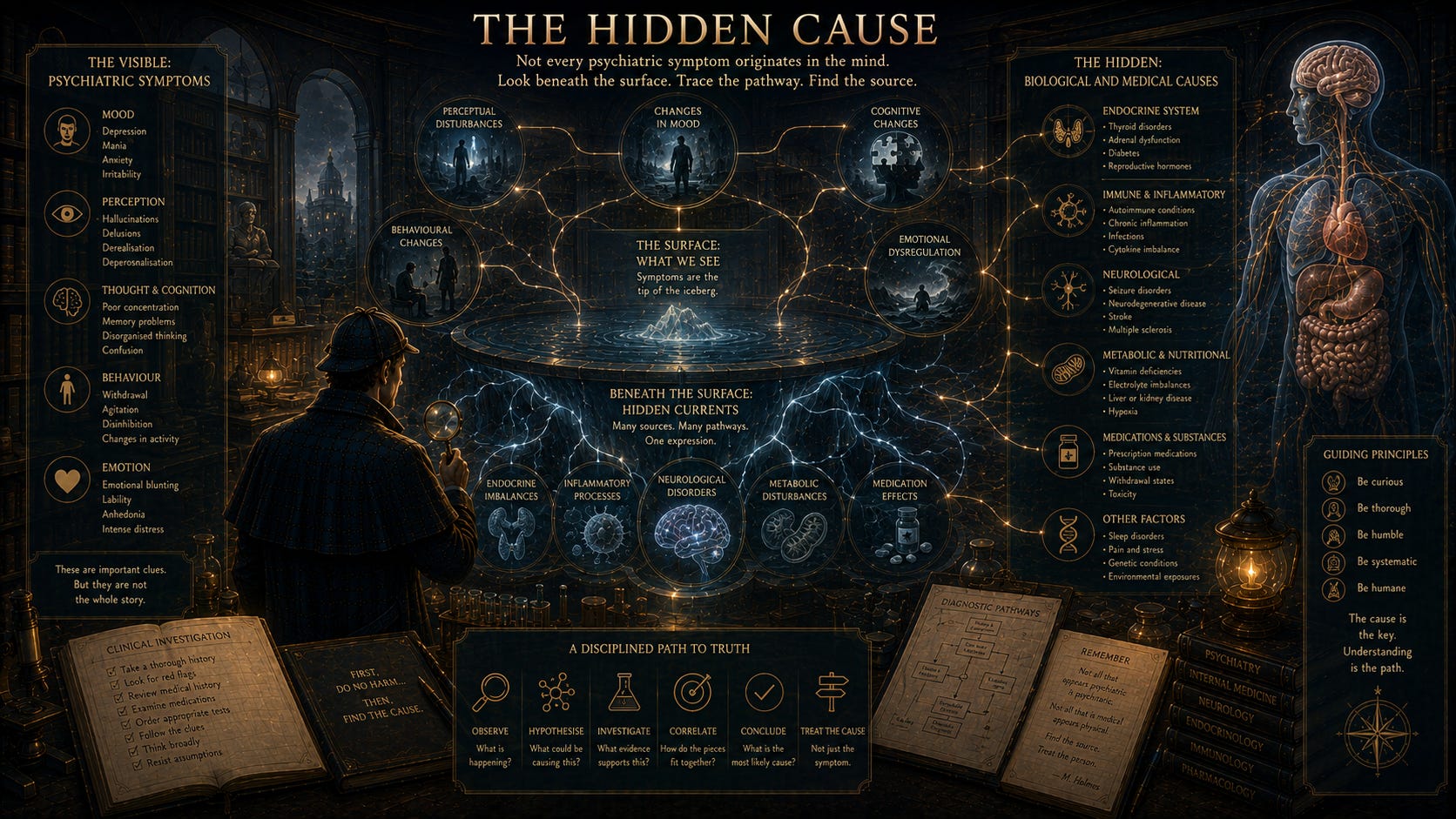
This chapter explores one of the most important principles in psychiatric practice: psychiatric symptoms do not always originate from psychiatric illness. The assessment of patients presenting with psychological or behavioural symptoms requires careful consideration of underlying medical, neurological, endocrine, infectious, metabolic, and pharmacological causes.Psychiatry occupies a unique position at the intersection of medicine and mental health. Changes in mood, cognition, perception, behaviour, or personality may arise from disorders affecting virtually any organ system. A comprehensive medical assessment therefore becomes an essential component of responsible psychiatric practice.The chapter examines the role of physical examination, medical history, medication review, and laboratory investigations in psychiatric assessment. These tools help clinicians identify conditions that may mimic, contribute to, or complicate psychiatric presentations. Disorders of thyroid function, vitamin deficiencies, autoimmune disease, substance use, infections, neurological conditions, and medication side effects all have the potential to present as psychiatric symptoms.A central theme is differential diagnosis. The clinician must continually ask whether symptoms represent a primary psychiatric disorder, a medical condition affecting the brain, a substance-related phenomenon, or an interaction between multiple factors. Psychiatric diagnosis often depends as much on excluding alternative explanations as it does on identifying characteristic symptom patterns.The chapter also highlights the limitations of testing. Laboratory investigations do not replace clinical judgement. Tests are most valuable when guided by thoughtful clinical reasoning rather than routine or indiscriminate ordering.Importantly, medical assessment reinforces a holistic understanding of patients. The artificial boundary between mind and body often dissolves under close examination. Biological, psychological, and social factors interact continuously to shape human experience.Ultimately, this chapter reminds us that good psychiatry begins with good medicine. Understanding mental illness requires understanding the whole person.Key Takeaways* Medical conditions can mimic or contribute to psychiatric symptoms.* Comprehensive psychiatric assessment includes medical history, examination, and appropriate investigations.* Laboratory testing helps identify reversible or treatable causes of symptoms.* Differential diagnosis is essential in psychiatric practice.* Medication effects and substance use must always be considered.* Tests should be guided by clinical reasoning rather than routine practice alone.* Mind and body are deeply interconnected systems.* Effective psychiatry requires a strong foundation in general medicine. This is a public episode. If you'd like to discuss this with other subscribers or get access to bonus episodes, visit drmanaankarray.substack.com/subscribe
Embed this episode
NOW PLAYING
PSYCH 067: Medical Assessment and Laboratory Testing in Psychiatry
No transcript for this episode yet
Similar Episodes
No similar episodes found.
Similar Podcasts
No similar podcasts found.