
EPISODE · Jul 22, 2026 · 51 MIN
PSYCH 068: Principles and Applications of Quantitative Electroencephalography in Psychiatry
from Clinical Deep Dives · host Dr Manaan Kar Ray
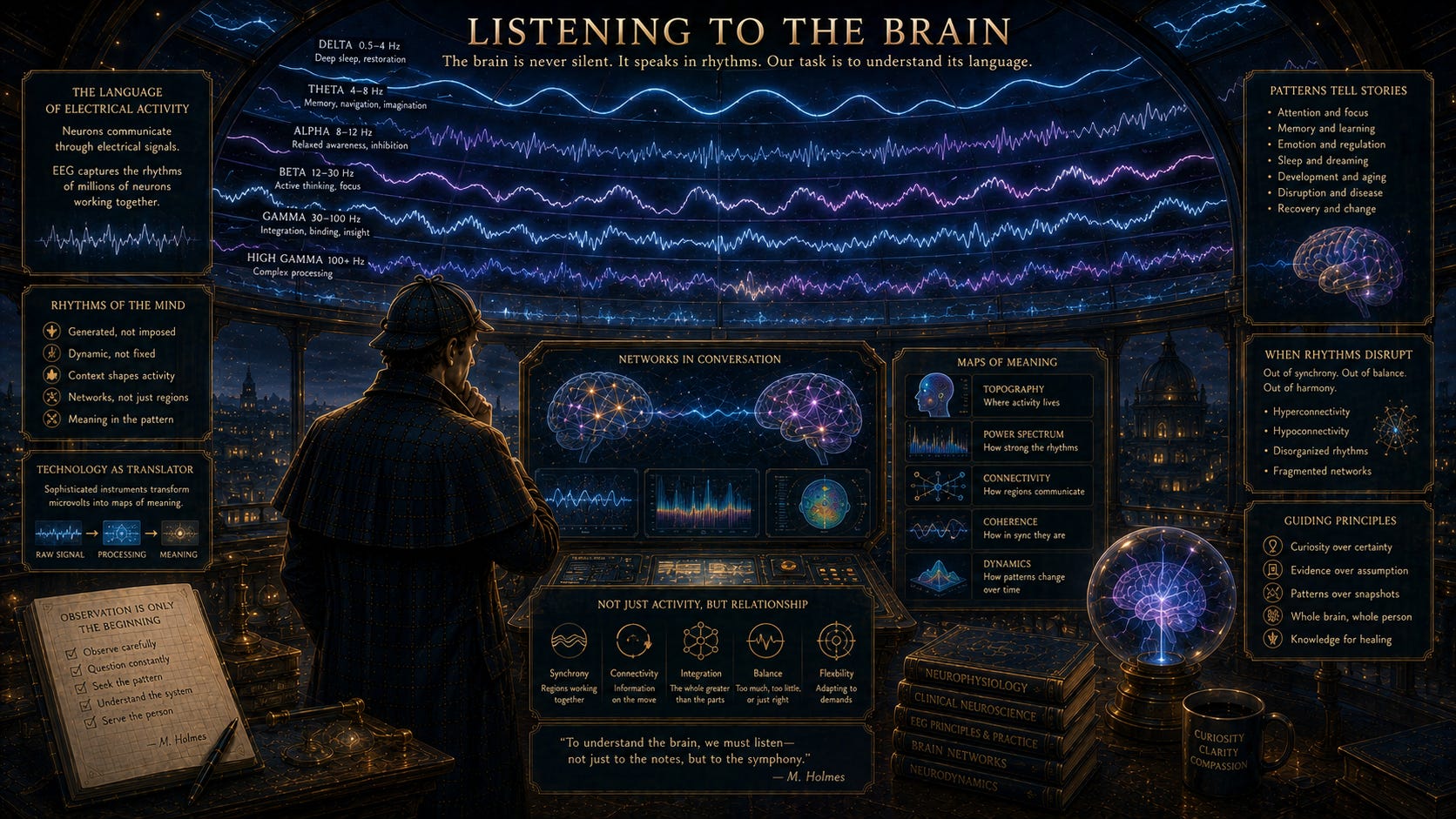
This chapter explores quantitative electroencephalography (qEEG), a powerful technique that transforms the brain’s electrical activity into measurable patterns that can be analysed, compared, and interpreted. While conventional EEG allows clinicians to observe brain wave activity, qEEG extends this capability by applying advanced computational methods to reveal underlying neural dynamics.Every thought, emotion, sensation, and behaviour emerges from coordinated electrical activity across vast neural networks. qEEG seeks to quantify these patterns, identifying rhythms, connectivity, synchronisation, and deviations from expected functioning. Rather than examining individual brain waves alone, it studies how entire systems communicate and organise themselves over time.The chapter introduces the fundamental principles of EEG recording, including frequency bands such as delta, theta, alpha, beta, and gamma activity. These rhythms reflect different states of brain function, ranging from deep sleep and relaxation to attention, cognition, and complex information processing.A central theme is the distinction between observation and interpretation. Abnormal electrical patterns do not automatically indicate psychiatric illness, nor does a normal qEEG exclude significant psychopathology. The challenge lies in understanding how brain activity relates to cognition, behaviour, symptoms, and clinical outcomes.The chapter also examines the applications of qEEG in psychiatry, including research into attention-deficit/hyperactivity disorder, mood disorders, anxiety disorders, schizophrenia, cognitive impairment, and treatment monitoring. It highlights both the promise and limitations of the technology, emphasising the importance of integrating qEEG findings with broader clinical assessment.Ultimately, qEEG represents an attempt to visualise the dynamic language of the brain. It offers a glimpse into patterns that are otherwise invisible, revealing how neural systems organise themselves in health and disease.Key Takeaways* qEEG quantifies and analyses the brain’s electrical activity.* Brain function is reflected through rhythmic patterns across multiple frequency bands.* qEEG examines connectivity, synchronisation, and neural network organisation.* Electrical patterns must be interpreted within a broader clinical context.* qEEG contributes to psychiatric research and selected clinical applications.* Abnormal findings do not automatically establish psychiatric diagnoses.* Neural activity reflects dynamic communication between brain systems.* qEEG provides a window into the functional organisation of the living brain. This is a public episode. If you'd like to discuss this with other subscribers or get access to bonus episodes, visit drmanaankarray.substack.com/subscribe
Embed this episode
NOW PLAYING
PSYCH 068: Principles and Applications of Quantitative Electroencephalography in Psychiatry
No transcript for this episode yet
Similar Episodes
No similar episodes found.
Similar Podcasts
No similar podcasts found.