
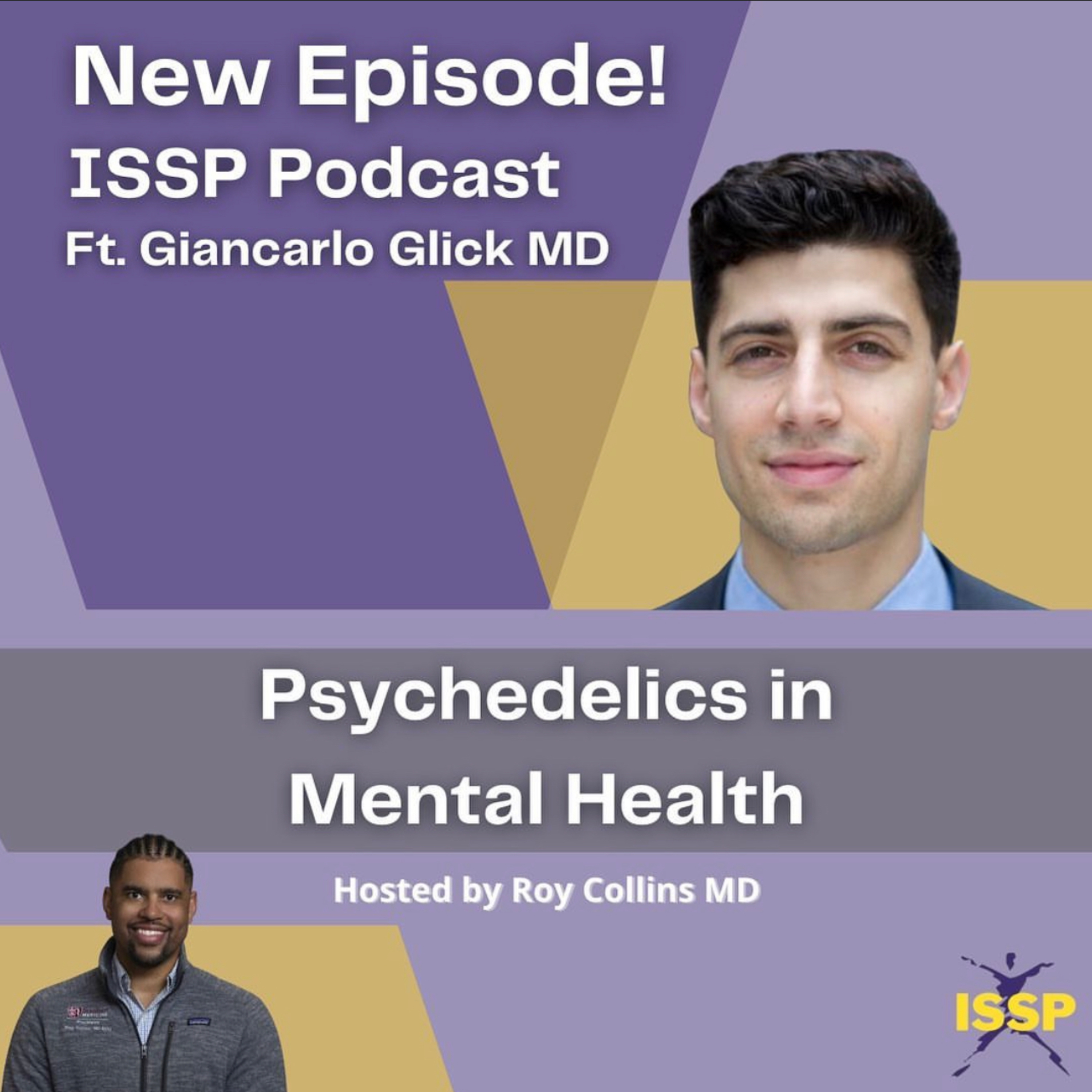
EPISODE · Jun 15, 2023 · 39 MIN
Psychodelics in Mental Health
from ISSP Podcast (Intersection of Mental Health and Sports) · host International Society for Sports Psychiatry
Gianni Glick is a psychiatry resident at Stanford. He earned his bachelor's from UC Berkeley in 2014 and his medical degree from Brown University in 2019. He is particularly interested in group therapy, psychoneuroimmunology, and the novel applications of psychedelic therapy. He teaches an "Introduction to Psychedelic Medicine" course at Stanford university and medical school. He is most recently the 2021 recipient of the Trainee Innovator Grant award from the Stanford Department of Psychiatry and Behavioral Science (2021). Host: Roy Collins, MD Guest: Giancarlo (Gianni) Glick, MD 0:46 - Introduction to Dr. Gianni Glick, Stanford Medicine Resident. 3:24 - Here, Dr. Glick defines “psychedelic therapy” and discusses some history of Psychedelics utilization. 4:41 - We define psychedelics and give some examples, including LSD, MDMA, Psilocybin, and ayahuasca 10:26 - Psilocybin has been shown to help treat depression, treatment-resistant depression, alcohol use d/o, smoking cessation, anxiety, and depression associated with terminal illnesses like cancer -MDMA is also being studied as a potential treatment for social anxiety and PTSD 11:36 - We discuss the results of a recently published study in the journal NATURE on the effects of psilocybin on patients using fMRI data 16:13 - We discuss “enhanced activation of neuroplasticity” as a mode of action in psychotherapy and potential similarities in psychedelic-assisted therapy 21:26 - We discuss a 2021 study that compared psilocybin to escitalopram, an anti-depressant, in treating depression—link to the paper in the references section (Trial of Psilocybin versus Escitalopram for Depression, 2021) 30:26 - We discuss the contrast between the controlled nature of research trial environments in psychedelic research compared to public use 32:46 - We discuss potential uses of psychedelics in athletics and anecdotal athlete experiences of enhanced performance with “micro-dosing.” We also define a “normal” dose v micro-dosing. Micro dosing is defined as 1/8th to 1/15th of a regular dose. References Stanford psychedelic science group: https://med.stanford.edu/spsg.html -Trial of Psilocybin versus Escitalopram for Depression (2021): https://www.nejm.org/doi/full/10.1056...
Embed this episode
NOW PLAYING
Psychodelics in Mental Health
No transcript for this episode yet
Similar Episodes
No similar episodes found.
Similar Podcasts
No similar podcasts found.