
EPISODE · May 21, 2025 · 31 MIN
Psychological Evidence Behind Tattoos and Trauma
from Depraved and Debaucherous · host King of Podcasts
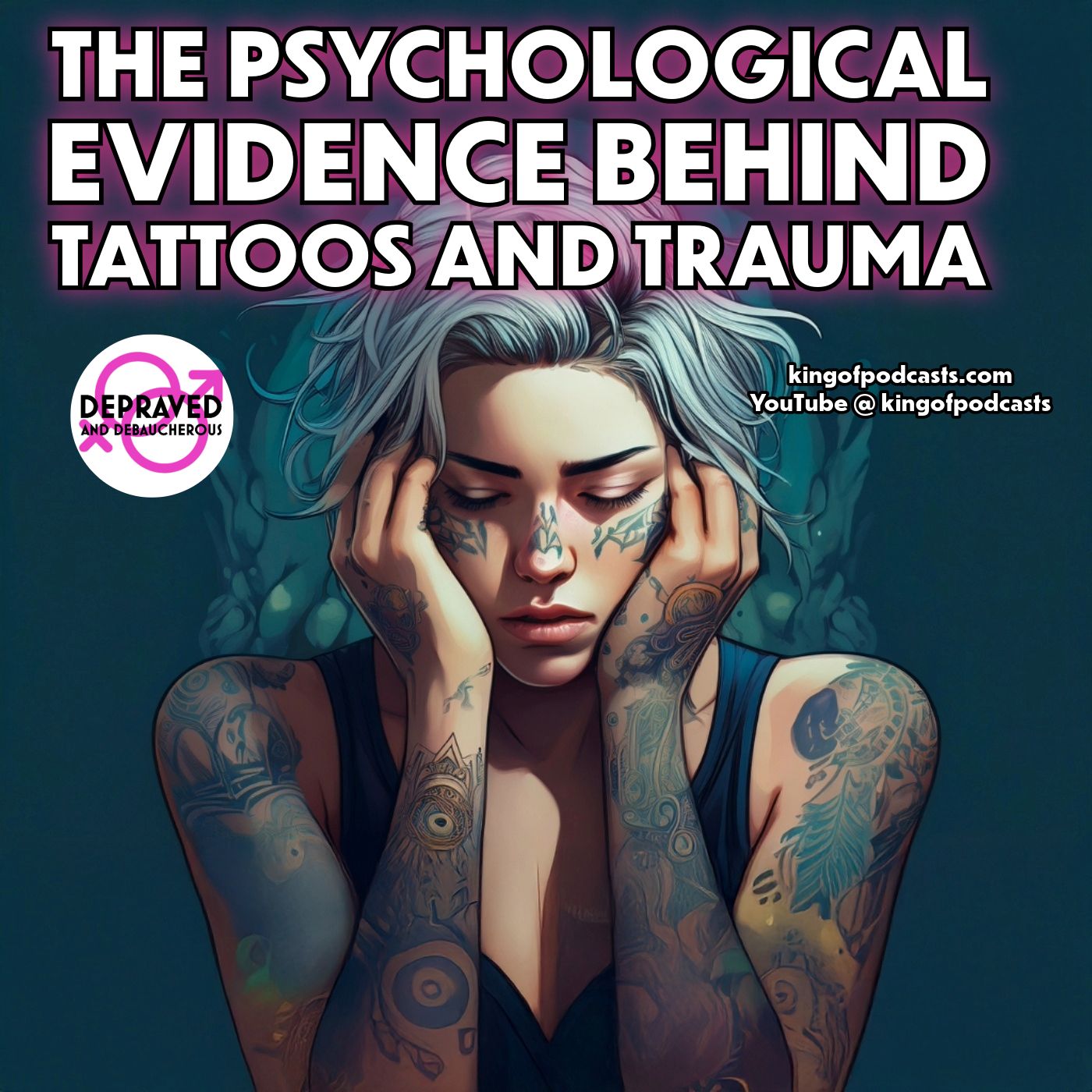
Tattoos have long been intertwined with culture, identity, and rebellion—but in recent years, they've also become the subject of deeper psychological inquiry, especially in relation to trauma. While initial reports highlighted that many trauma survivors turn to tattoos as a "coping mechanism" or "form of expression," feedback has made it clear: we need to go deeper.Rather than settling on surface-level generalizations, we should explore the psychological mechanisms that may drive tattoo acquisition post-trauma. One plausible hypothesis is that tattoos serve as a form of self-verification—a way to regain a sense of coherence and control over identity after it has been destabilized by trauma. For some, the permanence of ink provides a counterpoint to the impermanence of safety, love, or self-worth they've previously experienced.Another possible explanation lies in embodied cognition. Research suggests that physical alterations to the body can alter internal emotional states. For trauma survivors, tattooing—especially in areas associated with prior harm or vulnerability—may serve as a tactile form of emotional reprocessing. The pain of the needle itself may also invoke a cathartic release, aligning with studies on pain offset relief, which demonstrate how controlled physical pain can produce short-term emotional regulation.Of course, there's a key distinction to be made between correlation and causation. While studies, including one cited from Germany, have found higher incidences of childhood trauma among those with tattoos, this does not mean that tattoos are a direct result of trauma. Rather, they may reflect a broader set of behavioral patterns—risk-taking, identity exploration, or social signaling—that become more pronounced in individuals with unresolved psychological wounds.Additionally, tattoos may function as narrative anchors. Survivors of trauma often struggle to construct coherent life stories. Tattoos—especially those with symbolic or mythological resonance like Medusa—can help externalize these narratives, acting as visual milestones in one’s journey toward healing or transformation.That said, it’s crucial not to paint all tattooed individuals with a single psychological brush. Many people, including those who have never experienced trauma, are drawn to tattoos for cultural, aesthetic, or even spiritual reasons. Some celebrate the ritual of body modification as a form of belonging to tribal or ancestral traditions, while others simply enjoy the art.The cultural divide is real. Critics still associate tattoos with promiscuity, rebellion, or poor decision-making—sometimes in overtly misogynistic terms, as seen in comments labeling tattooed women as having a “high body count” or “self-identifying 304s.” These reactions say more about societal biases than the inked individuals themselves.Meanwhile, tattoo enthusiasts—many of whom have been getting inked since adolescence—often view the practice as a lifelong journey of self-discovery and connection. As one heavily tattooed commenter reflected, “One day I kind of asked myself, why did I start doing this?” That introspective question reveals the deeper layers behind a seemingly simple act.In the end, tattoos are not inherently trauma-linked—but for some, they become a canvas where pain, power, and purpose intersect. Whether you're drawn to the ink for healing, heritage, or purely for art, understanding the psychological undercurrents invites a more empathetic—and scientifically rigorous—conversation.Contact KOP for professional podcast production, imaging, and web design services at http://www.kingofpodcasts.comSupport KOP by subscribing to his YouTube channel and search for King Of PodcastsFollow KOP on X or TikTok or LinkedIn @kingofpodcastsFind KOP’s other programs, Podcasters Row… and the Wrestling is Real Wrestling Podcast and The Broadcasters Podcast at http://www.kingofpodcasts.comBuy KOP a Coffee https://buymeacoffee.com/kingofpodcastsDrop KOP a PayPal https://www.paypal.com/donate?hosted_button_id=3TAB983ZQPNVLDrop KOP a CashApp https://cash.app/$kingofallpodcastsBecome a supporter of this podcast: https://www.spreaker.com/podcast/depraved-and-debaucherous--5267208/support.Contact KOP for professional podcast production, imaging, and web design services at http://www.kingofpodcasts.comSupport KOP by subscribing to his YouTube channel and search for King Of PodcastsFollow KOP on X and TikTok @kingofpodcasts (F Meta!)Listen to KOP’s other programs, Podcasters Row… and the Wrestling is Real Wrestling Podcast and The Broadcasters Podcast.Buy KOP a Coffee https://buymeacoffee.com/kingofpodcastsDrop KOP a PayPal https://www.paypal.com/donate?hosted_button_id=3TAB983ZQPNVLDrop KOP a Venmo https://account.venmo.com/u/kingofpodcastsDrop KOP a CashApp https://cash.app/$kingofallpodcasts
Embed this episode
NOW PLAYING
Psychological Evidence Behind Tattoos and Trauma
No transcript for this episode yet
Similar Episodes
No similar episodes found.
Similar Podcasts
No similar podcasts found.