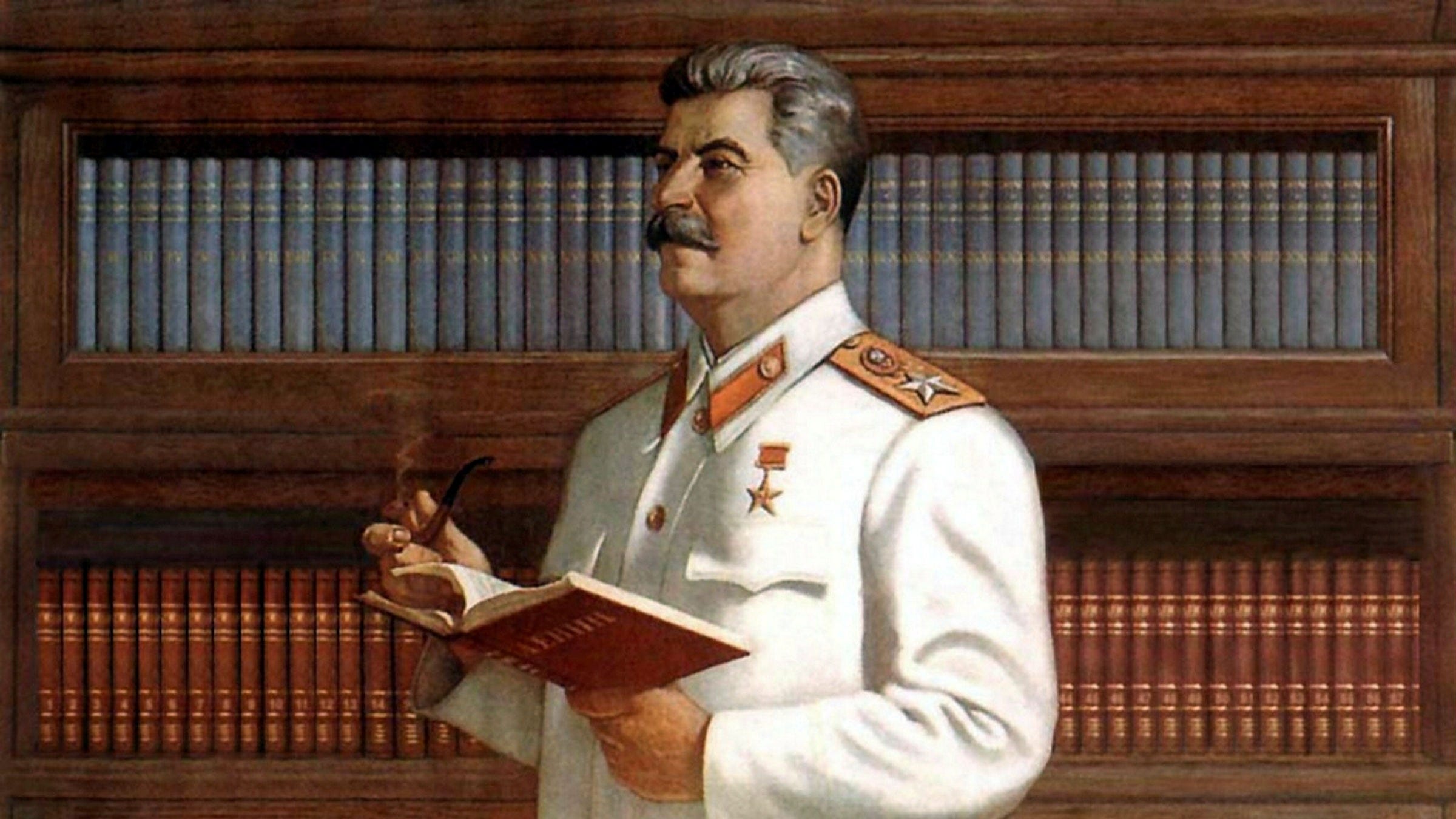
Putin and Stalin
from The Return to Virtue Podcast Hosted by Will Knowland
World-renowned military historian Martin van Creveld joins me to discuss Stalin. You can buy his book here. What did Stalin want? Western scholars have traditionally claimed it was power only. Doctrine, they claimed, was secondary, derivative - even irrelevant. But Stalin stuck doggedly to his basic ideas and concepts even when the evidence suggested he should abandon them. It's a comforting thought for Western scholars to assume that a mass murderer could not also be an intellectual and that Marxism could not possibly have been involved. Stalin is more palatable as something Eastern, primeval even, rather than Western. But Stalin was influenced more by the western (mainly though not wholly, German) revolutionary traditions embodied in the ideas of Marx, Engels et al, than by the native Russian philosophical/doctrinal/political traditions of statism, bureaucratic centralism and mobilisation of society. In contradistinction to the ancien regime pre-modernity of tsarism, he is a part of modernity. The 'standard' story of the development of Marxist thought in Russia outlines that as the imported ideas from Europe were grafted onto the native Russian revolutionary plant, the graft gradually took on the characteristics of the native plant, until it was almost unrecognisable. The lineage is so clear, however, that all of Stalin's doctrines, like all of Lenin's, can be found in the Western European revolutionary tradition. Stalinism, then, is a possible outcome of it. His private library comprised almost entirely works by Marx, Engels and Lenin - all the hand-written notes. His mentality was Marxist. The interests of the nation, he thought, were best served by revolutionary change. Socialism allied with patriotism was the best way to defend the interests of the nation. Numerous streams flowed into the river of his political thought: - Jacobinism (revolutionary patriotism, combining centralisation, government by terror, patriotism); - The state in the thought of Marx and Lenin (centralised, minority rule, bureaucratic); - The notion of a proletarian revolution in a backward country - Marxist nationalism (Marxism actually contained a strong nationalist element) - Stalin’s intellectual development before October and under Lenin (in particular his views on the national question). - Marx and Engels appeared to see the proletariat as a force for 'patriotic regeneration'. Stalinism's origins are ultimately in the West. This is a public episode. If you'd like to discuss this with other subscribers or get access to bonus episodes, visit beherleader.substack.com/subscribe
Embed this episode
No transcript yet.