
EPISODE · May 25, 2026 · 7 MIN
Putin exploits openings in Trump and Xi’s security bargaining
from Korea JoongAng Daily - Daily News from Korea
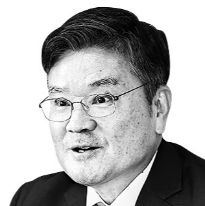
Koh Yu-hwan The author is an emeritus professor of North Korean studies at Dongguk University and former director of the Institute for Unification Studies. Summits involving the leaders of the United States, China and Russia were held in Beijing on May 14 and May 20 in rapid succession. The closely watched meetings among the world's major powers reflected a broader shift in the international order, as the U.S.-led unipolar system gradually gives way to a more multipolar structure. At the latest U.S.-China summit, Washington appeared focused on "managing relations" with Beijing while China concentrated on establishing what it called a "constructive strategic stability relationship." Some diplomats even remarked that U.S. President Donald Trump appeared conciliatory while Chinese President Xi Jinping remained firm and confident throughout the talks. During Trump's first term, Washington attempted to "decouple" China from global supply chains as part of strategic competition. That effort later softened into "de-risking," aimed at reducing vulnerabilities rather than severing ties altogether. The latest summit suggested another adjustment in Washington's approach. After returning to office and initially imposing sweeping tariffs on allies and rivals alike, Trump appeared to soften his stance during the Beijing visit. Accompanied by major business leaders including Jensen Huang and Elon Musk, Trump praised China and expressed hopes for expanded business cooperation in artificial intelligence, semiconductors and aerospace industries. Critics viewed the posture as unusually deferential for the leader of a global superpower. The apparent shift reflected mounting domestic economic pressure. Rising prices linked to conflict with Iran have become a political burden ahead of November's midterm elections, increasing pressure on the administration to stabilize relations with Beijing and avoid further disruption to supply chains and financial markets. As a result, Washington's China strategy increasingly appears centered on managing competition rather than pursuing separation. The deep economic interdependence between the two countries has made a complete break unrealistic. This process should be understood through the broader framework of "power transition." Since Xi took power in 2012, China has promoted the "Chinese Dream," calling for the "great rejuvenation of the Chinese nation." At the 2013 Sunnylands summit, Xi told then-President Barack Obama that "the Pacific Ocean is vast enough to accommodate both China and the United States." At the 2023 San Francisco summit, Xi expanded the idea further, saying the Earth itself was large enough for both countries. During the latest summit, he went further still by openly demanding coexistence on equal terms. From sharing the Pacific to sharing the globe, China's message has steadily evolved into a demand for mutual recognition of spheres of influence. Beijing's long-advocated concept of a "new type of major power relations" increasingly appears to be taking shape in reality. The implications for Taiwan are particularly significant. Xi reportedly pressed Trump on whether the United States would defend Taiwan in the event of military conflict, but Trump avoided giving a direct answer. Instead, he suggested that U.S. arms sales to Taiwan could be reconsidered, implying that Taiwan might become a bargaining chip in negotiations with Beijing. Whether this reflects a tactical retreat or a deeper strategic shift remains uncertain. Still, the message unsettled U.S. allies in Asia, including Korea and Japan, because it suggested Washington could revise security commitments if doing so served American interests. For countries that have long depended on the U.S. security umbrella, the remarks reinforced concerns that alliance commitments could become part of broader geopolitical bargaining. Trump's emphasis on transactional diplomacy also carries serious implications for Korea. While the United State...
Embed this episode
NOW PLAYING
Putin exploits openings in Trump and Xi’s security bargaining
No transcript for this episode yet
Similar Episodes
No similar episodes found.
Similar Podcasts
No similar podcasts found.