
EPISODE · Jun 24, 2026 · 59 MIN
Putting the ENT into dENTistry – PDP272
from Protrusive Dental Podcast · host Jaz Gulati
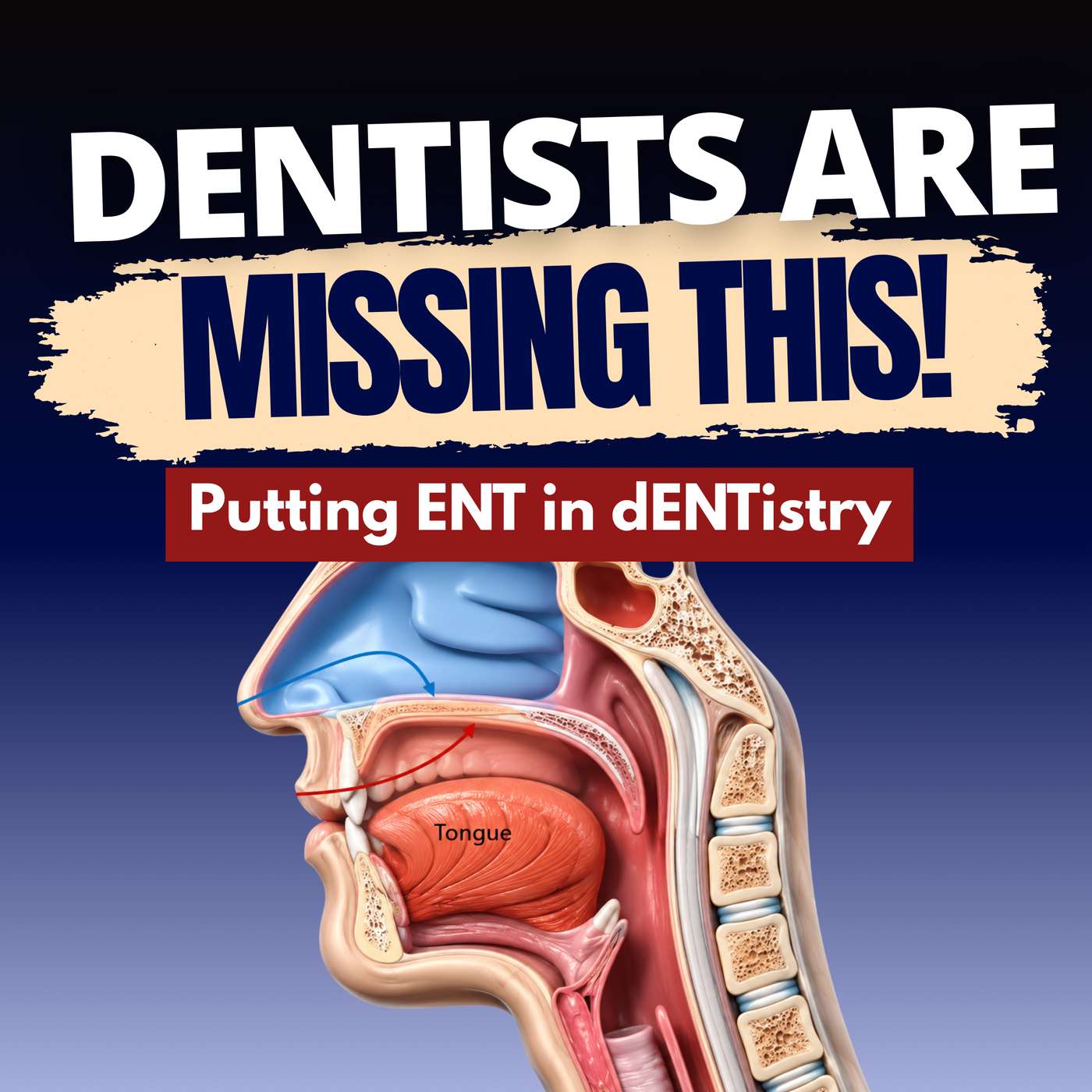
Sleep, Airway and Mouth Breathing: An ENT’s Guide for DentistsCould a “normal” sleep study still be missing your patient’s airway problem?Why do women and children with real symptoms keep scoring “mild”?Should a mouth-breathing child see a myofunctional therapist — or an ENT first?And which four questions screen a child for sleep problems in under a minute?The roof of the mouth is the floor of the nose — so ENT and dentistry should be in constant dialogue. In practice, they rarely are. In this one, Dr David McIntosh— an Australian ear, nose and throat surgeon with a deep niche in sleep-disordered breathing — makes the case for why that has to change, and gives dentists practical ways to screen and refer. He is direct, analogy-rich and doesn’t mince words; expect a few positions that cut against the grain of how sleep apnoea is usually handled. https://youtu.be/QVEc0ocxTCc Watch PDP272 on YouTubeProtrusive Dental Pearl: When the Numbers MisleadDentists love data — the AHI, the cut-offs (over 5 is mild, over 30 is severe). But take those numbers with a pinch of salt: the thresholds are arbitrary, and a single score tells you nothing about why a patient has the problem.They don’t account for individual variability — especially in women and children, where a mild score can sit right alongside significant symptoms. Read the number with the anatomy and the phenotype — the clinical signs and the airway assessment — never instead of them.What You’ll Take From This EpisodeThis conversation reframes sleep-disordered breathing from a number on a report into something you can localise and refer. A sleep study tells you IF, not WHY — sleep-disordered breathing is the whole spectrum; a normal study doesn’t mean normal breathing.Phenotyping the airway — map the individual anatomical causes instead of trusting a single score.Why women get missed — the gender bias built into standard adult screening tools, and what to ask instead.The four-question filter for children — snore, mouth breathe, stop breathing, wake up tired: any ‘yes’ means refer.Treat the cause before the function — why myofunctional therapy comes after the obstruction is cleared, not before, and how expansion and surgery are matched to the anatomy.Highlights of This Episode00:00 Teaser01:00 Why ENT and Dentistry Should Be Talking02:51 Protrusive Dental Pearl: When Sleep Data Misleads You03:46 Meet the ENT Who Works With Dentists06:00 Sleep Physician, ENT or Dentist: Who Should Lead?07:26 Why Children and Adults Are Completely Different08:58 Sleep-Disordered Breathing Is Not the Same as Sleep Apnoea09:39 Why a Normal Sleep Study Doesn’t Mean Normal Breathing10:01 Same AHI, Different Cause: A Tale of Two Patients12:54 Why One Night’s Sleep Study Isn’t Enough13:44 Where the AHI Cut-Off Numbers Really Came From15:27 CPAP Explained: A Bridge, Not a Cure18:27 When Snoring Hides Something Serious19:10 What Phenotyping the Airway Actually Means20:27 Splint, CPAP, or Both?21:33 Why a CBCT Can Miss a Deviated Septum25:32 Is STOP-Bang Enough to Screen for Sleep Apnoea?26:06 Why the Epworth Sleepiness Scale Is a Blunt Tool26:50 Why STOP-Bang Is Biased Against Women31:17 Sleep Apnoea in Women: Mild on Paper, Severe in Life32:05 Midroll36:56 The Triad: Airway, TMD and Orthodontics37:12 The Three Most Common Causes of Night-Time Grinding39:41 The Four Questions That Screen a Child for Sleep Problems41:03 Tired vs Not Tired: The Sign That Changes Everything43:36 Should You Refer to Myofunctional Therapy Before an ENT?45:58 The Hidden Dangers of Forcing Nasal Breathing52:28 Maxillary Expansion vs Surgery: Which One Fixes It?54:51 How Dentists Can Assess Adenoids56:25 Save the Child First: The Drowning Analogy57:56 Where Dentistry and ENT Go From Here1:00:05 Outro – New-Look Premium Notes & CPD OutroFrom the GuestDr David McIntosh is an ear, nose and throat surgeon (MBBS, FRACS, PhD) with a special interest in sleep-disordered breathing and airway obstruction. A self-described compulsive educator, he is the author of several books on Amazon — including dENTal health, on the connection between ENT and dental disease, and Snored to Death, on the lesser-recognised causes of obstructive sleep apnoea in adults.References & Further ReadingSources discussed in this episode:Chervin RD, Hedger K, Dillon JE, Pituch KJ. Pediatric sleep questionnaire (PSQ): validity and reliability of scales for sleep-disordered breathing, snoring, sleepiness, and behavioral problems. Sleep Medicine, 2000;1(1):21–32. The 22-item PSQ; a score above 0.33 suggests sleep-disordered breathing.Loved This Episode? Try NextAirway Dentistry with Jeff Rouse – PDP229Listen, Subscribe, Earn CPDThis episode is eligible for 1 CE credit via the quiz on Protrusive Guidance.This episode meets GDC Outcomes CAGD Subject Code: 730 – Oral Medicine, Oral Diagnosis, Oral Pathology (Sleep medicine)#PDPMainEpisodes #OralSurgeryandOralMedicineAim & Learning OutcomesAim: To help dental practitioners recognise sleep-disordered breathing across the whole airway, screen adults and children appropriately, and refer at the right time and to the right clinician.Learning Outcomes — by the end of this episode, dentists will be able to:Differentiate sleep-disordered breathing from obstructive sleep apnoea, and explain why a normal sleep study does not exclude clinically significant breathing problems.Apply a structured screening approach for adults and children, including recognising why standard adult tools under-detect sleep-disordered breathing in women and children.Evaluate when to refer for specialist airway assessment, and articulate why addressing anatomical obstruction should precede functional (myofunctional) therapy.
Embed this episode
Ready to play
Putting the ENT into dENTistry – PDP272
No transcript for this episode yet
Similar Episodes
No similar episodes found.