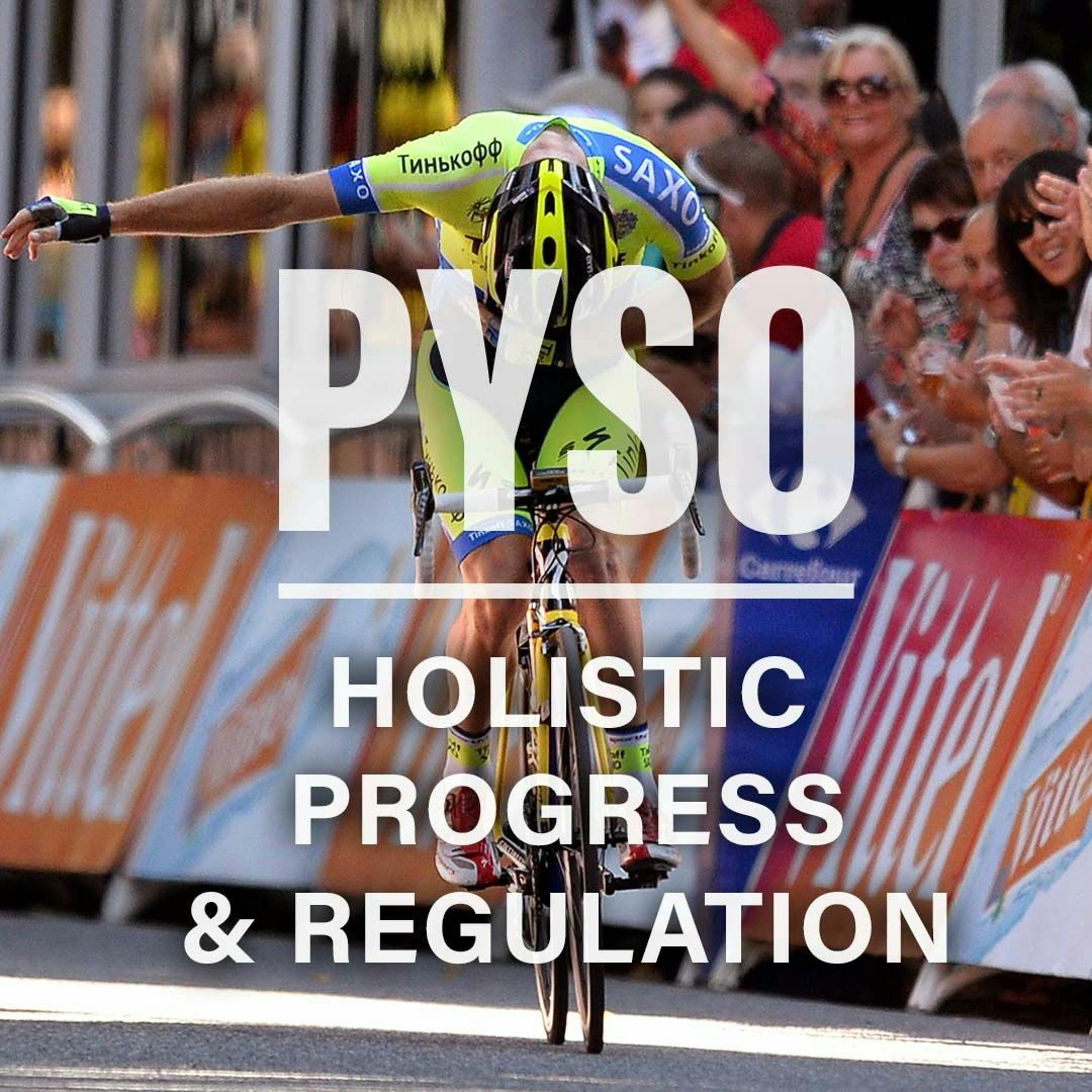
PYSO, ep. 81: UCI innovation manager Michael Rogers on progress and regulation episode artwork

EPISODE · Dec 3, 2020 · 56 MIN

PYSO, ep. 81: UCI innovation manager Michael Rogers on progress and regulation

from Velo Podcast · host Velo

The Lugano Charter, constructed in 1996, formed the UCI's basis for regulation of bike technology with a noble ideal: the rider, not his or her access to technology, should determine who wins a bike race. The devil, as always, is in the details. Now, Michael "Mick" Rogers, a three-time world time trial champion, is tasked with guiding the regulation of bicycle equipment and clothing as innovation manager at the UCI. Rogers got his start in big-time racing with Mapei in 2000. He proceeded to have a successful career with Quick-Step, T-Mobile, Team Sky and Saxo-Tinkoff before retiring in 2016. In addition to having world-class physiology, Rogers was also fascinated with the physics and mathematics at play in bike racing, whether that was in the mechanics of a long sprint leadout train, or in the interconnected variables of a fast time trial position. At T-Mobile, which became HTC, Rogers said "we were one of the the teams to really master the leadout train. If we go back into the mid ’90s with [Marco] Cipollini and Saeco, they revolutionized the leadout train. At HTC, we took that that one step further, we started to understand some of the mathematics. We started to understand that when we were riding on the front, with two or three kilometers to go, we're at 60 plus K an hour — the amount of energy that the riders behind us would would need to come up beside Mark Cavendish was going to have a massive effect on the actual sprint." Rogers' real-world studying later included time racing at Team Sky, a team famous for its analysis and methodical racing tactics. Rogers talks about how the team could be so effective when riding in coordination. "It just kind of came down to, we knew what we were good at as riders," Rogers said of being able to reel in breakaways and attacking riders with confidence. "Simple math — when we were riding at our threshold, the power values and very high power to weight ratios. We knew that anyone riding out over that threshold, to be able to open up a large enough gap, the amount of energy required to put in is almost for most people unbearable. When you're attacking on some of these climbs, you might have to ride at 600 650 watts for for 30 to 40 seconds. And there's only a handful of guys that can withstand that kind of intensity for anything longer than a minute. So it's simple math, they're going to come back." Now at the UCI, Rogers and his coworkers are tasked with keeping up to speed with a sport that is changing rapidly. "We are aware that cycling must progress. There must be evolution," Rogers said. How that looks, and how a level playing field can be enforces among teams and nations with varying levels of financial ability, will be an ongoing challenge. Tune in to this episode of Put Your Socks On to hear Rogers' thoughts on the challenges and the excitement of regulating bike racing heading into a new world of cycling.

The Lugano Charter, constructed in 1996, formed the UCI's basis for regulation of bike technology with a noble ideal: the rider, not his or her access to technology, should determine who wins a bike race. The devil, as always, is in the details. Now, Michael "Mick" Rogers, a three-time world time trial champion, is tasked with guiding the regulation of bicycle equipment and clothing as innovation manager at the UCI. Rogers got his start in big-time racing with Mapei in 2000. He proceeded to have a successful career with Quick-Step, T-Mobile, Team Sky and Saxo-Tinkoff before retiring in 2016. In addition to having world-class physiology, Rogers was also fascinated with the physics and mathematics at play in bike racing, whether that was in the mechanics of a long sprint leadout train, or in the interconnected variables of a fast time trial position. At T-Mobile, which became HTC, Rogers said "we were one of the the teams to really master the leadout train. If we go back into the mid ’90s with [Marco] Cipollini and Saeco, they revolutionized the leadout train. At HTC, we took that that one step further, we started to understand some of the mathematics. We started to understand that when we were riding on the front, with two or three kilometers to go, we're at 60 plus K an hour — the amount of energy that the riders behind us would would need to come up beside Mark Cavendish was going to have a massive effect on the actual sprint." Rogers' real-world studying later included time racing at Team Sky, a team famous for its analysis and methodical racing tactics. Rogers talks about how the team could be so effective when riding in coordination. "It just kind of came down to, we knew what we were good at as riders," Rogers said of being able to reel in breakaways and attacking riders with confidence. "Simple math — when we were riding at our threshold, the power values and very high power to weight ratios. We knew that anyone riding out over that threshold, to be able to open up a large enough gap, the amount of energy required to put in is almost for most people unbearable. When you're attacking on some of these climbs, you might have to ride at 600 650 watts for for 30 to 40 seconds. And there's only a handful of guys that can withstand that kind of intensity for anything longer than a minute. So it's simple math, they're going to come back." Now at the UCI, Rogers and his coworkers are tasked with keeping up to speed with a sport that is changing rapidly. "We are aware that cycling must progress. There must be evolution," Rogers said. How that looks, and how a level playing field can be enforces among teams and nations with varying levels of financial ability, will be an ongoing challenge. Tune in to this episode of Put Your Socks On to hear Rogers' thoughts on the challenges and the excitement of regulating bike racing heading into a new world of cycling.

NOW PLAYING

PYSO, ep. 81: UCI innovation manager Michael Rogers on progress and regulation

0:00 56:39

No transcript for this episode yet

We transcribe on demand. Request one and we'll notify you when it's ready — usually under 10 minutes.

That Hoarder: Overcome Compulsive Hoarding That Hoarder Hoarding disorder is stigmatised and people who hoard feel vast amounts of shame. This podcast began life as an audio diary, an anonymous outlet for somebody with this weird condition. That Hoarder speaks about her experiences living with compulsive hoarding, she interviews therapists, academics, researchers, children of hoarders, professional organisers and influencers, and she shares insight and tips for others with the problem. Listened to by people who hoard as well as those who love them and those who work with them, Overcome Compulsive Hoarding with That Hoarder aims to shatter the stigma, share the truth and speak openly and honestly to improve lives. The Small Business Startup School – Business Notes | Financial Literacy | Retail Psychology – For Professionals & Entrepreneurs The Small Business Startup School Inc. Starting or buying a small business? While personal circumstances may vary, business patterns remain timeless. On The Small Business Startup School, we explore strategies, insights, and practical solutions to help entrepreneurs confidently navigate their journey.Hosted by Ola Williams—a retail entrepreneur, fintech founder, and financial coach with over two decades of experience—this podcast marries financial awareness and retail psychology with optimism to deliver actionable takeaways.Join us to learn, grow, and connect as we uncover the keys to business success.Let’s continue to learn together and be encouraged to keep on connecting! DIOSA. Carolina Sanper This podcast is a sacred space created by Carolina Sanper where you connect with your inner wisdom and embody your magnetic feminine power.It is the realization that the mystical realm is where you plant the seeds of your desired reality.It is a portal to your true essence: awareness, presence, and receiving with ease. Welcome home, DIOSA. 🖤 XXX Tech by SOVRYN Dr. Brian Sovryn The crossroads between technology, sensuality, and metaphysics - and the longest running anarchist podcast in the world! Brought to you by Dr. Brian Sovryn.

Frequently Asked Questions

How long is this episode of Velo Podcast?

This episode is 56 minutes long.

When was this Velo Podcast episode published?

This episode was published on December 3, 2020.

What is this episode about?

The Lugano Charter, constructed in 1996, formed the UCI's basis for regulation of bike technology with a noble ideal: the rider, not his or her access to technology, should determine who wins a bike race. The devil, as always, is in the...

Can I download this Velo Podcast episode?

Yes, you can download this episode by clicking the download button on the episode player, or subscribe to the podcast in your preferred podcast app for automatic downloads.
URL copied to clipboard!