Quantum Accelerators: Why Your Next AI Breakthrough Needs a Cryostat and a GPU Farm
from Quantum Computing 101 Hosted by Liquid Studios
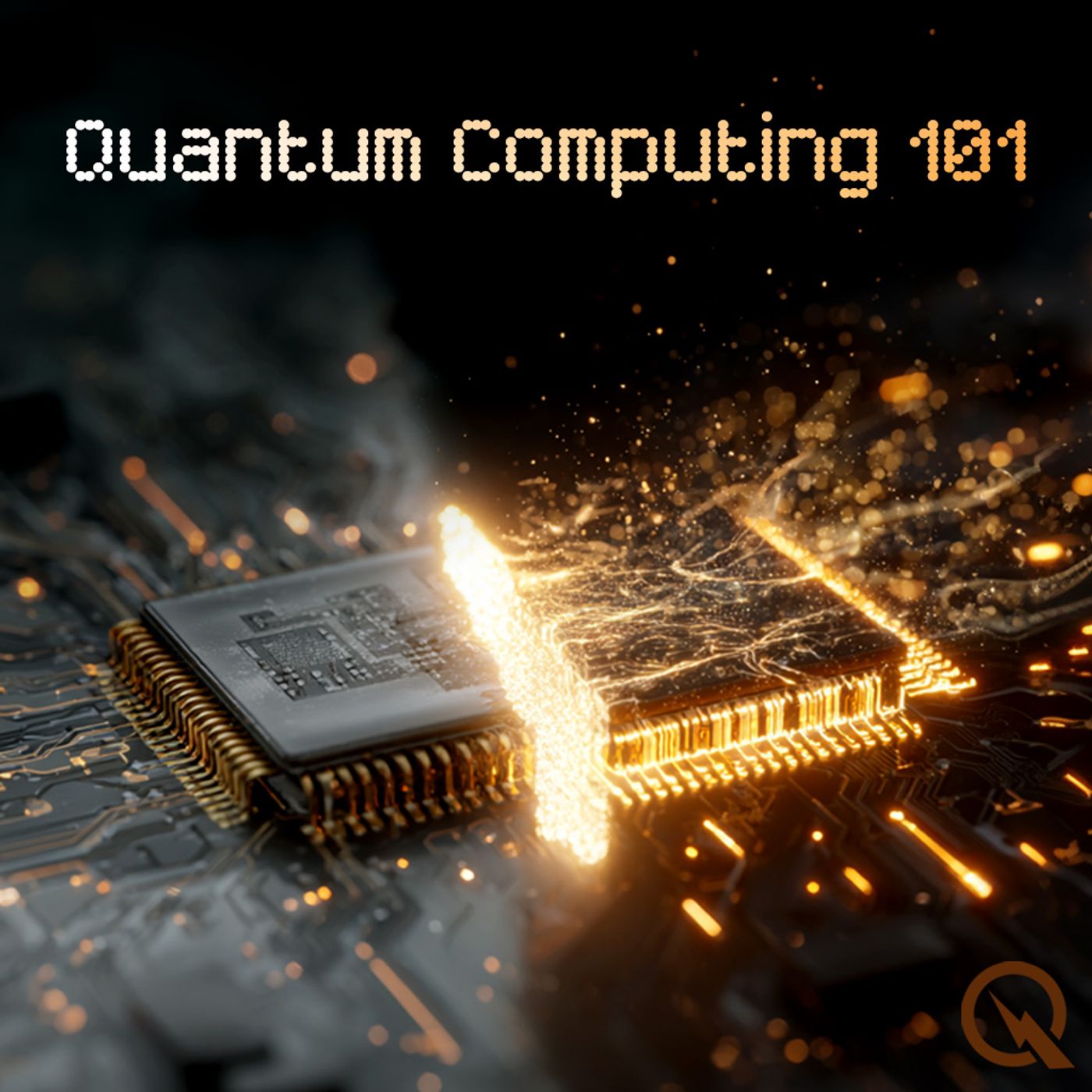
This is your Quantum Computing 101 podcast. Picture this: I’m standing in a humming data hall, fluorescent lights glinting off racks of GPUs, and at the far end, behind a thick glass pane, sits a cryostat — a gleaming silver cylinder dropping a tiny quantum chip to near absolute zero. That’s the stage where today’s most interesting story plays out: the rise of the quantum‑classical hybrid. I’m Leo — Learning Enhanced Operator — and what fascinates me this week is how fast hybrid solutions are moving from theory to infrastructure. Dell’s quantum infrastructure team has been very clear recently: forget the sci‑fi image of a standalone “quantum computer.” Think “quantum accelerator” wired into a high‑performance classical cluster, just like a GPU but weirder, colder, and much pickier about noise. In parallel, Quantinuum just went public on the Nasdaq, signaling that this hybrid future is not just a research dream, it’s a market bet measured in billions. So what makes a quantum‑classical hybrid so powerful? Classical machines are like elite marathon runners: they go long, they’re reliable, they crunch vast datasets, and they execute control logic with ruthless consistency. Quantum processors are more like high‑jumpers: for certain problems — optimization, chemistry, cryptography — they can clear heights classical systems struggle to reach, but only for short bursts and only if the conditions are perfect. In a modern hybrid stack, the data starts its life in the classical world. CPUs and GPUs clean it, encode it, and then, at just the right moment, orchestrate a quantum circuit call — often over the cloud to a device in a lab at places like Quantinuum, IBM, or a university cryogenic facility. Millikelvin refrigerators cool superconducting qubits until thermal noise is quieter than a whisper in a cathedral at midnight. Microwave pulses sculpt delicate quantum states, creating superpositions and entanglement that explore many computational paths in parallel. Then comes the crucial classical handoff: the quantum state is measured — the wavefunction “collapses” — and the raw, noisy outcomes flow back to the classical side. There, powerful classical algorithms perform error mitigation, statistical analysis, and adaptive feedback, deciding in microseconds what the next quantum circuit should be. It’s a feedback loop: classical logic steering quantum exploration, quantum results sharpening classical insight. The drama is in that loop. It’s where a logistics company might tune routes the way a quantum algorithm tunes interference, or where financial risk models adapt to markets the way qubits adapt to noise. Just as today’s AI boom rides on the synergy between models and massive classical compute, tomorrow’s breakthroughs in materials, climate modeling, and cryptography will ride on this hybrid dance. Thanks for listening. If you ever have questions or have topics you want discussed on air, just send an email to [email protected]. Don’t forget to subscribe to Quantum Computing 101. This has been a Quiet Please Production, and for more information you can check out quiet please dot AI. For more http://www.quietplease.ai Get the best deals https://amzn.to/3ODvOta
Embed this episode
No transcript yet.