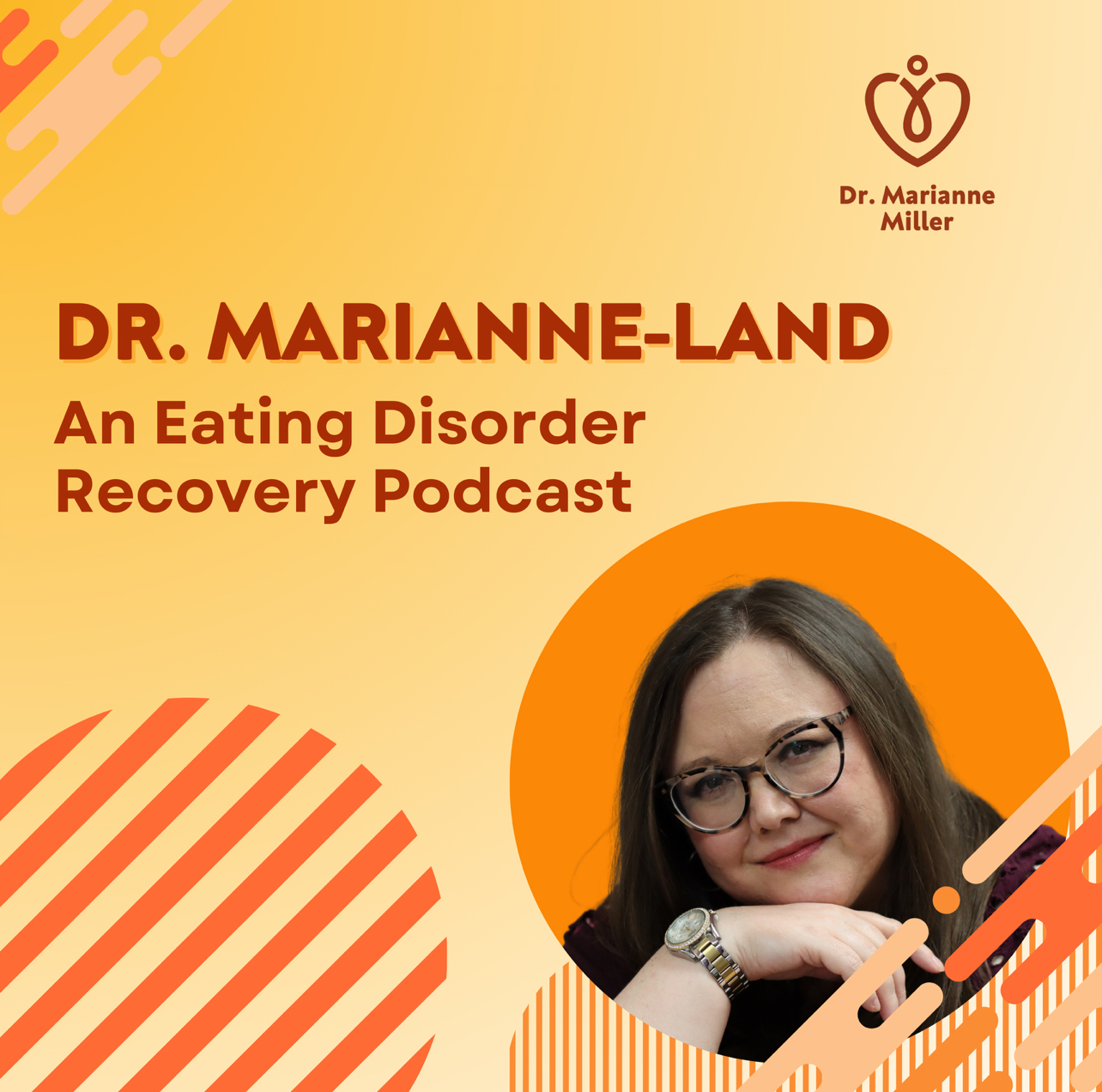
Quasi-Recovery Explained: When Eating Disorder Recovery Feels Incomplete episode artwork

EPISODE · Aug 27, 2025 · 15 MIN

Quasi-Recovery Explained: When Eating Disorder Recovery Feels Incomplete

from Dr. Marianne-Land: An Eating Disorder Recovery Podcast · host mariannemillerphd

What happens when you're no longer engaging in dangerous eating disorder behaviors, but food still feels like it controls your life? In this episode, Dr. Marianne Miller unpacks the concept of quasi-recovery, a space that can feel both safer than active illness and yet not fully free. Quasi-recovery often includes improved behaviors, such as more regular meals or weight restoration, but leaves behind the deeper work of healing food fear, body shame, and internalized rules. It can be an especially frustrating and lonely experience, because it is often praised by others even when it does not feel like real recovery on the inside. Dr. Marianne explores how quasi-recovery can shape lifelong eating struggles and why people often get stuck there. This episode also considers how neurodivergent and marginalized folks are particularly vulnerable to staying in quasi-recovery when treatment does not address trauma, sensory needs, systemic harm, or body autonomy. This episode covers: What quasi-recovery is and how it shows up in daily life Why healing requires more than just behavior change How fear and food rules quietly persist in this phase Why some people believe they will struggle with food forever What a more liberating vision of recovery can look like If you have ever wondered whether you are truly recovered or just surviving in a different way, this episode offers clarity, compassion, and hope. You do not have to stay stuck in a version of recovery that does not meet your full needs. There is more available to you. CONTENT CAUTION: This episode discusses eating disorder behaviors, body image distress, and systemic oppression. Please take care while listening. RELATED EPISODES ON QUASI-RECOVERY & ORTHOREXIA: Orthorexia, Quasi-Recovery, & Lifelong Eating Disorder Struggles with Dr. Lara Zibarras @drlarazib on Apple & Spotify. Orthorexia Uncovered: Causes, Challenges, & Pathways to Healing on Apple & Spotify. An Orthorexia Recovery Story with Sabrina Magnan, @sabrina.magnan.health on Apple & Spotify. LEARN MORE: Dr. Marianne Miller is a fat, neurodivergent eating disorder therapist and ARFID educator. She supports individuals recovering from ARFID, binge eating disorder, anorexia, bulimia, and quasi-recovery. Her work centers autonomy, sensory attunement, and liberation. It is also neurodivergent-affirming and trauma-informed. She provides Queer-affirming and gender-affirming care. Dr. Marianne is late-diagnosed autistic. For those who connect with this discussion and suspect ARFID may be part of their experience, or for clinicians seeking to better understand this overlap, Dr. Marianne offers her ARFID and Selective Eating Course. This self-paced program provides neurodivergent-affirming strategies and tools to address ARFID, including its intersection with anorexia, in both teens and adults. INTERESTED IN HANGING OUT MORE IN DR. MARIANNE-LAND? Go to my website https://www.drmariannemiller.com Follow me on Instagram @drmariannemiller Look into my self-paced, virtual, anti-diet, subscription-based curriculum. It is called Dr. Marianne-Land's Binge Eating Recovery Membership. Check out my blog. Want more information? Email me at [email protected]  

What happens when you're no longer engaging in dangerous eating disorder behaviors, but food still feels like it controls your life? In this episode, Dr. Marianne Miller unpacks the concept of quasi-recovery, a space that can feel both safer than active illness and yet not fully free. Quasi-recovery often includes improved behaviors, such as more regular meals or weight restoration, but leaves behind the deeper work of healing food fear, body shame, and internalized rules. It can be an especially frustrating and lonely experience, because it is often praised by others even when it does not feel like real recovery on the inside. Dr. Marianne explores how quasi-recovery can shape lifelong eating struggles and why people often get stuck there. This episode also considers how neurodivergent and marginalized folks are particularly vulnerable to staying in quasi-recovery when treatment does not address trauma, sensory needs, systemic harm, or body autonomy. This episode covers: What quasi-recovery is and how it shows up in daily life Why healing requires more than just behavior change How fear and food rules quietly persist in this phase Why some people believe they will struggle with food forever What a more liberating vision of recovery can look like If you have ever wondered whether you are truly recovered or just surviving in a different way, this episode offers clarity, compassion, and hope. You do not have to stay stuck in a version of recovery that does not meet your full needs. There is more available to you. CONTENT CAUTION: This episode discusses eating disorder behaviors, body image distress, and systemic oppression. Please take care while listening. RELATED EPISODES ON QUASI-RECOVERY & ORTHOREXIA: Orthorexia, Quasi-Recovery, & Lifelong Eating Disorder Struggles with Dr. Lara Zibarras @drlarazib on Apple & Spotify. Orthorexia Uncovered: Causes, Challenges, & Pathways to Healing on Apple & Spotify. An Orthorexia Recovery Story with Sabrina Magnan, @sabrina.magnan.health on Apple & Spotify. LEARN MORE: Dr. Marianne Miller is a fat, neurodivergent eating disorder therapist and ARFID educator. She supports individuals recovering from ARFID, binge eating disorder, anorexia, bulimia, and quasi-recovery. Her work centers autonomy, sensory attunement, and liberation. It is also neurodivergent-affirming and trauma-informed. She provides Queer-affirming and gender-affirming care. Dr. Marianne is late-diagnosed autistic. For those who connect with this discussion and suspect ARFID may be part of their experience, or for clinicians seeking to better understand this overlap, Dr. Marianne offers her ARFID and Selective Eating Course. This self-paced program provides neurodivergent-affirming strategies and tools to address ARFID, including its intersection with anorexia, in both teens and adults. INTERESTED IN HANGING OUT MORE IN DR. MARIANNE-LAND? Go to my website https://www.drmariannemiller.com Follow me on Instagram @drmariannemiller Look into my self-paced, virtual, anti-diet, subscription-based curriculum. It is called Dr. Marianne-Land's Binge Eating Recovery Membership. Check out my blog. Want more information? Email me at [email protected]

NOW PLAYING

Quasi-Recovery Explained: When Eating Disorder Recovery Feels Incomplete

0:00 15:43

No transcript for this episode yet

We transcribe on demand. Request one and we'll notify you when it's ready — usually under 10 minutes.

Eat to Live Jenna Fuhrman, Dr. Fuhrman Our health is our most precious gift and smart nutrition can change your life. Each month, join Dr. Fuhrman and his daughter, Jenna Fuhrman as they discuss important topics in the world of nutrition. Eat to Live will change the way you eat and think about food. That Hoarder: Overcome Compulsive Hoarding That Hoarder Hoarding disorder is stigmatised and people who hoard feel vast amounts of shame. This podcast began life as an audio diary, an anonymous outlet for somebody with this weird condition. That Hoarder speaks about her experiences living with compulsive hoarding, she interviews therapists, academics, researchers, children of hoarders, professional organisers and influencers, and she shares insight and tips for others with the problem. Listened to by people who hoard as well as those who love them and those who work with them, Overcome Compulsive Hoarding with That Hoarder aims to shatter the stigma, share the truth and speak openly and honestly to improve lives. The Small Business Startup School – Business Notes | Financial Literacy | Retail Psychology – For Professionals & Entrepreneurs The Small Business Startup School Inc. Starting or buying a small business? While personal circumstances may vary, business patterns remain timeless. On The Small Business Startup School, we explore strategies, insights, and practical solutions to help entrepreneurs confidently navigate their journey.Hosted by Ola Williams—a retail entrepreneur, fintech founder, and financial coach with over two decades of experience—this podcast marries financial awareness and retail psychology with optimism to deliver actionable takeaways.Join us to learn, grow, and connect as we uncover the keys to business success.Let’s continue to learn together and be encouraged to keep on connecting! HOMELAND HOMELAND The Church is a body not a building. It's the bride of Jesus Christ! Jesus is coming back for a mature bride. That means it's time for the church of Jesus Christ to move from milk to meat. This is the hour of maturity!HOMELAND is an announcement that the church is being set free. Only the church has the ability to transform the world. The kingdom's of this world will become the kingdoms of our Lord and Savior!All of creation has been waiting for this moment! Sons and daughters of God are rising up and taking their seat!

Frequently Asked Questions

How long is this episode of Dr. Marianne-Land: An Eating Disorder Recovery Podcast?

This episode is 15 minutes long.

When was this Dr. Marianne-Land: An Eating Disorder Recovery Podcast episode published?

This episode was published on August 27, 2025.

What is this episode about?

What happens when you're no longer engaging in dangerous eating disorder behaviors, but food still feels like it controls your life? In this episode, Dr. Marianne Miller unpacks the concept of quasi-recovery, a space that can feel both safer than...

Can I download this Dr. Marianne-Land: An Eating Disorder Recovery Podcast episode?

Yes, you can download this episode by clicking the download button on the episode player, or subscribe to the podcast in your preferred podcast app for automatic downloads.
URL copied to clipboard!